Basic Addition Skills Adding up to 100 Worksheets for Ages 3-7
5 filtered results
-
From - To
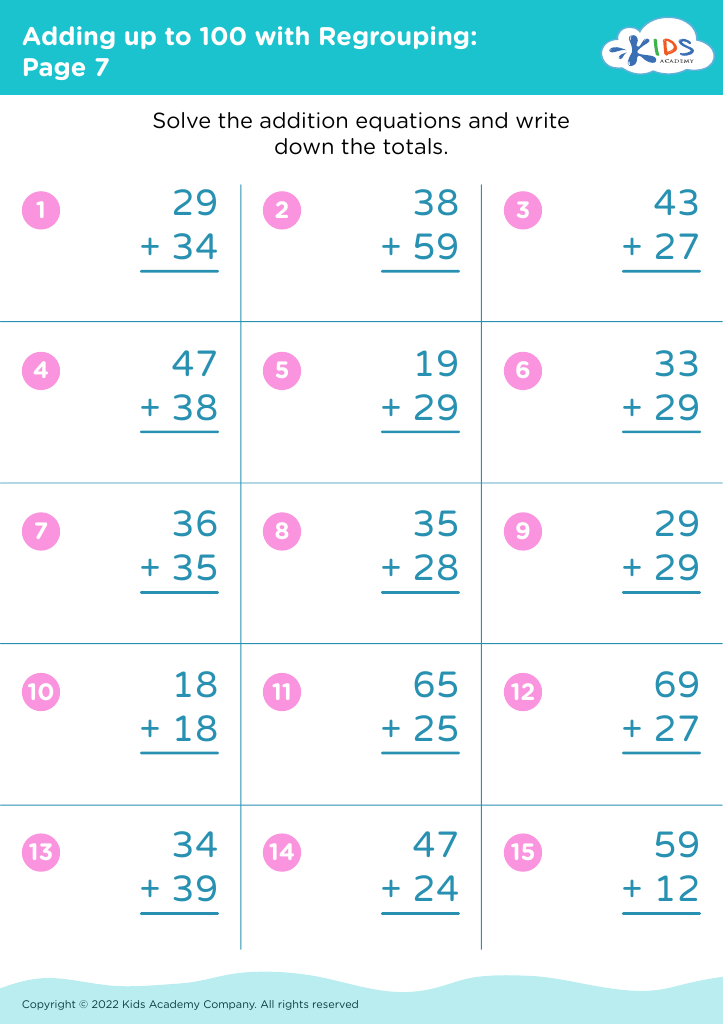
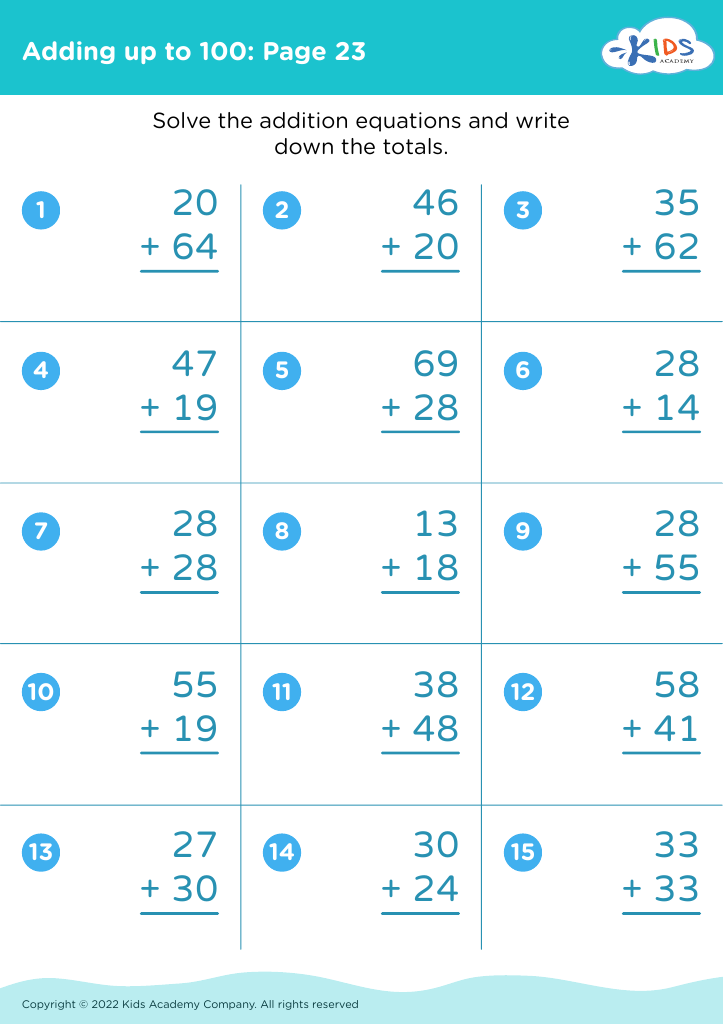
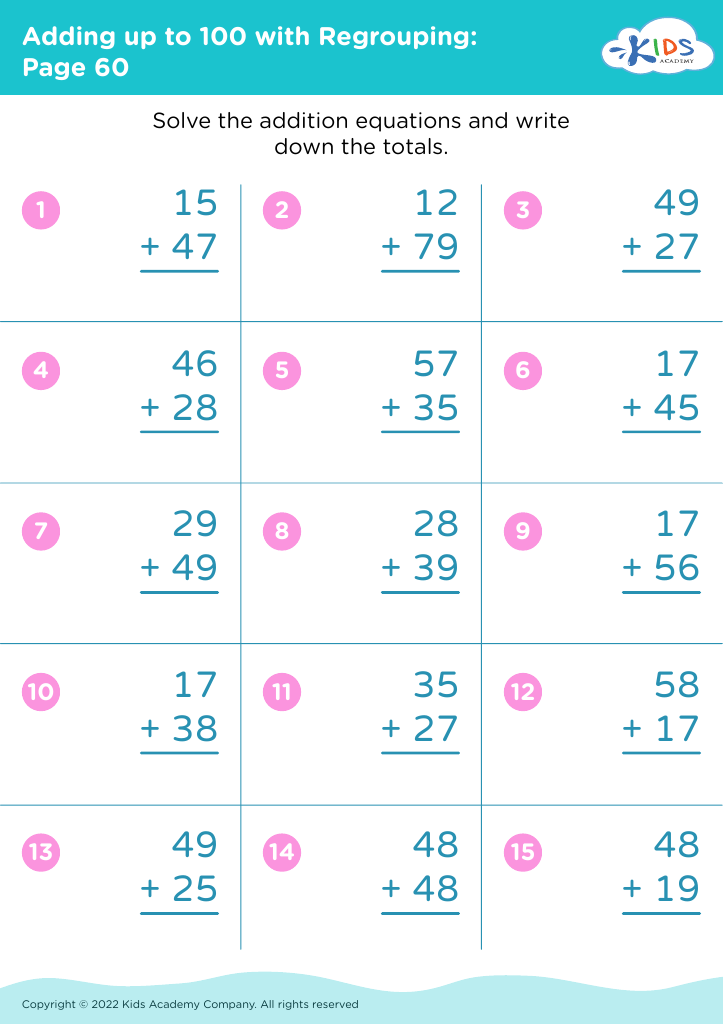
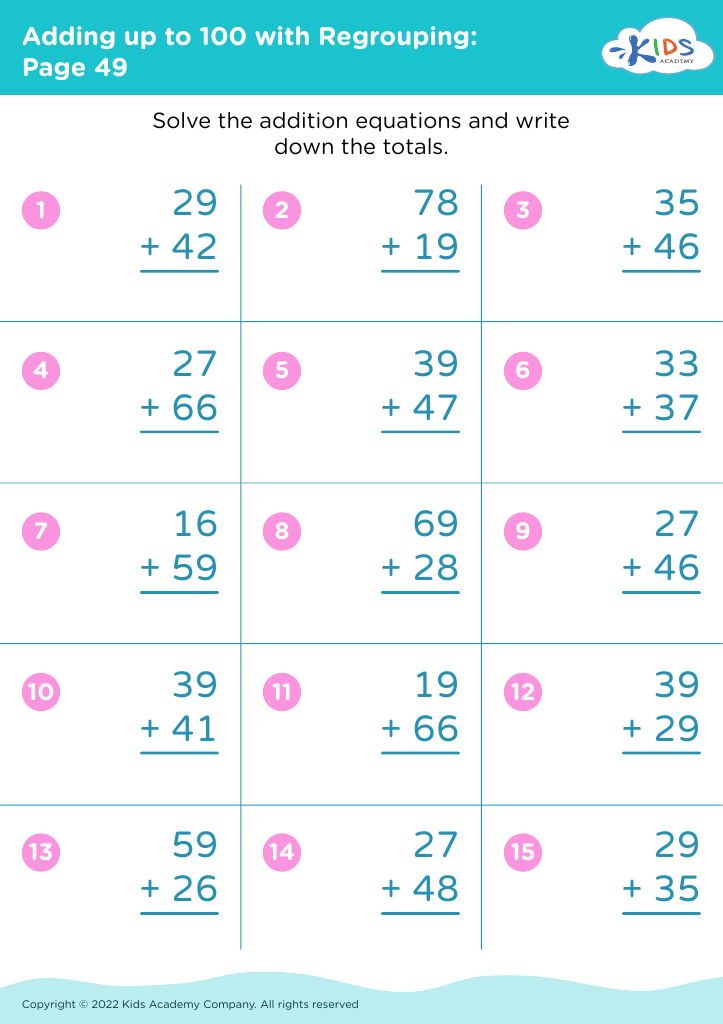
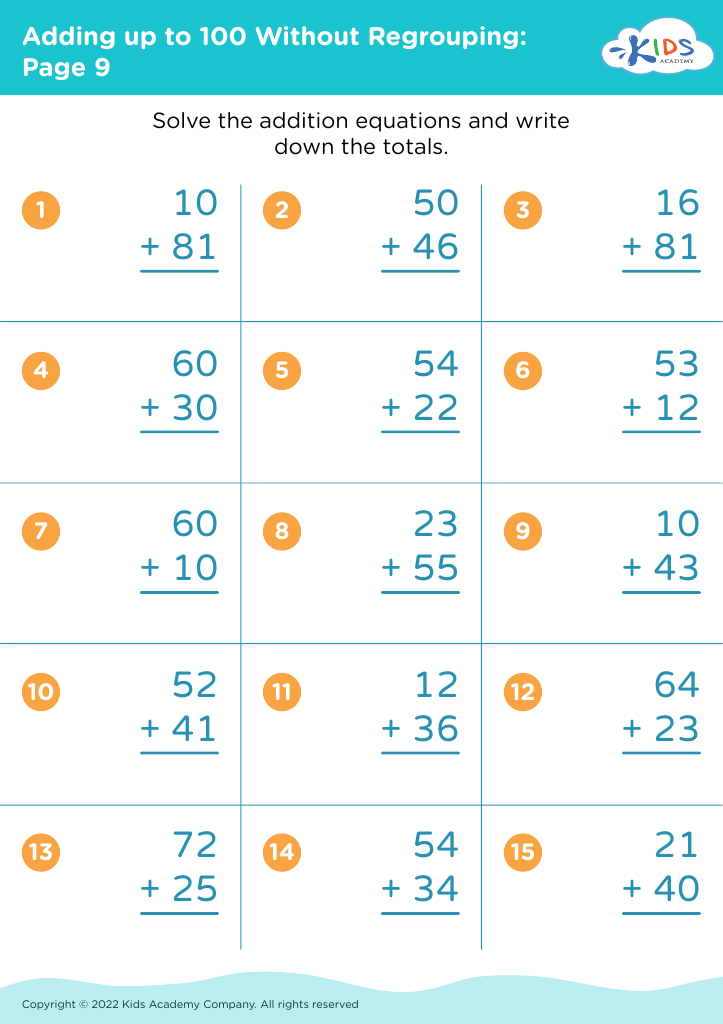
Introduce your child to the essentials of math with our "Basic Addition Skills Adding up to 100 Worksheets for Ages 3-7" from Kids Academy! Perfectly designed for young learners, these engaging worksheets help children grasp basic addition concepts through colorful and fun exercises. Each worksheet aims to build a strong foundation in math by incorporating visual aids and interactive activities. These resources not only support classroom learning but also provide excellent opportunities for practice at home. Help your child thrive in early math stages by making learning enjoyable and effective with our expertly-crafted addition worksheets! Start today and make math fun!


%20(1).jpg)




Basic addition skills, particularly adding up to 100, are fundamental for children aged 3-7 because they serve as the building blocks for more complex mathematical concepts. For parents and teachers, focusing on these skills during early childhood is crucial as it sets the foundation for future academic success. Here’s why:
First, arithmetic skills are essential for everyday tasks. Proficiency in basic addition helps children solve real-life problems, like counting money or measuring ingredients for a recipe, which boosts their practical life skills.
Second, developing basic addition abilities improves a child's number sense, enabling them to understand numerical relationships and patterns. This foundational understanding is necessary for grasping more advanced mathematical concepts, such as subtraction, multiplication, and division.
Third, early proficiency in addition fosters confidence and a positive attitude towards mathematics. When children easily grasp basic addition, they experience a sense of accomplishment, encouraging them to tackle more challenging problems with enthusiasm.
Moreover, cognitive development in early childhood is rapid. Engaging in basic addition activities stimulates brain development, enhances memory, and strengthens logical thinking and problem-solving abilities.
In summary, parents and teachers should prioritize teaching basic addition up to 100 during early childhood to promote practical life skills, foundational understanding for advanced math, and cognitive growth while nurturing a positive outlook towards learning and challenges.








