Basic arithmetic skills Adding up to 100 Worksheets for Ages 3-7
3 filtered results
-
From - To
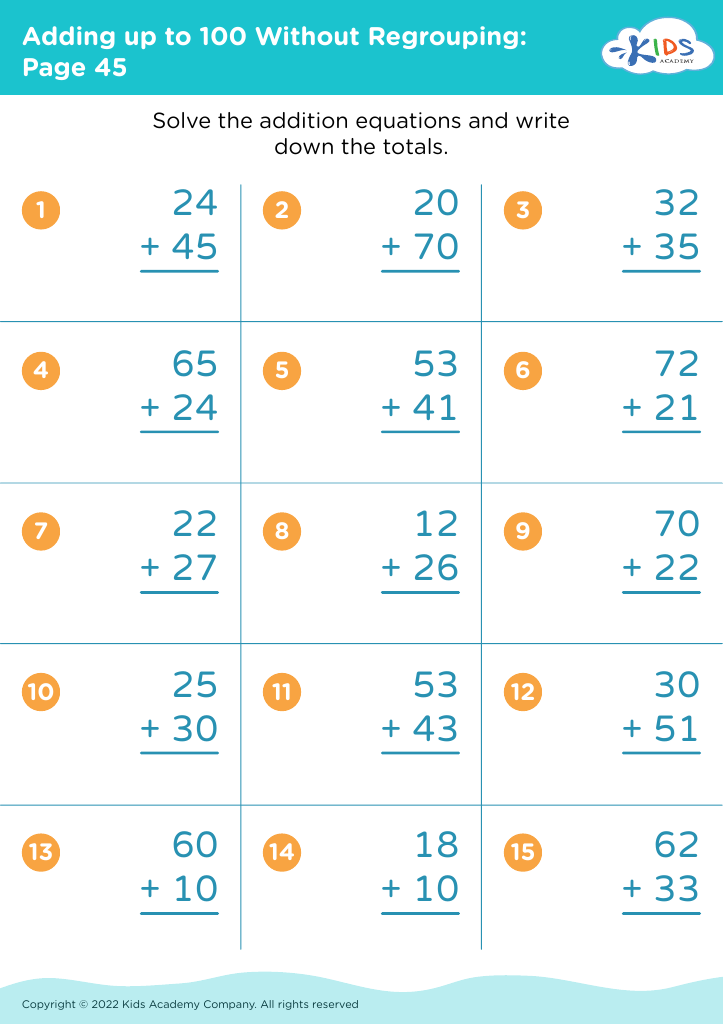
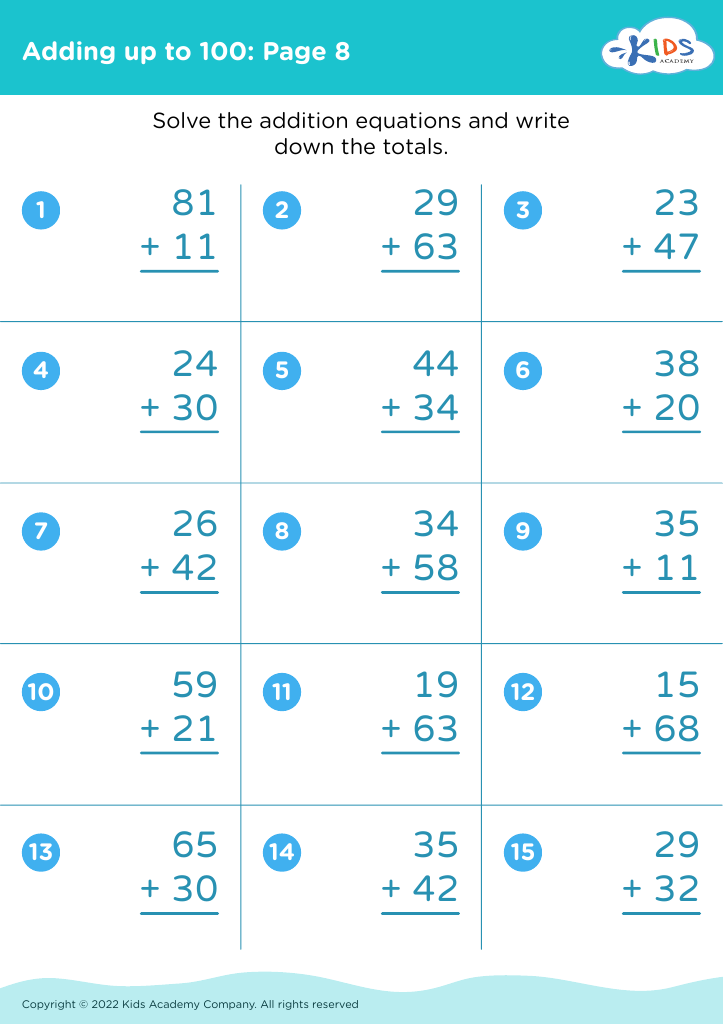
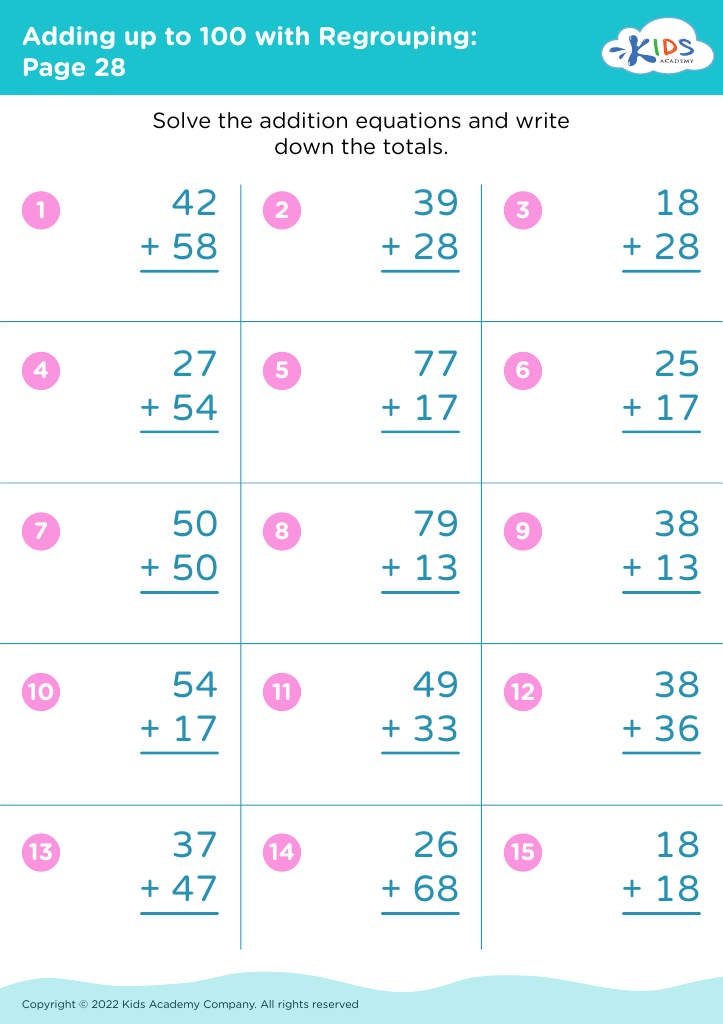
Discover our engaging "Basic Arithmetic Skills: Adding Up to 100" worksheets designed for children aged 3 to 7. These specially crafted worksheets provide a fun way for young learners to develop essential math skills through enjoyable activities. Your child will explore addition, learn to recognize numbers, and gain confidence in their arithmetic abilities. Each worksheet features colorful visuals and age-appropriate exercises, making learning enjoyable and effective. Ideal for parents and educators, these resources are perfect for reinforcing classroom lessons or enhancing home learning. Start your child's mathematical journey today and watch them add up to a level of competence and confidence!




%20(1).jpg)


Basic arithmetic skills, particularly adding up to 100, are foundational to a child’s mathematical development and overall cognitive growth. For children aged 3-7, early exposure to these concepts lays the groundwork for more complex mathematical functions in later years. Mastering addition helps them understand number sense, pattern recognition, and relationships between quantities, which are essential skills across all educational domains.
Developing these skills at a young age promotes confidence and a positive attitude towards math. Children who are secure in their arithmetic abilities are more likely to engage with math challenges, leading to deeper learning and enthusiasm for the subject. Furthermore, these skills prepare children for real-world applications, from simple tasks like counting change to solving problems in science and technology.
Parents and teachers who prioritize early arithmetic development create an informed and supportive learning environment. They can utilize games, visual aids, and everyday activities to make learning engaging. By doing so, they help equip children with critical thinking skills, improve their concentration, and foster a love of learning. Ultimately, a strong foundation in basic arithmetic contributes to lifelong success, empowering children to navigate a world increasingly reliant on math and logic.








