Color recognition Adding up to 100 Worksheets for Ages 3-7
4 filtered results
-
From - To
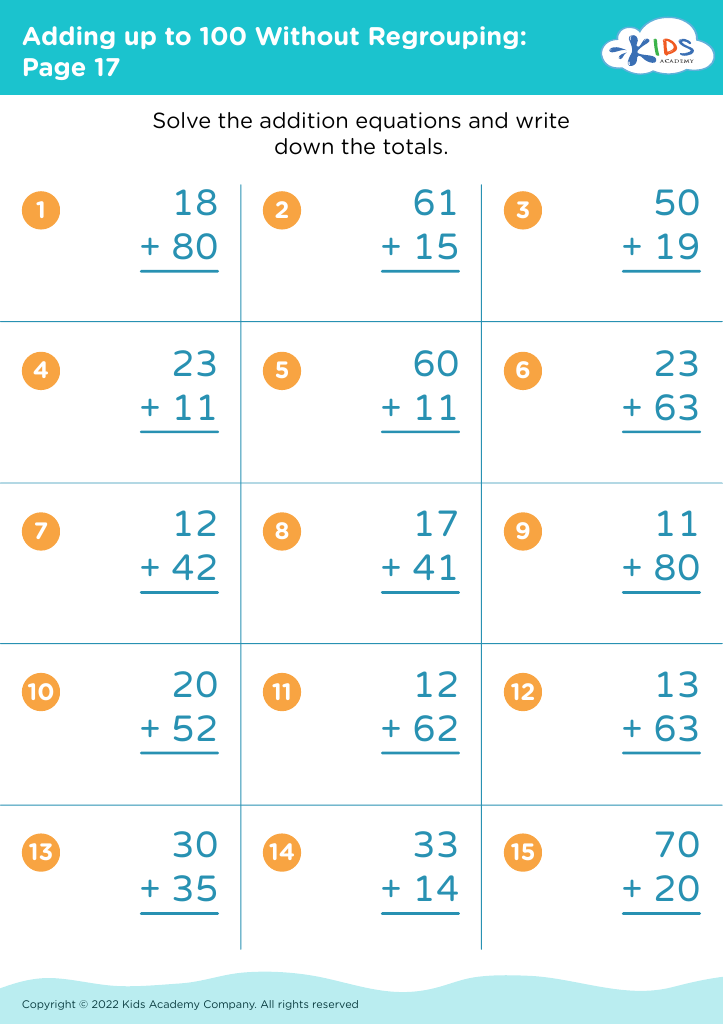
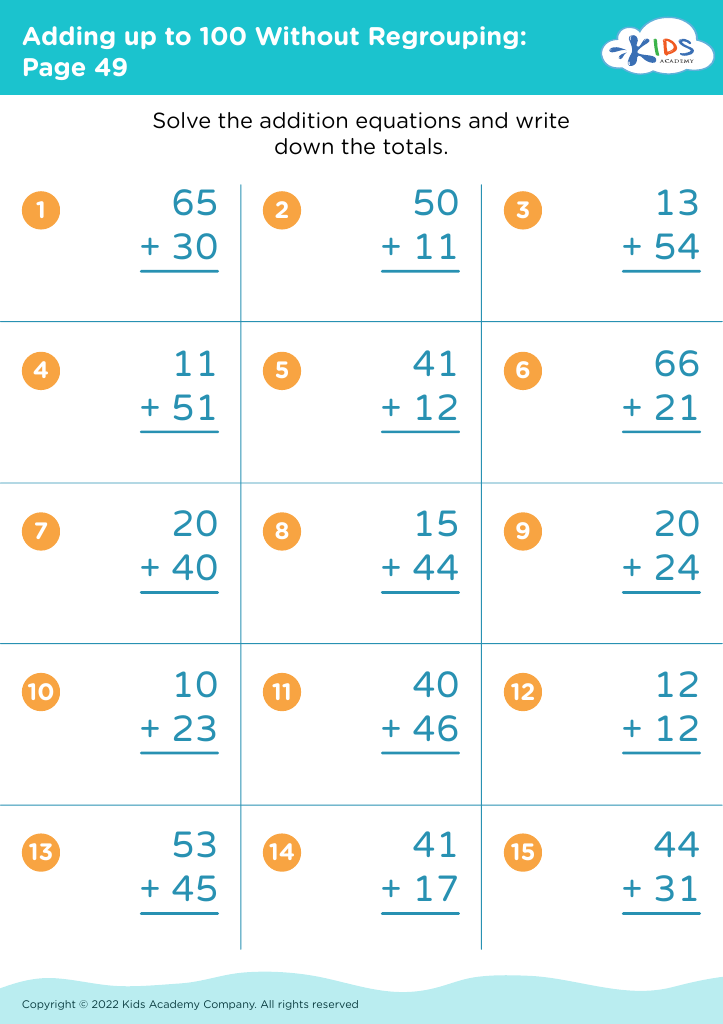
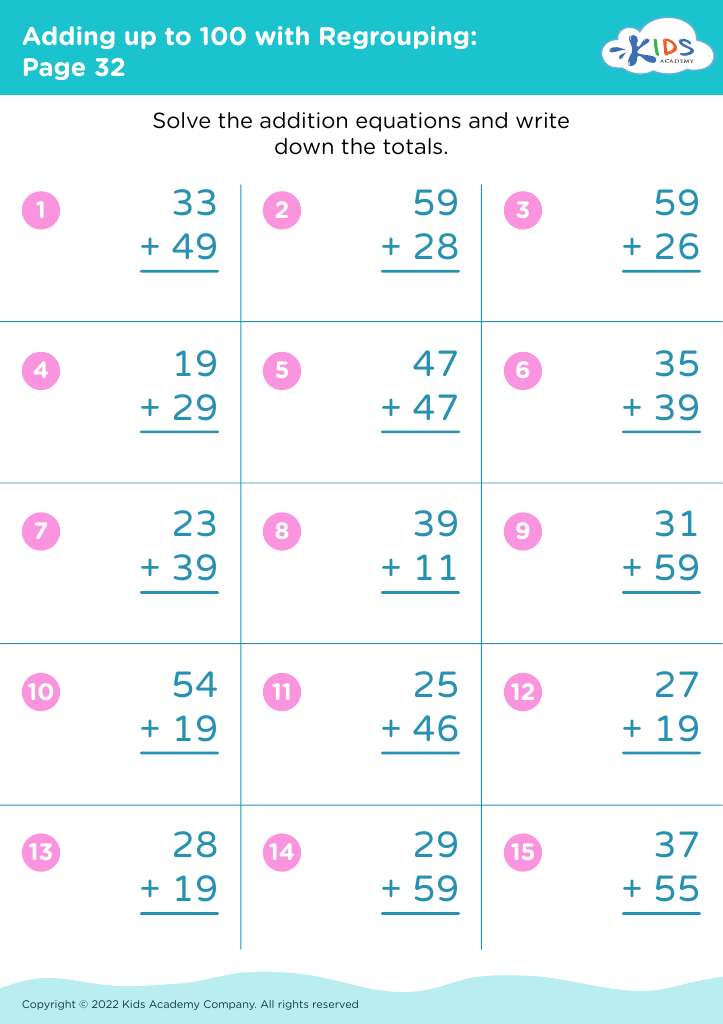
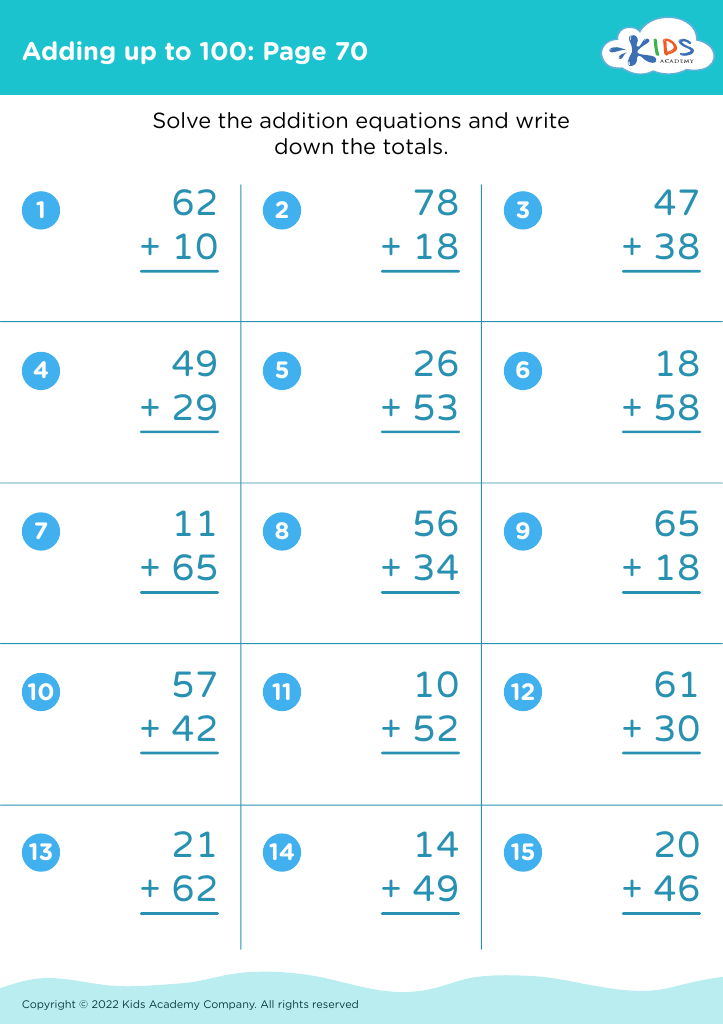
Discover our "Color Recognition Adding Up to 100 Worksheets" designed for children ages 3-7! These engaging worksheets combine fun and learning, helping young learners recognize colors while mastering addition up to 100. Ideal for early childhood education, our printable resources encourage creativity and enhance cognitive skills. Each worksheet is crafted to promote critical thinking and problem-solving as kids explore colors through interactive exercises and mathematical challenges. Perfect for homeschooling or classroom use, these worksheets foster a love for learning and build a solid foundation in math. Get started today and watch your child thrive in color recognition and addition!


%20(1).jpg)




Color recognition and basic math skills, like addition, are foundational aspects of early childhood education that parents and teachers should prioritize. For children aged 3-7, mastering color recognition helps develop visual discrimination skills, fostering better observation and understanding of their environment. Recognizing colors also aids in enhancing language skills as children learn to name and describe various colors, which is vital for effective communication.
Additionally, incorporating color recognition into activities that involve addition, such as counting colorful objects, engages children in an interactive learning process. This multi-sensory approach not only makes math fun but also reinforces their understanding of numbers and relationships. When children associate colors with quantities, they develop a clearer conceptual understanding of addition, paving the way for more complex mathematical skills in the future.
Furthermore, early engagement in these activities nurtures critical thinking and problem-solving abilities. As parents and teachers create colorful and engaging learning experiences, they stimulate a child’s curiosity, promote creativity, and build confidence. Ultimately, prioritizing color recognition and foundational math skills at this age lays the groundwork for lifelong learning, setting children up for future academic success and a love for learning.








