Develop critical thinking Adding up to 100 Worksheets for Ages 3-7
5 filtered results
-
From - To
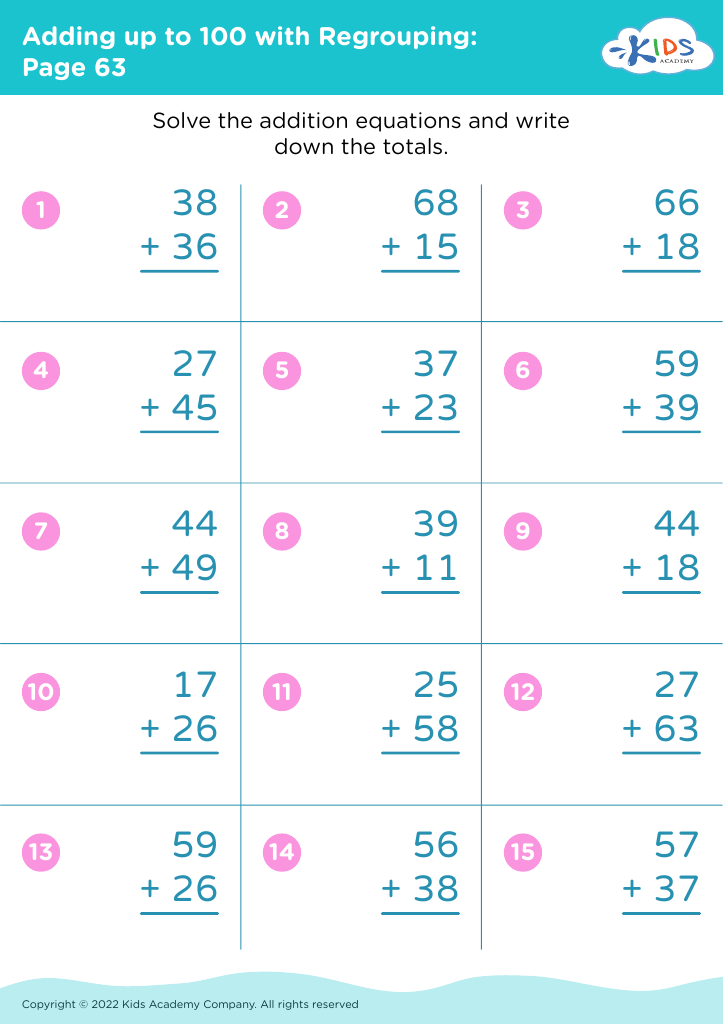
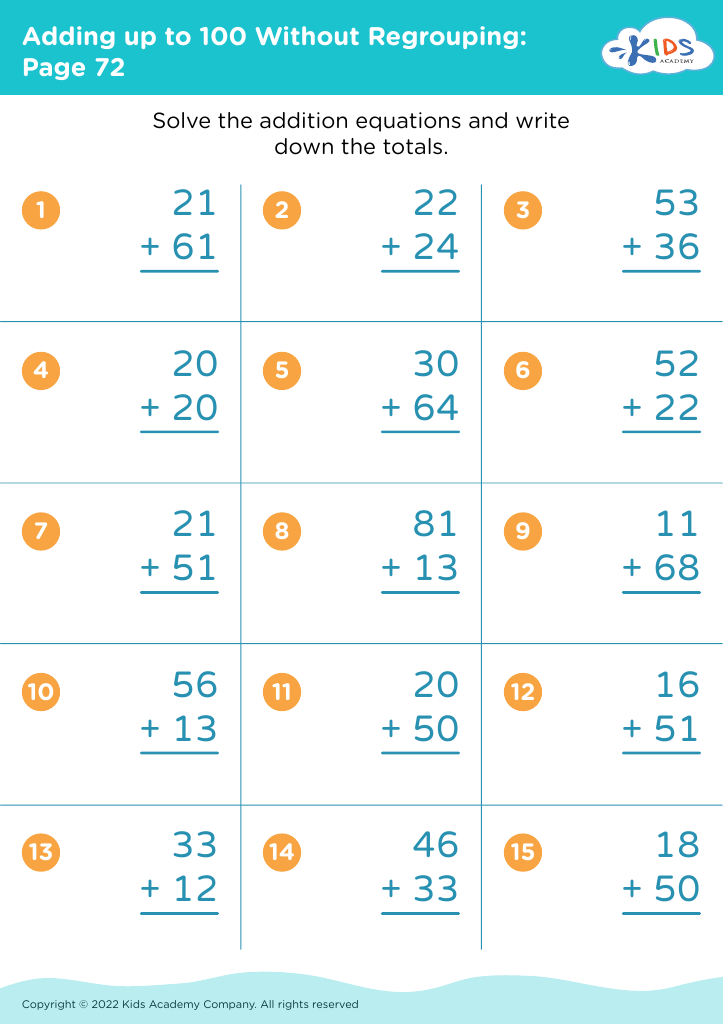
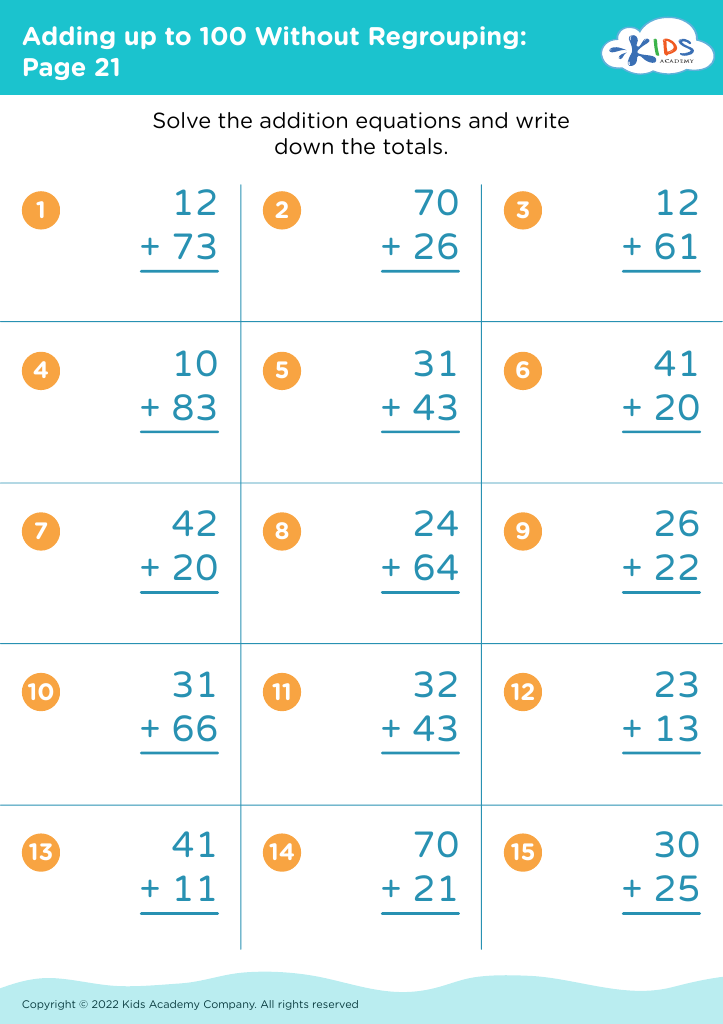
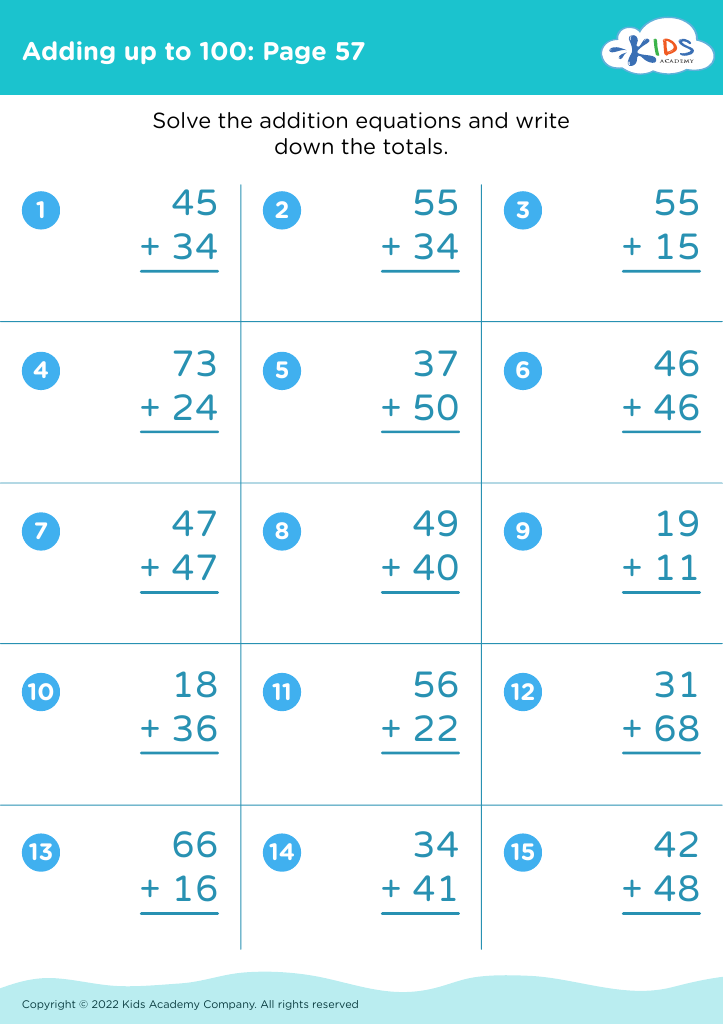
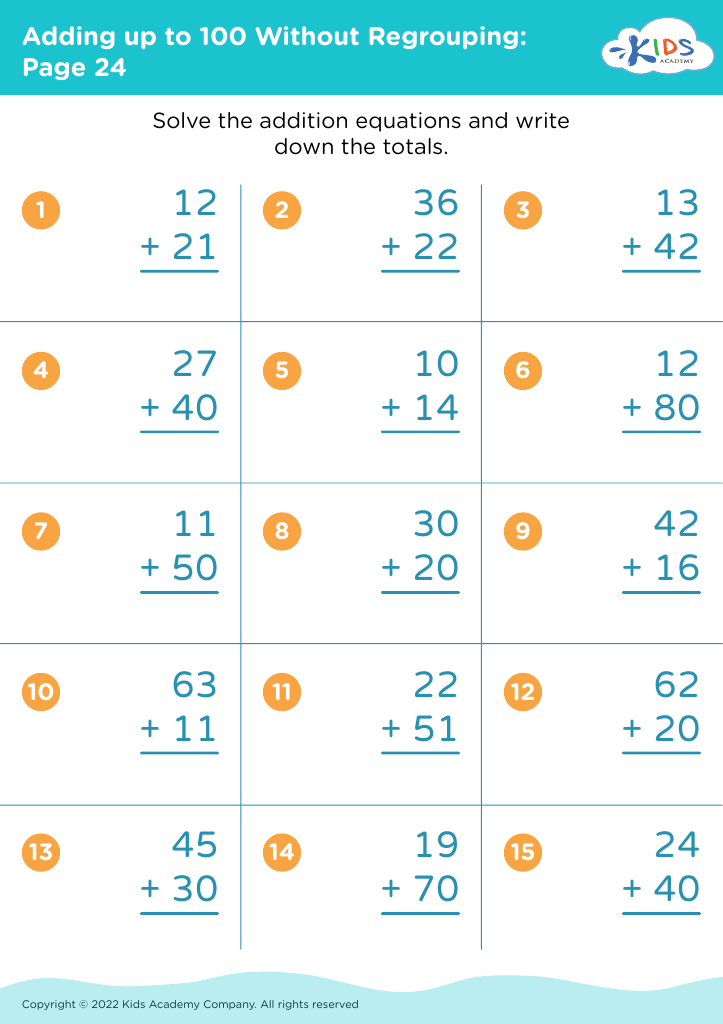
Unlock the potential of your young learners with our “Develop Critical Thinking: Adding up to 100” worksheets tailored for ages 3-7. These engaging, colorful worksheets not only introduce basic addition but also stimulate critical thinking skills. Children will explore patterns, problem-solving strategies, and logical reasoning as they tackle fun math challenges designed to develop their cognitive abilities. With 100 worksheets, each crafted to enhance learning through play, your little ones will build confidence in math and sharpen their critical thinking skills. Transform math practice into an enjoyable adventure, ensuring a strong foundation for future learning success!


%20(1).jpg)




Developing critical thinking skills in children aged 3-7 is crucial for several reasons. Firstly, this age is formative; children are naturally curious and eager to explore the world around them. Encouraging critical thinking helps harness that curiosity, enabling them to ask questions, reason, and build problem-solving skills.
Parents and teachers should care because critical thinking lays the foundation for later academic success. Kids who engage in critical thinking become better at analyzing information, making informed decisions, and understanding multiple perspectives. These skills are essential in a rapidly changing world, where the ability to think critically aids in navigating complex situations.
Additionally, fostering critical thinking promotes creativity. Children learn to think outside the box, which leads to innovative ideas and solutions. This creativity can enhance their self-esteem and motivation, making learning a more enjoyable experience.
Moreover, critical thinking supports emotional development. When children learn to evaluate their own thoughts and feelings, they become more empathetic and able to understand others’ viewpoints.
Ultimately, investing time and effort into developing critical thinking in young children helps prepare them not only for academic challenges but also for life tasks, nurturing responsible and independent future citizens.








