Develop number recognition Adding up to 100 Worksheets for Ages 3-7
4 filtered results
-
From - To
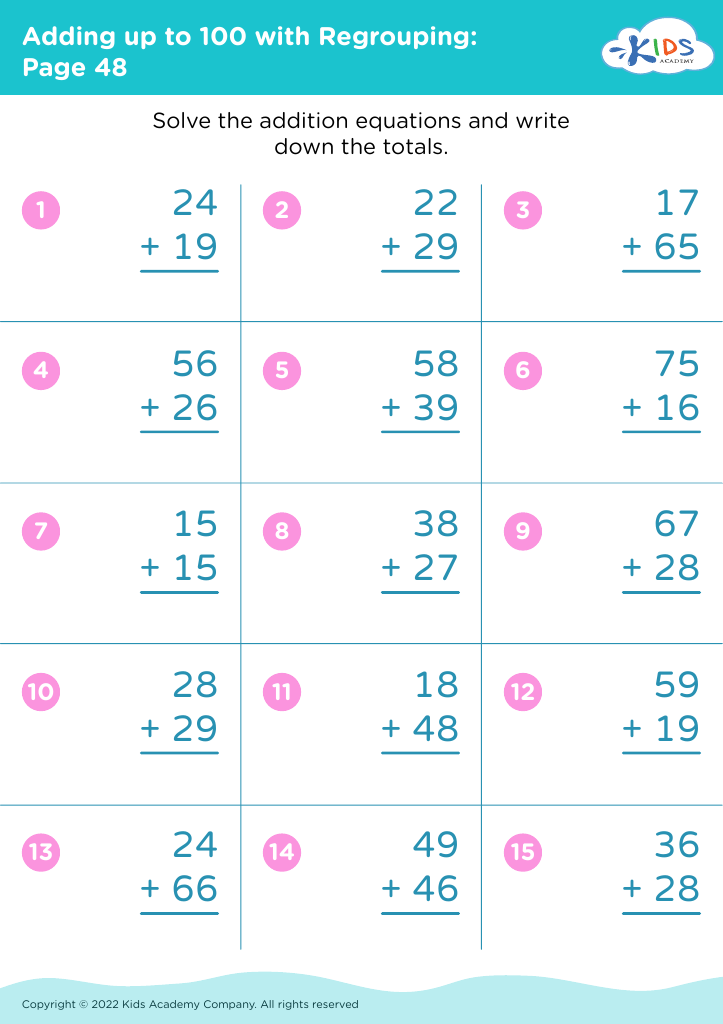
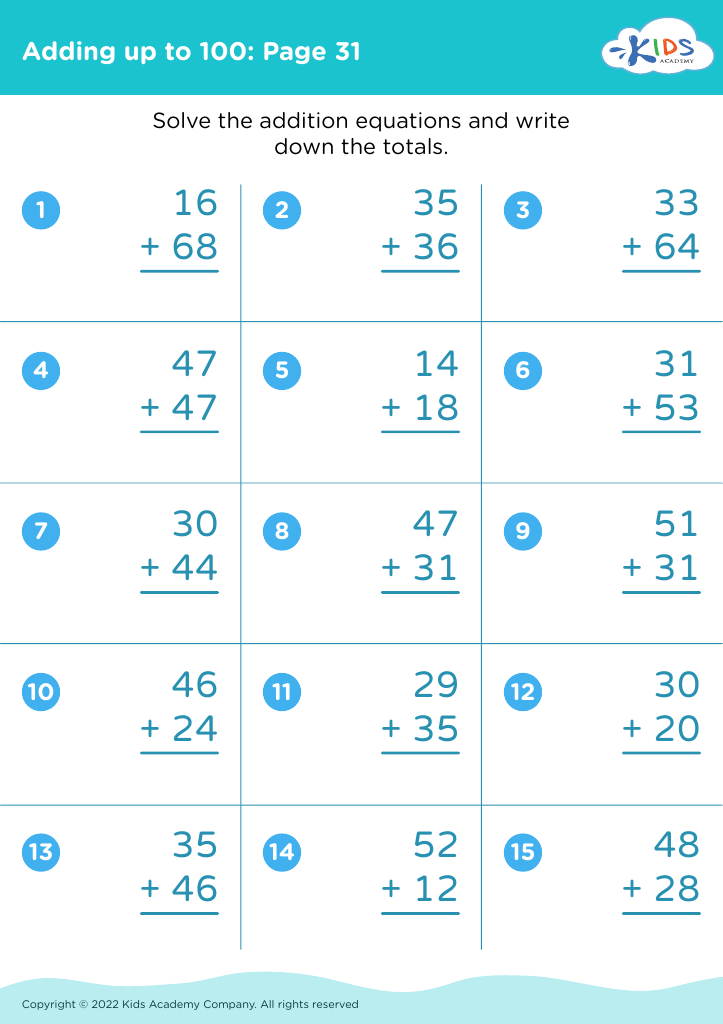
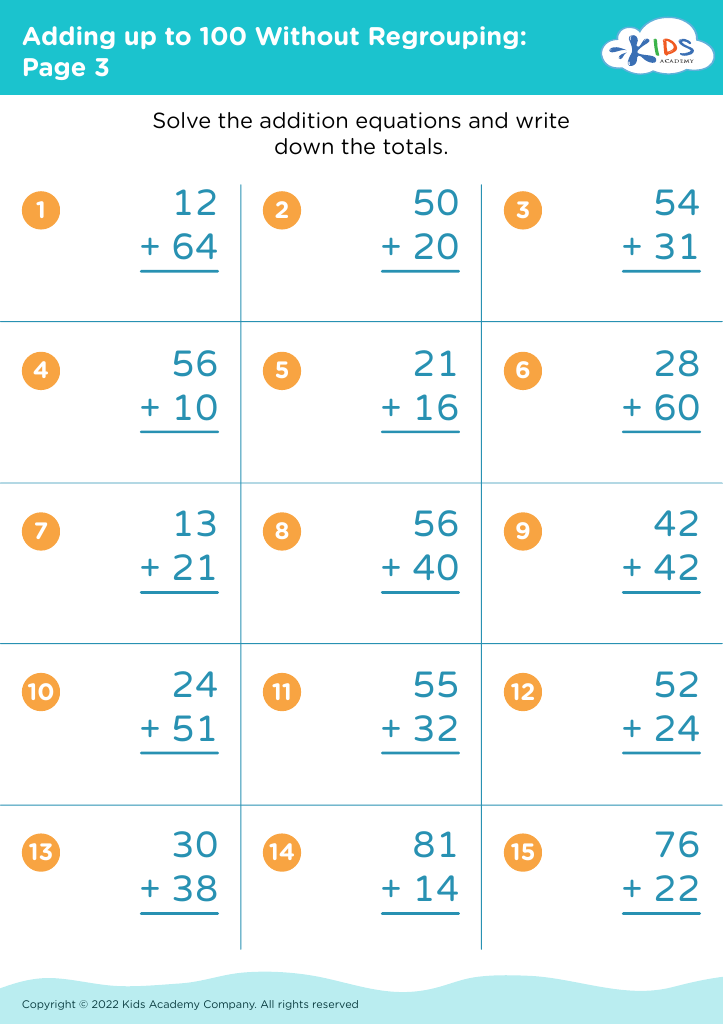
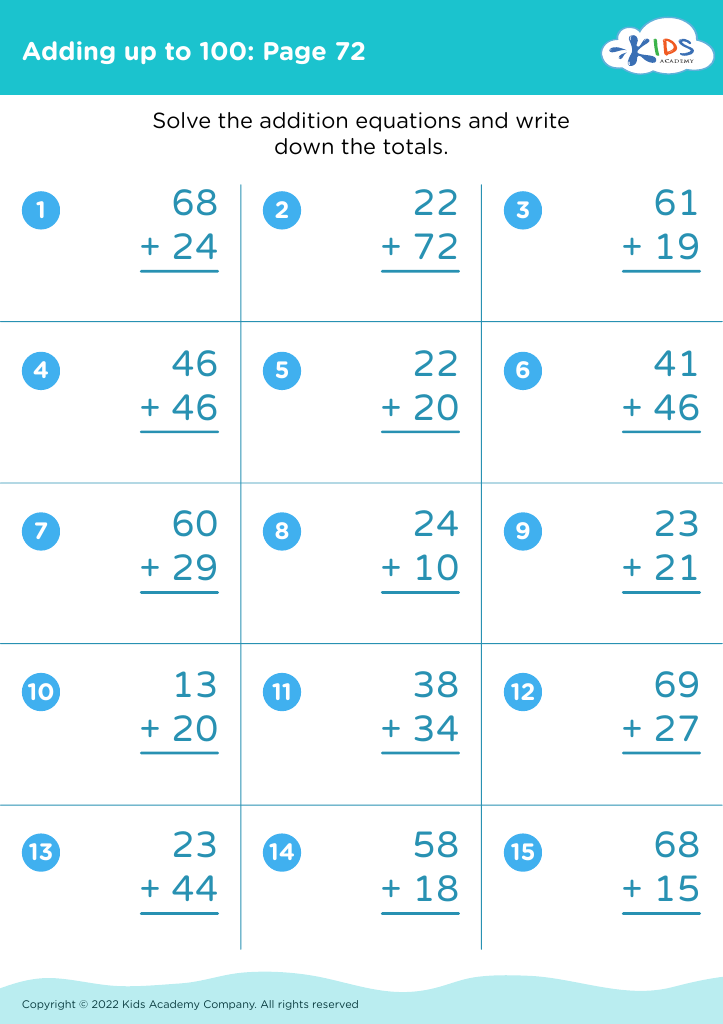
Enhance your child’s number recognition and addition skills with our engaging "Adding up to 100 Worksheets" designed for ages 3-7. These expertly crafted worksheets combine fun activities with educational content to help young learners confidently identify and work with numbers up to 100. Perfect for parents and teachers, these printable resources support children's mathematical development through colorful exercises and interactive tasks. Kids will enjoy mastering addition while building a foundation for future math success. With consistent practice using our worksheets, your little ones will excel in understanding numbers and basic arithmetic in no time.





%20(1).jpg)

Parents and teachers should prioritize developing number recognition and the ability to add up to 100 in children aged 3-7 because these foundational skills form the cornerstone of early mathematics understanding. Starting with number recognition, knowing and identifying numbers helps young children understand the concept of quantity and order, which is crucial for daily activities and future learning.
Adding up to 100 not only builds basic arithmetic skills but also enhances cognitive abilities such as problem-solving, logical thinking, and memory. Children who proficiently grasp these skills are more likely to succeed in more complex mathematical concepts, which will be introduced later in their academic careers. Additionally, these early math skills are integrated into many everyday situations where they serve practical purposes, such as understanding money, telling time, and measuring objects.
Beyond academics, confidence and proficiency in math-related tasks foster a positive attitude toward learning as a whole, reducing anxiety. Mastery in these areas also promotes a child's readiness for school curriculum, leading to better classroom engagement and academic performance. Therefore, nurturing these crucial skills during the formative years of ages 3-7 sets the stage for lifelong learning and success, both in school and in real-world situations.








