Developing math skills Adding up to 100 Worksheets for Ages 3-7
3 filtered results
-
From - To
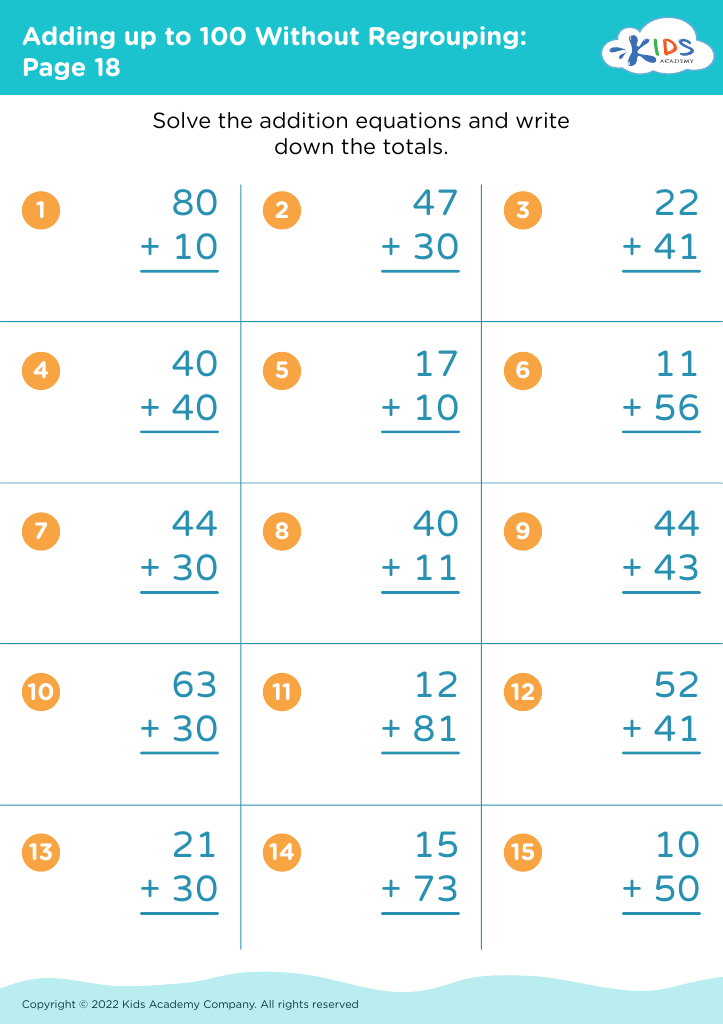
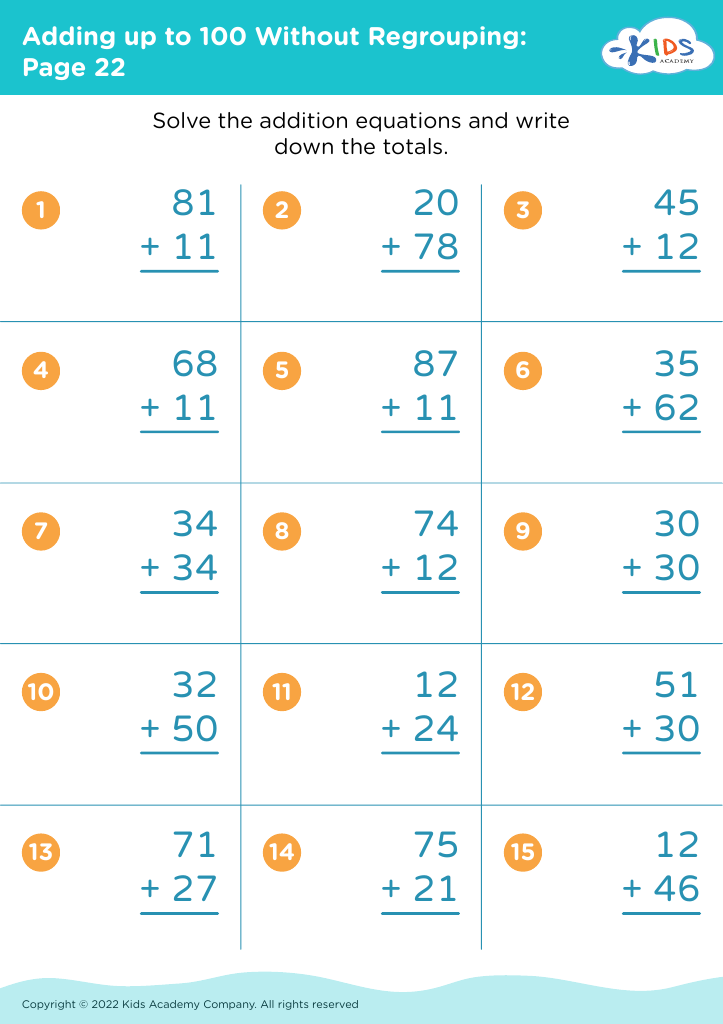
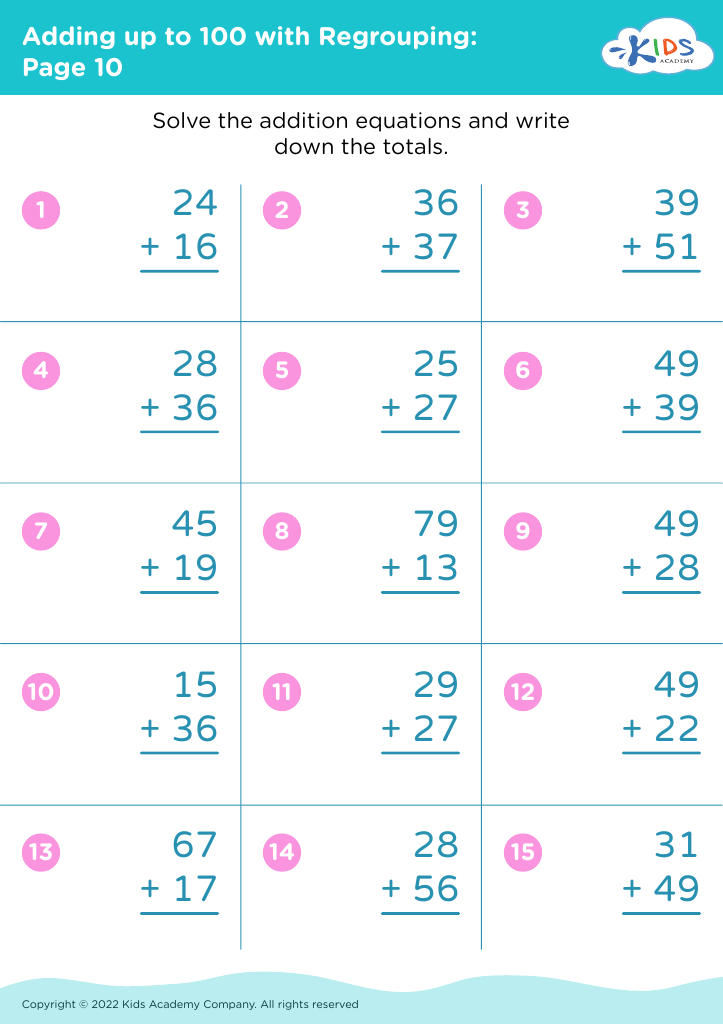
Discover our "Developing Math Skills: Adding Up to 100 Worksheets" for children aged 3-7! These engaging and interactive worksheets are designed to help young learners build a strong foundational understanding of basic math concepts. With a variety of exercises that focus on addition, number recognition, and problem-solving, kids will enjoy practicing their skills while having fun. Perfect for parents, teachers, or homeschoolers, these worksheets promote critical early math abilities essential for future success in mathematics. Download and inspire your child's love for learning as they confidently add their way to 100! Explore our resources today and watch your little mathematicians thrive!



%20(1).jpg)



Developing math skills, particularly adding up to 100, is crucial for children aged 3-7. At this stage, children are laying the foundation for their understanding of numbers and basic arithmetic, which are essential for their academic success and confidence in math. Learning to count and add up to 100 helps children grasp the concept of number relationships and improves their ability to recognize patterns.
Early mathematical skills set the stage for more complex problem-solving abilities later in life. Mastery of basic addition fosters critical thinking and analytical skills. Additionally, proficiency in math can significantly influence a child's overall academic trajectory, as it often correlates with success in various subjects, including science and technology.
Engaging in math activities allows children to apply their skills in everyday situations, promoting a practical understanding of mathematics. It also nurtures their creativity and enhances their cognitive development.
For parents and teachers, supporting children in attaining this milestone not only promotes their mathematical skills but also boosts their confidence, setting a positive attitude towards learning. By fostering a love for math early on, adults empower children to become independent thinkers and problem solvers in the future, benefiting them throughout their educational journey and beyond.








