Enhancing calculation skills Adding up to 100 Worksheets for Ages 3-7
4 filtered results
-
From - To
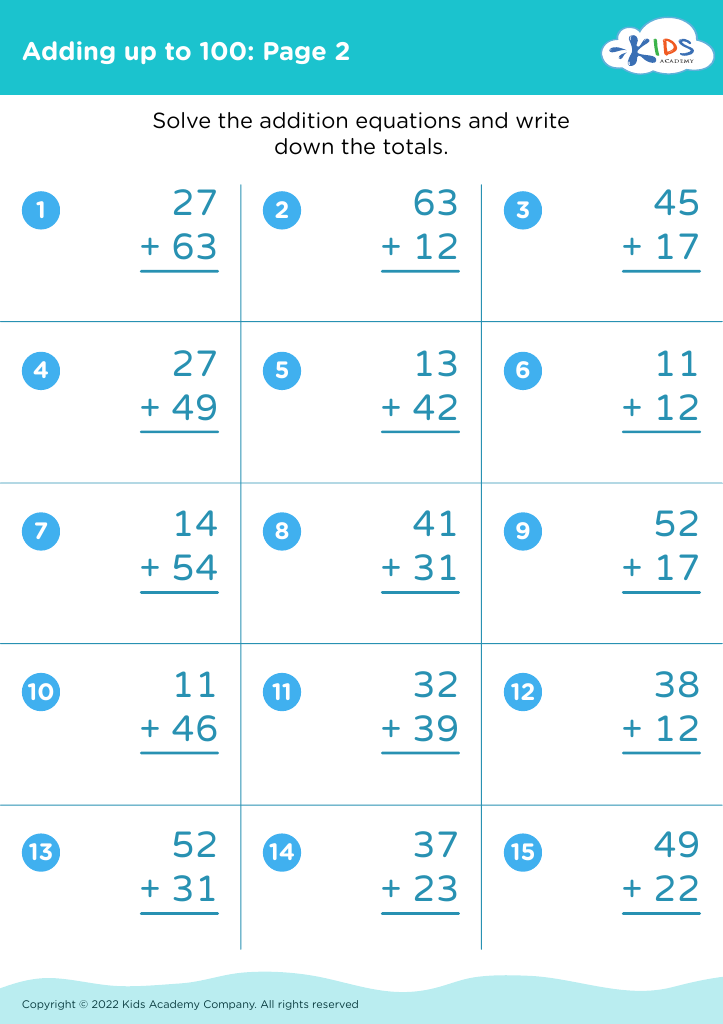
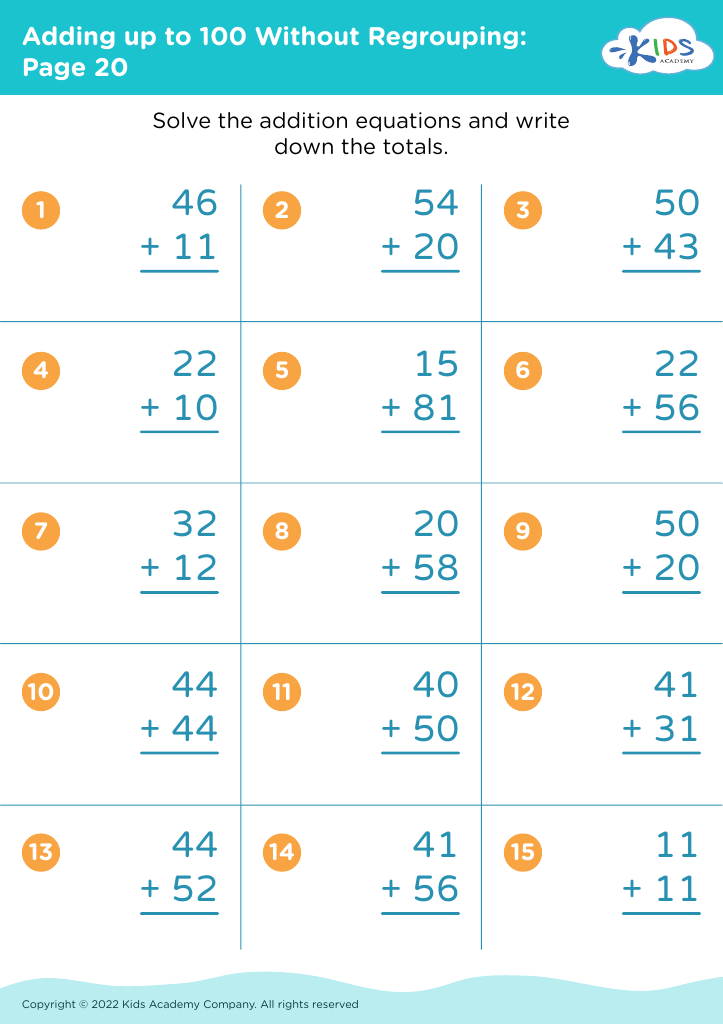
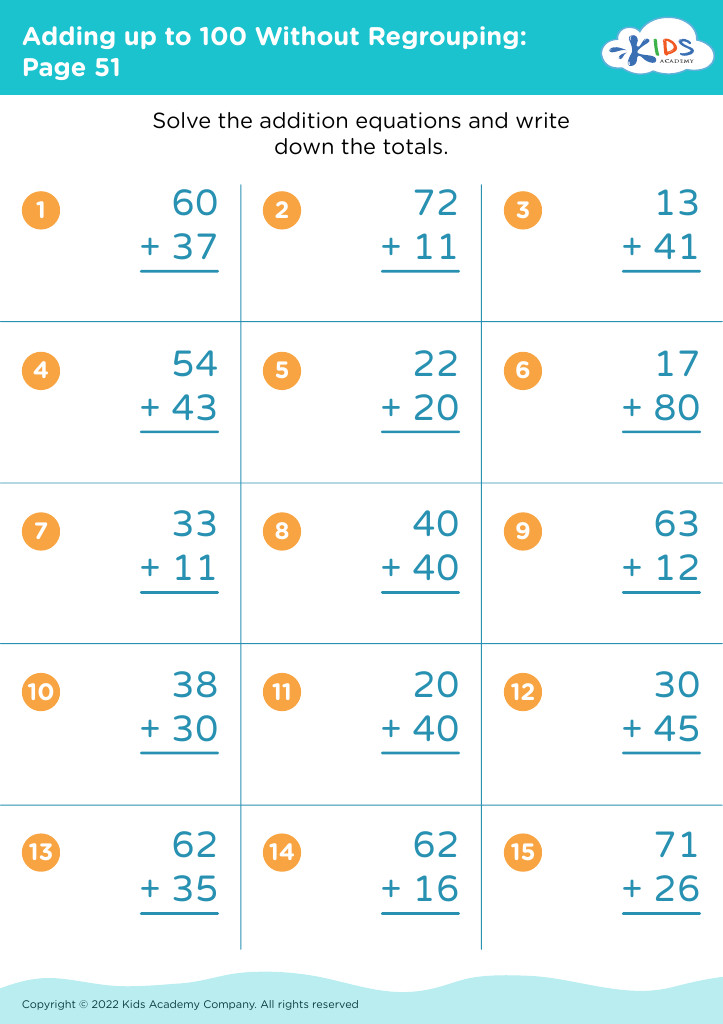
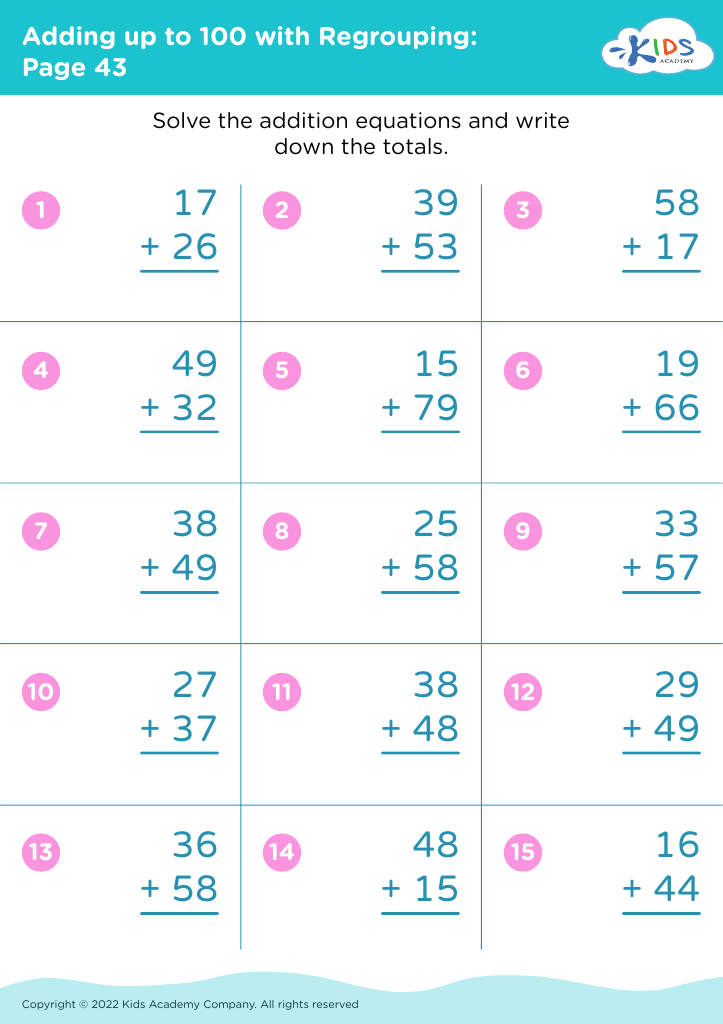
Enhance your child's early calculation skills with our specialized "Adding up to 100 Worksheets" designed for ages 3-7. These worksheets make learning addition fun and engaging, helping children understand the foundational concepts of math while boosting their confidence. Tailored to young learners, each activity incorporates vivid illustrations and straightforward problems, ideal for developing critical thinking and problem-solving skills. By regularly practicing with these worksheets, children will become proficient in adding numbers up to 100, paving the way for future mathematical success. Perfect for both classroom and at-home learning, our worksheets offer an excellent resource for educational growth.




%20(1).jpg)


Enhancing calculation skills in young children, specifically adding up to 100, is crucial for several key reasons. At ages 3-7, children are in a significant developmental phase where their cognitive abilities are rapidly evolving. Introducing basic arithmetic, such as addition, not only strengthens their mathematical foundation but also promotes critical thinking and problem-solving skills. These abilities are fundamental for more complex mathematical concepts they will encounter as they progress in their education.
Moreover, developing strong calculation skills early on can foster a positive attitude toward mathematics. Children who grasp basic arithmetic at a young age are more likely to feel confident and enthusiastic about math, reducing anxiety and the possibility of math-related challenges in the future. This early success can influence their overall academic performance and love for learning.
Parents and teachers play a pivotal role in this developmental stage, providing encouragement, resources, and engaging learning activities that make math fun and relevant. Through games, hands-on activities, and real-world examples, adults can help young learners see the practical applications of math in everyday life. Thus, enhancing calculation skills up to 100 for children ages 3-7 sets the stage for lifelong numeracy, ensuring they have the tools they need for academic achievement and everyday problem-solving.








