Enhancing problem-solving skills Adding up to 100 Worksheets for Ages 3-7
3 filtered results
-
From - To
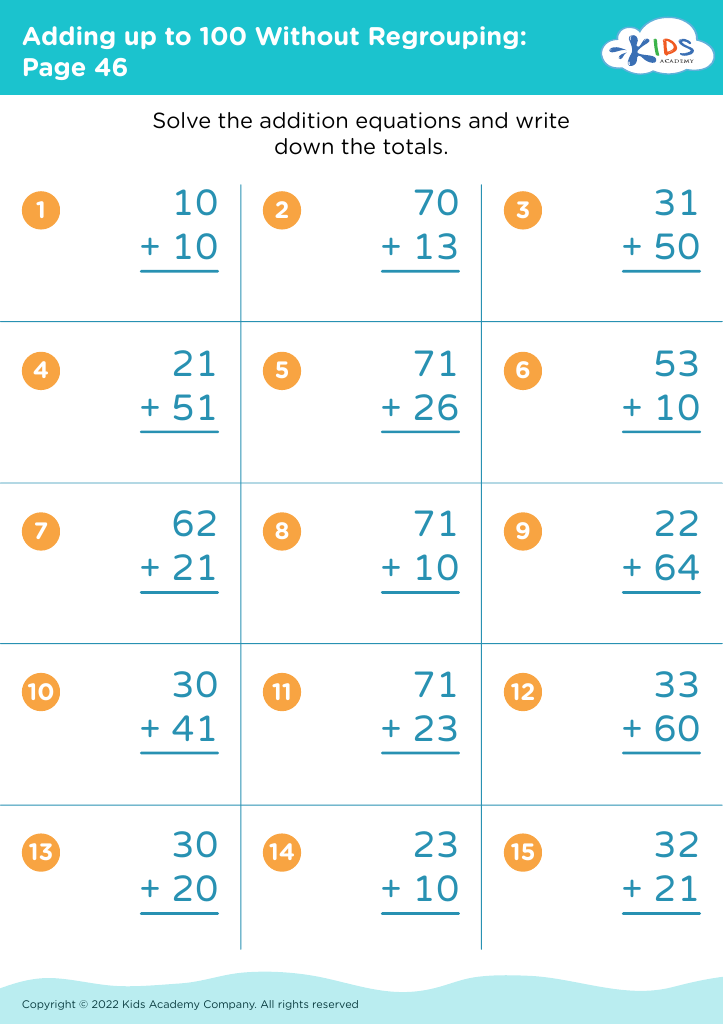
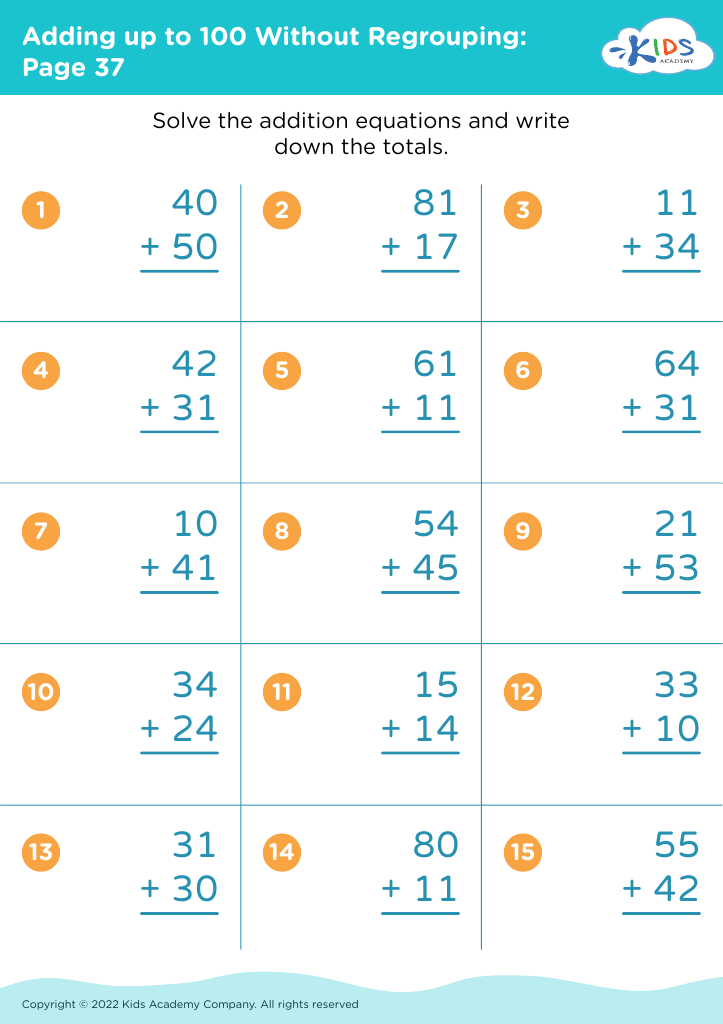
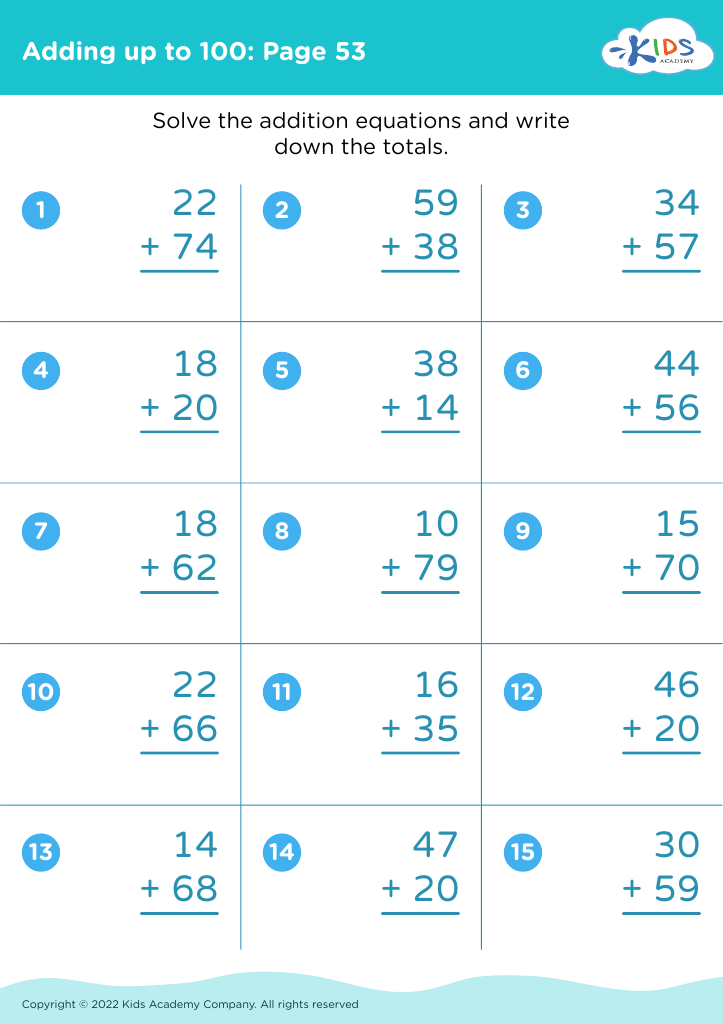
Enhance your child's problem-solving skills with our "Adding Up to 100 Worksheets" designed for ages 3-7! These engaging worksheets encourage young learners to develop essential math skills while fostering critical thinking and creativity. Each activity is tailored to make learning fun and interactive, helping children grasp the concepts of addition and number strategies. By completing these worksheets, your little ones will gain confidence in tackling mathematical challenges, setting a strong foundation for future learning. Perfect for at-home practice or classroom use, our comprehensive resources will inspire your child to embrace math with excitement and enthusiasm!





%20(1).jpg)

Enhancing problem-solving skills in young children, specifically in contexts like adding up to 100, is crucial for their cognitive and emotional development. For ages 3-7, these foundational experiences lay the groundwork for practical math skills and critical thinking abilities. When children engage with numbers, they learn not just addition but also how to approach challenges methodically.
Parents and teachers should care because these skills promote persistence, creativity, and resilience. As children learn to tackle problems, they develop a sense of accomplishment, boosting their confidence and motivation. In a world increasingly driven by technology and analytics, strong problem-solving skills become essential for future success.
Additionally, mastering concepts such as adding up to 100 helps children connect math to real-life situations, enhancing their understanding of numbers in practical contexts. Approaching math playfully during these formative years fosters a positive attitude toward learning, minimizing the fear or anxiety that often accompanies math in later years.
Ultimately, investing time and effort in enhancing problem-solving skills for young learners enriches their educational journey, equips them for future academic challenges, and helps them grow into capable, confident individuals. Encouraging this growth should be a priority for both parents and educators alike.








