Fine Motor Skills Adding up to 100 Worksheets for Ages 3-7
12 filtered results
-
From - To
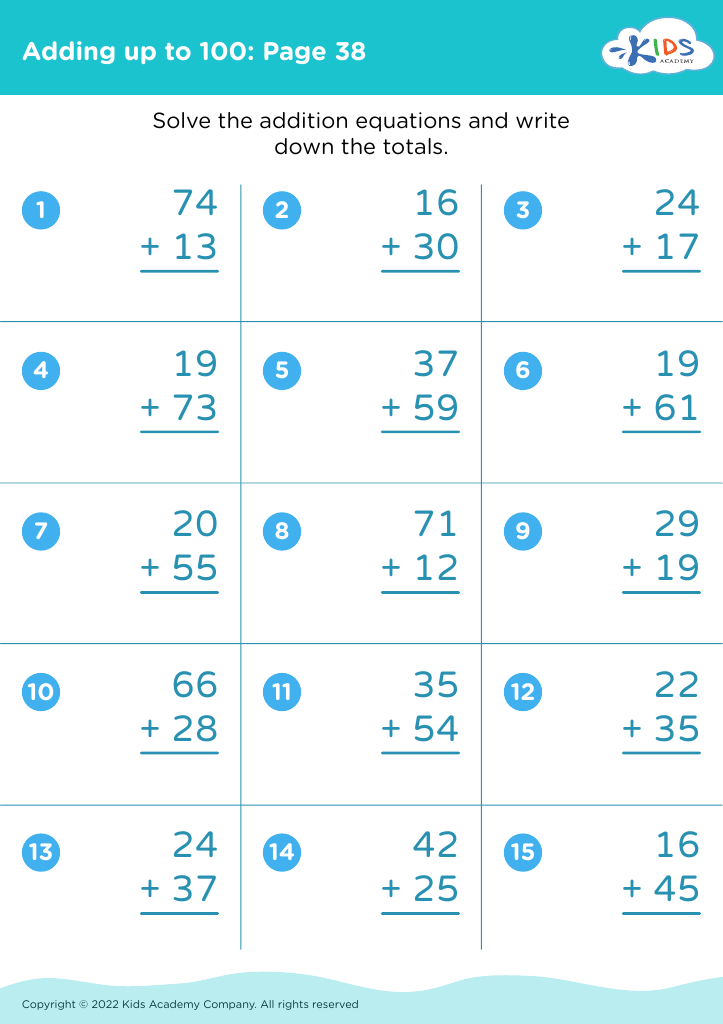
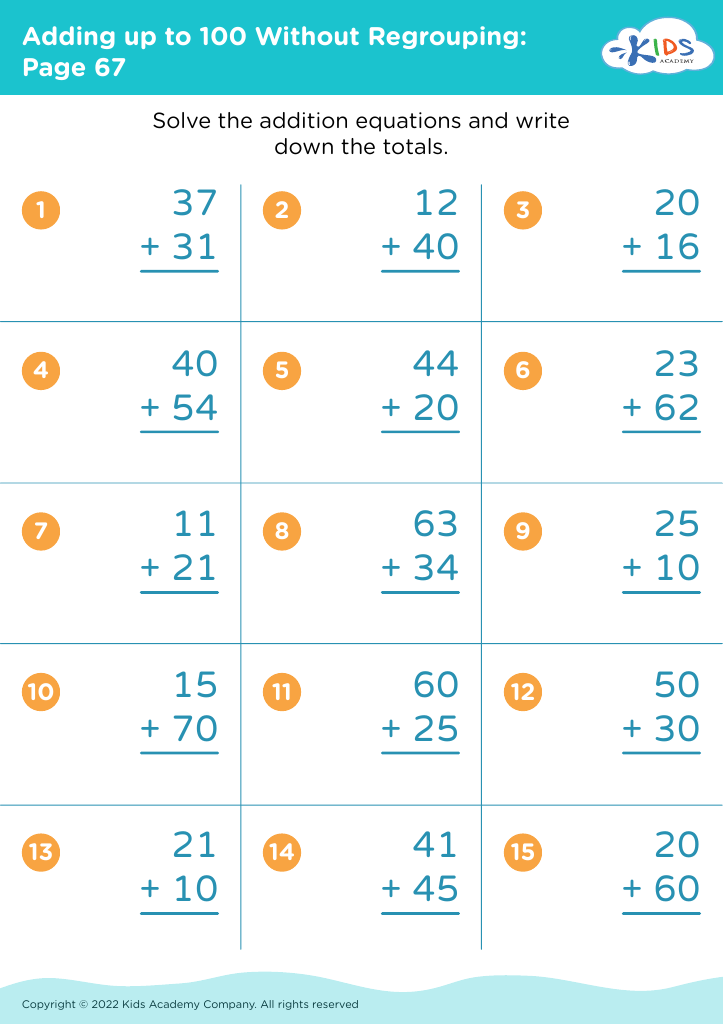
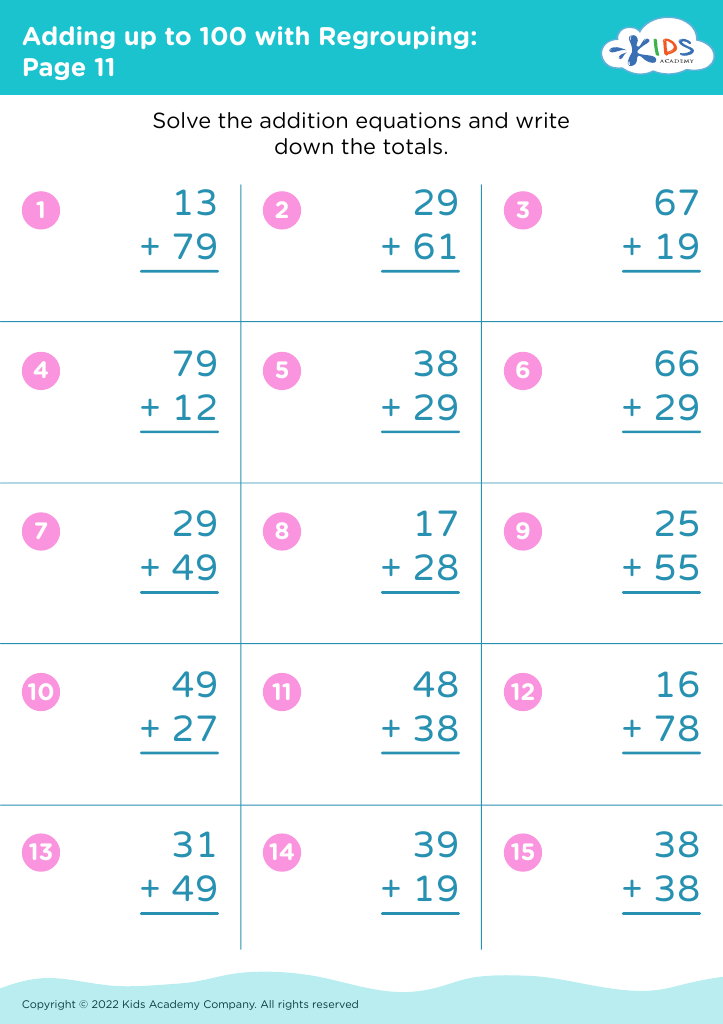
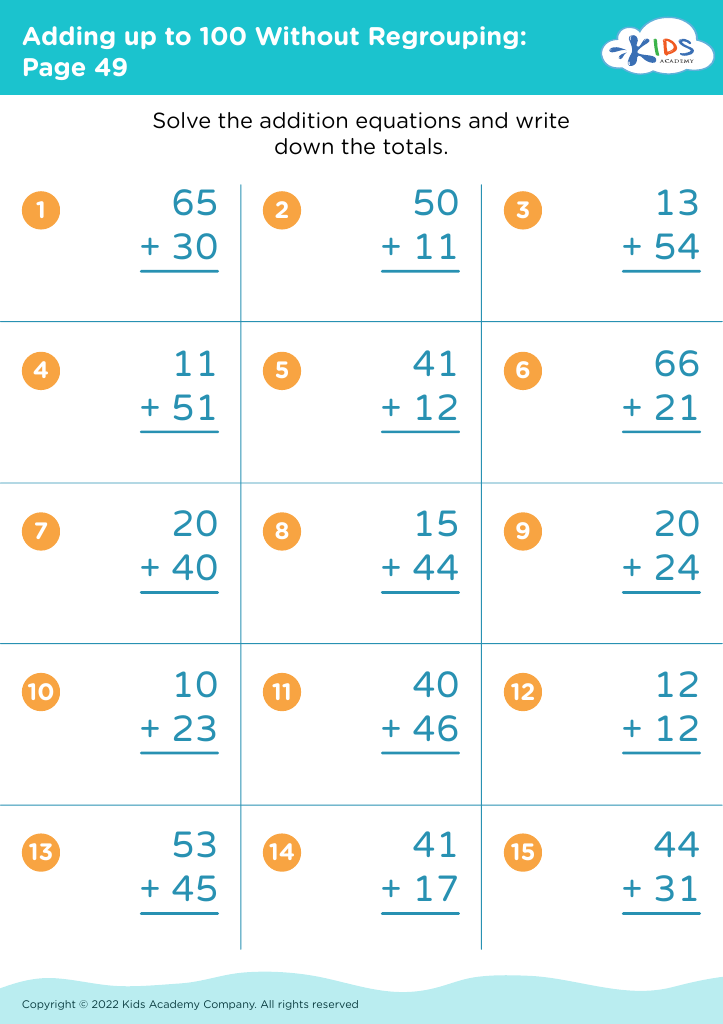
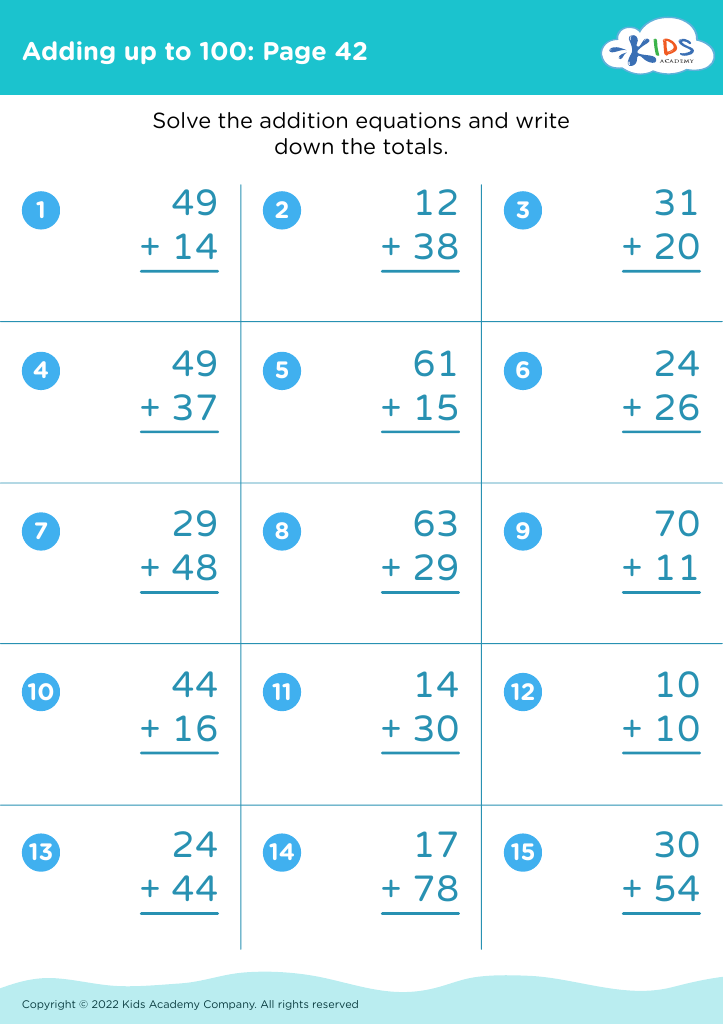
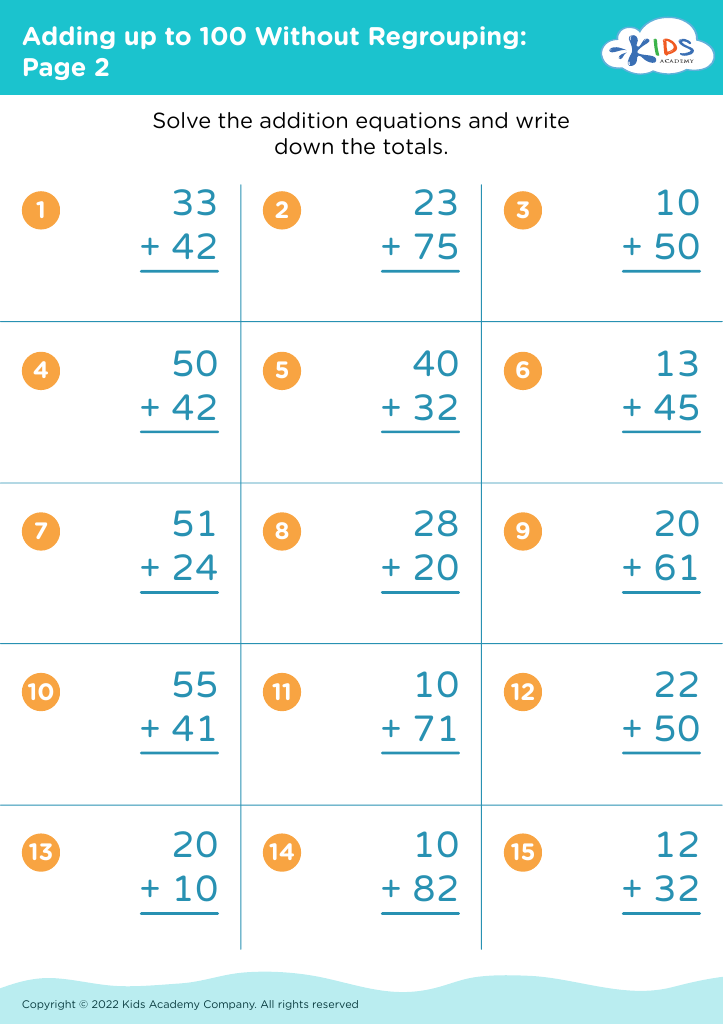
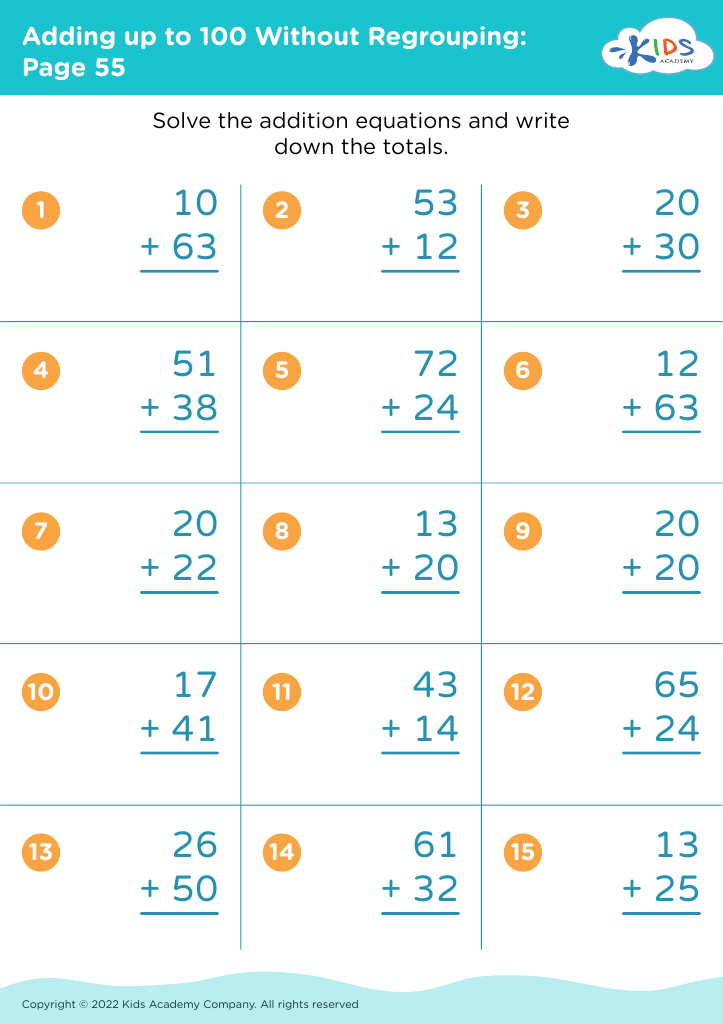
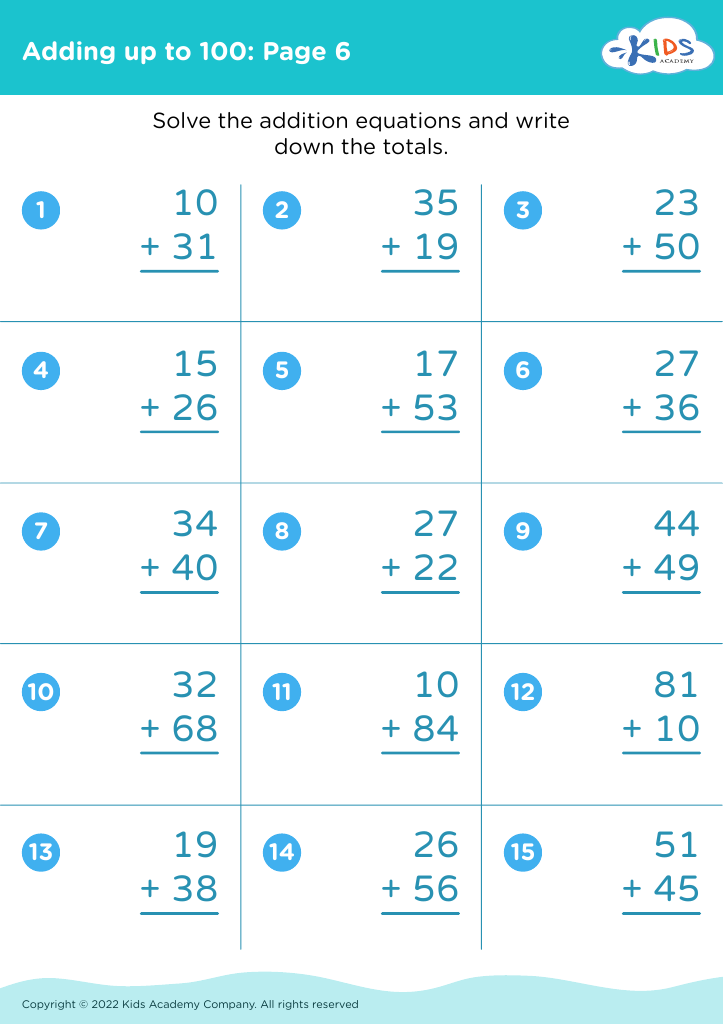
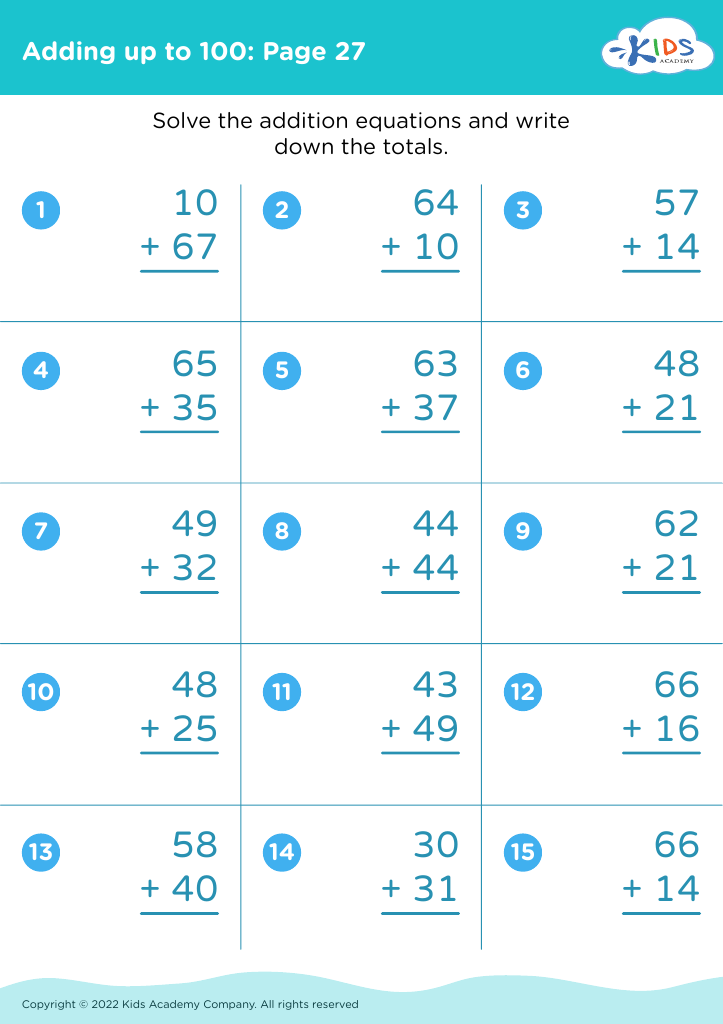
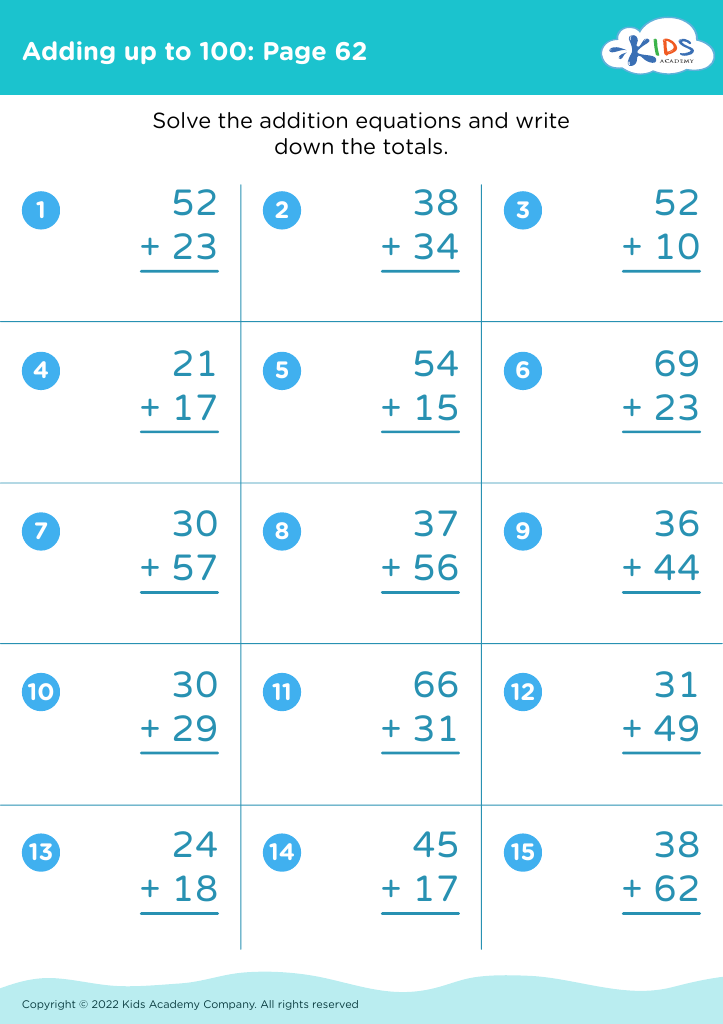
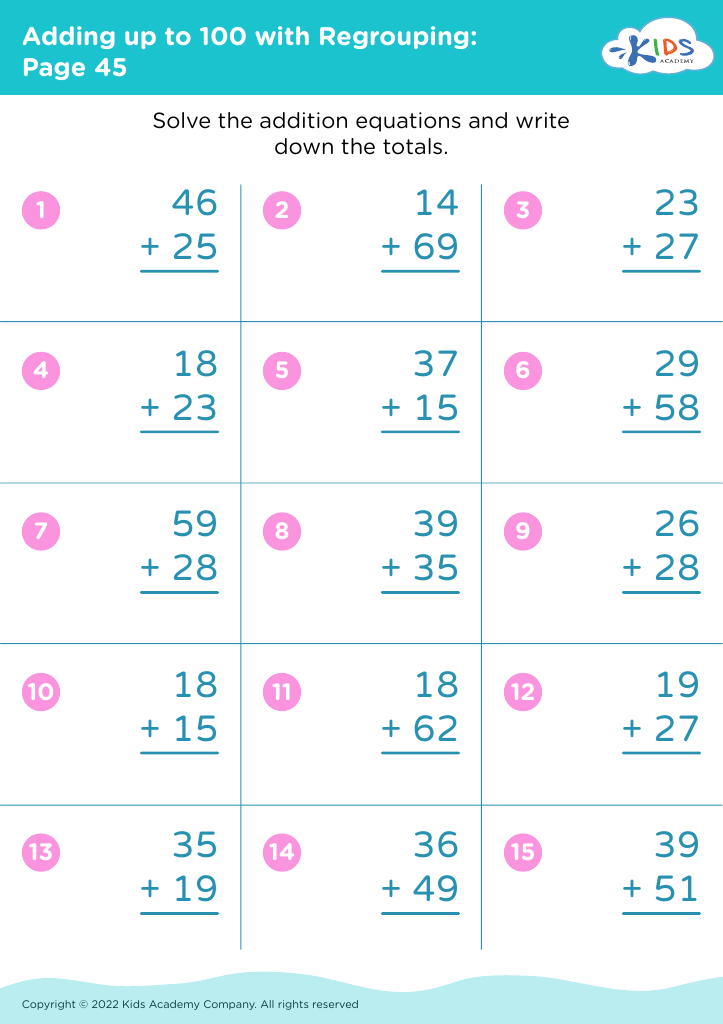
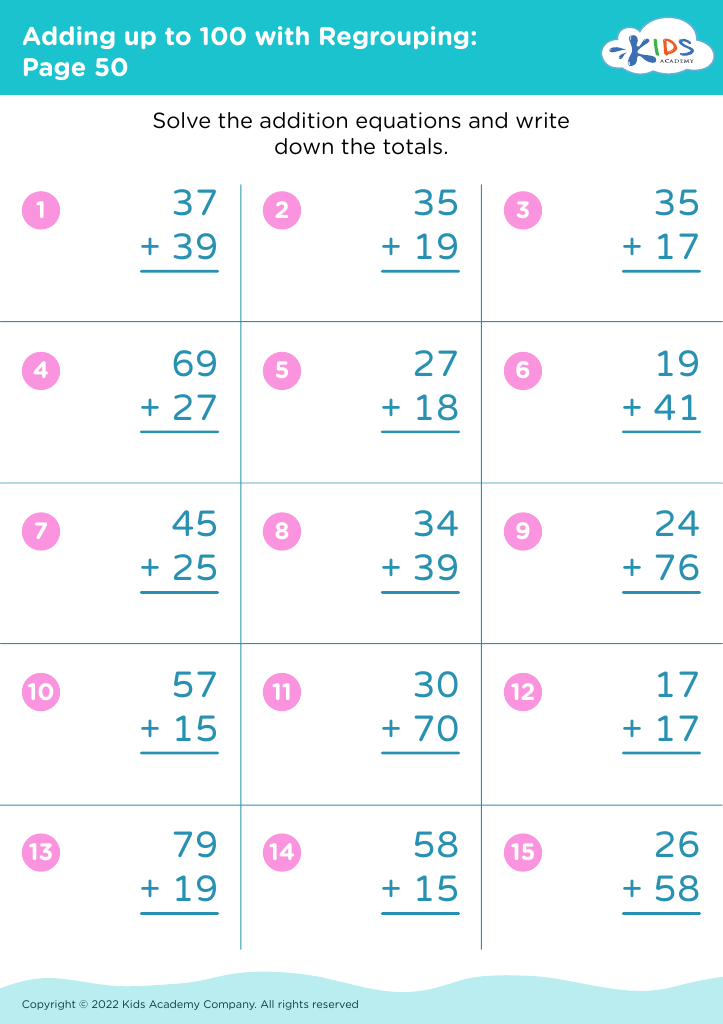
Discover our engaging "Fine Motor Skills Adding up to 100 Worksheets" designed for children aged 3-7. These worksheets support the development of fine motor skills while teaching essential math concepts through fun activities. As kids trace, color, and complete engaging exercises, they improve their hand-eye coordination and dexterity, all while building confidence in their math abilities. Each worksheet is thoughtfully crafted to effortlessly integrate learning with play, ensuring a holistic educational experience. Perfect for parents and educators, these resources will enrich your child's learning journey. Encourage creativity and skill development today with our vibrant and interactive worksheets!






%20(1).jpg)
Fine motor skills are crucial for children aged 3-7 as they form the foundation for various everyday tasks and academic success. These skills involve the coordination of small muscles in the hands and fingers, enabling kids to perform essential activities such as grasping objects, writing, and using tools effectively.
Parents and teachers should care about fine motor skills because they directly impact a child's ability to learn and interact with their environment. Early development of these skills contributes to self-esteem and independence, as children who master tasks like buttoning clothes, cutting with scissors, and manipulating small objects feel more competent and confident in their abilities.
Moreover, strong fine motor skills are linked to cognitive development and learning; they facilitate improved handwriting, art skills, and participation in classroom activities. As children progress through these critical years, a lack of fine motor skill development can lead to frustration and difficulties in academic achievement, affecting social interactions and overall development.
By engaging children in activities that promote fine motor skill growth—such as arts and crafts, puzzles, and building blocks—parents and educators can help prepare them for a successful transition into structured learning environments, ensuring a lifelong foundation for essential skills.








