
Following instructions Adding up to 100 Worksheets for Ages 3-7
4 filtered results
Difficulty Level
Grade
Age
-
From - To
Subject
Activity
Standards
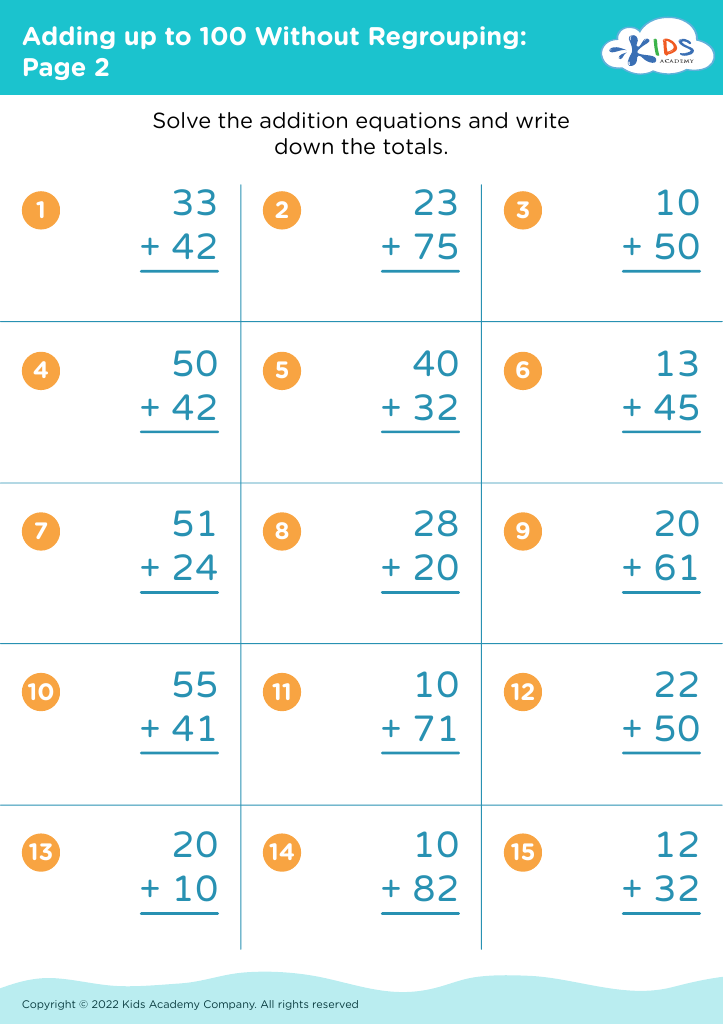
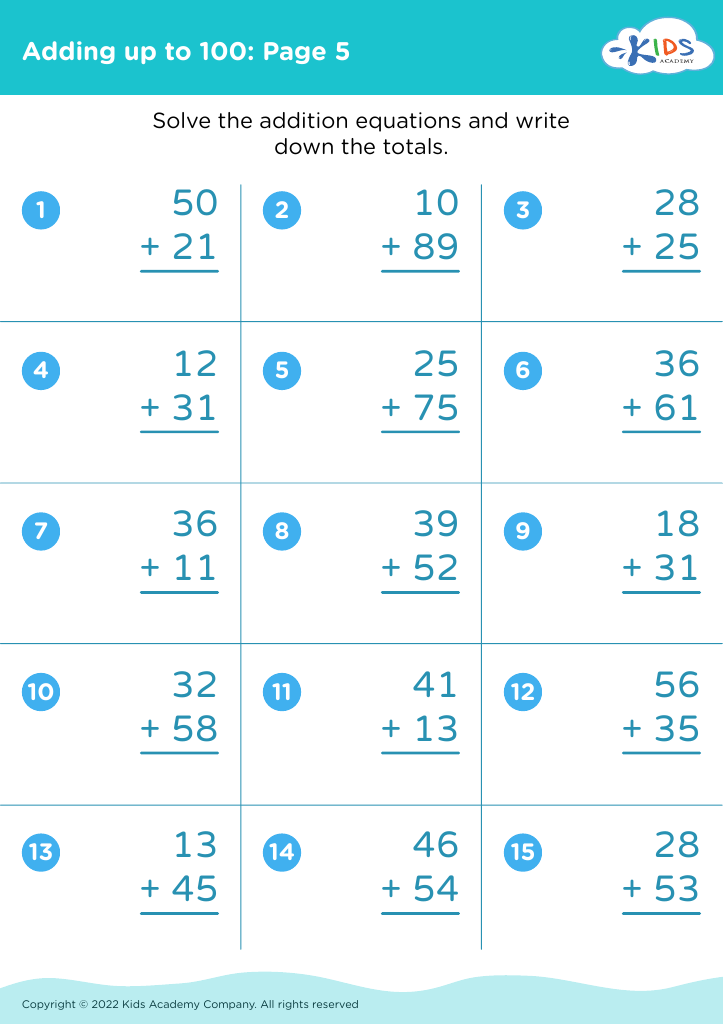
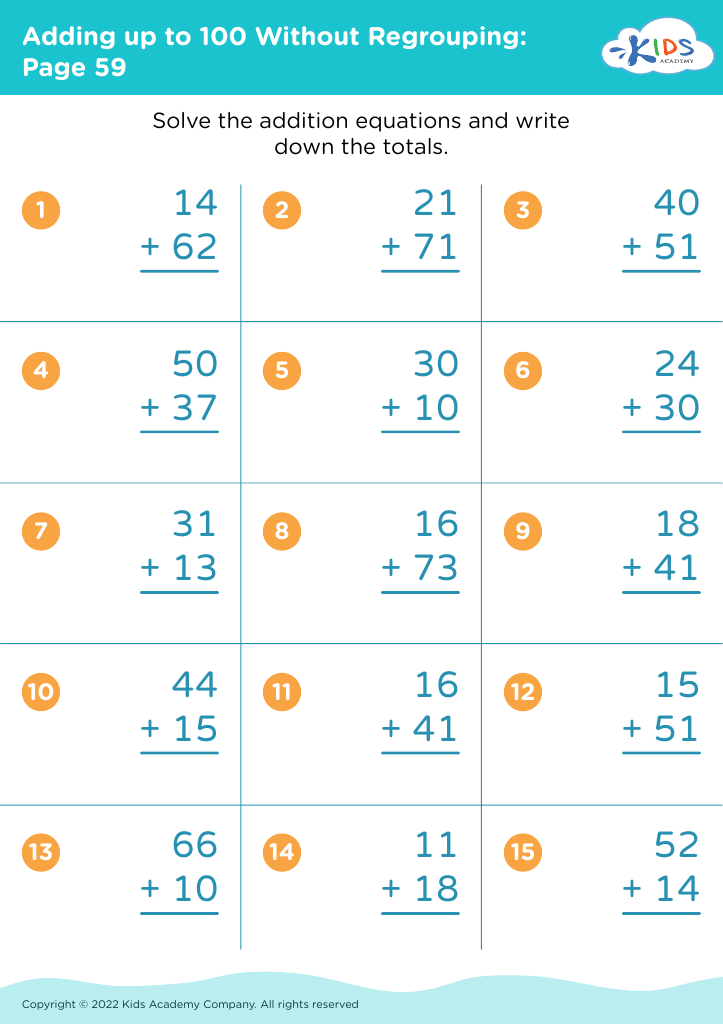
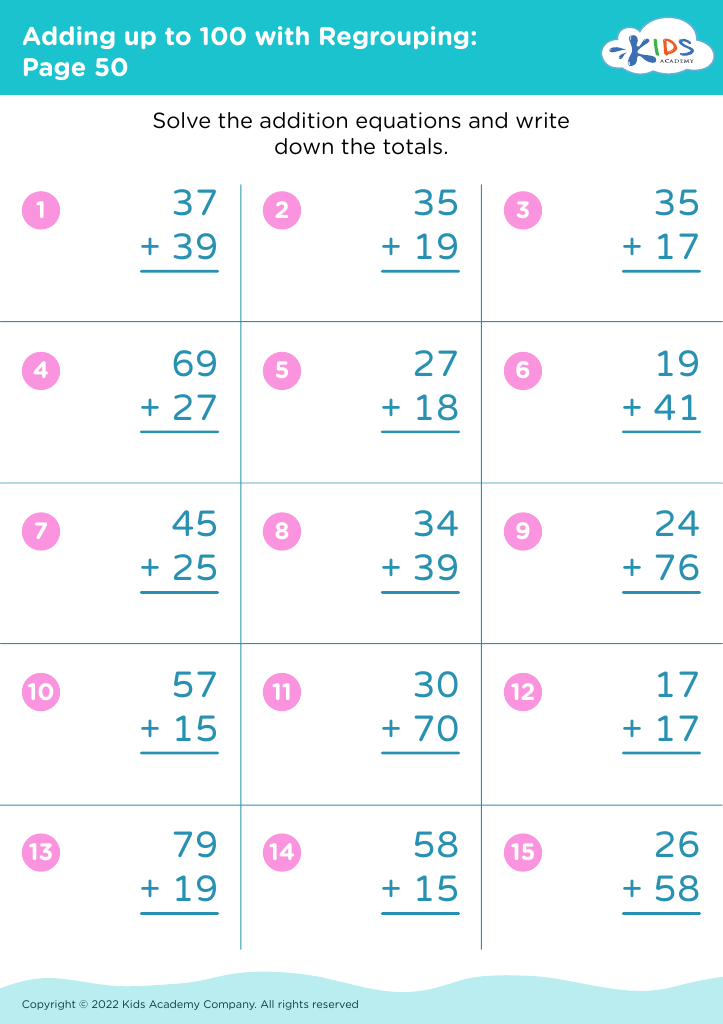
Discover our engaging "Following Instructions: Adding Up to 100 Worksheets," designed for children ages 3-7! These interactive worksheets encourage young learners to enhance their math skills while following simple directions. Perfect for home or classroom use, each activity helps improve comprehension, attention span, and mathematical abilities through colorful and fun exercises. Children will practice addition up to 100, developing their confidence in math while boosting their ability to follow instructions accurately. With a variety of formats and challenges, these worksheets make learning enjoyable and effective. Foster a love for math in your early learners today with our thoughtfully crafted resources!
Favorites
With answer key
Interactive
Join Kids Academy for Free
Who is primarily going to use this learning content?



%20(1).jpg)



Following instructions and understanding the concept of adding up to 100 are critical skills for children ages 3-7, setting the foundation for lifelong learning.
First and foremost, following instructions cultivates discipline and enhances cognitive development. When children learn to listen and adhere to directions, they gain essential skills in focusing and prioritizing tasks—attributes essential for academic success. This practice fosters independence, as children will eventually need to apply these skills in various environments, including school, home, and social settings.
Secondly, the ability to add up to 100 introduces fundamental math concepts. Early mathematical proficiency is crucial because positive experiences with numbers can influence a child's confidence and engagement with math across their educational journey. Learning to recognize the relationship between numbers helps in problem-solving, critical thinking, and logical reasoning.
Moreover, both skills promote effective communication between parents, teachers, and children. Engaging children in activities that require following instructions or practicing math fosters collaboration and opens discussions about learning outcomes.
By encouraging these skills, parents and teachers proactively contribute to a child’s sense of security, competence, and enthusiasm towards learning, paving the way for future academic and life success.








