Fraction Addition Adding up to 100 Worksheets for Ages 3-7
3 filtered results
-
From - To
Explore our engaging Fraction Addition: Adding up to 100 Worksheets designed specifically for ages 3-7! These interactive worksheets help young learners grasp the essentials of combining fractions in a fun and educational way. Each page offers colorful and easy-to-understand problems, fostering a solid foundation in math skills. Perfect for both in-class and at-home learning, these activities will boost your child's confidence in handling fractions while making math enjoyable. Visit Kids Academy to download and start enhancing their fraction addition abilities today!
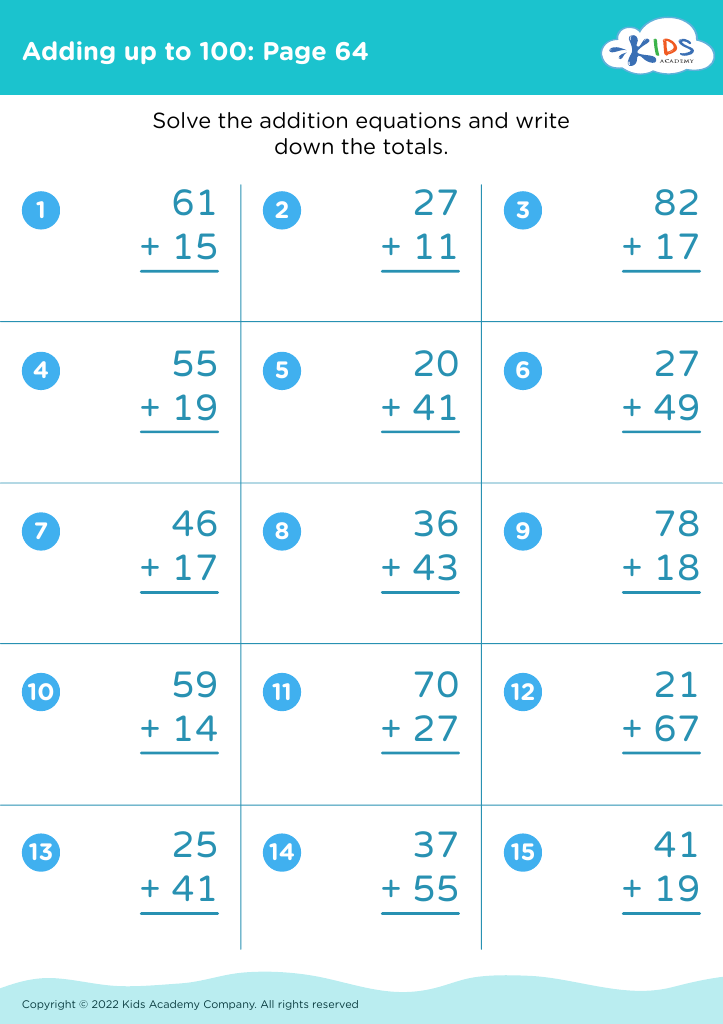
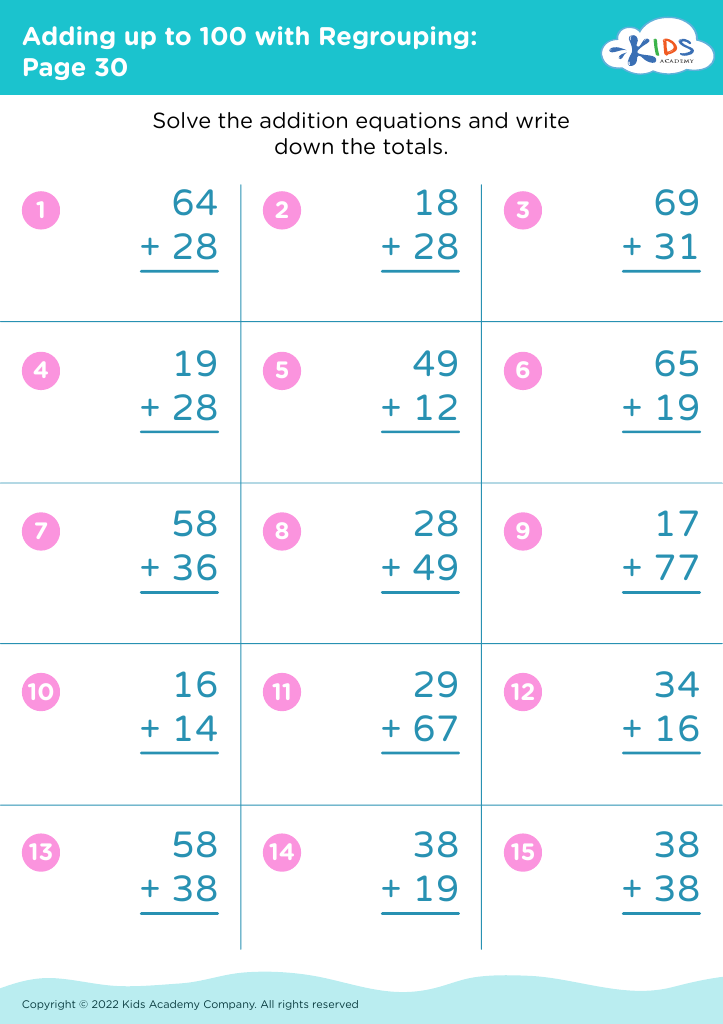
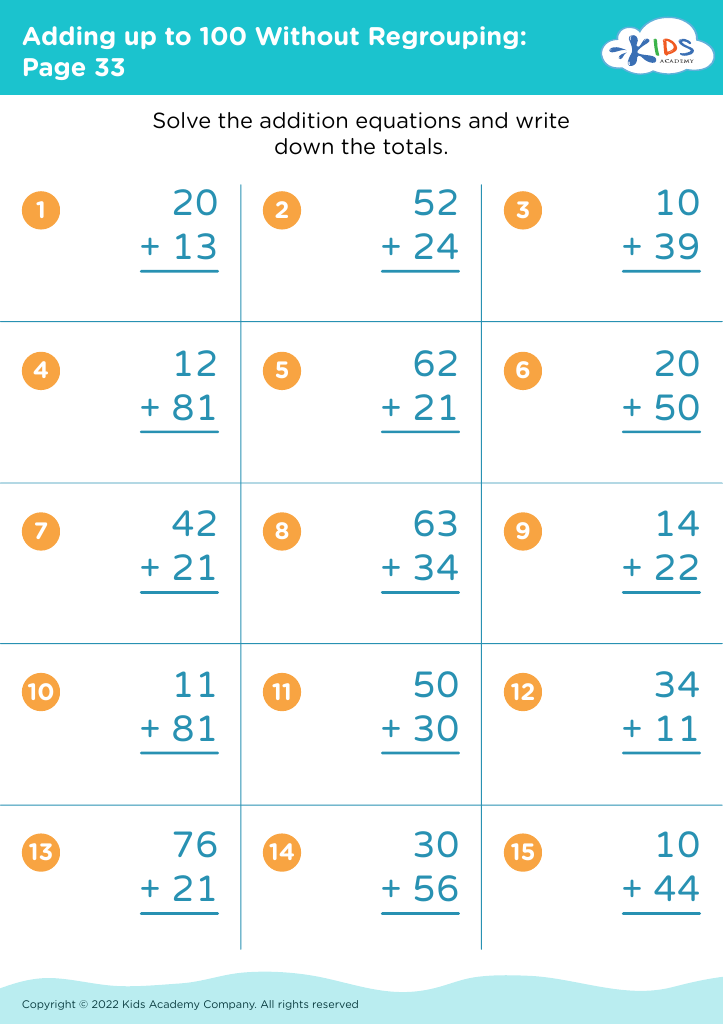






%20(1).jpg)
Understanding addition, including fraction addition adding up to 100, for young children ages 3-7 is foundational to their future mathematical success. At this developmental stage, kids are highly receptive and capable of absorbing basic math concepts that will serve as building blocks for more complex math skills. Introducing fraction addition early encourages numerical literacy, logical thinking, and problem-solving abilities. It also demystifies fractions, which many children find challenging later on.
Early exposure to fraction addition allows children to visualize and conceptualize parts of a whole, reinforcing their comprehension of totality versus division. For example, understanding that ½ + ¼ equals ¾ aids their ability to see how numbers can come together to form new numbers, underscoring the value of arithmetic properties like commutativity and associativity.
Moreover, the practicality of fractions in everyday life—from measuring ingredients in a recipe to dividing a pizza—can make this concept tangible and relevant, fostering intrinsic motivation to learn. Teachers and parents who lay this groundwork at a young age can promote a positive, confident attitude towards math. In doing so, they help prevent future math anxiety, paving the way for more advanced topics. Overall, investing in early fraction understanding is a crucial step in holistic maths education development.








