Fraction comparison Adding up to 100 Worksheets for Ages 3-7
6 filtered results
-
From - To
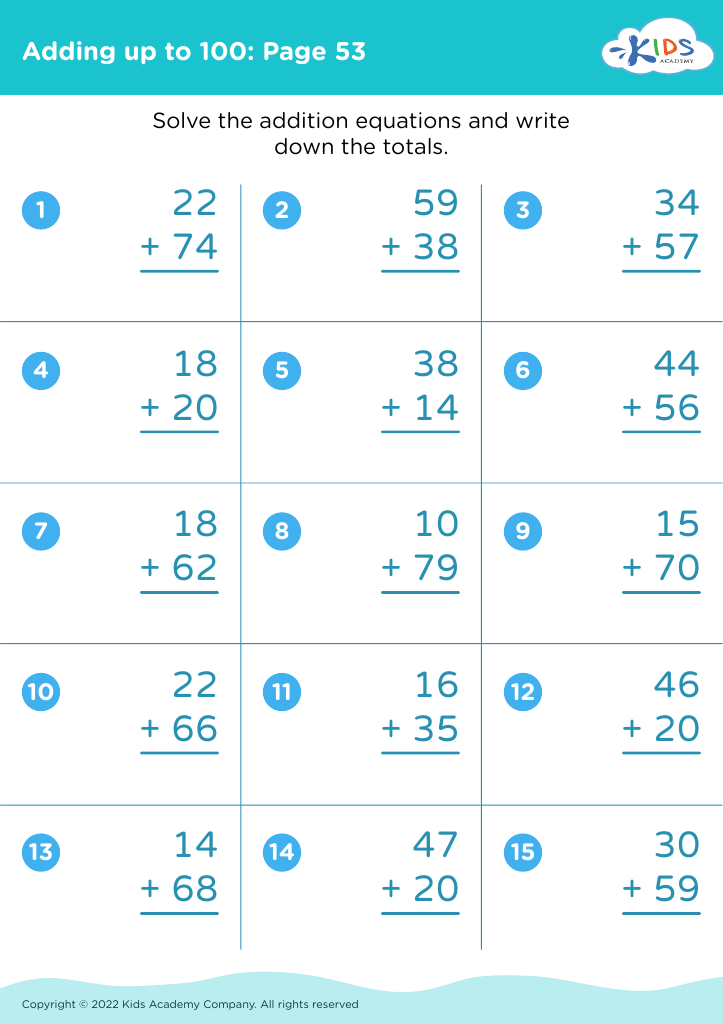
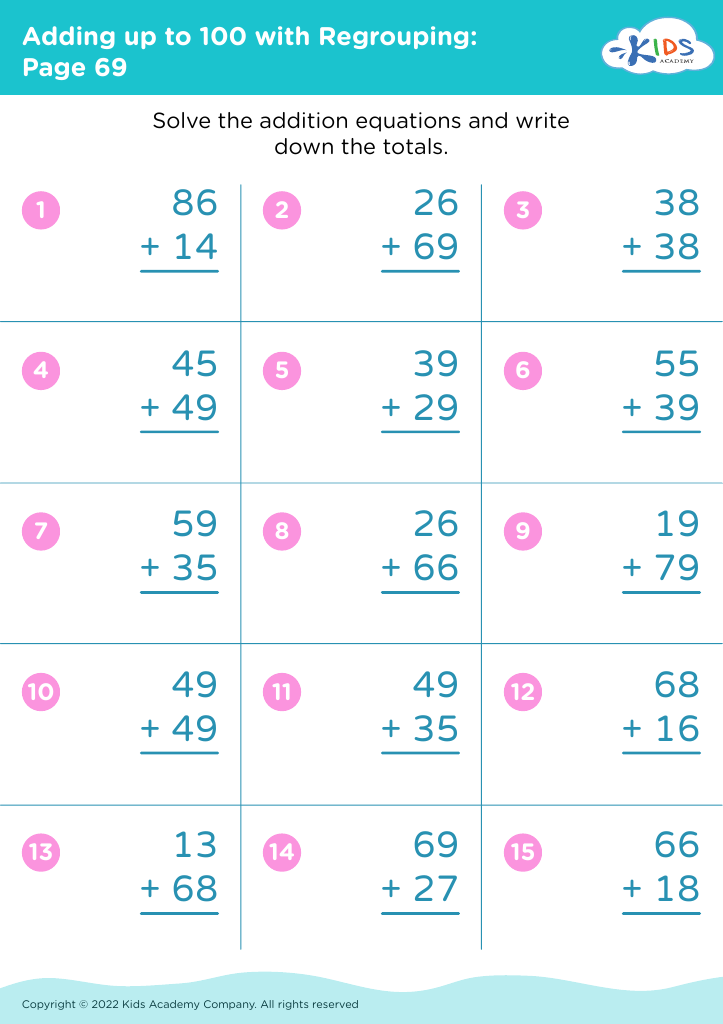
Explore our engaging "Fraction Comparison Adding Up to 100 Worksheets" designed specifically for children ages 3-7. These carefully crafted worksheets introduce young learners to the concept of fractions in a fun and interactive way, helping them understand how to compare and contrast different fractional amounts. With colorful visuals and age-appropriate exercises, children will develop essential math skills while practicing addition and refining their understanding of numbers up to 100. These worksheets are perfect for home or classroom use, ensuring that kids have fun while building a strong foundation in math. Let your little ones embark on their fraction adventure today!
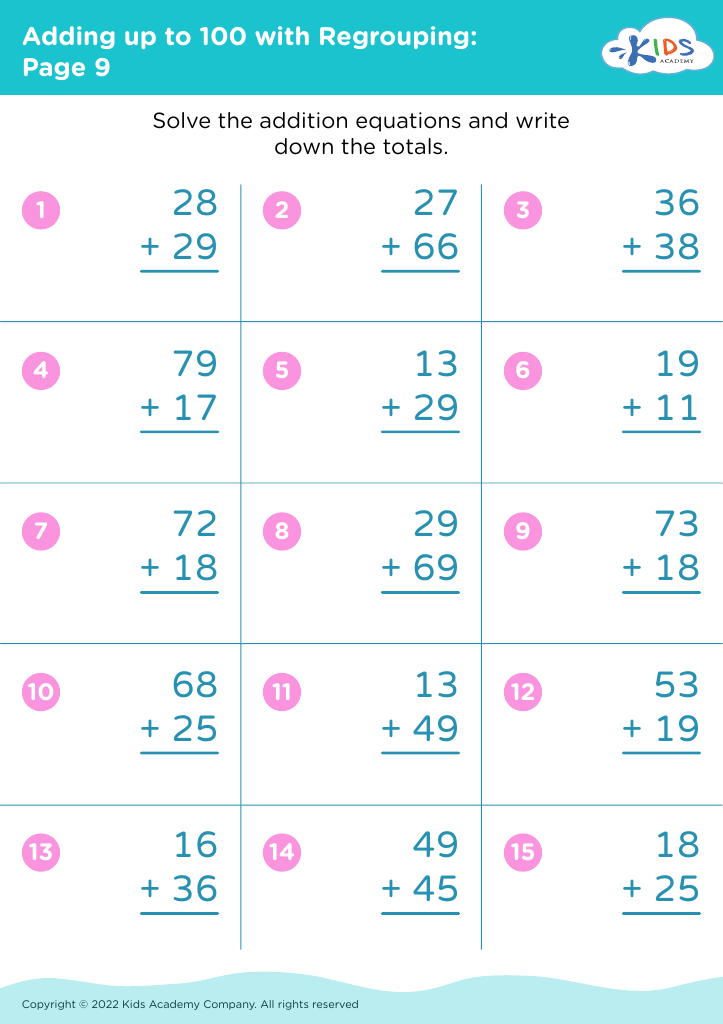
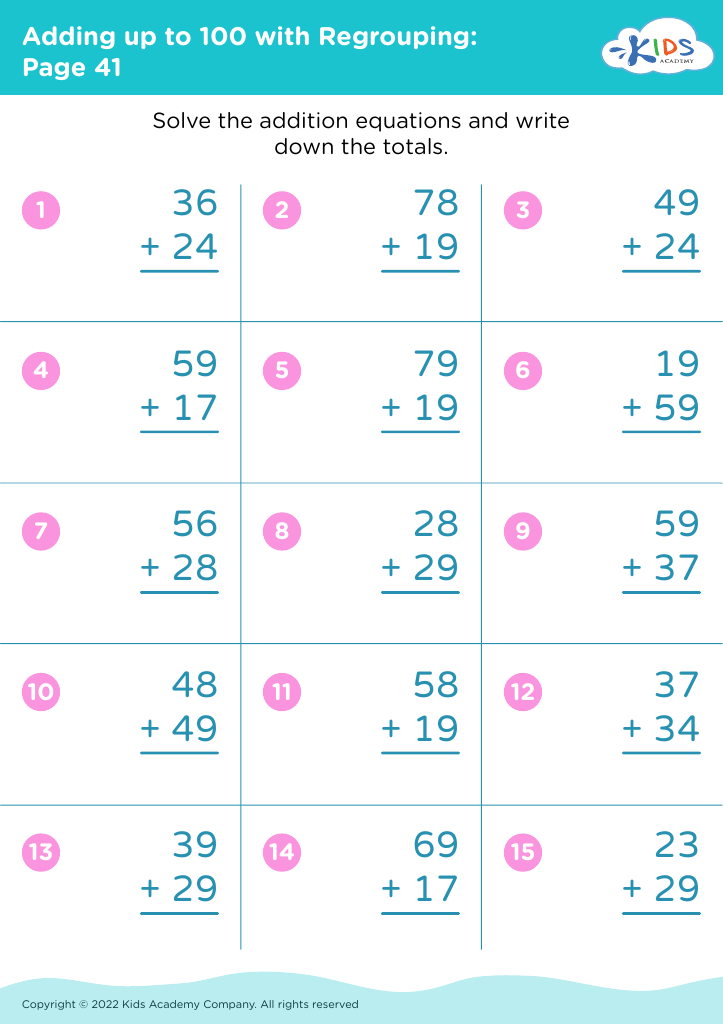
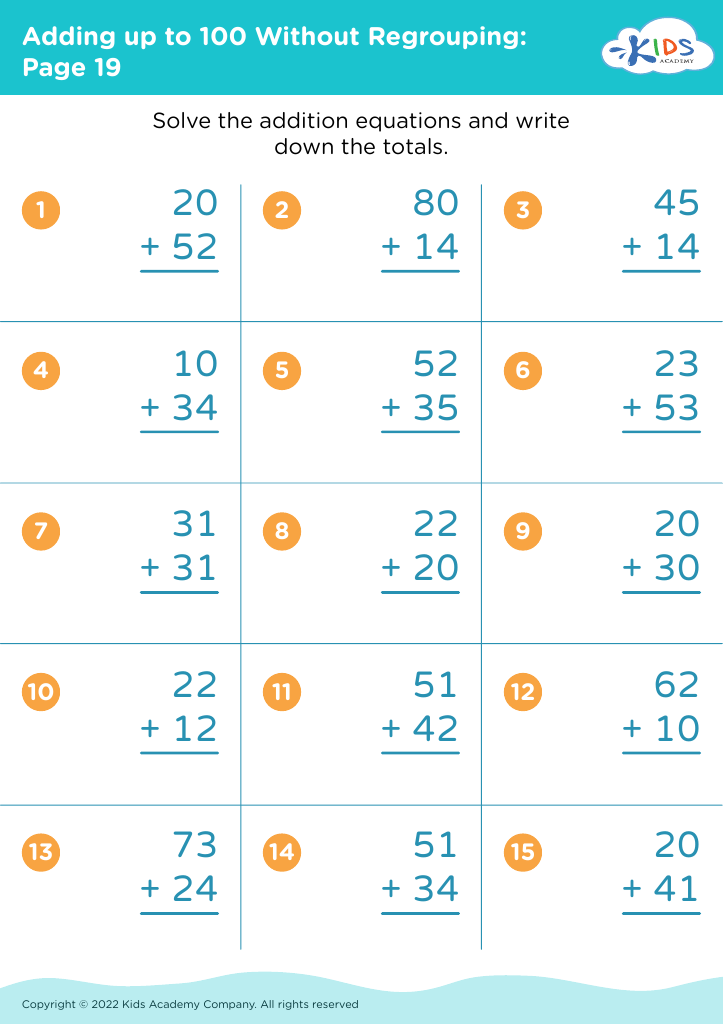
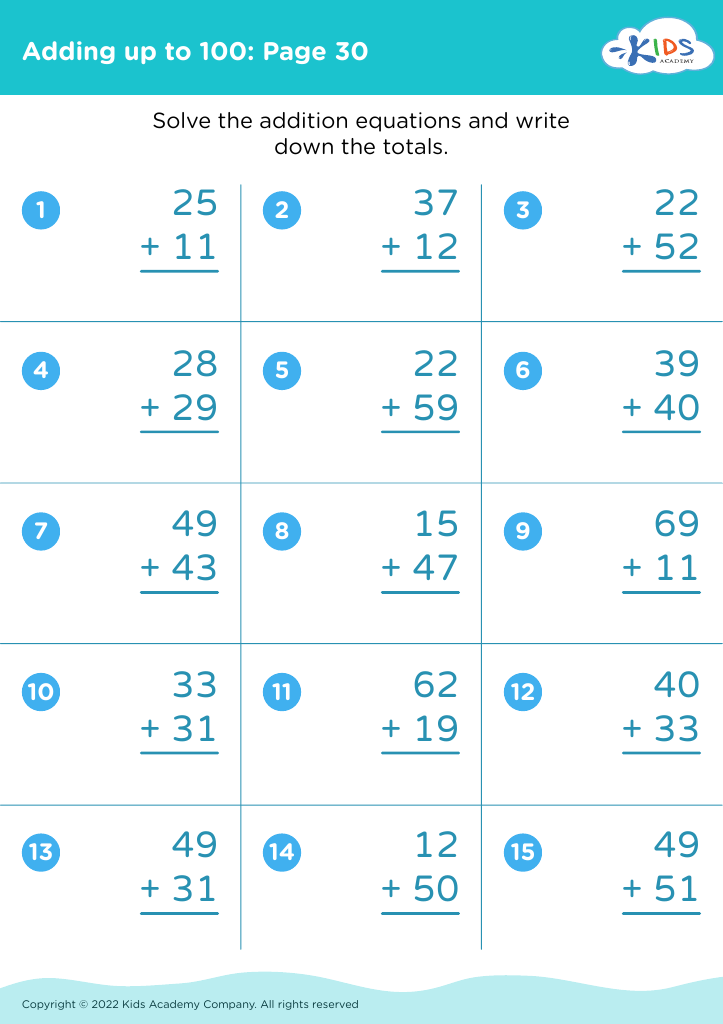





%20(1).jpg)

Understanding fraction comparison and addition for young learners aged 3-7 is crucial for several reasons. Firstly, foundational math skills are vital for cognitive development at this age. By familiarizing children with concepts like fractions, parents and teachers set the groundwork for more complex mathematical reasoning later in life.
Secondly, learning to compare and add fractions helps children build critical thinking and problem-solving skills. These abilities extend beyond math, equipping them for challenges in various subjects and real-life situations. For instance, when children learn to recognize that 1/2 is greater than 1/4, they are also honing skills in evaluation and decision-making.
Additionally, engaging children in activities that involve fractions can foster a fun and interactive learning environment. By using everyday examples, such as sharing food or dividing toys, educators and parents can make learning relatable and enjoyable.
Lastly, instilling a sense of mathematical value from an early age encourages a positive attitude towards math. When children feel comfortable and competent in such concepts, they are more likely to embrace math in their future studies. Therefore, focusing on fraction comparison and addition can arm children with essential tools for success both academically and in everyday life.








