Hand-eye Coordination Adding up to 100 Worksheets for Ages 3-7
3 filtered results
-
From - To
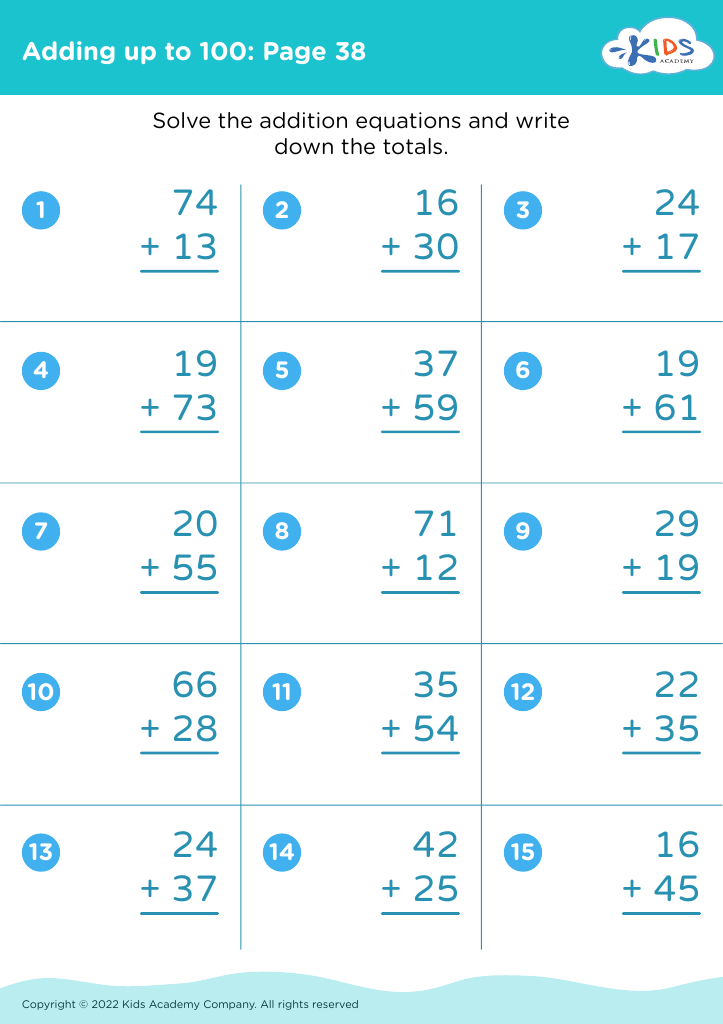
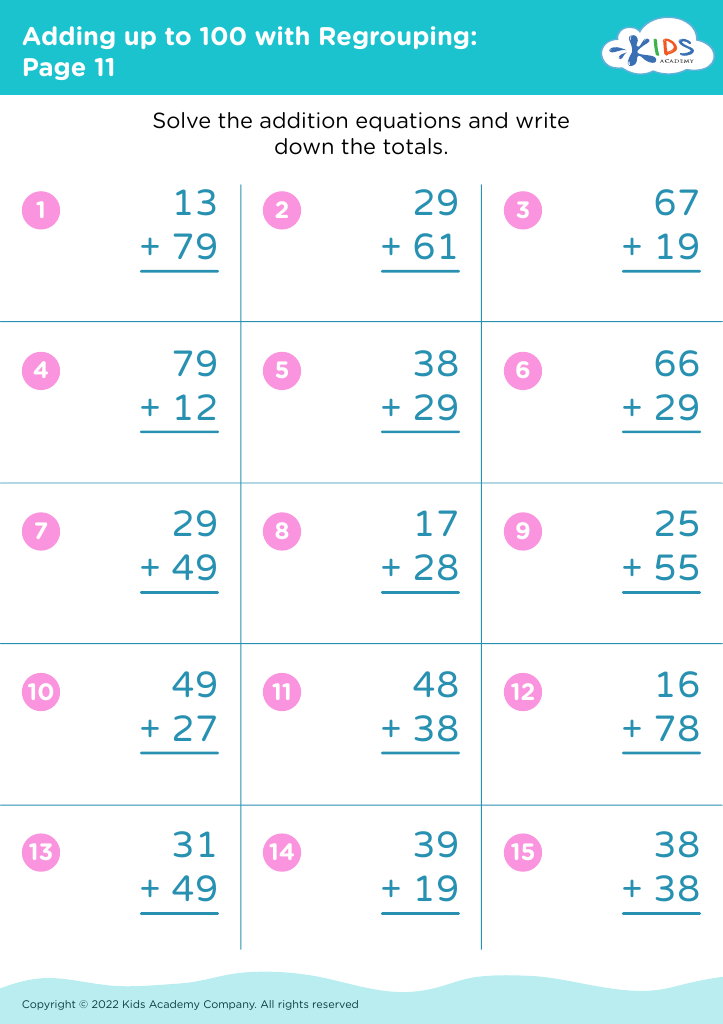
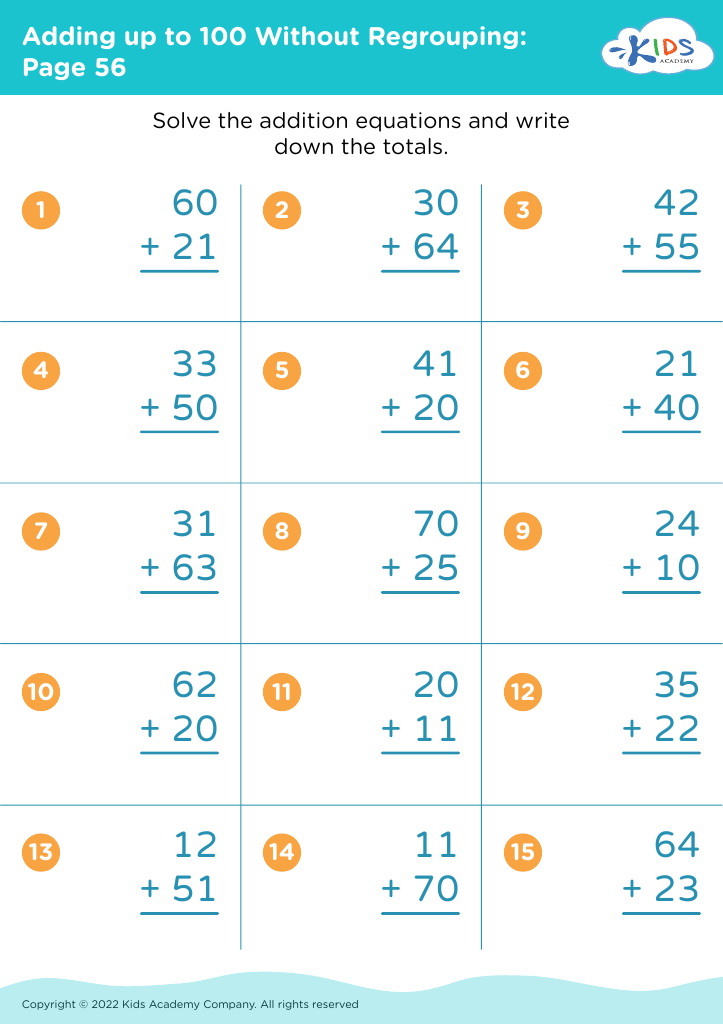
Elevate early math learning with our "Hand-eye Coordination Adding up to 100 Worksheets for Ages 3-7." These engaging worksheets are designed to blend foundational math skills with vital hand-eye coordination exercises, helping young learners seamlessly connect visual perception with hand movement. Each fun and interactive activity aims to enhance a child's ability to add numbers up to 100 while improving their motor skills and concentration. Ideal for preschool, kindergarten and early elementary students, these worksheets offer an exciting way to master math fundamentals and develop an essential life skill. Unlock your child's potential today with fun, educational, and development-focused activities.





%20(1).jpg)

Hand-eye coordination is an essential skill for children, particularly between the ages of 3 and 7, as it underpins their ability to successfully perform daily tasks and contribute to their cognitive and motor development. Activities like "Hand-eye Coordination Adding up to 100" serve a dual purpose of enhancing both counting skills and motor skills simultaneously, setting a strong foundation for future learning.
In this age group, children are developing the fine motor skills required for writing, cutting with scissors, and tying shoelaces. Strong hand-eye coordination improves their ability to accurately grasp and manipulate objects, leading to better control and precision in these activities. This coordination also influences their ability to play sports, draw, and even dress themselves, fostering independence and self-confidence.
On the cognitive side, tasks that involve adding numbers up to 100 help children grasp basic arithmetic concepts early on. These tasks also aid in pattern recognition and logical thinking, making math less daunting and more intuitive as they progress in school. Moreover, engaging activities that blend physical movement with cognitive challenges can keep children more focused and engaged, making learning fun and effective.
Encouraging development in hand-eye coordination through such activities not only boosts academic readiness but also supports overall physical growth, social confidence, and emotional well-being. Therefore, parents and teachers should prioritize these exercises in their children's daily routines.








