Identifying equivalent fractions Adding up to 100 Worksheets for Ages 3-7
5 filtered results
-
From - To
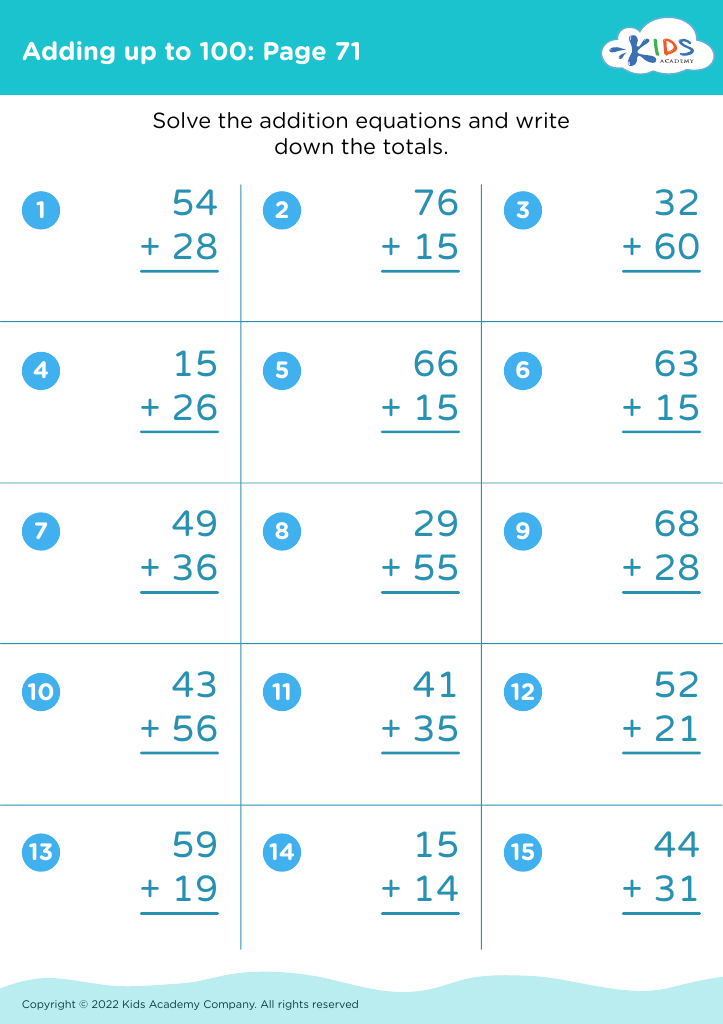
Unlock the magic of fractions for young learners with our "Identifying Equivalent Fractions Adding up to 100 Worksheets for Ages 3-7." Designed to simplify the concept of equivalent fractions, these engaging worksheets offer kids an interactive way to grasp fundamental math skills. Our printable activities guide children through visual comparisons and practical exercises, fostering strong mathematical foundations early on. Perfect for classroom use or home practice, these worksheets help develop essential math confidence while making learning enjoyable. Ideal for ages 3-7, they gently introduce key concepts through play and colorful graphics. Let’s make math exciting and accessible!
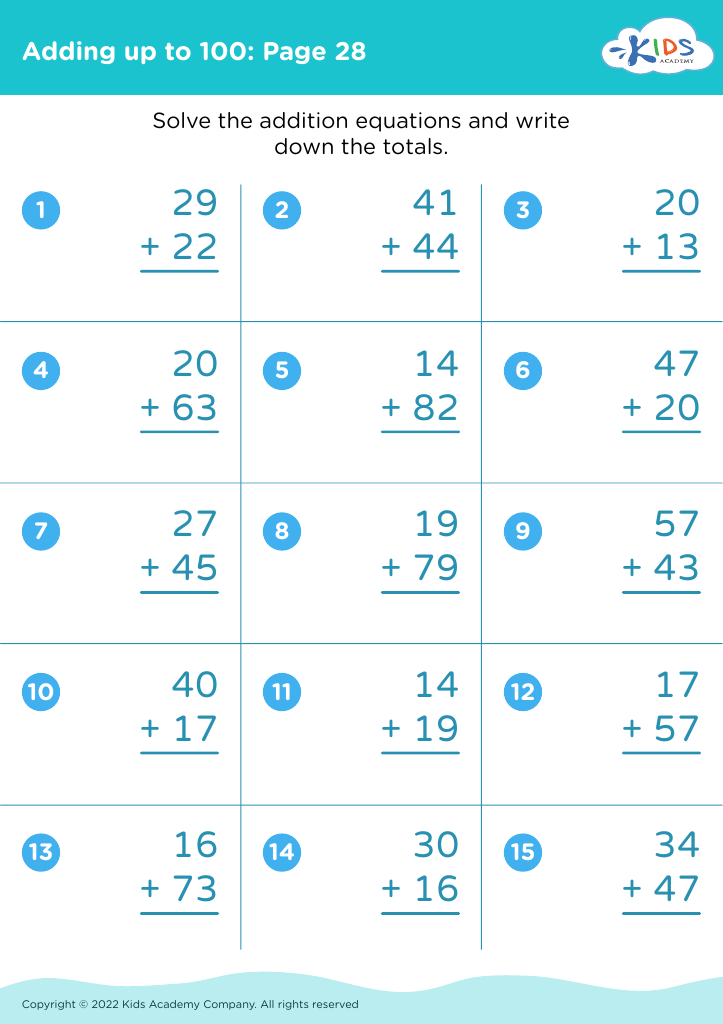
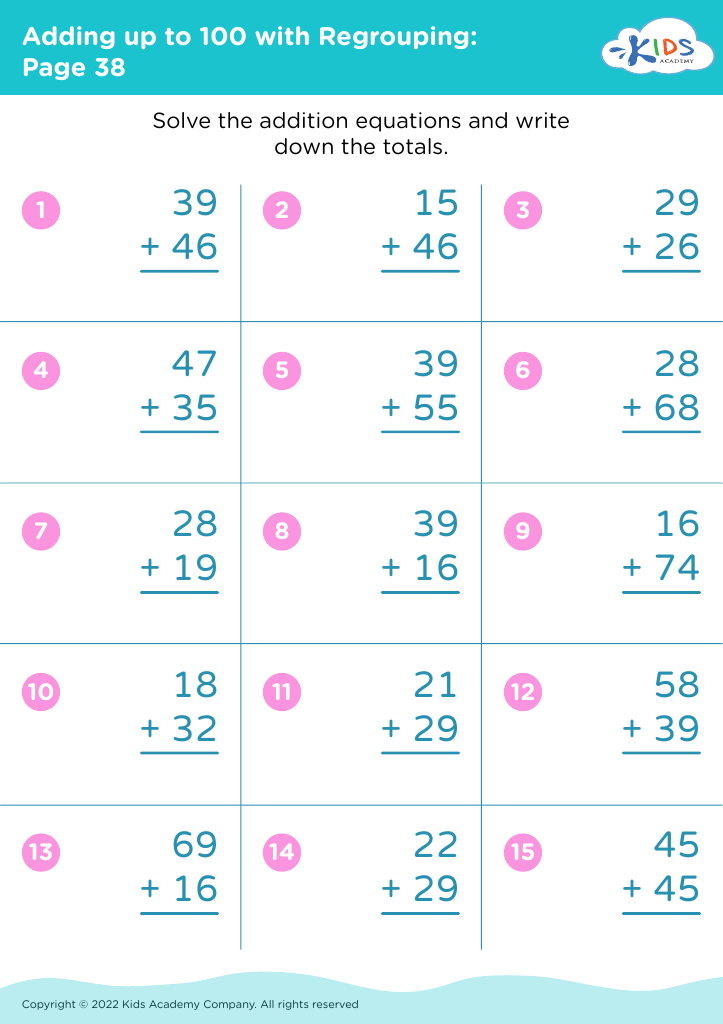
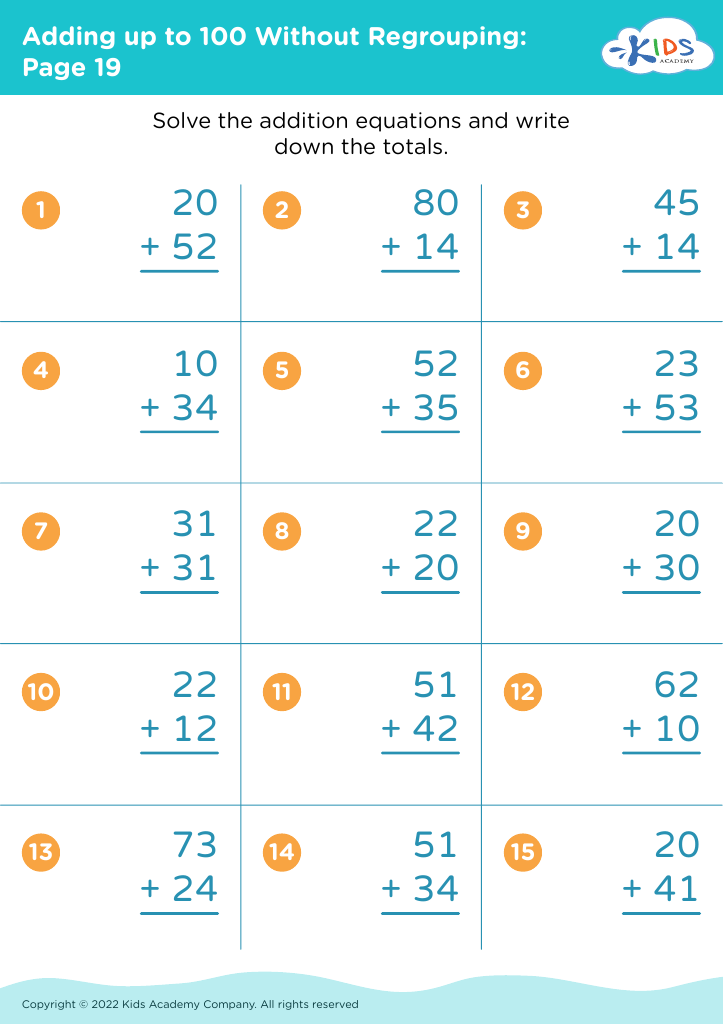
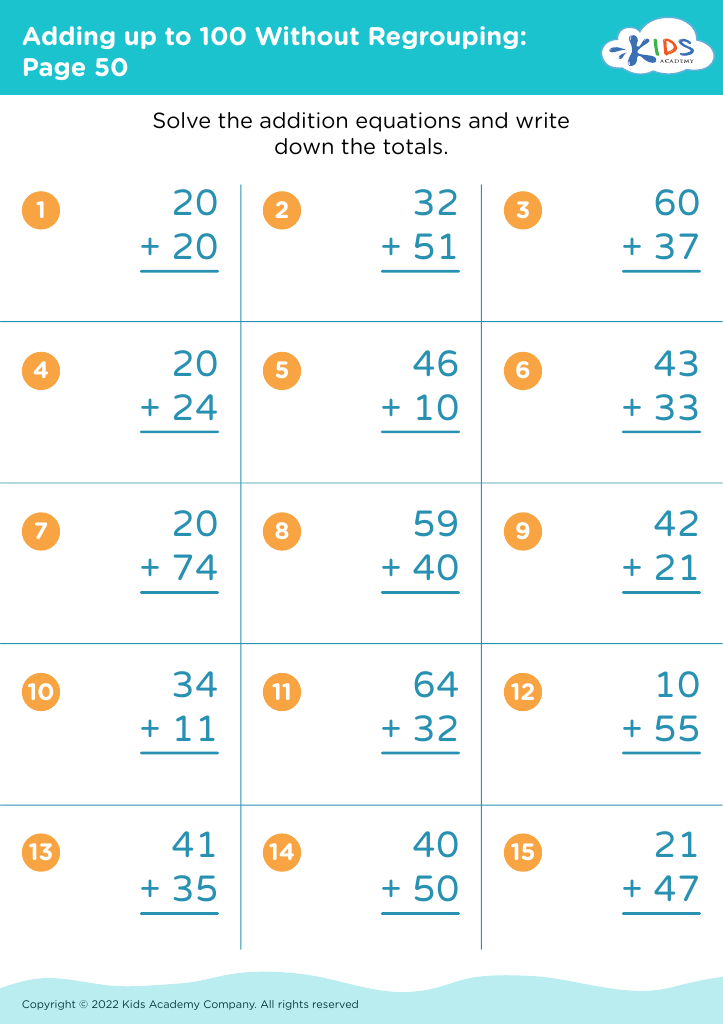





%20(1).jpg)

Understanding and identifying equivalent fractions, as well as simple addition up to 100, are fundamental aspects of early childhood education that provide a strong foundation for future mathematical learning. For children ages 3-7, recognizing equivalent fractions helps them grasp the concept that different fractions can express the same value, which enhances their number sense and prepares them for more complex mathematical operations in the future.
Identifying equivalent fractions also promotes critical thinking and problem-solving skills. Children learn to compare, categorize, and find relationships between numbers, which strengthens their analytical abilities. Additionally, teaching the addition of numbers up to 100 develops their basic arithmetic skills, including memorization of addition facts, number bonds, and the ability to perform simple calculations with confidence.
When parents and teachers engage children in activities that involve these concepts, they bridge the gap between abstract ideas and practical understanding. Early mastery in these areas fosters a positive attitude towards math, encouraging children to approach more challenging problems with confidence as they progress in their education. Ultimately, caring about these early competencies helps ensure that children build a solid mathematical foundation, setting them up for academic success and everyday problem-solving.








