Identifying shapes Adding up to 100 Worksheets for Ages 3-7
8 filtered results
-
From - To
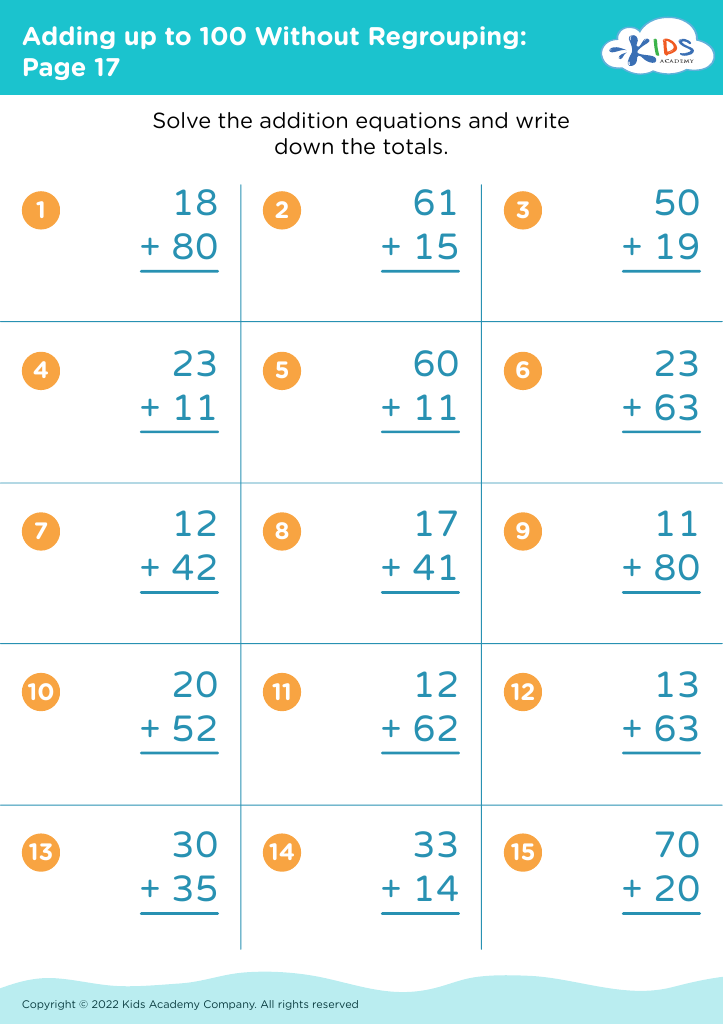
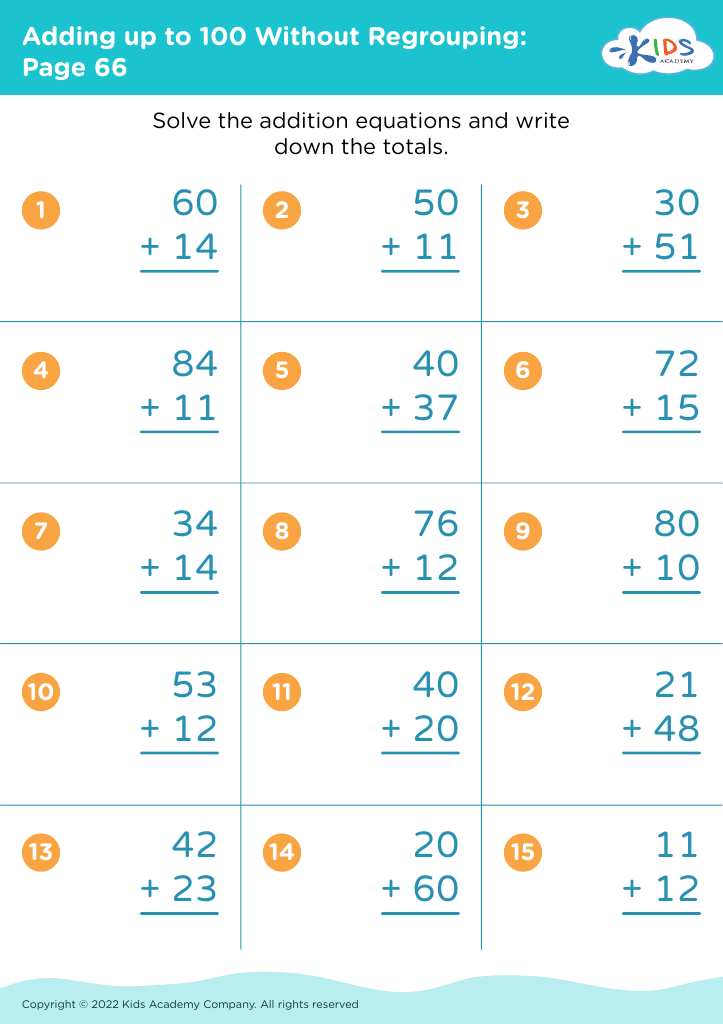
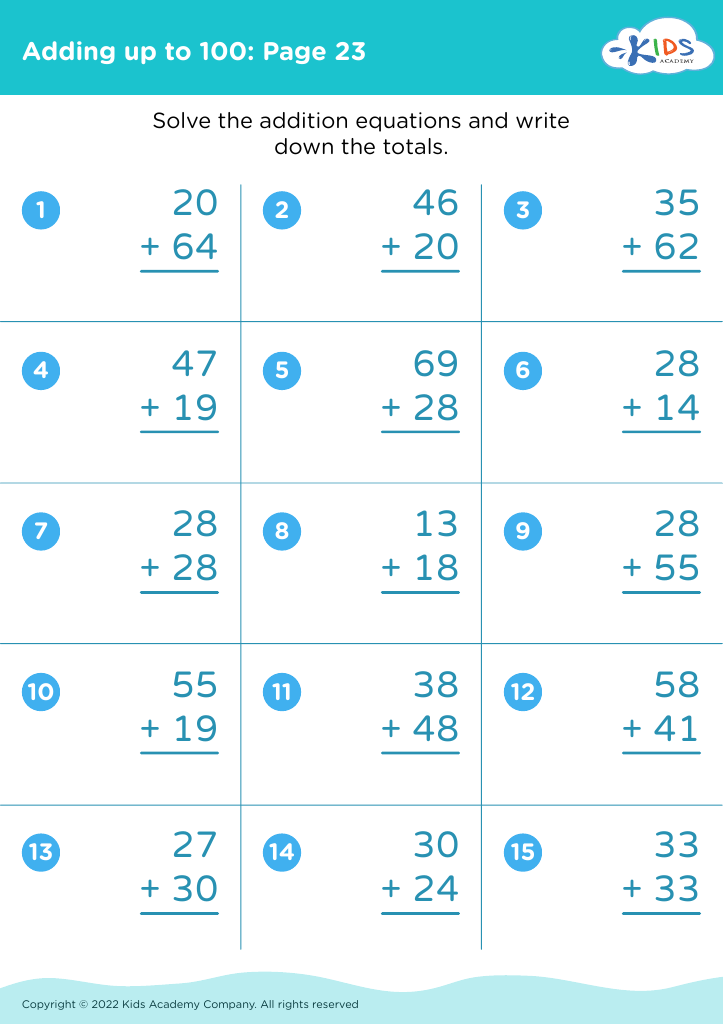
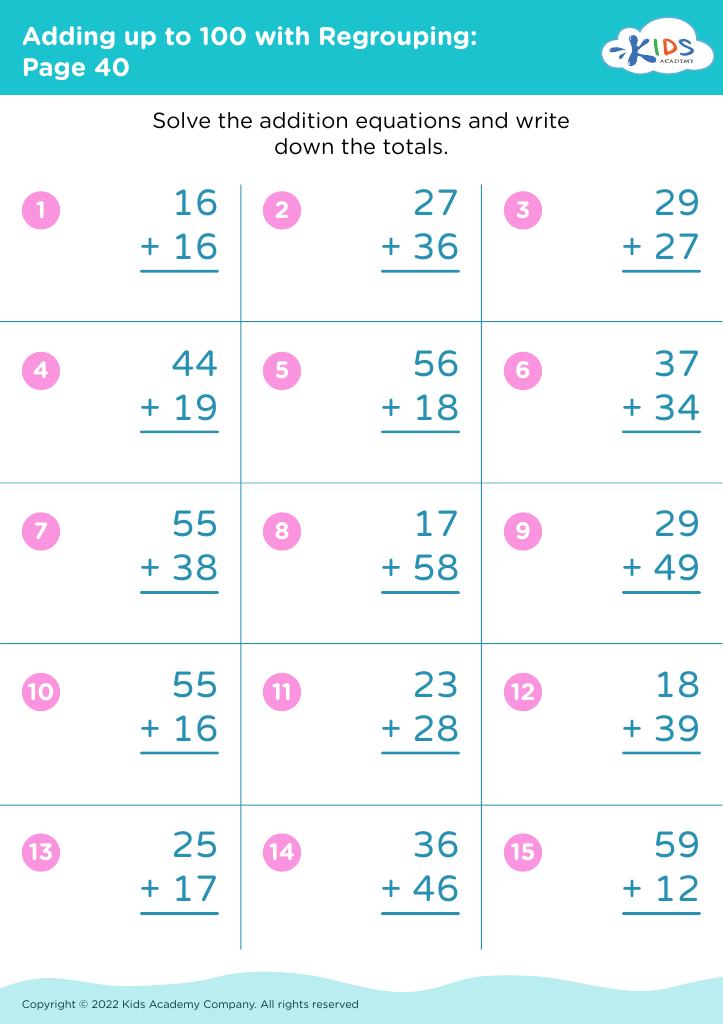
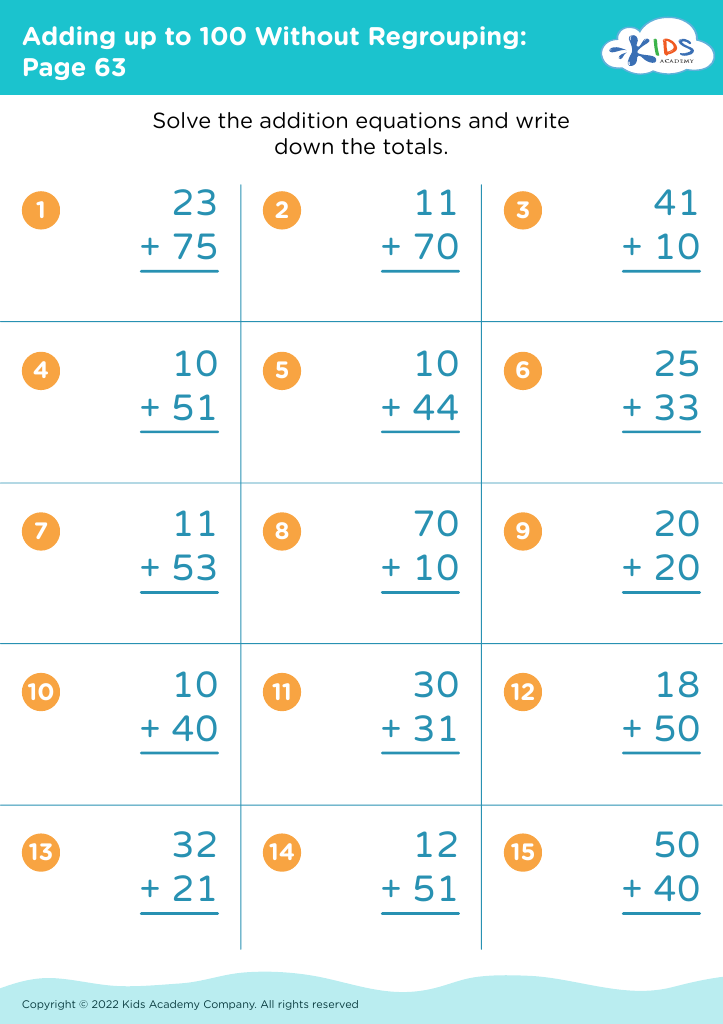
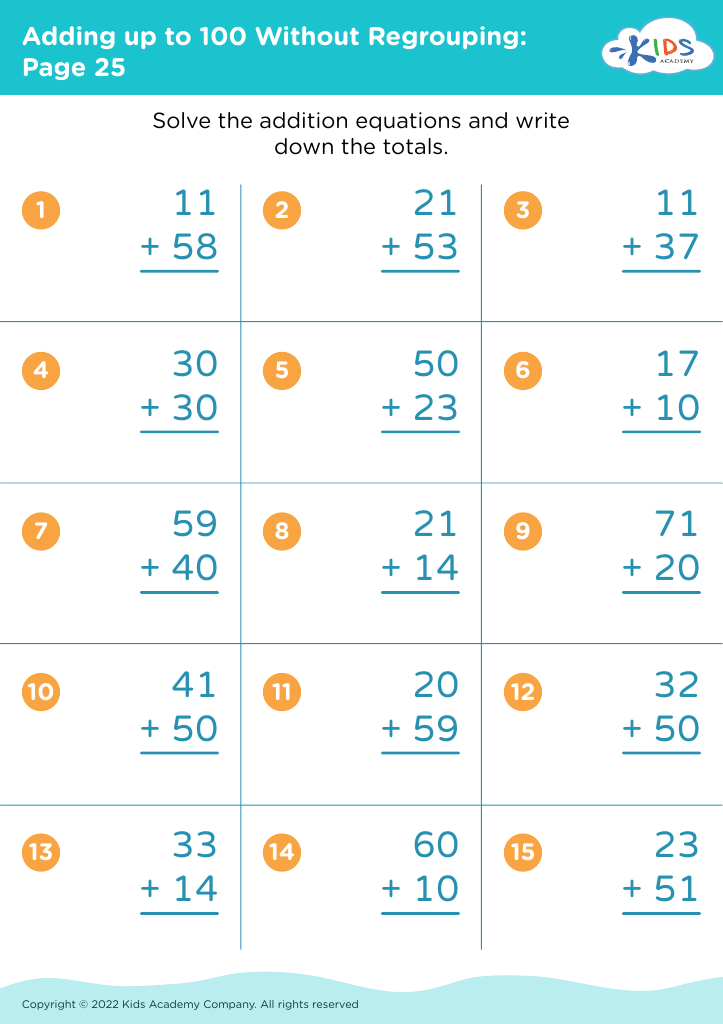
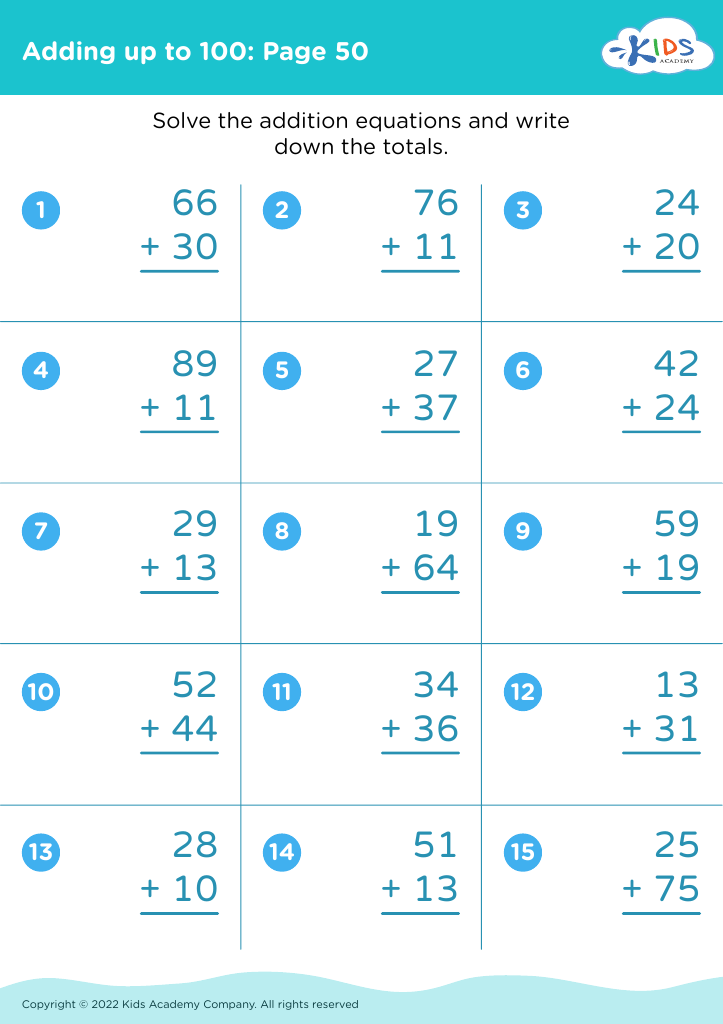
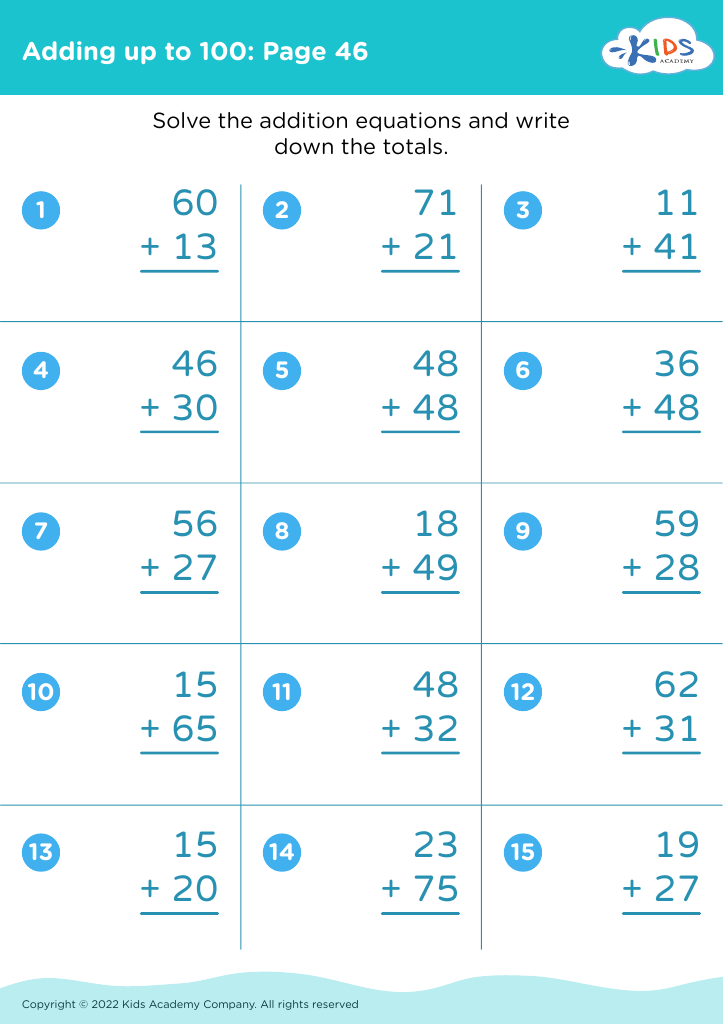
Unlock your child's potential with our "Identifying Shapes Adding up to 100" worksheets, specifically designed for ages 3-7! These engaging activities make learning fun by combining fundamental math skills and shape recognition. Young learners will enjoy tracing, counting, and adding up to 100 while identifying various shapes like triangles, squares, and circles. Our expertly crafted worksheets encourage critical thinking, enhance problem-solving abilities, and foster a love for math at an early age. Perfect for both classroom settings and at-home practice, provide your child with the tools to succeed in their educational journey today!



%20(1).jpg)



Identifying shapes and learning to add up to 100 are essential early math skills that benefit children aged 3-7 in several ways, fostering both cognitive and academic development.
Recognizing shapes is foundational. It aids in visual-spatial skills, important for understanding geometry, problem-solving, and even daily tasks like reading maps. Shape recognition enhances cognitive development, improving categorization, differentiation, and memory. It lays the groundwork for letter recognition—crucial for reading—since distinguishing shapes is akin to distinguishing letters.
Adding up to 100 fosters numerical understanding and arithmetic proficiency. For children aged 3-7, grasping basic addition and the concept of place value (i.e., tens and ones) is vital. These skills underpin more complex math concepts they'll encounter later. Practicing addition strengthens logical thinking, sequencing, and pattern recognition, important for broader problem-solving abilities.
Beyond academics, these skills contribute to self-confidence and enthusiasm for learning. Successfully identifying shapes or solving addition problems gives children a sense of accomplishment, encouraging further inquiry and resilience. Both tasks also involve fine motor skills and hand-eye coordination, important for writing and other essential activities.
In summary, early focus on shapes and addition is crucial for cognitive development, academic foundation, and holistic growth, setting children on a path to lifelong learning and success.








