Improve math skills Adding up to 100 Worksheets for Ages 3-7
6 filtered results
-
From - To
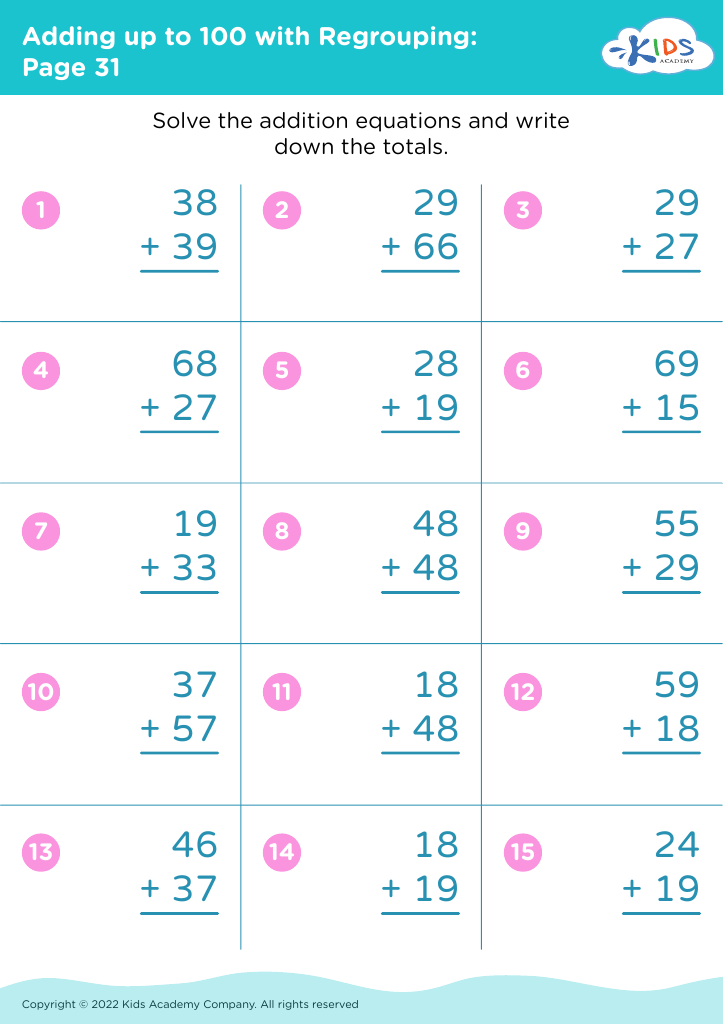
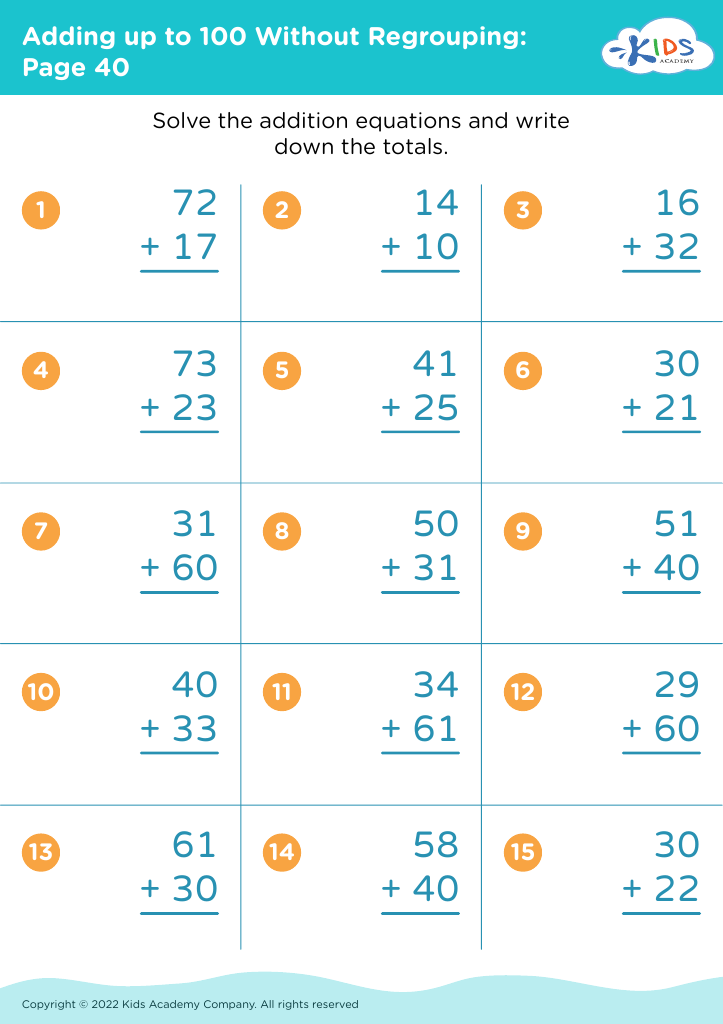
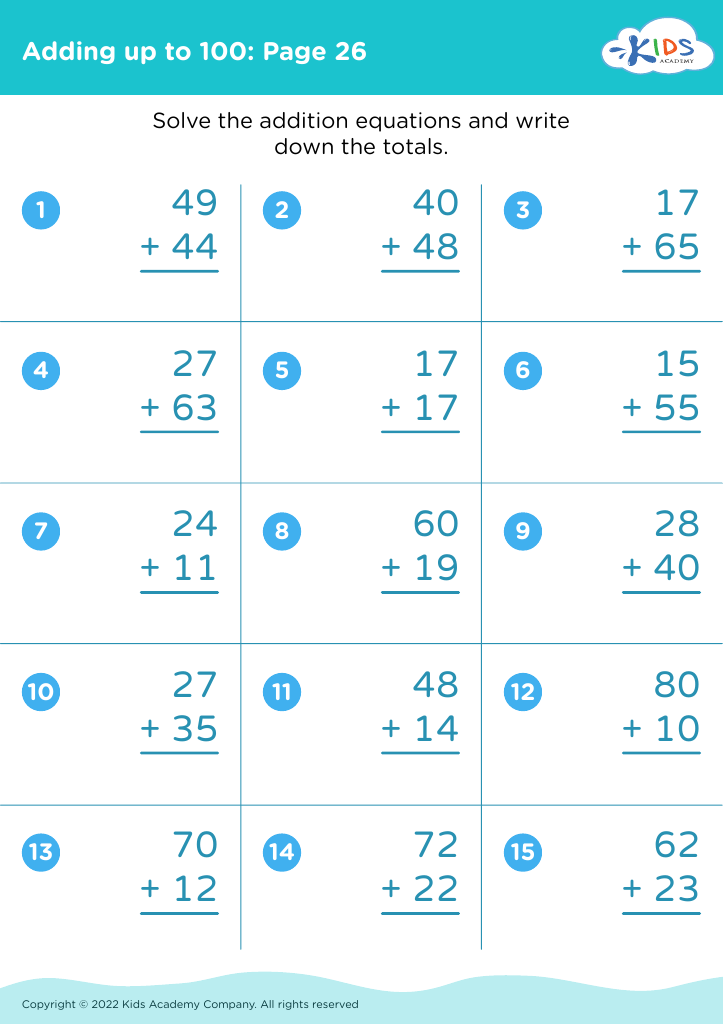
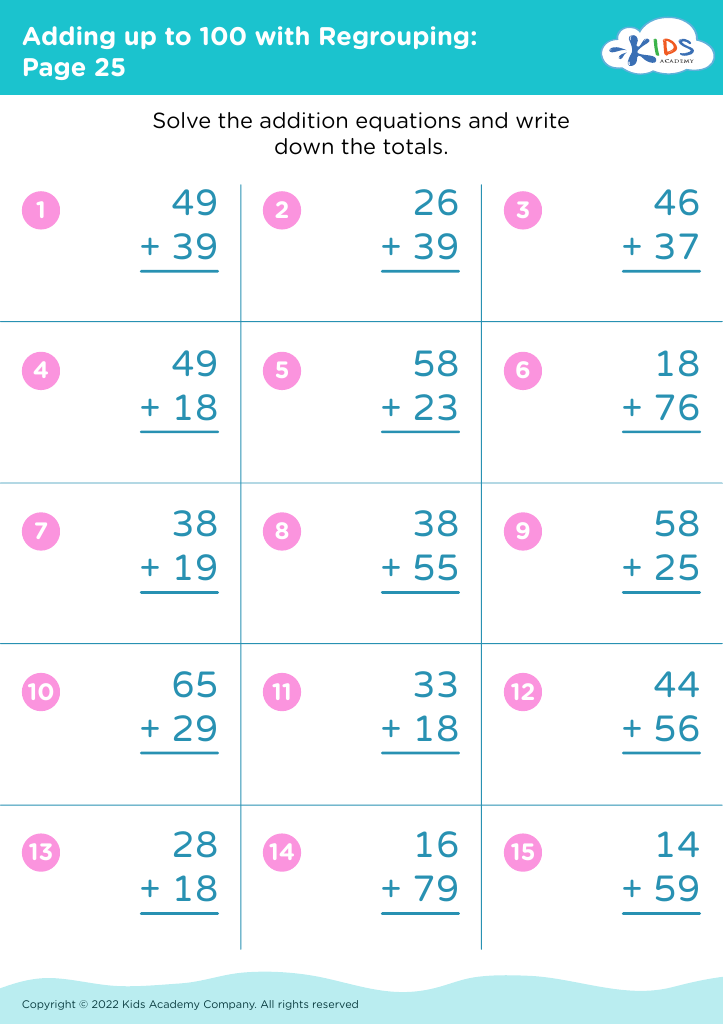
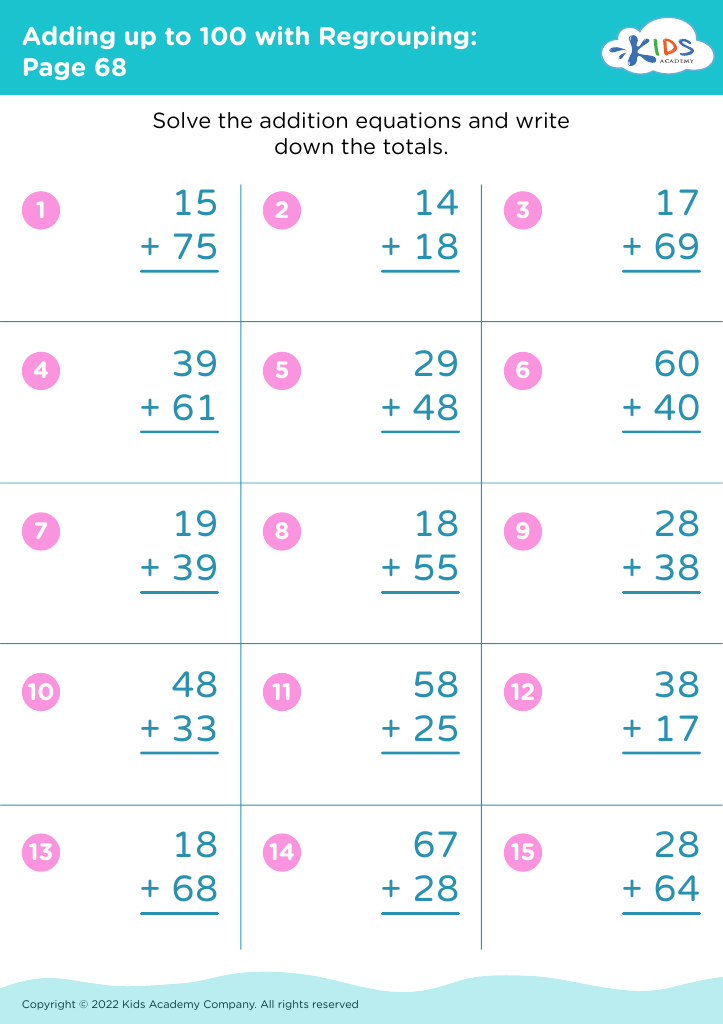
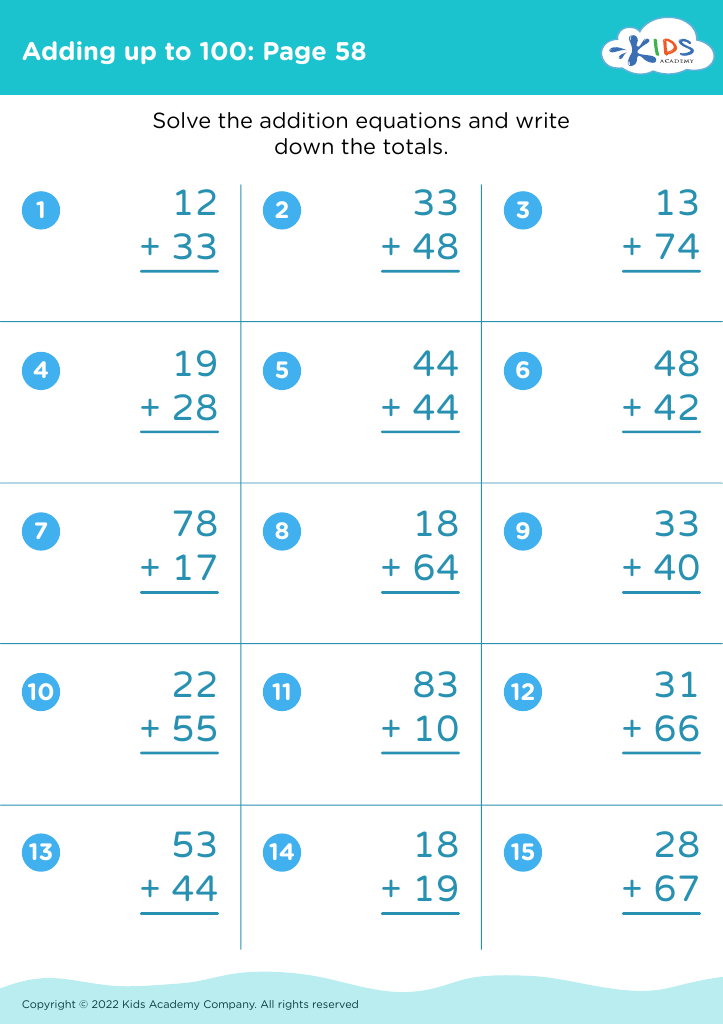
Discover an engaging way to enhance your child’s math skills with our "Adding Up to 100 Worksheets" designed specifically for ages 3-7. These interactive worksheets provide a fun and effective approach for young learners to master addition concepts. With colorful visuals and age-appropriate exercises, children can practice counting, number recognition, and basic arithmetic, building a strong foundation for future math success. Our resources are tailored to meet the developmental needs of preschool and early primary students, making math enjoyable and accessible. Unlock your child's potential today and watch their confidence soar as they start adding up to 100 with ease!


%20(1).jpg)




Improving math skills, particularly focusing on basic addition up to 100, is crucial for children aged 3-7 as it lays the foundation for future mathematical understanding and overall academic success. Mastering these skills promotes cognitive development, enhancing critical thinking, problem-solving, and logical reasoning abilities. By learning to add numbers effectively, young learners build their confidence, which can lead to greater interest and enjoyment in mathematics.
For parents and teachers, fostering math skills at this age is essential for several reasons. First, early exposure to math helps children develop a positive attitude towards the subject, reducing anxiety and fear often associated with mathematics later in life. These foundational skills also support children's abilities in other subjects, such as science and reading, encouraging a more rounded educational experience.
Additionally, strong math skills provide practical life applications, helping children understand everyday situations involving counting, budgeting, and time management as they grow older. In short, investing time and resources into improving math skills in early childhood creates pathways for lifelong learning and can significantly impact a child’s journey towards academic achievement and personal growth. Building these foundational skills sets the stage for a lifetime of success and confident problem-solving abilities.








