Improve reading skills Adding up to 100 Worksheets for Ages 3-7
5 filtered results
-
From - To
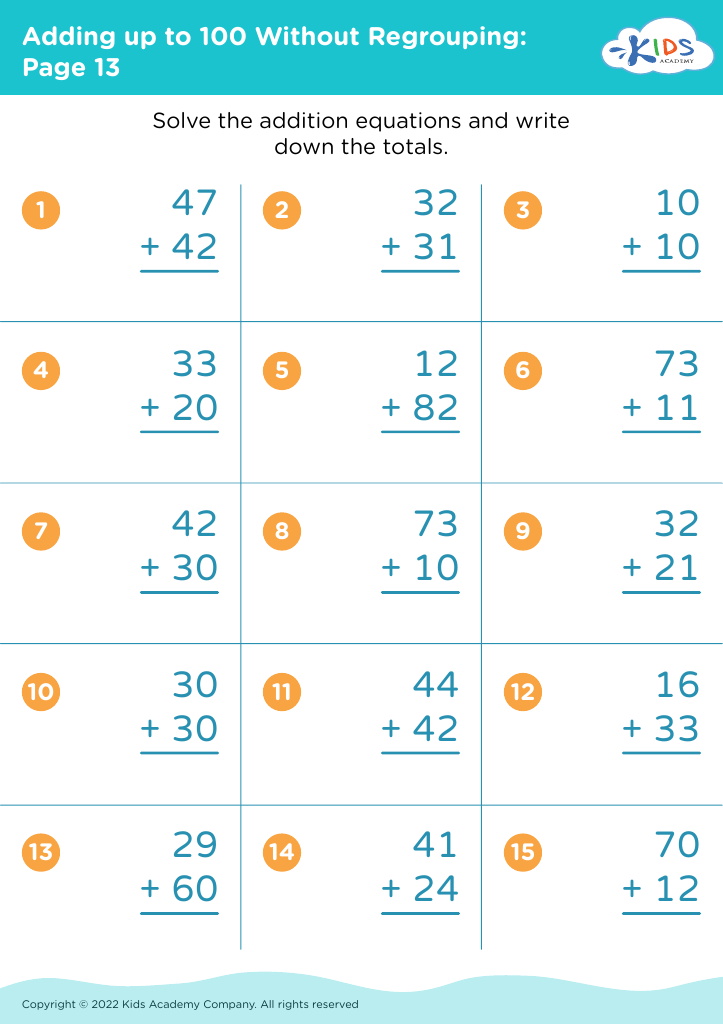
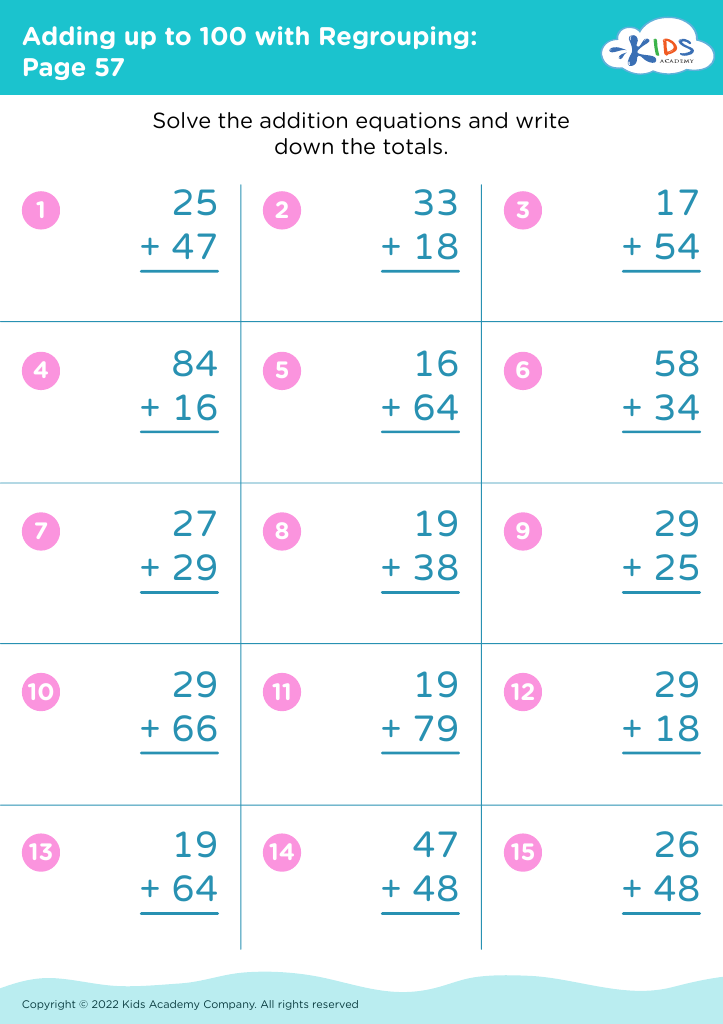
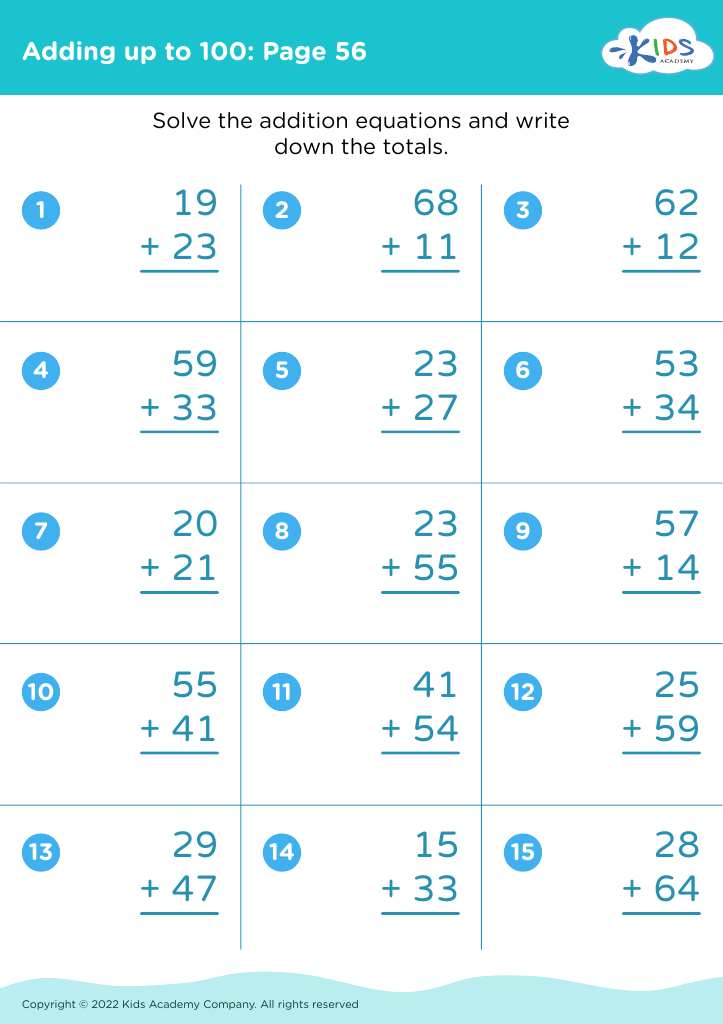
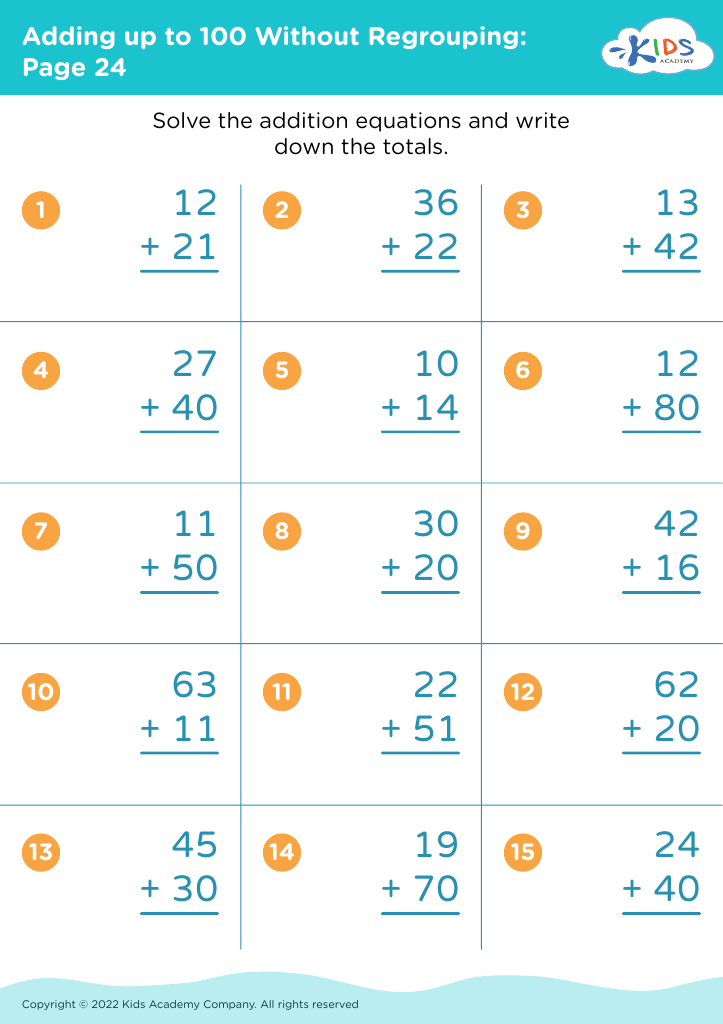
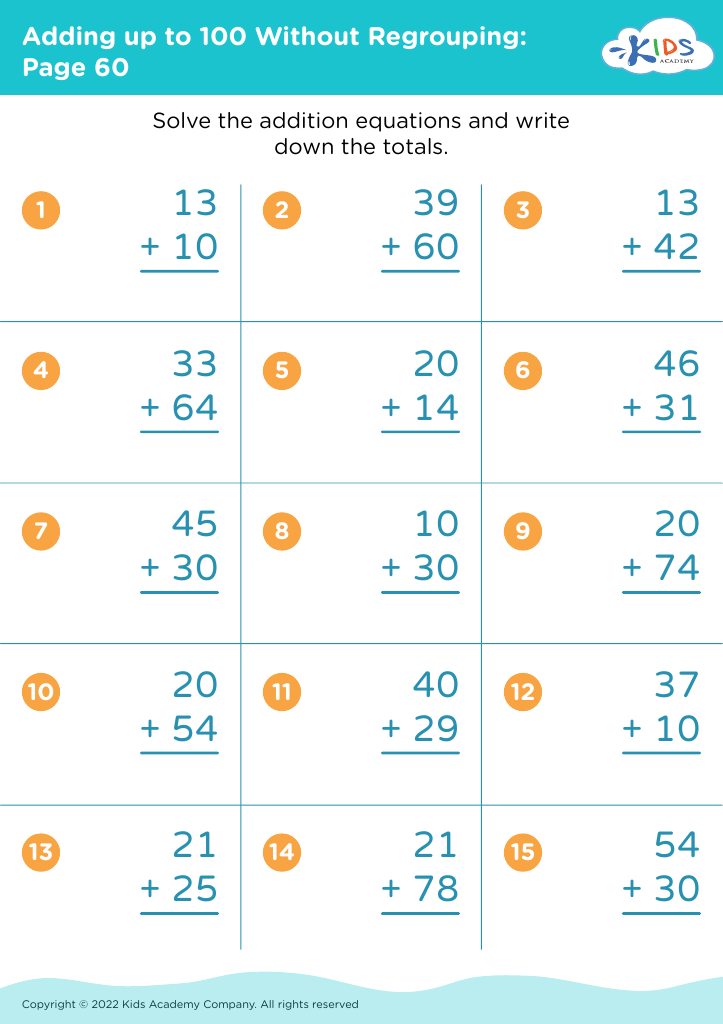
Boost your child's reading and math abilities with our "Adding up to 100" worksheets designed for ages 3-7. These engaging educational activities not only strengthen math skills but also improve reading comprehension. Each worksheet combines simple arithmetic with fun, age-appropriate word problems and stories, encouraging young learners to read and solve equations. Perfect for both classroom and at-home learning, our worksheets provide a balanced approach to developing critical early learning skills. Start building a strong foundation in reading and math with our expertly crafted worksheets that make learning enjoyable and effective for your little ones.






%20(1).jpg)
Improving early reading skills and basic math abilities, like adding up to 100, is crucial for children ages 3-7 because these foundational skills set the stage for future academic success and overall development.
For reading, early literacy promotes language acquisition, improves vocabulary, and enhances understanding of syntax and grammar. Strong reading skills allow children to comprehend instructions, stories, and eventually, complex texts across all subjects. Early engagement with reading fosters a love for books and lifelong learning, which contribute to cognitive development and critical thinking abilities.
Similarly, basic arithmetic skills like adding up to 100 lay the groundwork for more advanced math concepts. Early proficiency in math boosts confidence and enhances problem-solving skills. It also enables children to grasp essential life skills, such as counting money, telling time, or understanding simple measurements.
Collectively, these early academic skills equip children with the confidence and competencies needed in their educational journey and everyday life. For parents and teachers, nurturing these abilities at a young age is vital because children are particularly receptive to learning during these critical developmental years. The effort invested now promotes greater academic achievement, improved self-esteem, and more significant life opportunities as the children grow.








