Improving math skills Adding up to 100 Worksheets for Ages 3-7
5 filtered results
-
From - To
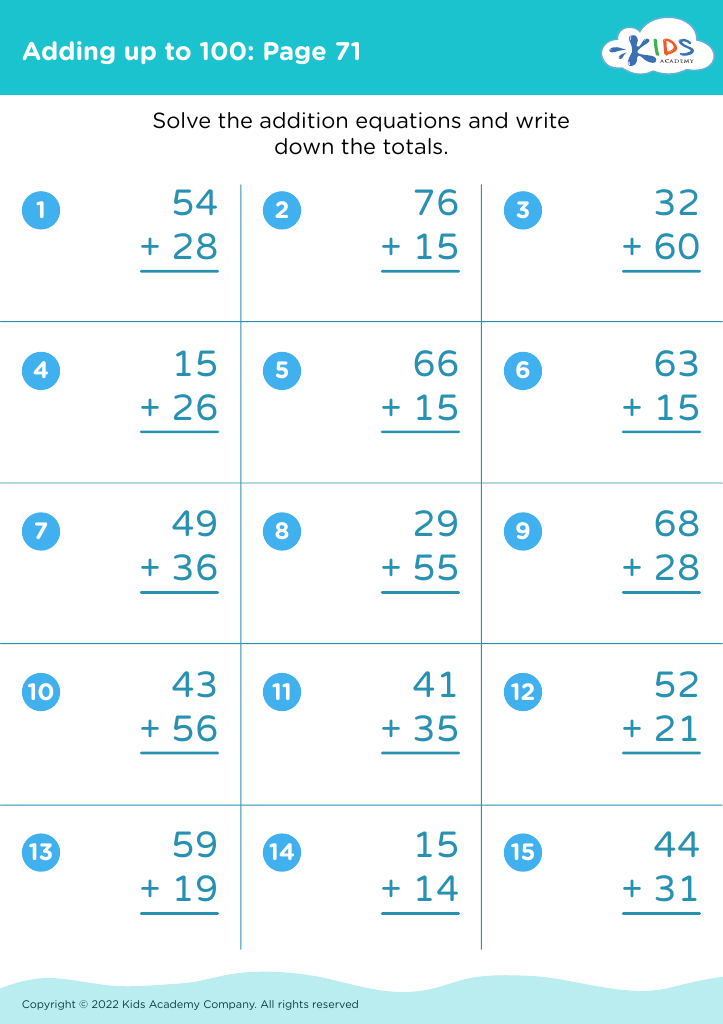
Explore our "Improving Math Skills: Adding Up to 100" worksheets, specifically designed for children ages 3-7. These engaging resources help young learners develop essential math skills through fun, interactive exercises. With a variety of activities tailored to various learning styles, kids will enjoy practicing addition in an exciting way. Our worksheets encourage critical thinking and problem-solving as children work to reach the target sum of 100. Designed by education experts, these materials promote early math comprehension, laying a strong foundation for future learning. Download today and watch your child build confidence and competence in math!
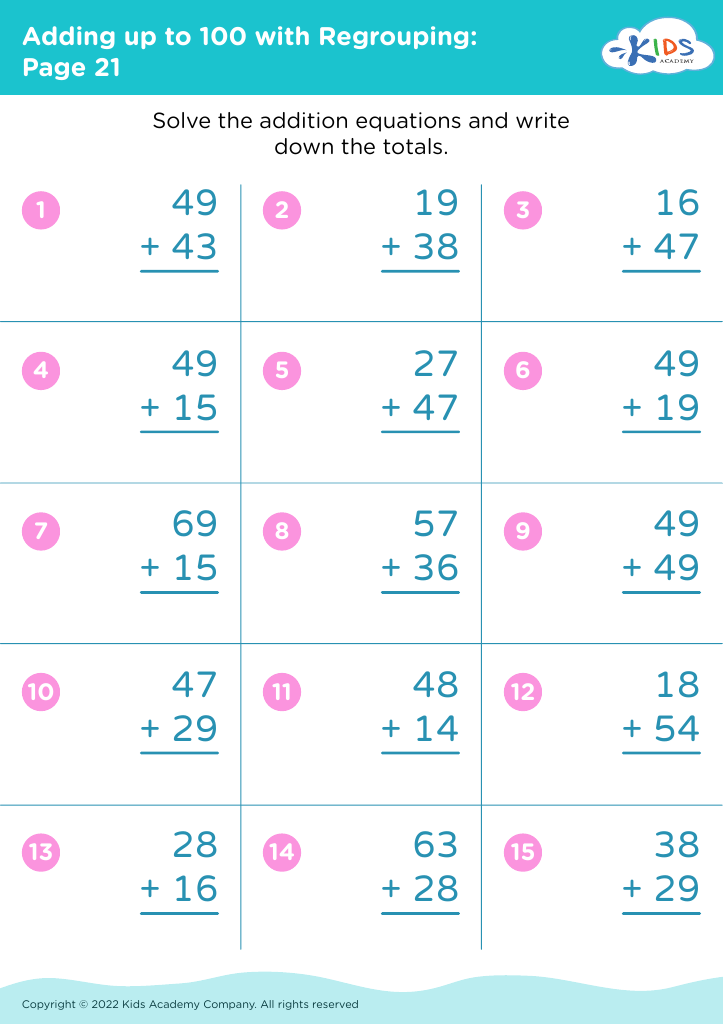
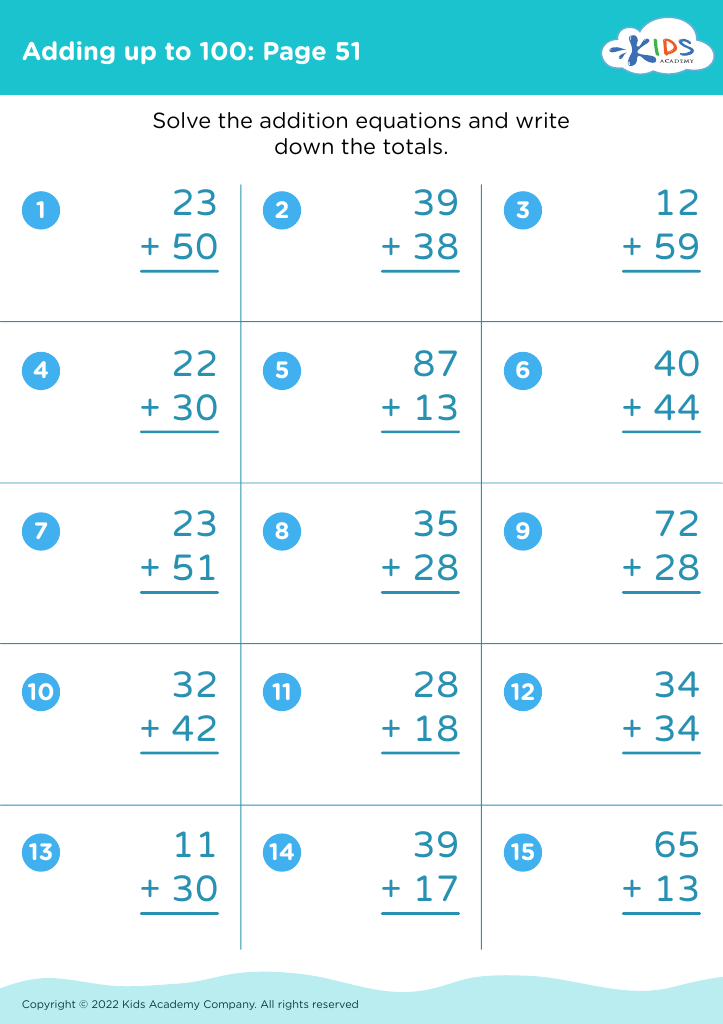
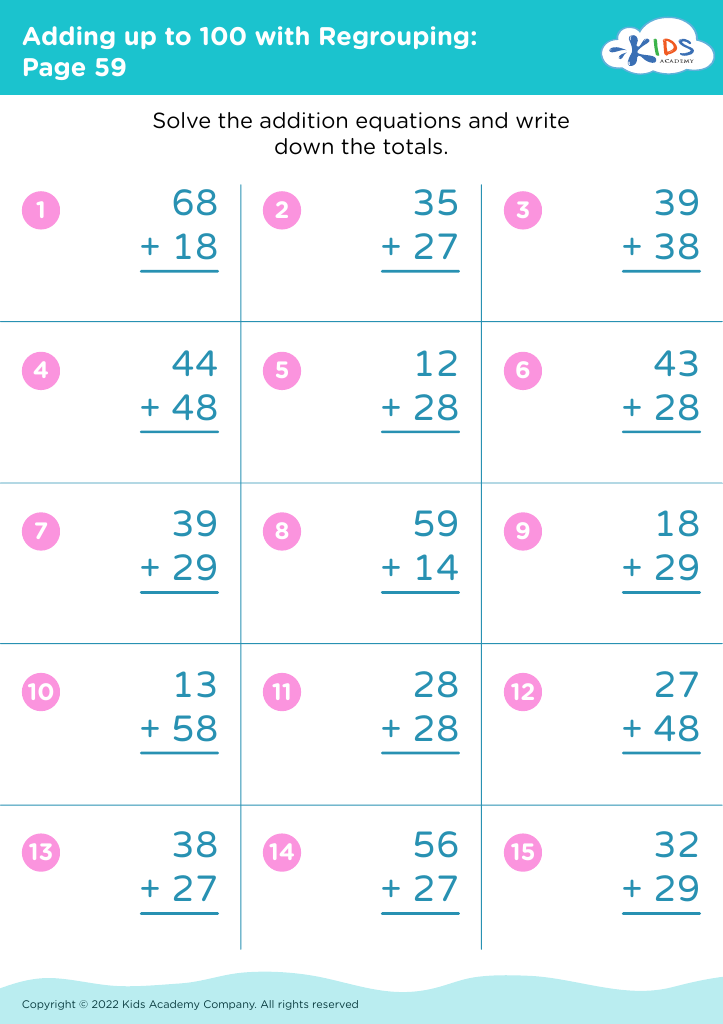
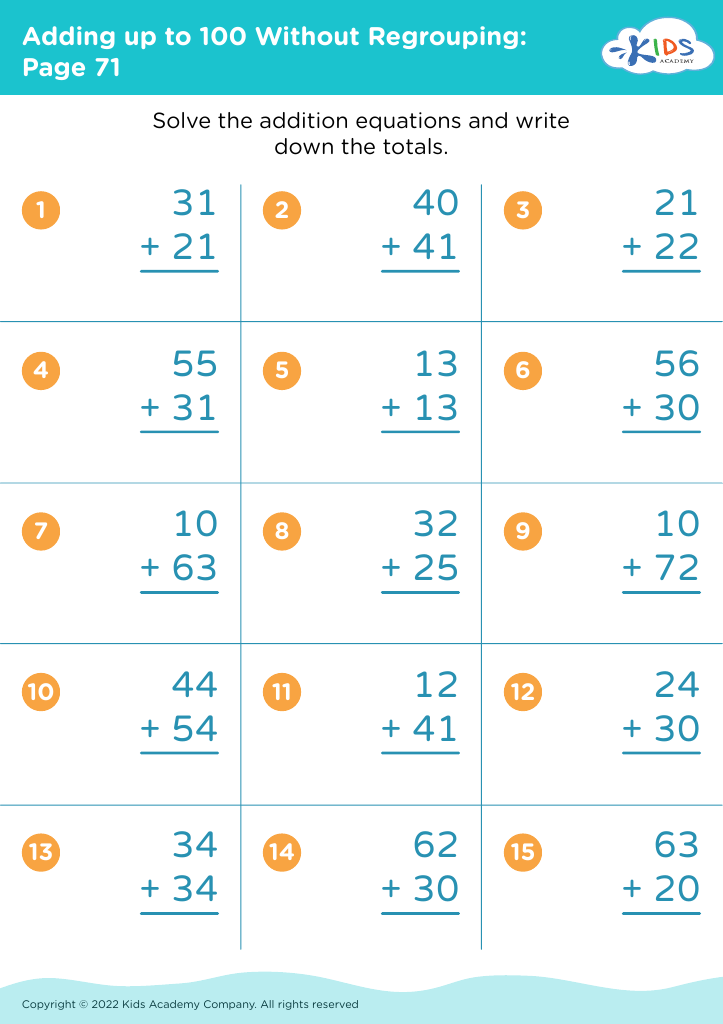






%20(1).jpg)
Improving math skills, particularly the ability to add up to 100, is crucial for children aged 3-7 as it lays the foundation for future academic success. At this stage, young learners naturally explore number concepts through everyday experiences. By focusing on addition skills, parents and teachers can foster essential cognitive abilities such as problem-solving, critical thinking, and logical reasoning.
Math proficiency at a young age contributes to overall academic confidence. When children master adding numbers, they develop a sense of accomplishment, encouraging a positive attitude toward learning. Additionally, early math skills are linked to later success in not just mathematics but also reading and science, making it a key component of a well-rounded education.
Furthermore, early introduction to addition and subtraction helps children understand patterns and relationships in numbers, which are vital skills for more complex math as they progress. Engaging in fun and interactive activities like games and songs can make learning enjoyable, reinforcing these skills and promoting a love for learning. Ultimately, by prioritizing math skills development, parents and teachers help shape capable, confident learners who are equipped to tackle future challenges with enthusiasm.








