Numeracy skills Adding up to 100 Worksheets for Ages 3-7
4 filtered results
-
From - To
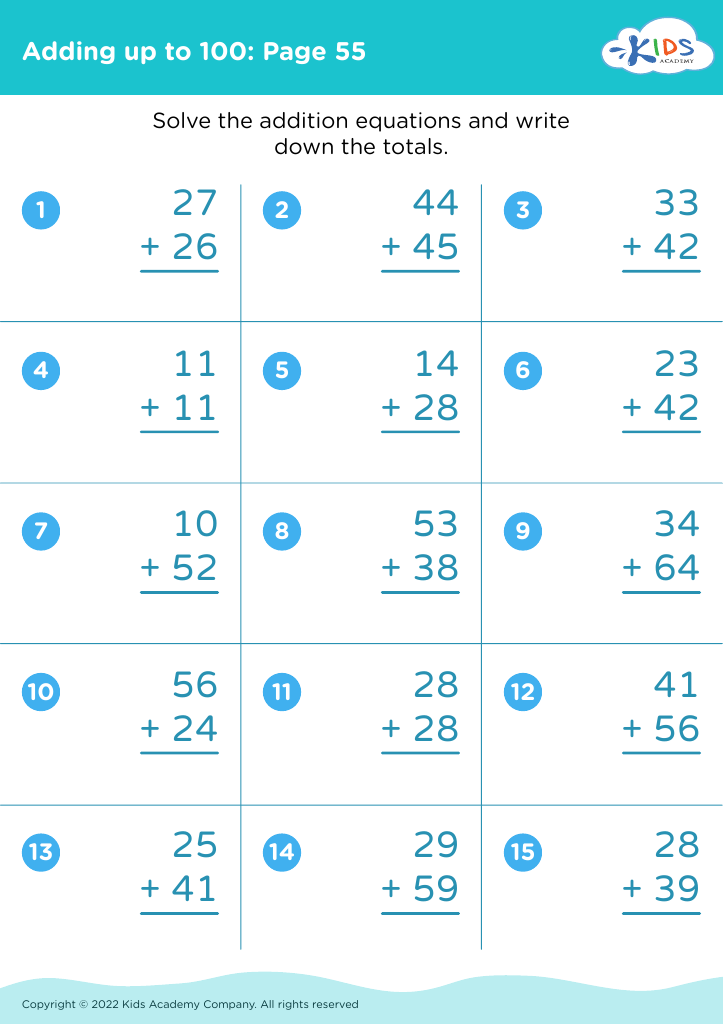
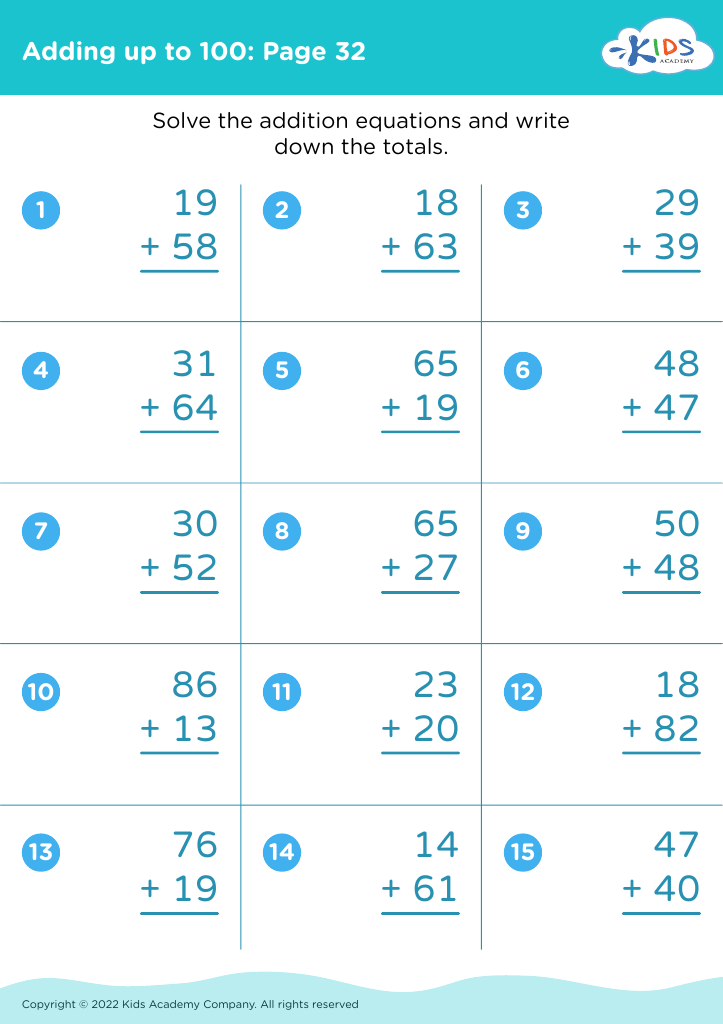
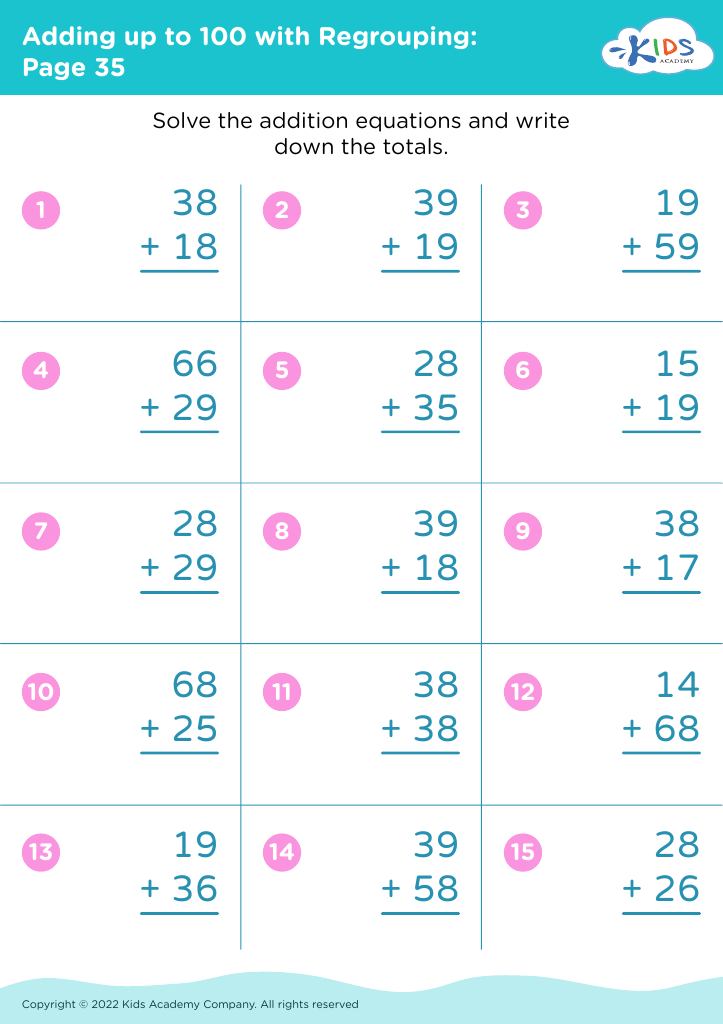
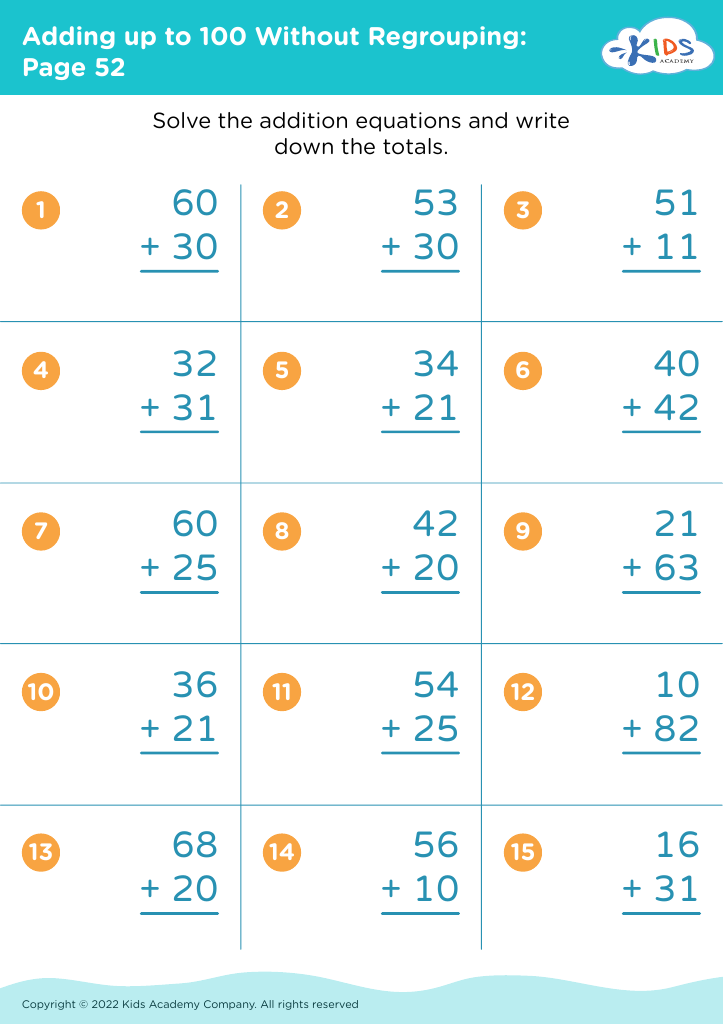
Our "Numeracy Skills: Adding up to 100 Worksheets for Ages 3-7" are designed to help young learners grasp essential math concepts in a fun and engaging way. Suitable for children from preschool to early primary, these printable worksheets offer various activities that build addition skills and reinforce counting up to 100. Through colorful illustrations and interactive exercises, kids can improve their mathematical abilities step-by-step. Ideal for both classroom and home use, these resources aim to boost confidence and foster a love for numbers from an early age. Encourage your child's early numeracy journey with our expertly crafted worksheets.



%20(1).jpg)



Early numeracy skills, particularly adding up to 100, are crucial for children aged 3-7 as these form the foundation for all future mathematical learning. At this age, children are developing their cognitive abilities rapidly, and fostering numeracy skills can enhance their problem-solving, reasoning, and critical thinking capabilities. Mastering addition up to 100 is essential because it moves them from counting basic numbers to understanding more complex mathematical concepts like place value, patterns, and the basics of arithmetic operations.
When parents and teachers emphasize numeracy, they help children build confidence and a positive attitude toward mathematics. This proficiency not only prepares them for more advanced mathematical problems but also for real-life situations where math is necessary, such as managing money, measuring ingredients in recipes, and even in time management. Moreover, developing numeracy early can foster a child's analytical and logical thinking skills, which are applicable across various subjects and in everyday decision-making.
Parents and teachers who actively engage in reinforcing these skills through playful and interactive activities contribute significantly to a child's overall academic performance and enthusiasm for learning. By focusing on addition up to 100, adults lay a robust groundwork for the children, helping them navigate their educational journey with greater ease and success.








