Practicing multiplication Adding up to 100 Worksheets for Ages 3-7
4 filtered results
-
From - To
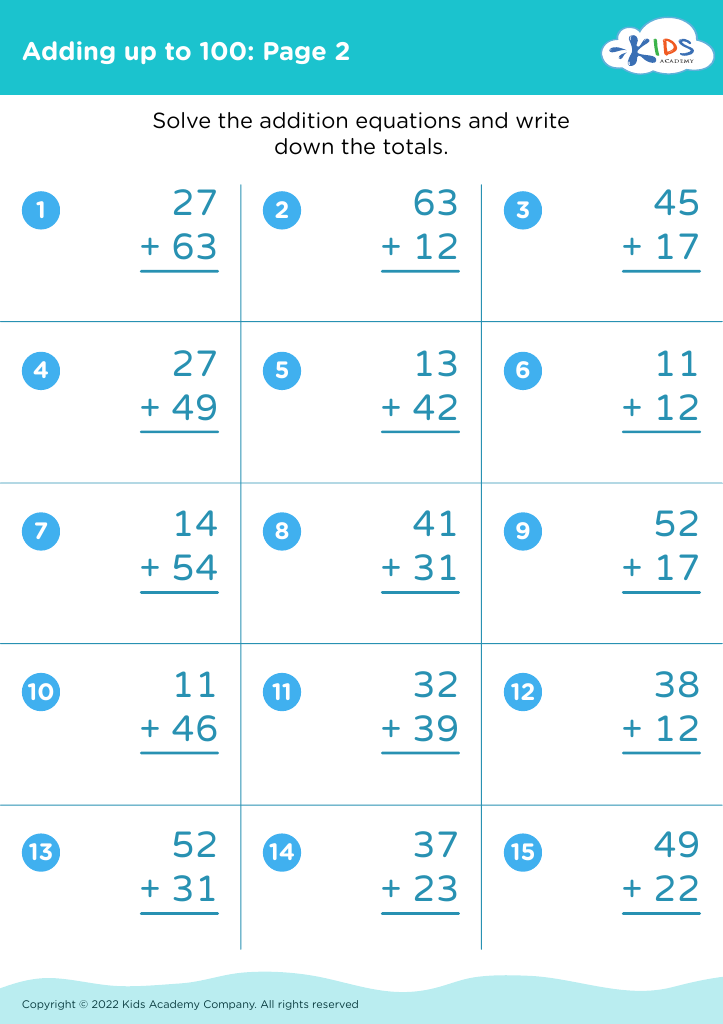
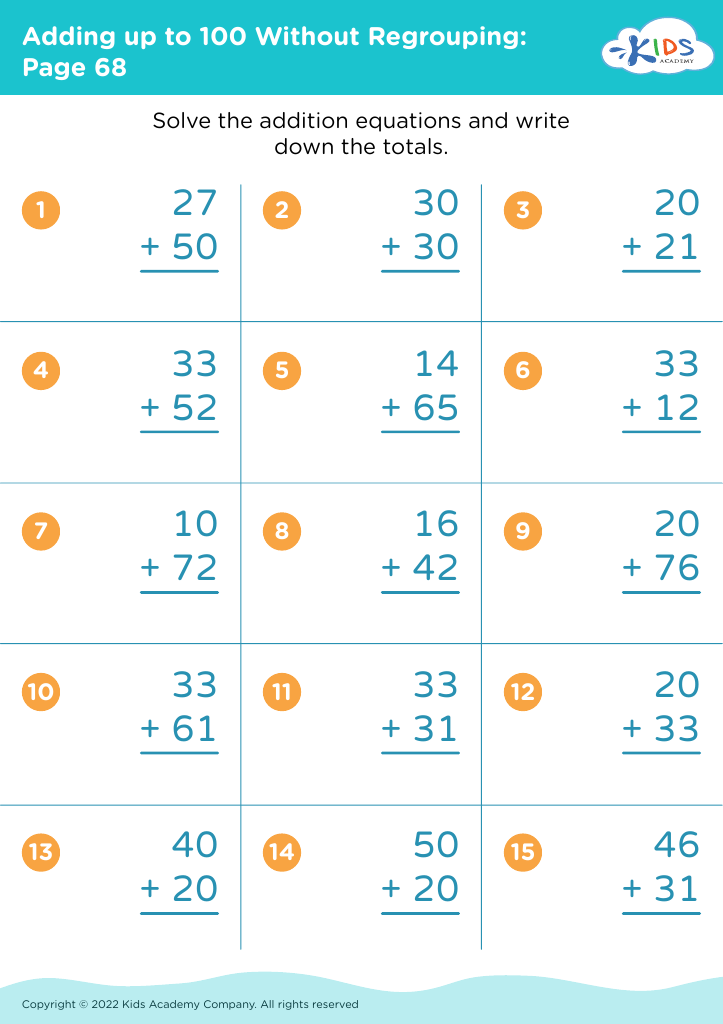
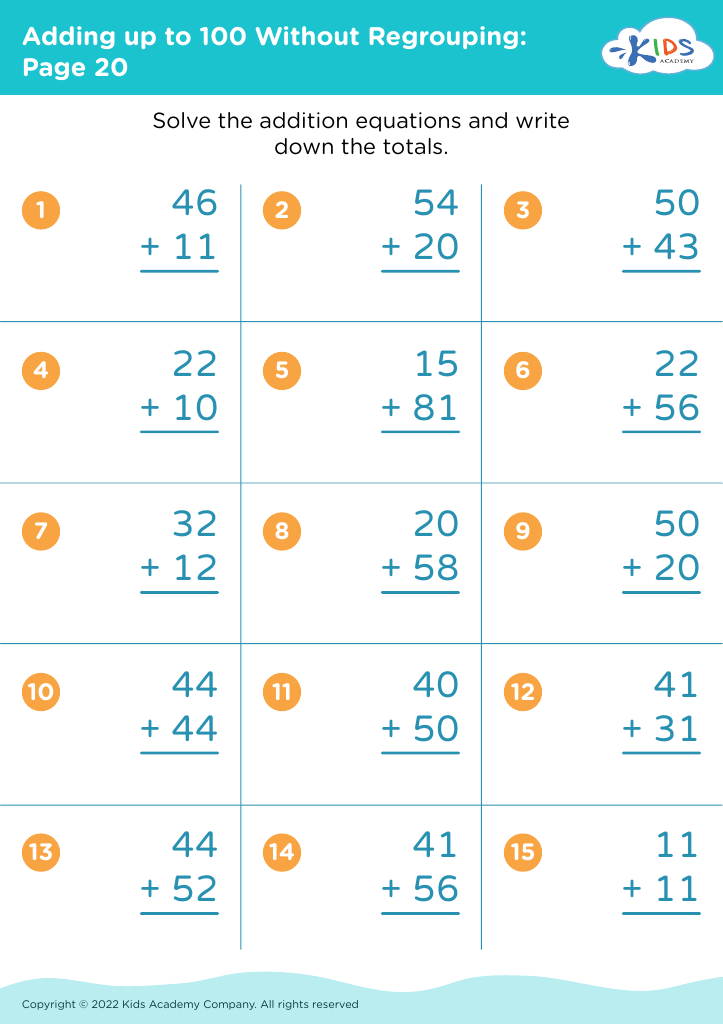
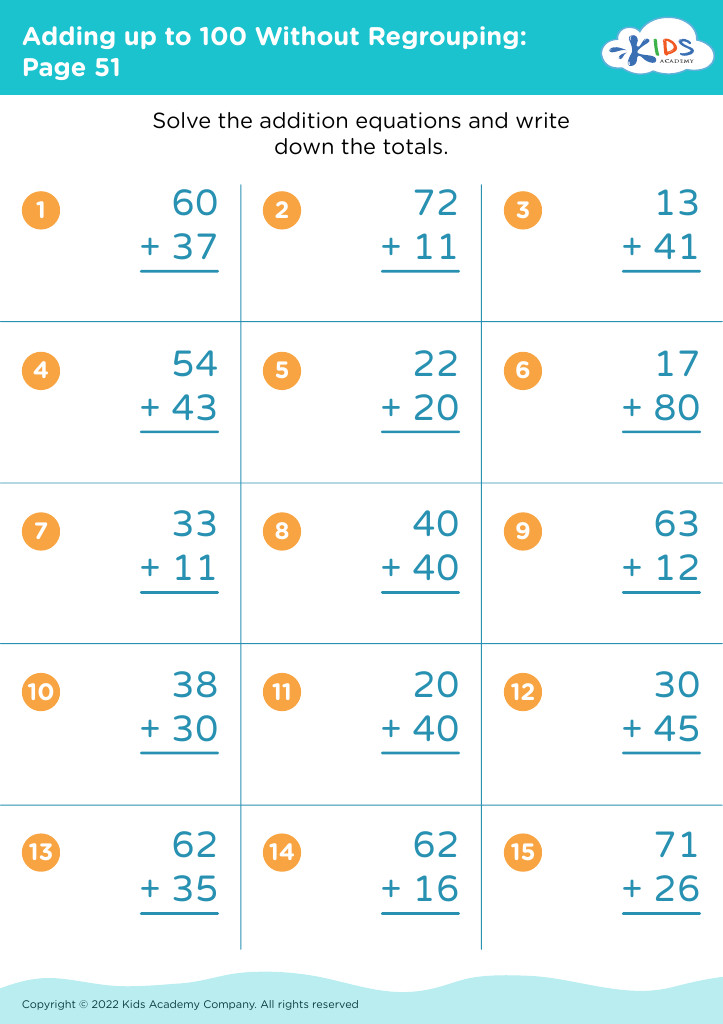
Welcome to our "Practicing Multiplication Adding Up to 100 Worksheets" for ages 3-7! Designed to enhance young learners' math skills, these engaging worksheets make multiplication fun and accessible. Children will explore fundamental multiplication concepts while building a strong foundation in numbers up to 100. Our printable resources support various learning styles, encouraging creativity and critical thinking. With colorful illustrations and age-appropriate exercises, your little ones will enjoy practicing and gaining confidence in their math abilities. Perfect for home or classroom use, these worksheets are an excellent tool for reinforcing math knowledge and ensuring a successful start to their educational journey!



%20(1).jpg)



Practicing multiplication and addition up to 100 is crucial for children ages 3-7, as it lays a strong mathematical foundation for future learning. Early exposure to these concepts enhances cognitive skills and promotes critical thinking. During this formative period, children develop number sense, which is vital for understanding more complex math concepts later on.
Moreover, engaging in multiplication and addition activities fosters a love for math. When children can confidently add and multiply, they feel empowered and less anxious about these subjects as they progress in their education. Incorporating playful techniques, such as games and visual aids, makes learning enjoyable and memorable, promoting longer retention of skills.
Additionally, practicing these basic operations enables children to improve their problem-solving abilities and enhances their ability to perform mental calculations, which are essential skills in everyday life. By encouraging an early focus on numbers, parents and teachers can help build a positive attitude towards academics, paving the way for lifelong learning. Ultimately, early math skills contribute not only to academic success but also to nurturing children's ability to think logically and independently. Thus, reinforcing multiplication and addition within this age group is vital for comprehensive educational development.








