Problem-solving practice Adding up to 100 Worksheets for Ages 3-7
5 filtered results
-
From - To
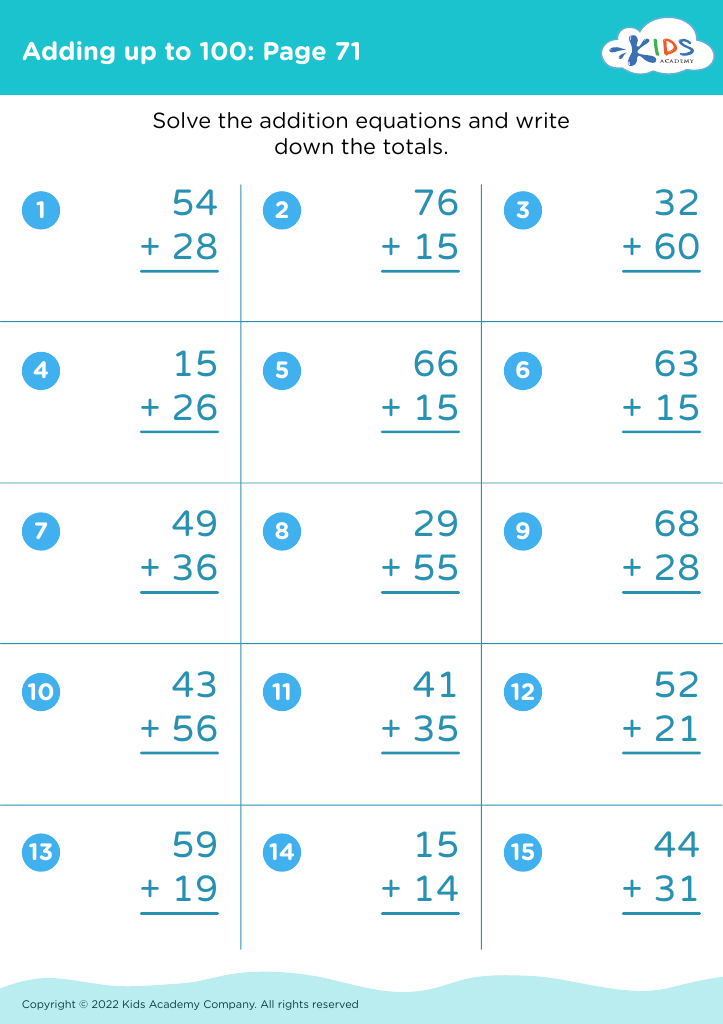
Our "Problem-Solving Practice Adding Up to 100 Worksheets for Ages 3-7" are designed to make learning math fun and engaging for young learners. These worksheets help children practice essential addition skills in a variety of interactive and visually appealing activities. Perfect for home or classroom use, each worksheet fosters critical thinking and problem-solving abilities as they work through sums that add up to 100. With kid-friendly themes and illustrations, kids stay motivated while enhancing their mathematical knowledge. Download our worksheets today and give your child a head start in mastering addition!
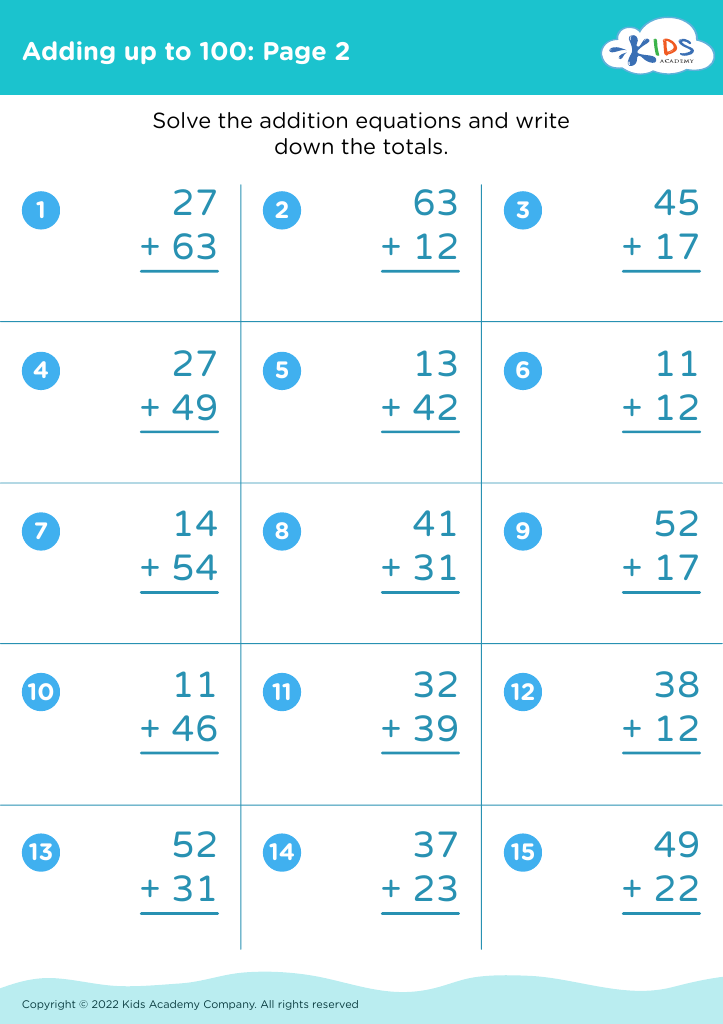
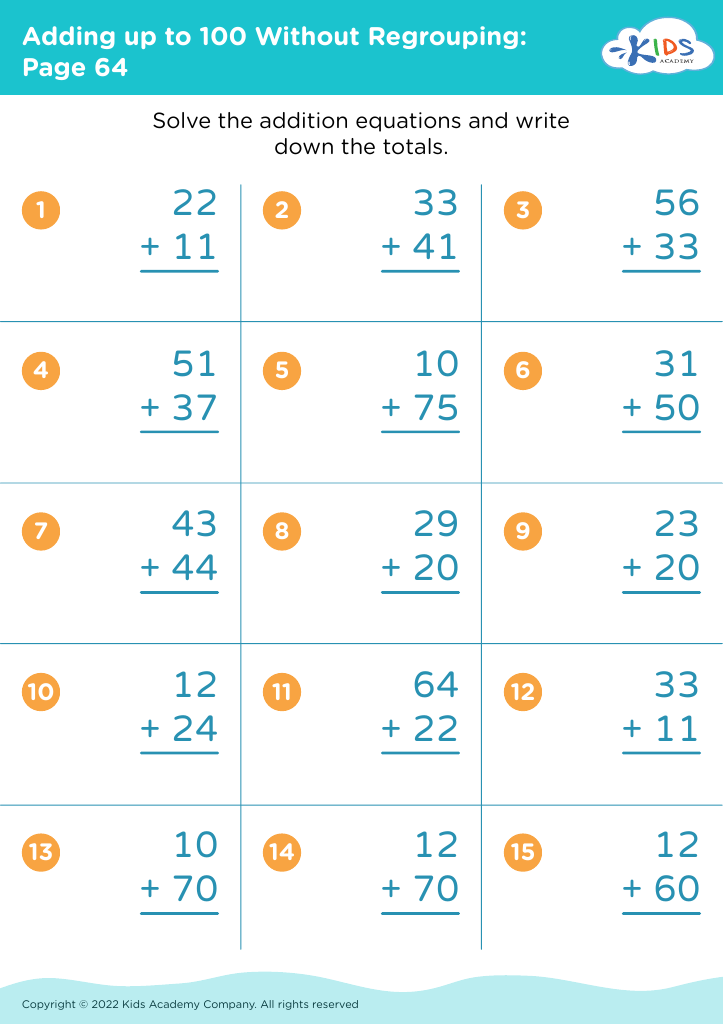
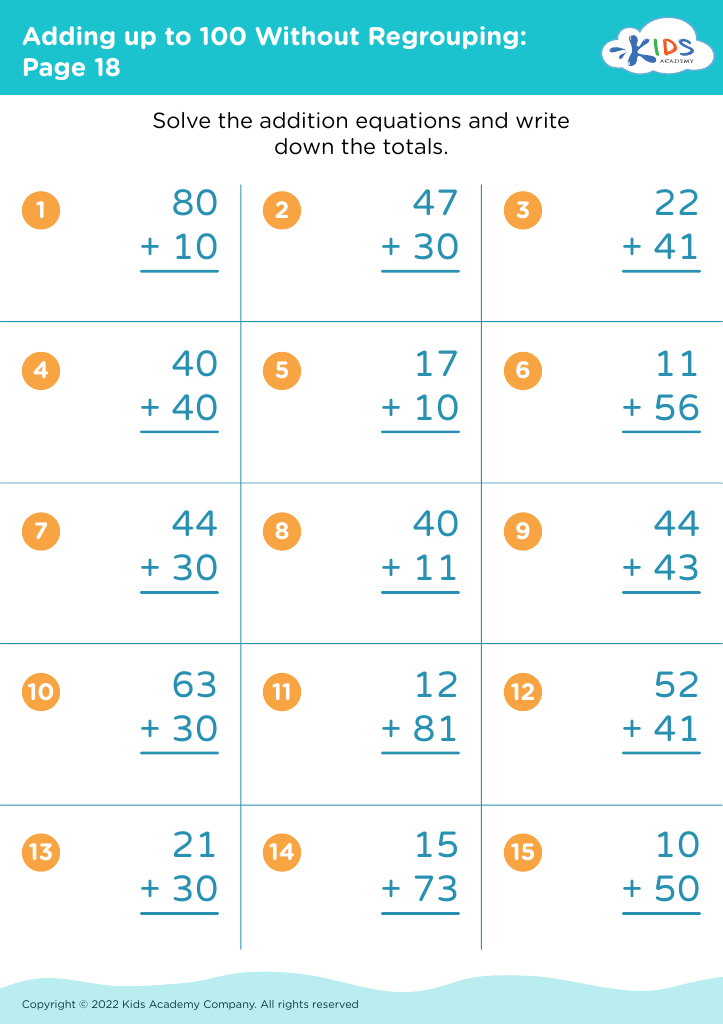
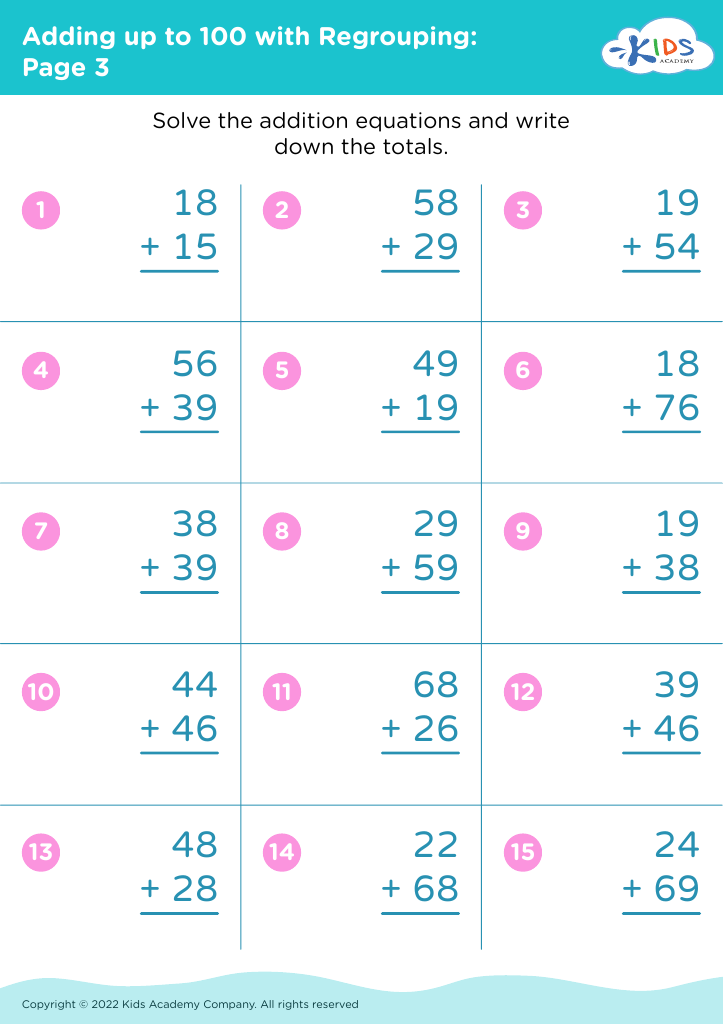





%20(1).jpg)

Problem-solving practice that involves addition up to 100 is crucial for children ages 3-7 as it lays a strong mathematical foundation and cultivates essential cognitive skills. Engaging young children in activities that require adding numbers up to 100 helps to develop their numerical understanding and arithmetic skills. These early stages of learning are when kids are most receptive to acquiring new concepts, making it an optimal time to introduce foundational math principles.
By mastering addition within this range, children build confidence and become familiar with basic operations, which are the stepping stones for more complex mathematical concepts they will encounter later. This practice also enhances critical thinking, as kids learn to approach problems methodically, identify patterns, and come to logical conclusions. Mental math exercises, particularly those that encourage breaking down larger numbers into manageable parts, also foster memory retention and boost problem-solving speed.
Furthermore, problem-solving activities promote a positive attitude towards math. Engagement in fun, interactive exercises can help alleviate math anxiety and make learning enjoyable. Teachers and parents play a vital role by providing consistent support and encouragement, creating a learning environment where children feel comfortable exploring and making mistakes. Ultimately, these early experiences shape children's future attitudes towards math and learning in general, making early math fluency beneficial in both academic and everyday life contexts.








