Recognizing Patterns Adding up to 100 Worksheets for Ages 3-7
5 filtered results
-
From - To
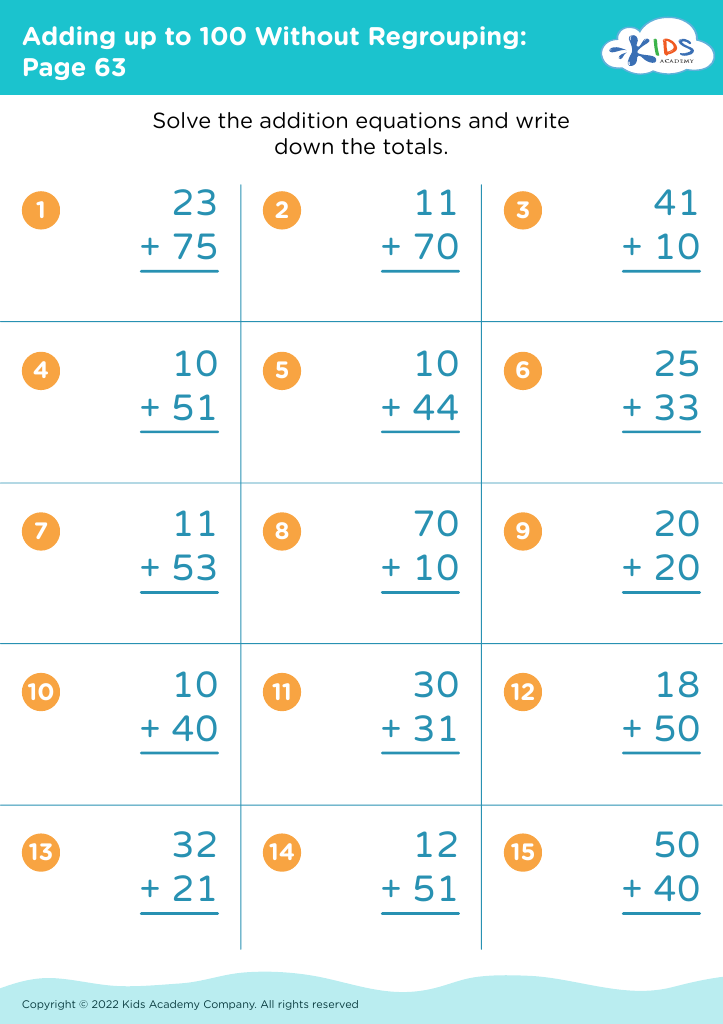
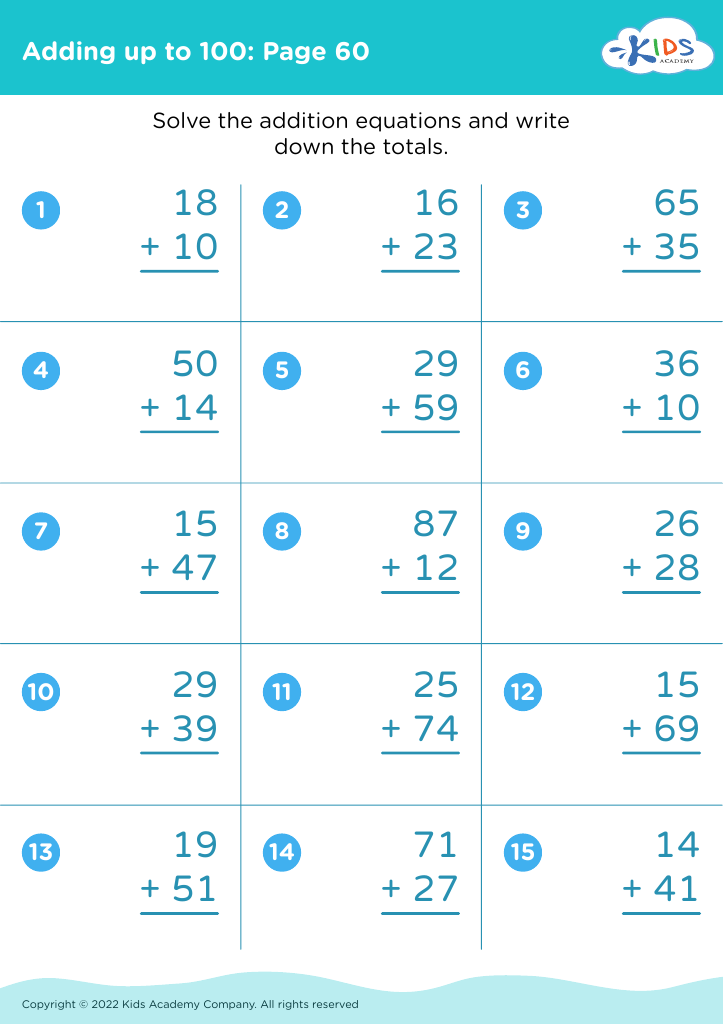
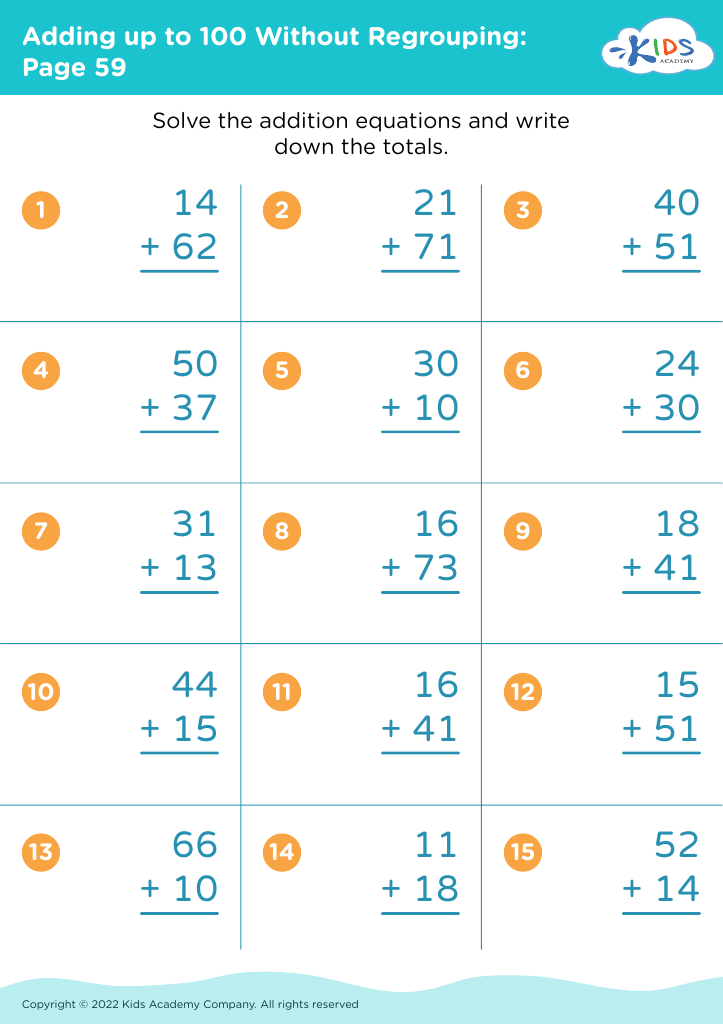
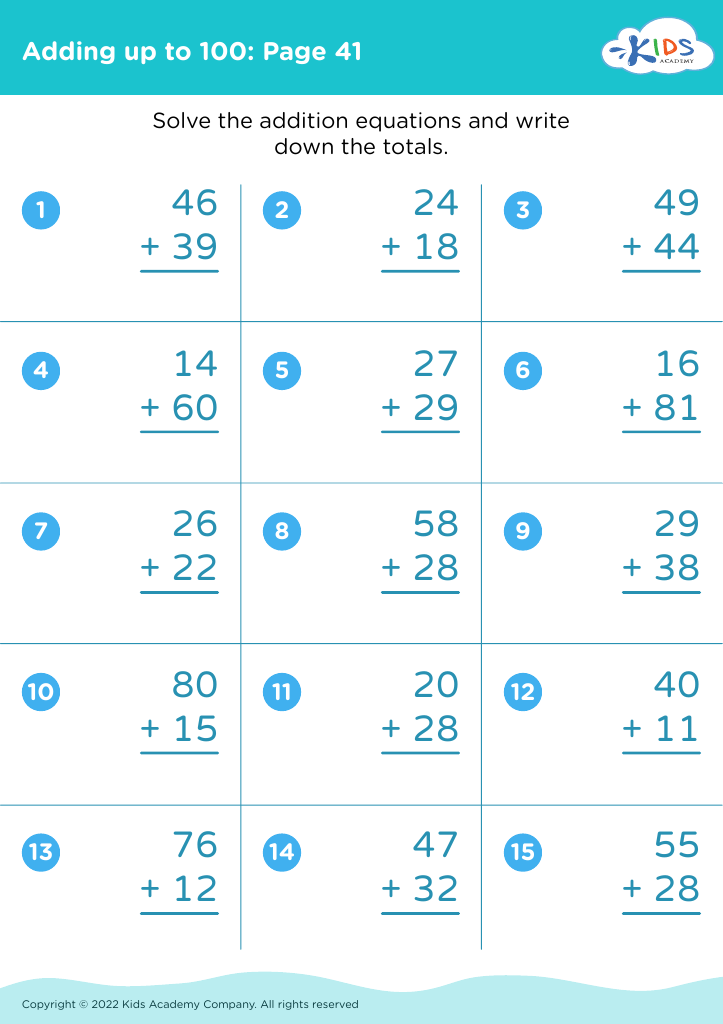
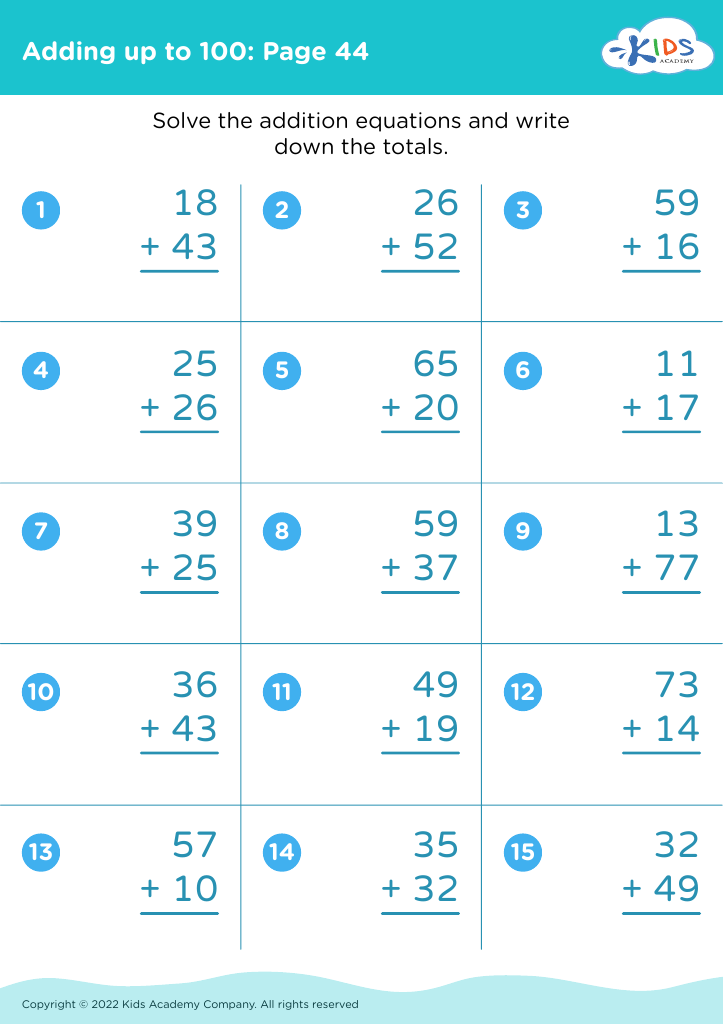
Explore our "Recognizing Patterns Adding up to 100 Worksheets" designed for children ages 3-7 to build essential math skills through interactive learning. These engaging worksheets guide students in recognizing numerical patterns, enhancing their ability to add and identify relationships between numbers. With vibrant visuals and age-appropriate activities, young learners will develop critical thinking abilities while mastering addition concepts in a fun way. Perfect for classroom use or at-home practice, our worksheets provide a solid foundation in mathematics, nurturing a love for learning. Get started today and help your child unlock the world of numbers with confidence!




%20(1).jpg)


Recognizing patterns and understanding number relationships, such as adding up to 100, are foundational skills in early mathematics for children ages 3-7. First, these skills nurture critical thinking and problem-solving abilities. When children learn to identify patterns, they enhance their ability to predict and make connections in other areas of learning, laying the groundwork for more complex mathematical concepts later on.
For parents and teachers, focusing on adding up to 100 teaches children about numbers in a practical context, promoting fluency in addition and subtraction. Early math skills are linked to later academic success, with students who grasp these concepts outperforming peers in both math and reading. Furthermore, engaging with numbers nurtures numerical literacy essential for everyday life decisions.
Developing these skills also fosters a sense of accomplishment and confidence in young learners. As children recognize patterns, they gain a sense of control over their learning environment, enhancing their motivation to engage with math-related activities.
In summary, recognizing patterns and mastering addition to 100 equips young learners with vital cognitive tools, supports their academic journey, and prepares them for a successful future, reinforcing the need for parents and teachers to actively promote these essential competencies.








