Understand fractions Adding up to 100 Worksheets for Ages 3-7
5 filtered results
-
From - To
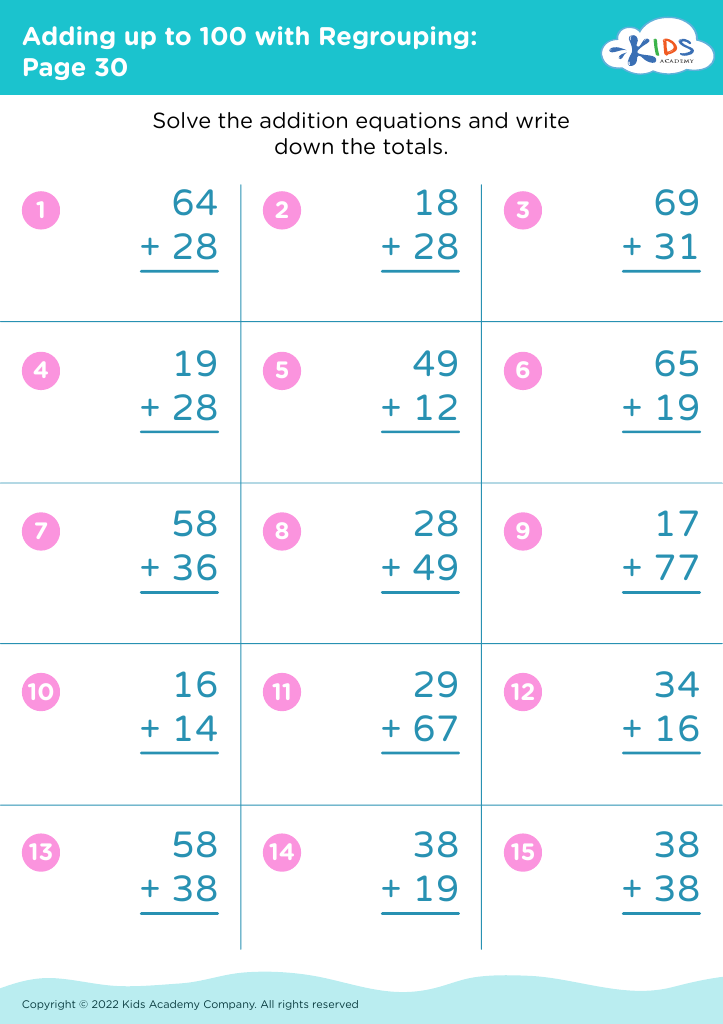
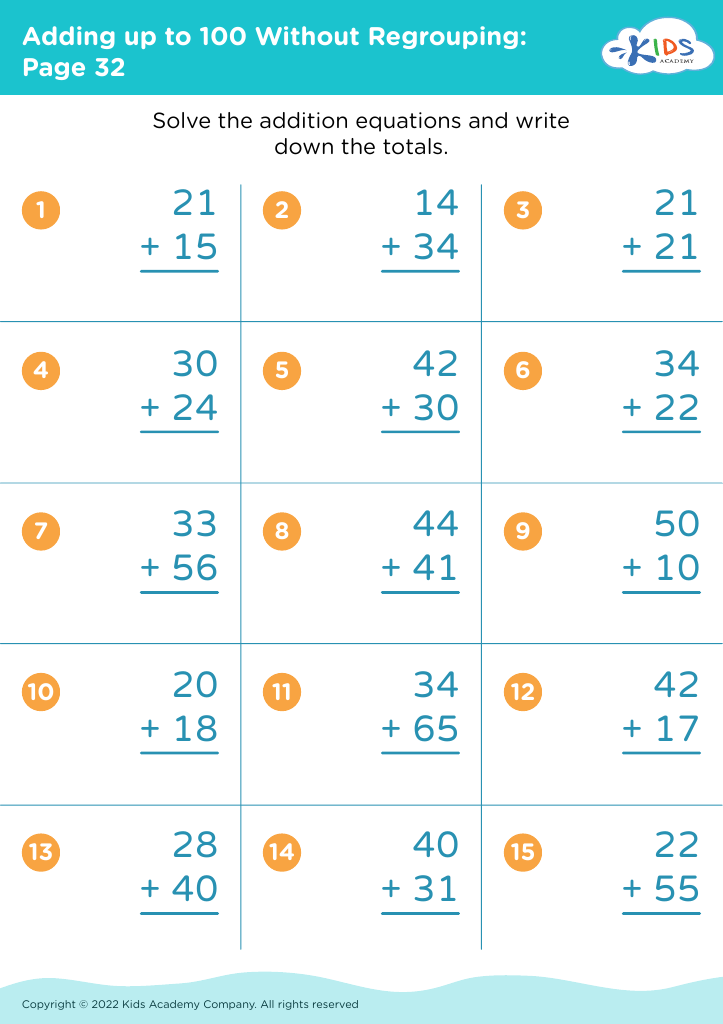
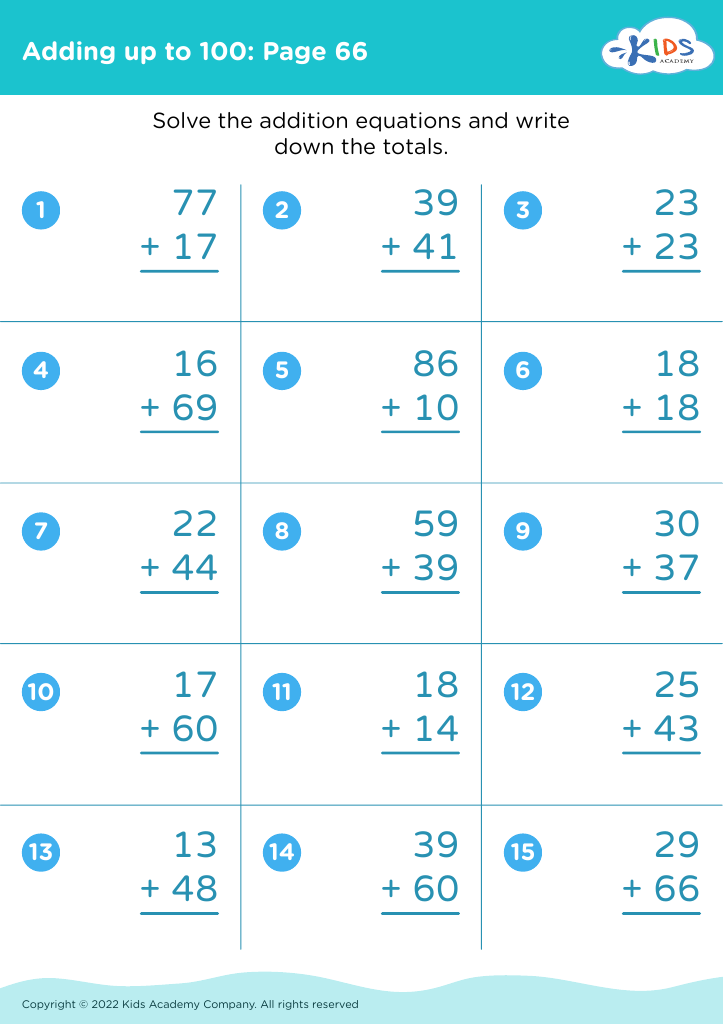
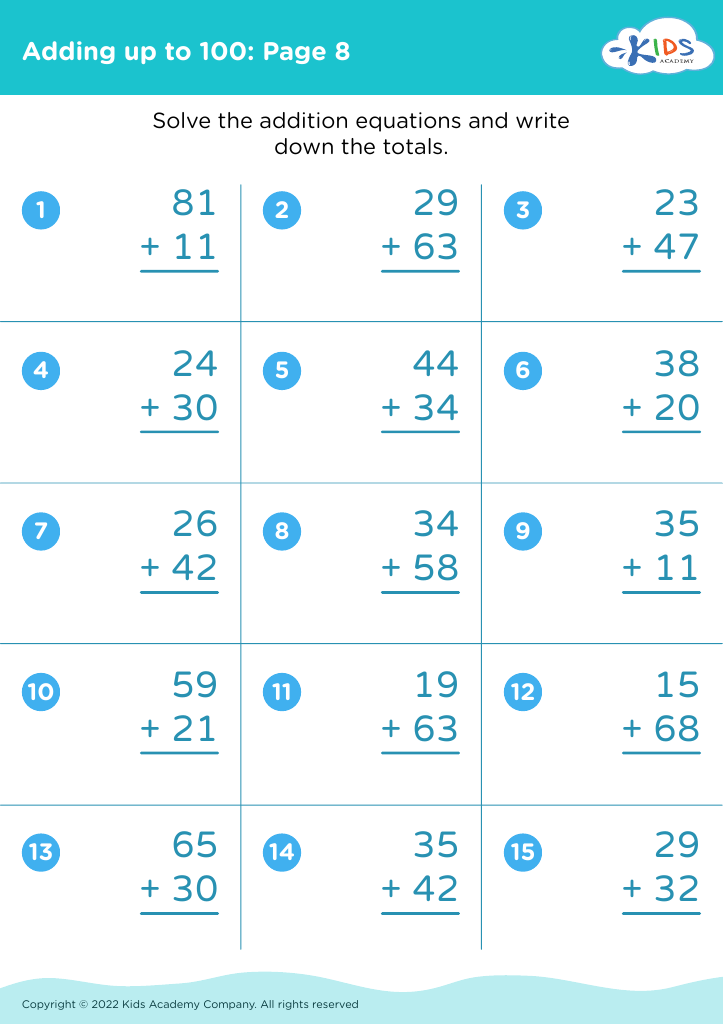
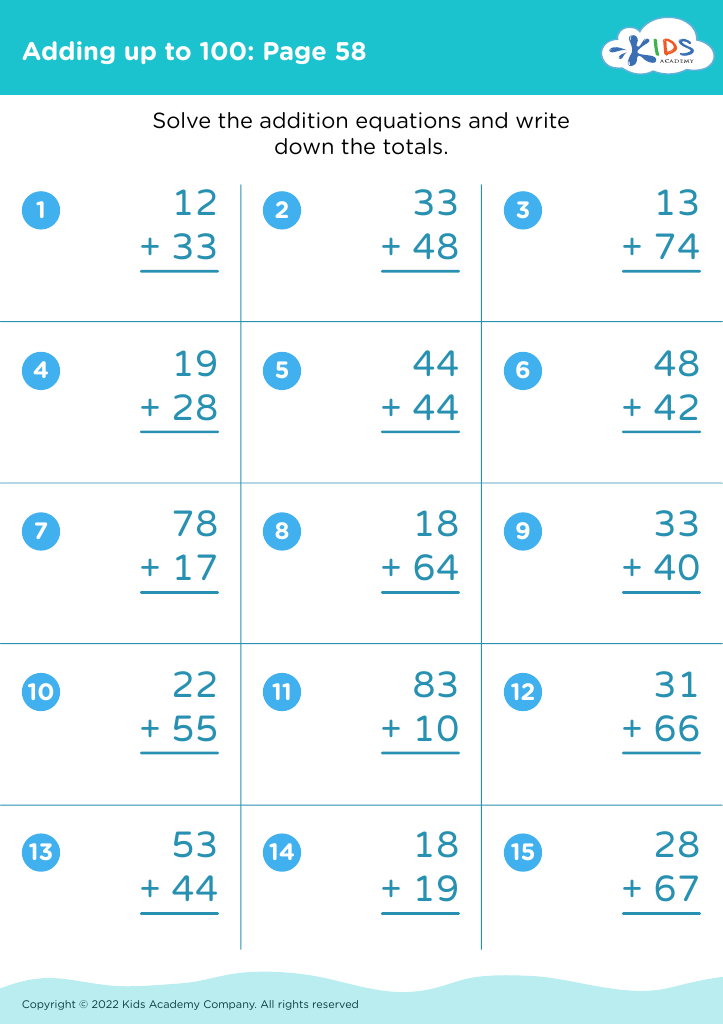
Introducing our "Understand Fractions Adding Up to 100 Worksheets," designed specifically for children aged 3-7. These engaging, print-friendly resources aim to help young learners grasp the foundational concepts of fractions in a fun and interactive way. Each worksheet features age-appropriate tasks that encourage critical thinking and problem-solving while mastering the basics of fractions that add up to 100. With colorful illustrations and relatable examples, kids can build their confidence in math skills. These worksheets are perfect for at-home learning or in the classroom, ensuring children solidify their understanding of fractions and become proficient in their early mathematical journey!




%20(1).jpg)


Understanding fractions, especially the concept of adding up to 100, is crucial for children aged 3-7 as it lays the foundation for their mathematical skills. Early exposure to fractions helps children develop number sense, which is essential for more complex arithmetic in later years. When students learn that fractions represent parts of a whole, they become better equipped to make sense of everyday situations, such as dividing food or sharing toys.
Teaching fractions at a young age also fosters critical thinking and problem-solving skills. Children can explore how multiple parts come together to create a whole, enabling them to grasp essential concepts in addition and subtraction in a more practical context. This understanding becomes increasingly important as they progress in their education.
Moreover, familiarizing children with fractions helps reduce math anxiety in later grades. By being comfortable with basic fractions early on, children can tackle more advanced concepts with confidence. For parents and teachers, nurturing this understanding is not merely about math but encouraging a love for learning and curiosity in young minds, which will benefit them across all subjects throughout their academic journey. Engaging with fractions can turn math from a daunting task into an enjoyable and rewarding experience.








