Understanding Sequences Adding up to 100 Worksheets for Ages 3-7
5 filtered results
-
From - To
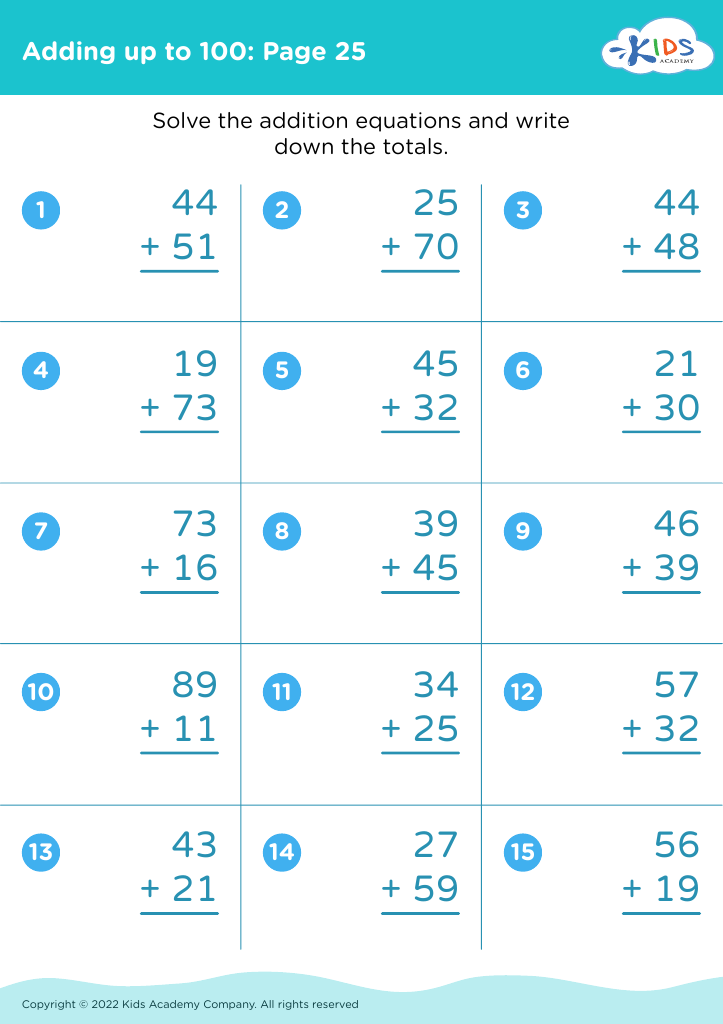
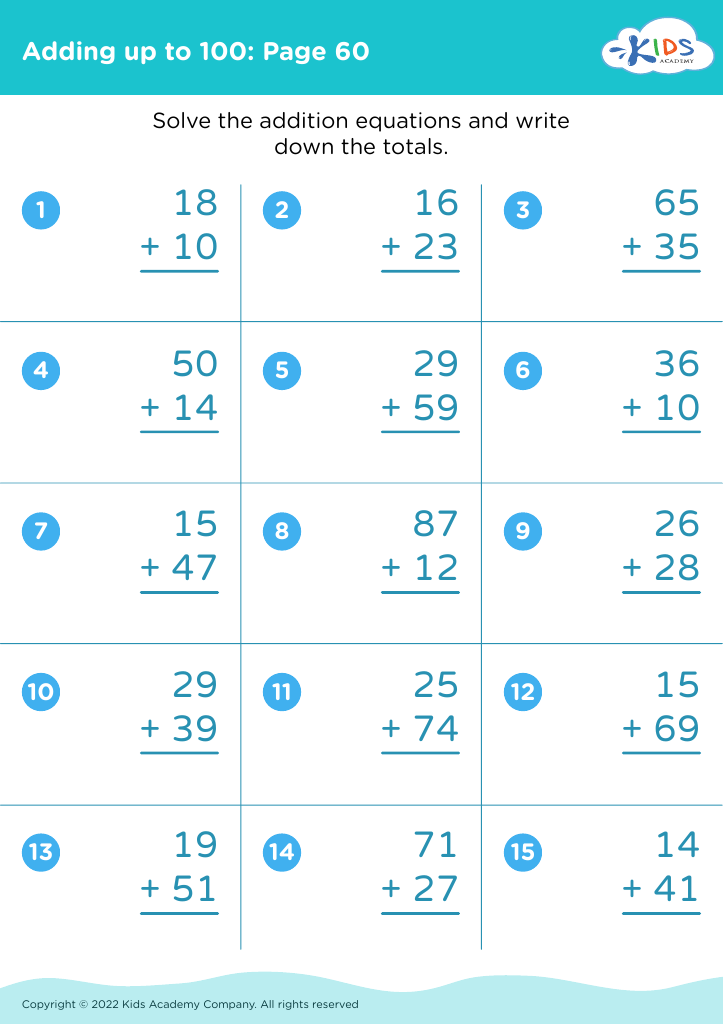
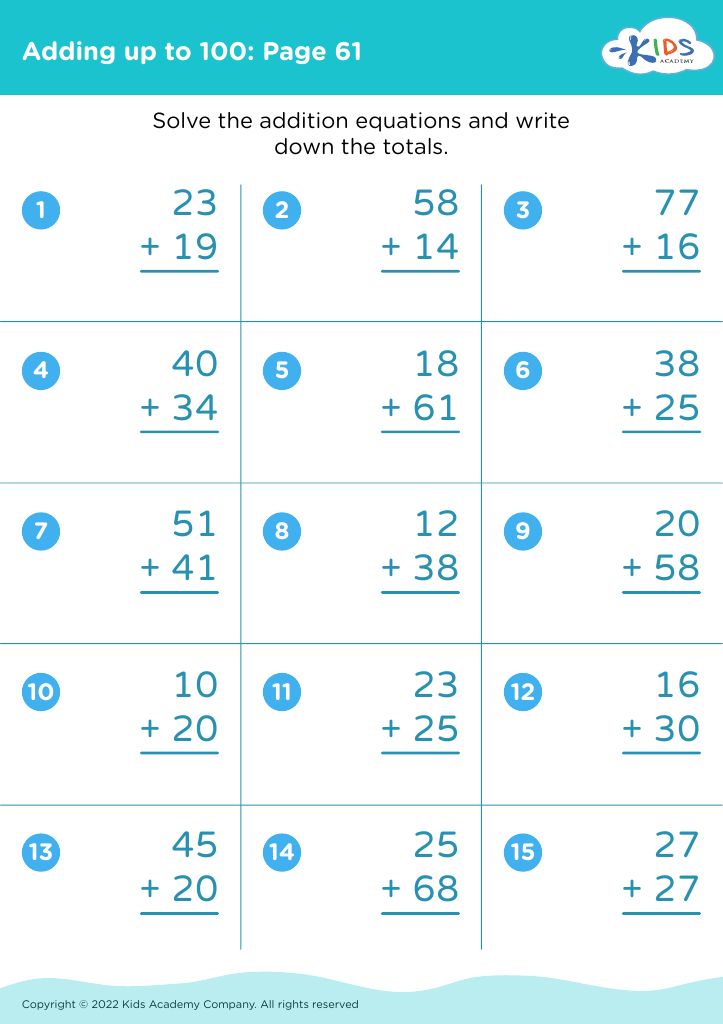
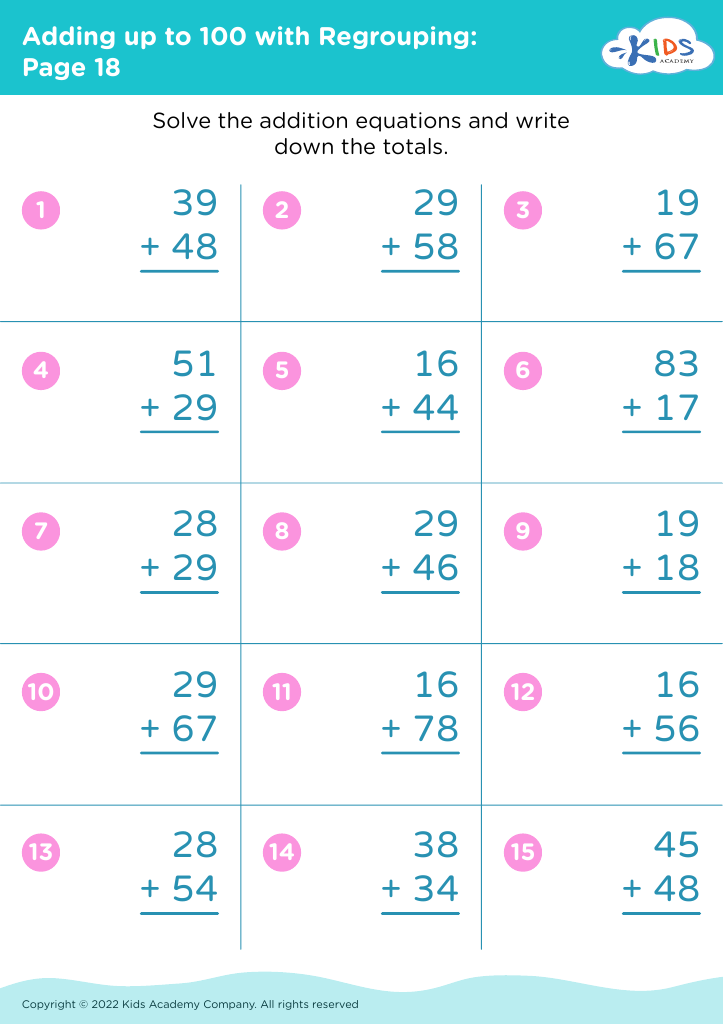
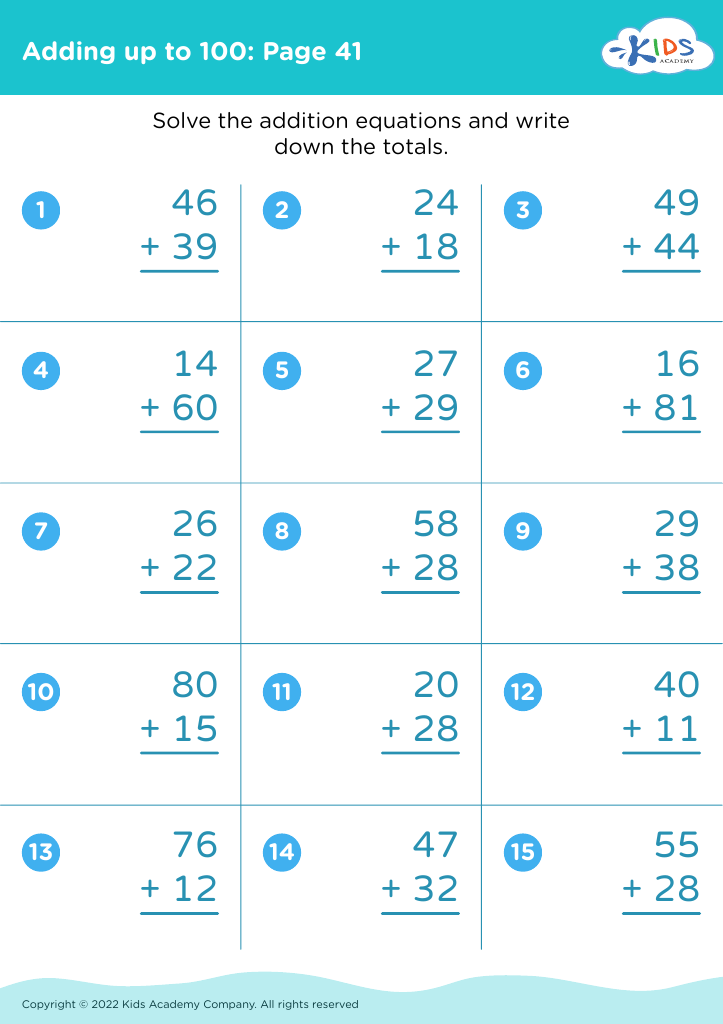
Our "Understanding Sequences Adding up to 100 Worksheets for Ages 3-7" are designed to make learning fun and intuitive for young children. Engaging activities help kids grasp the concept of number sequences and understand how to add numbers up to 100 through interactive exercises. Suitable for early learners, these worksheets encourage logical thinking, enhance math skills, and foster a love for learning. Perfect for both classroom use and at-home practice, our carefully designed resources ensure that your little one builds a strong mathematical foundation while enjoying a stimulating learning experience. Prepare them for future success with Kids Academy!


%20(1).jpg)




Understanding sequences that add up to 100 is crucial for children aged 3-7 as it lays the foundation for essential mathematical skills. Early exposure to these concepts helps develop number sense, an intuitive understanding of numbers and their relationships. When children grasp sequences and their cumulative sums, they enhance their ability to perform basic arithmetic operations like addition and subtraction. This foundational knowledge can also make complex math topics more approachable in their later academic years.
Incorporating sequences into early education fosters critical thinking and problem-solving abilities. Children learn to recognize patterns, predict subsequent numbers, and understand the concept of incremental increase. Such activities are not just arithmetic exercises but cognitive workouts that stimulate logical reasoning.
Moreover, learning these sequences can be a fun and engaging way to introduce children to math. Interactive games, using visual aids like number lines and counters, can make learning exciting and help maintain their interest. Parents and teachers can create a supportive learning environment, encouraging curiosity, and a positive attitude toward math. This early enthusiasm, coupled with a strong understanding of sequences, will provide a sturdy base for future learning, boosting their confidence and academic success in mathematics.








