Basic Arithmetic Adding Up to 5 Worksheets for Ages 3-7 - Page 2
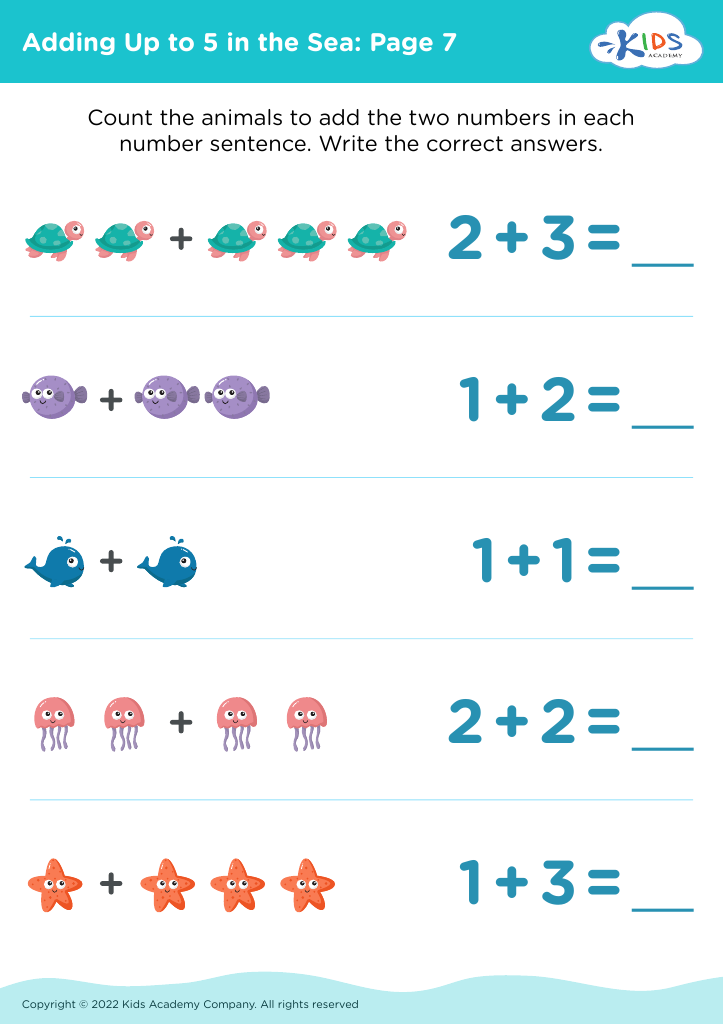
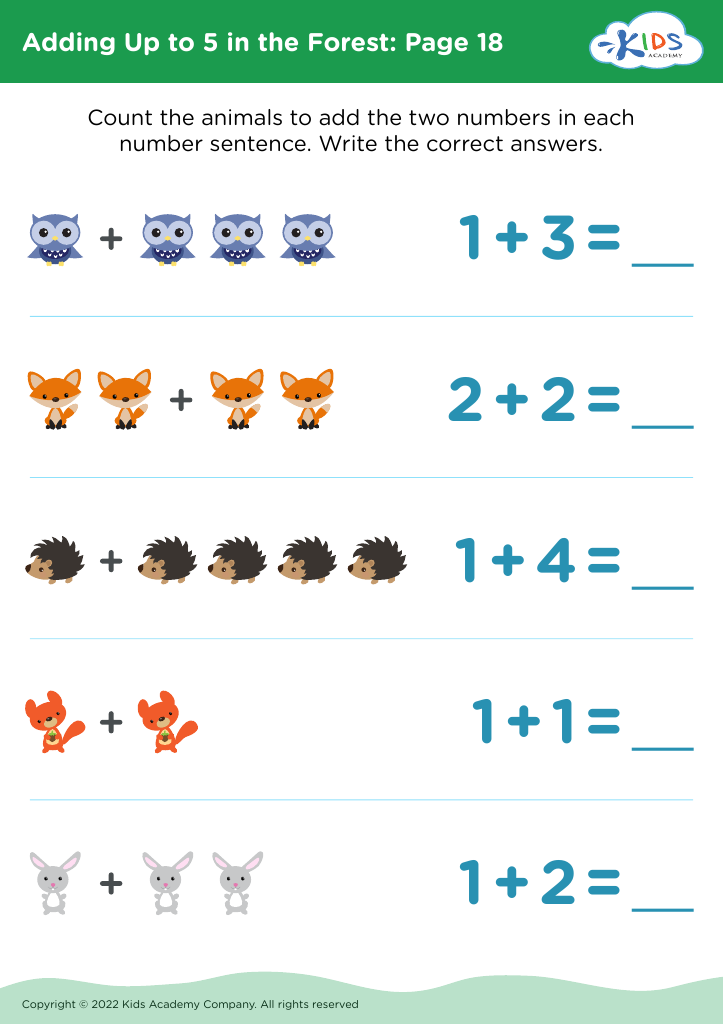
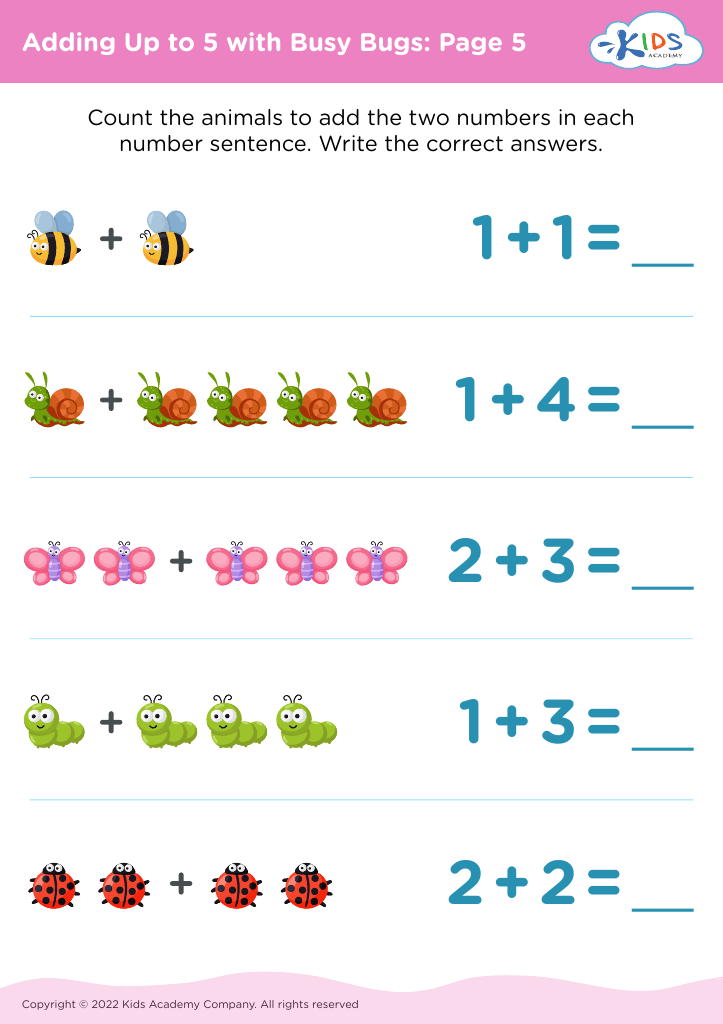
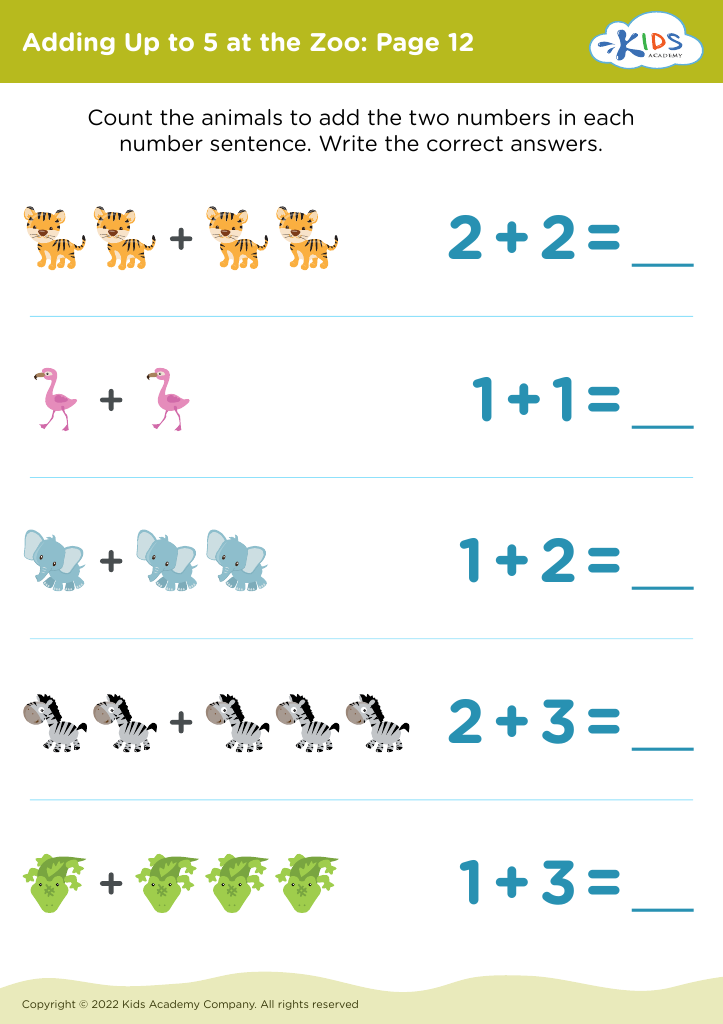
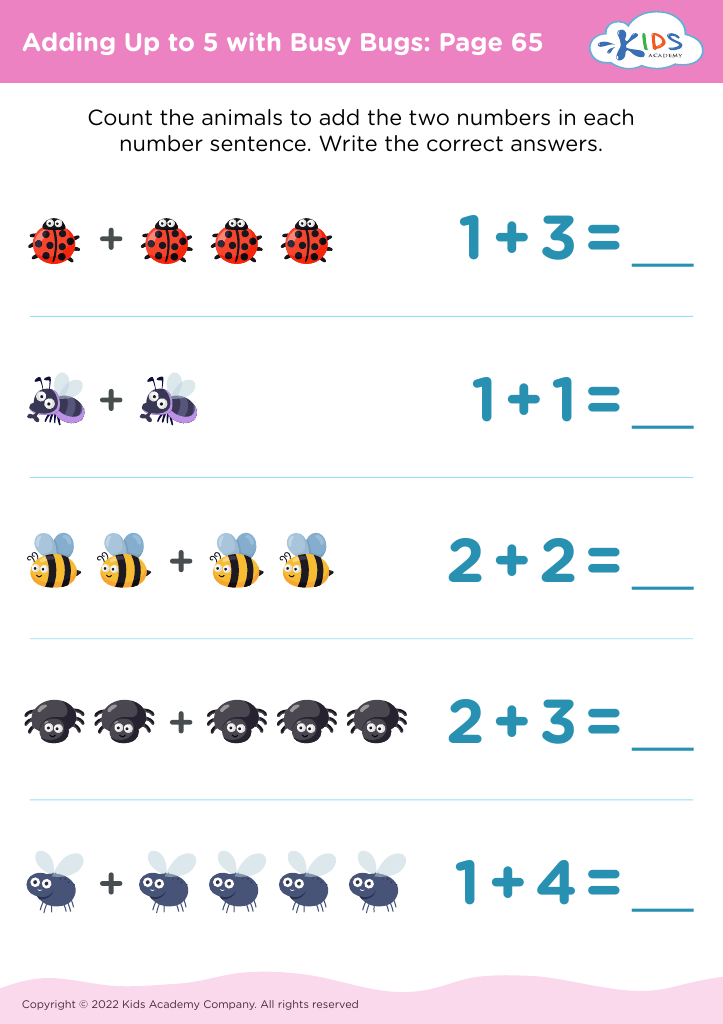
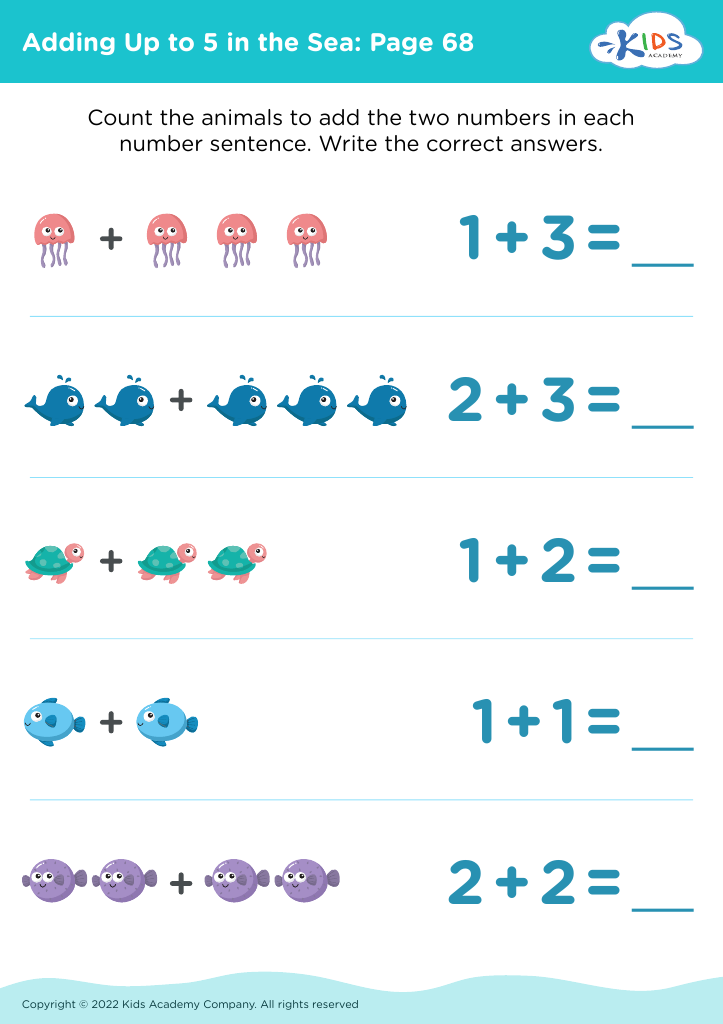
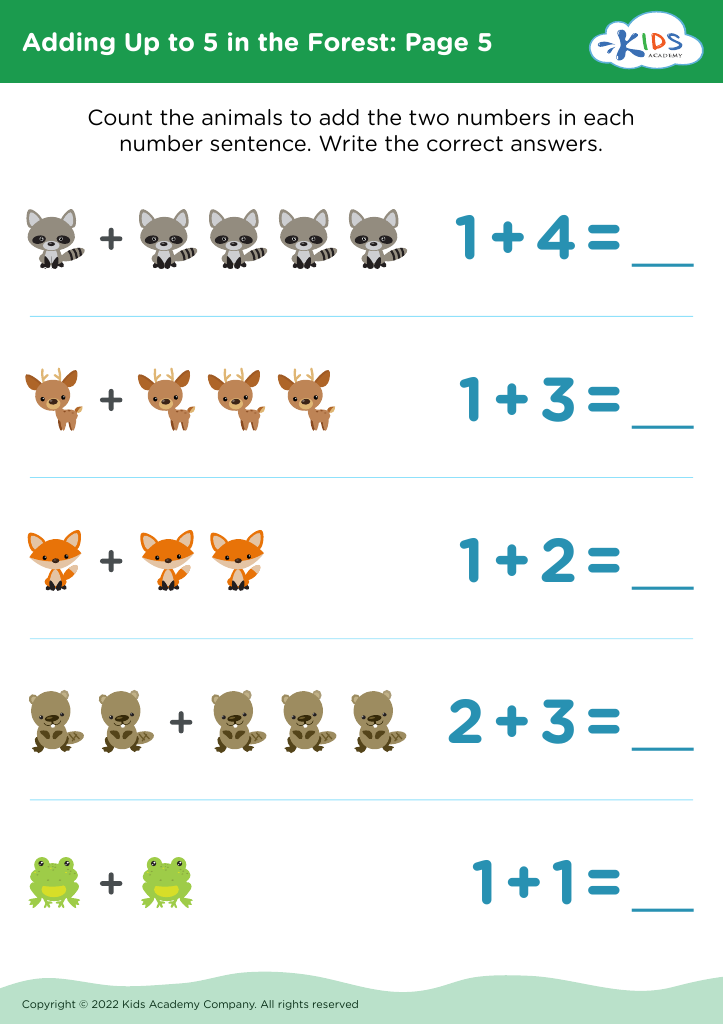
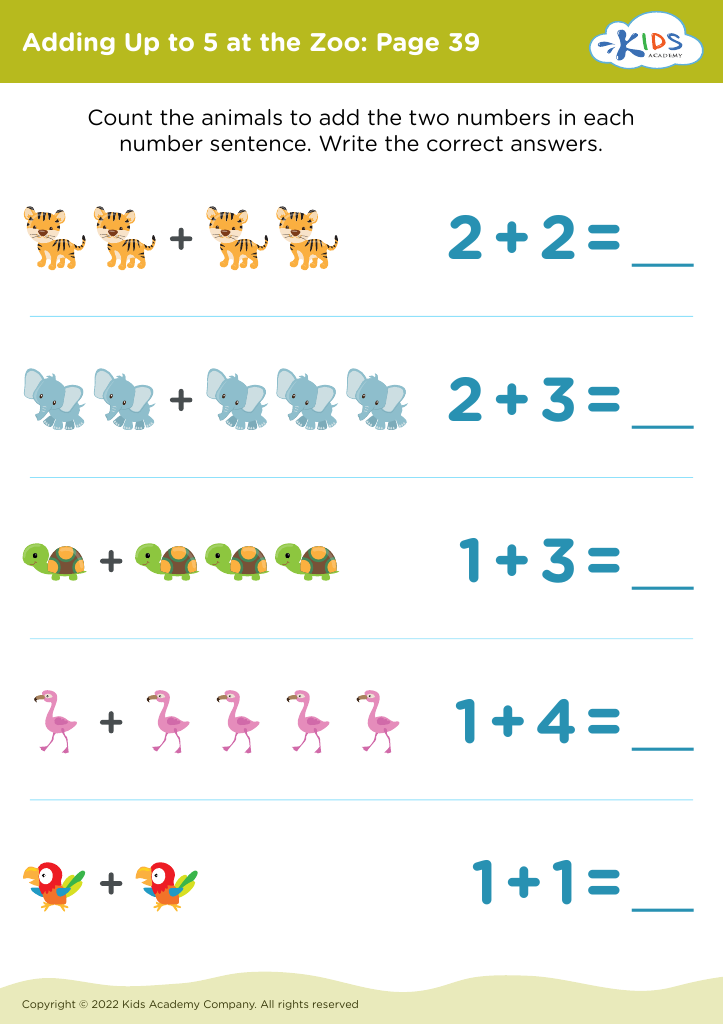







.jpg)
Ensuring that children aged 3-7 grasp basic arithmetic concepts, such as adding up to 5, is crucial for both parents and teachers. During this formative period, children's brains are exceptionally receptive to learning new skills. Basic arithmetic lays the foundation for all subsequent math education. When children start with a strong understanding of simple addition, they develop confidence and positive attitudes toward math, promoting a lifelong interest.
Mastering addition up to 5 helps young learners develop important cognitive skills, such as pattern recognition, logical thinking, and problem-solving. These competencies are not limited to math but extend to other academic areas and everyday life activities. Moreover, early math skills are strong predictors of future academic success. By prioritizing basic arithmetic, parents and teachers set children on the path to excelling in school and beyond.
In addition, collaborative activities involving basic arithmetic enhance children's social skills, including communication, cooperation, and patience. Children often begin to engage in play-based learning scenarios where they count, share, and distribute items, fostering both social and mathematical skills simultaneously.
In essence, focusing on basic arithmetic for young children builds a solid academic foundation, supports cognitive development, and enables the acquisition of broader life skills, all essential for their holistic growth and success.








