Filters

232 filtered results

Clear all filters
Favorites
With answer key
Interactive

232 filtered results

Difficulty Level

Grade


Check out this FREE Trial Lesson on Adding Up to 5 for age 3-7!

Short and Long Vowel Sort

Favorites
With answer key
Interactive
  • 3-7
  • Counting practice
  • Adding Up to 5
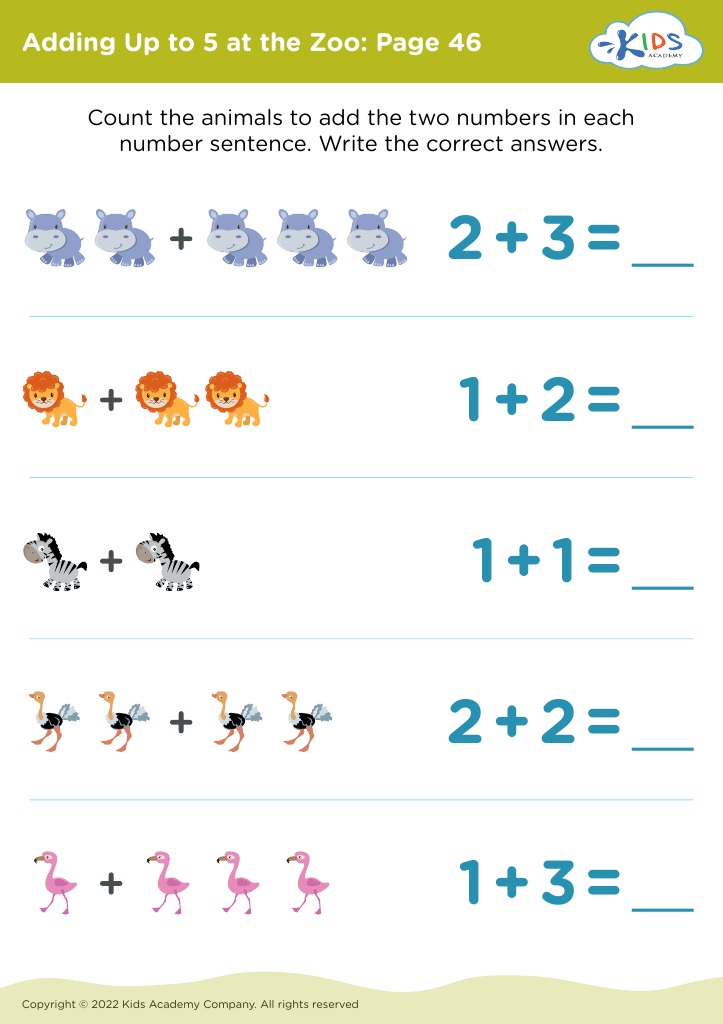
Adding Up to 5 at the Zoo: Page 46
Worksheet
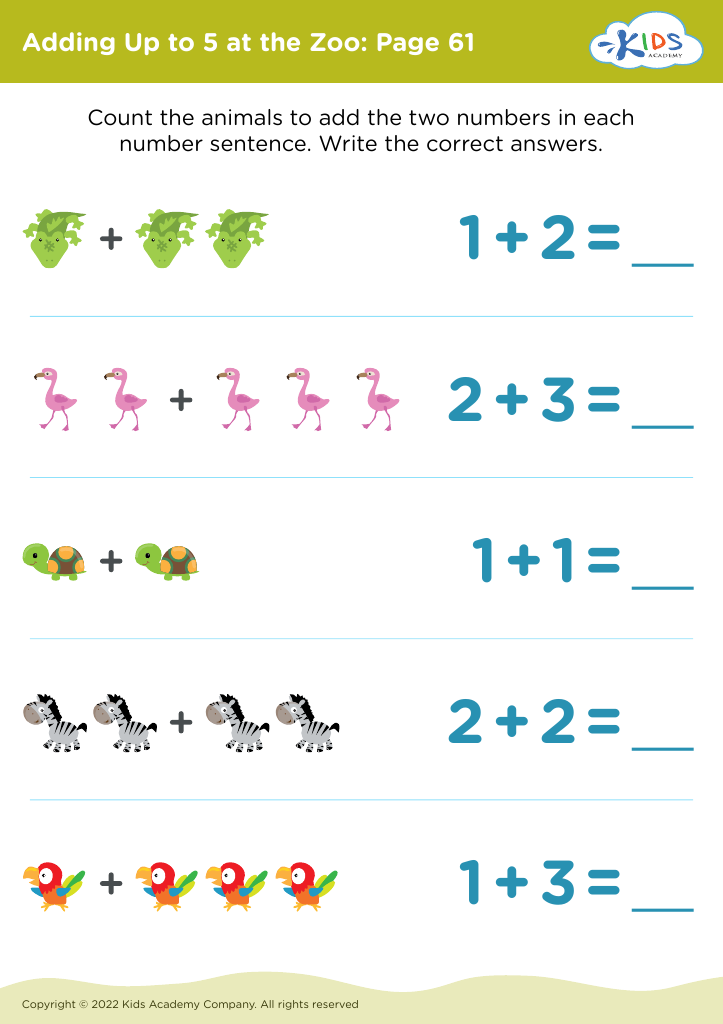
Adding Up to 5 at the Zoo: Page 61
Worksheet
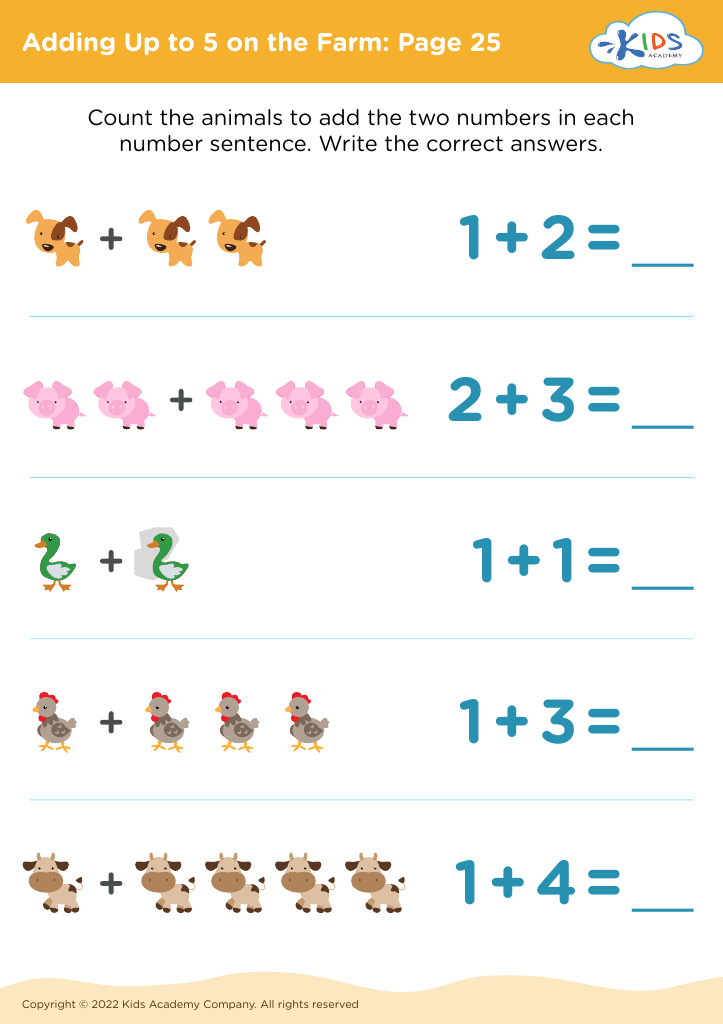
Adding Up to 5 on the Farm: Page 25
Worksheet
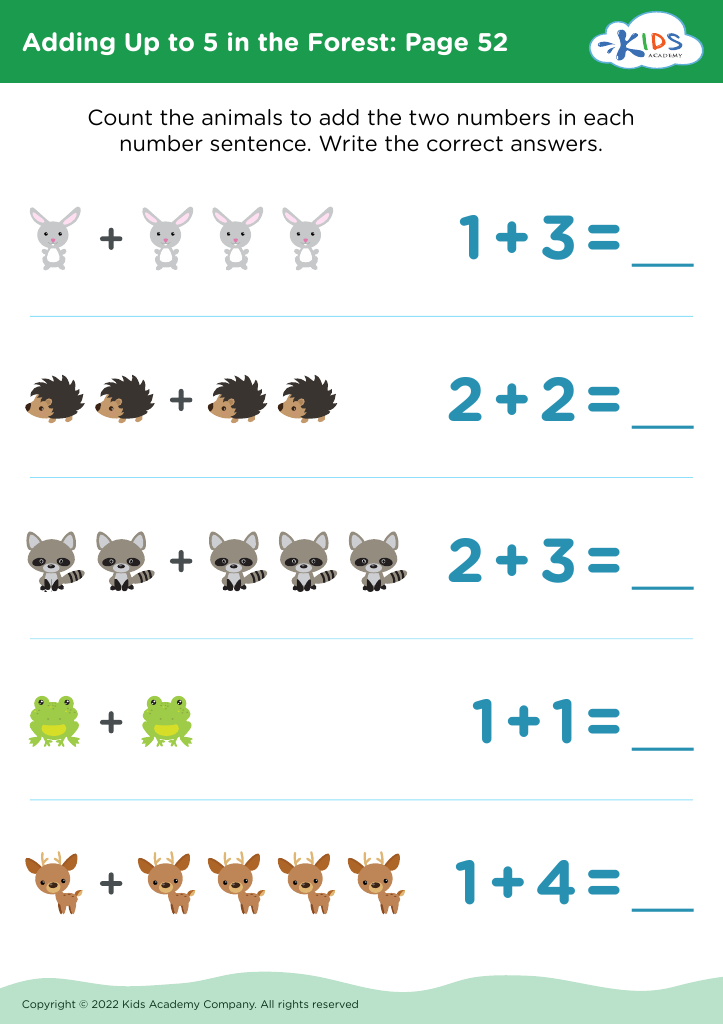
Adding Up to 5 in the Forest: Page 52
Worksheet
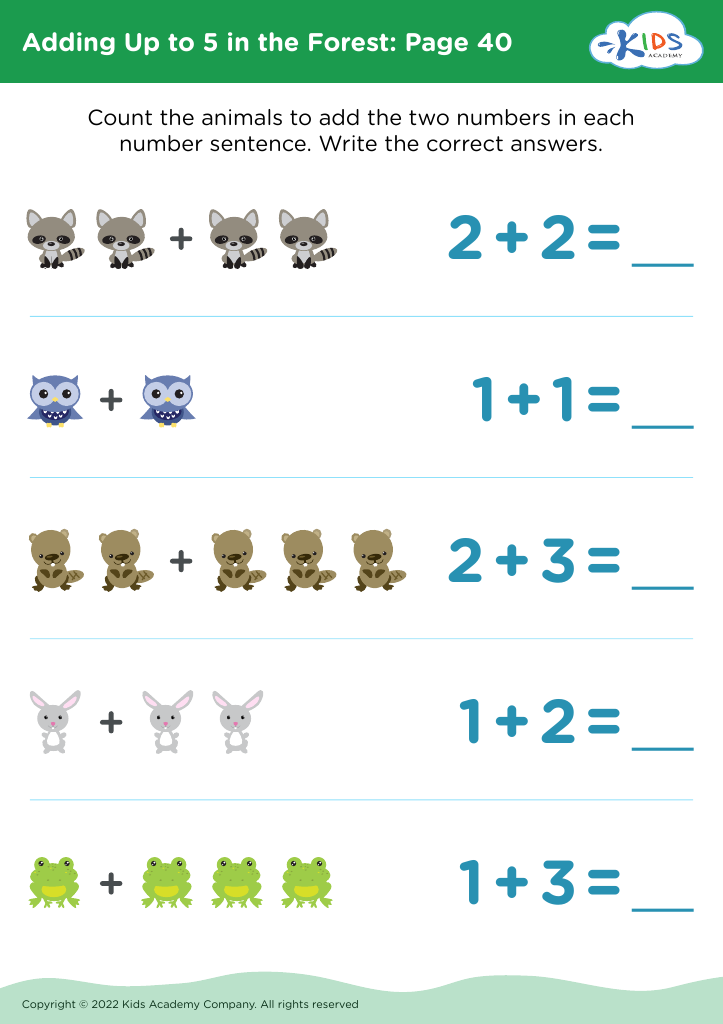
Adding Up to 5 in the Forest: Page 40
Worksheet
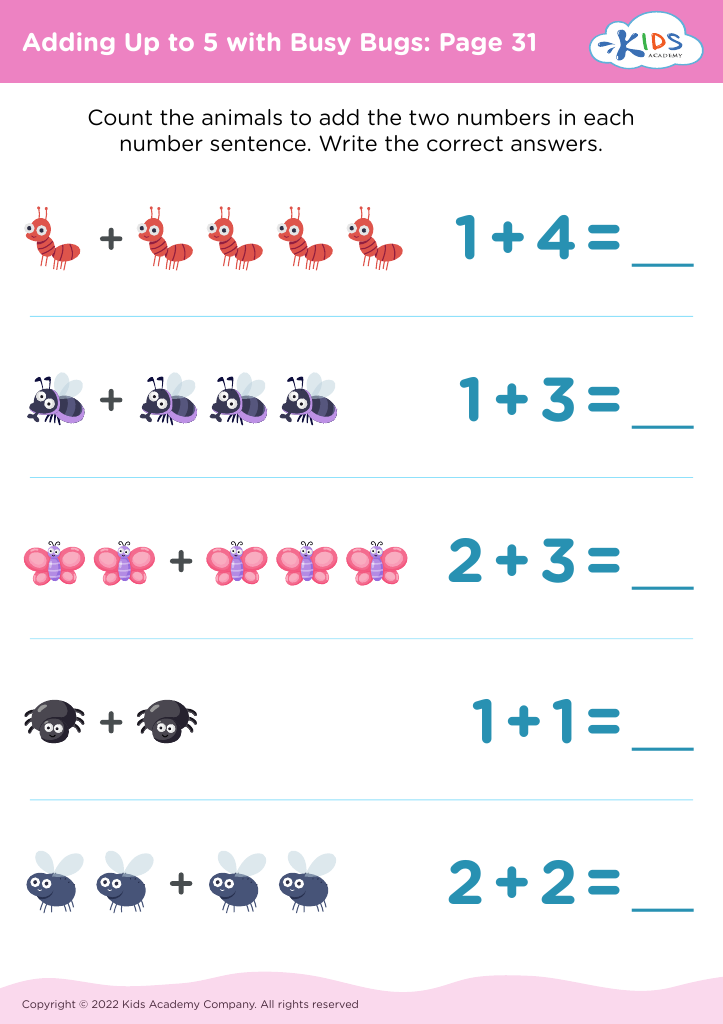
Adding Up to 5 with Busy Bugs: Page 31
Worksheet
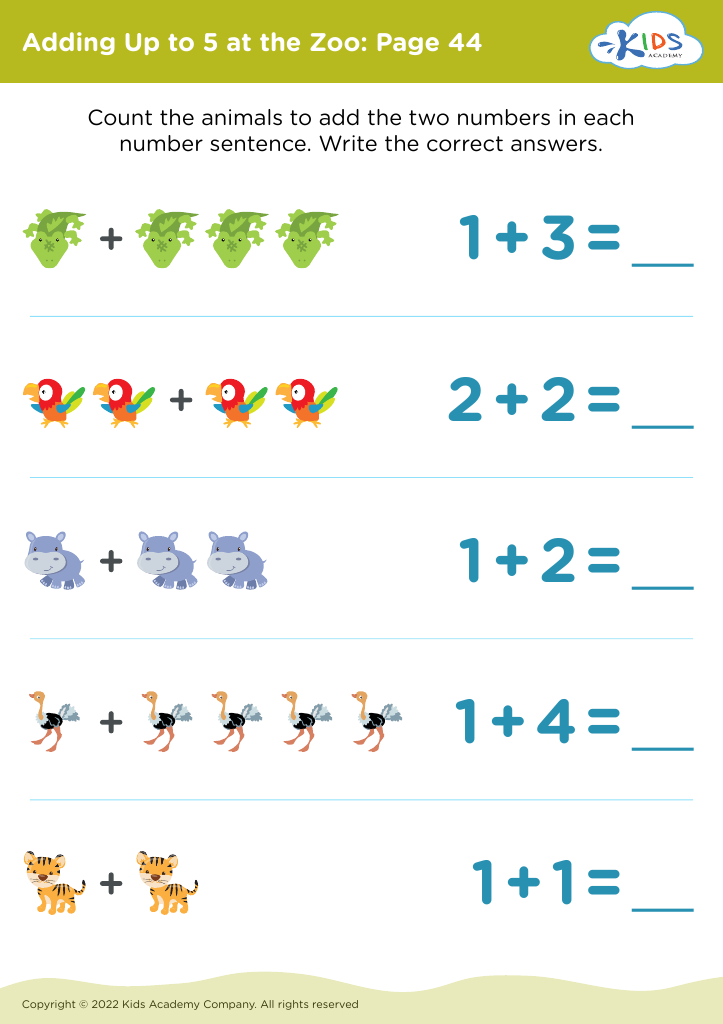
Adding Up to 5 at the Zoo: Page 44
Worksheet
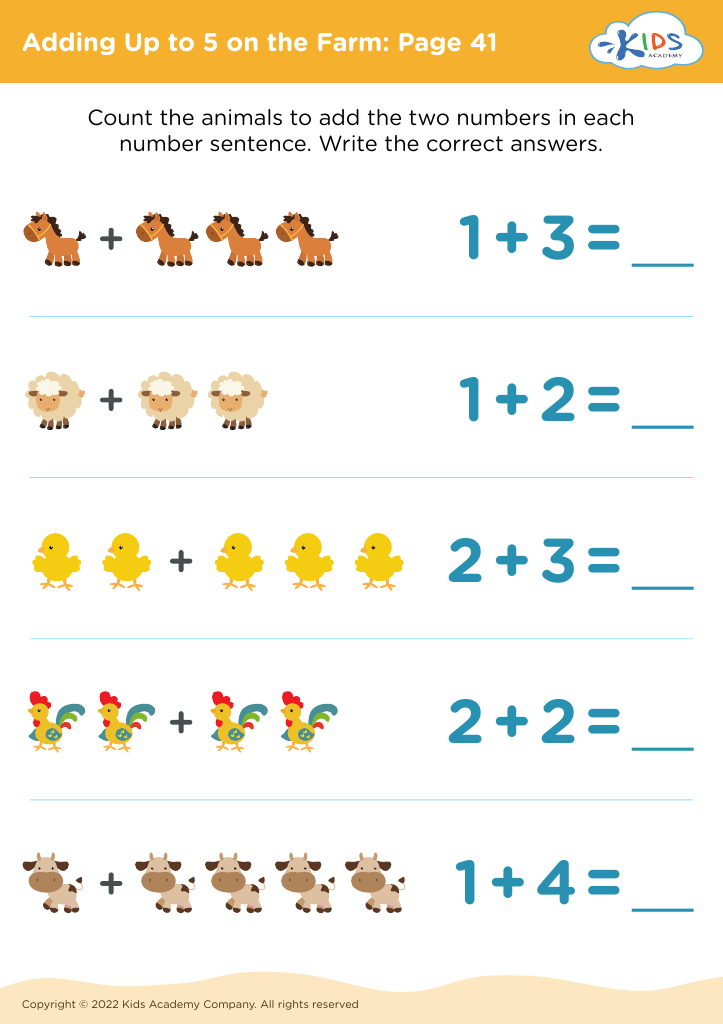
Adding Up to 5 on the Farm: Page 41
Worksheet
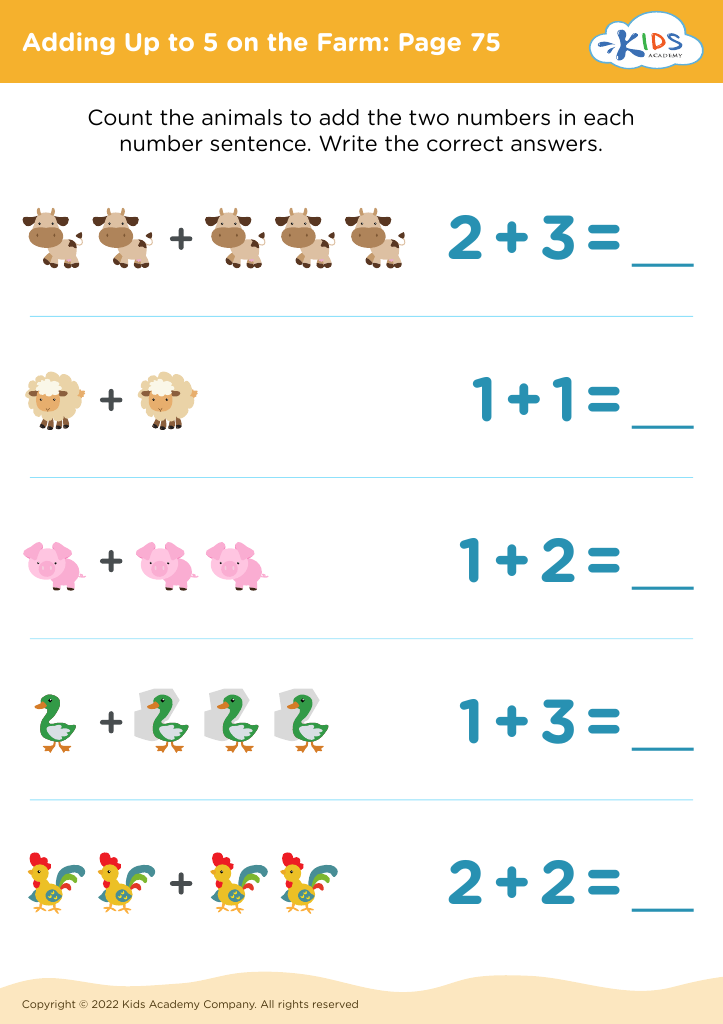
Adding Up to 5 on the Farm: Page 75
Worksheet
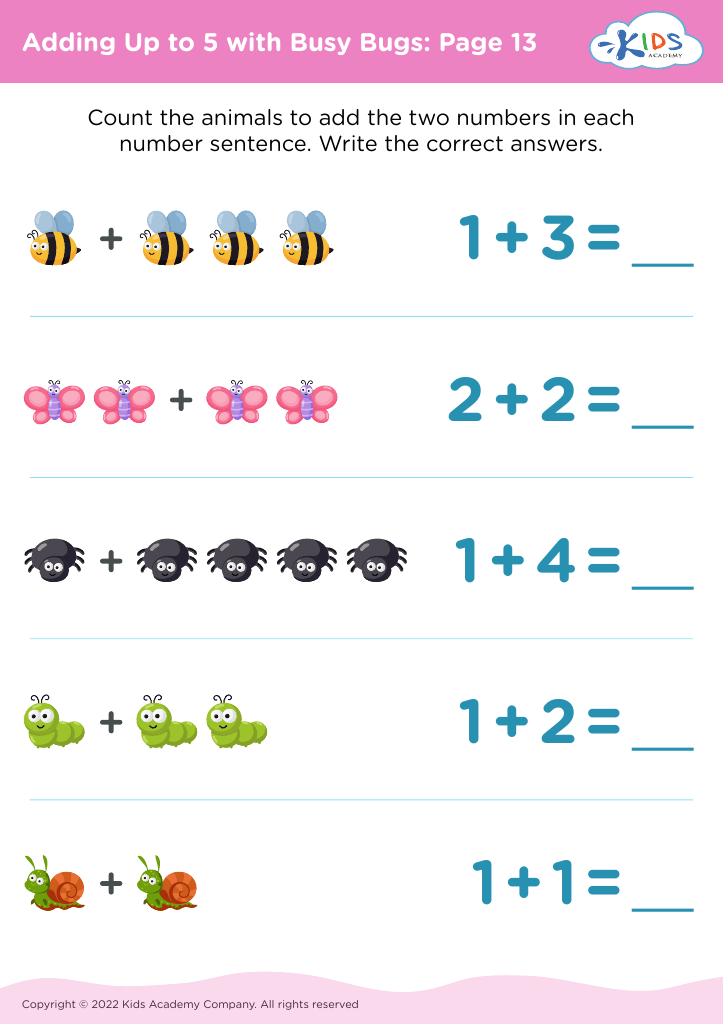
Adding Up to 5 with Busy Bugs: Page 13
Worksheet
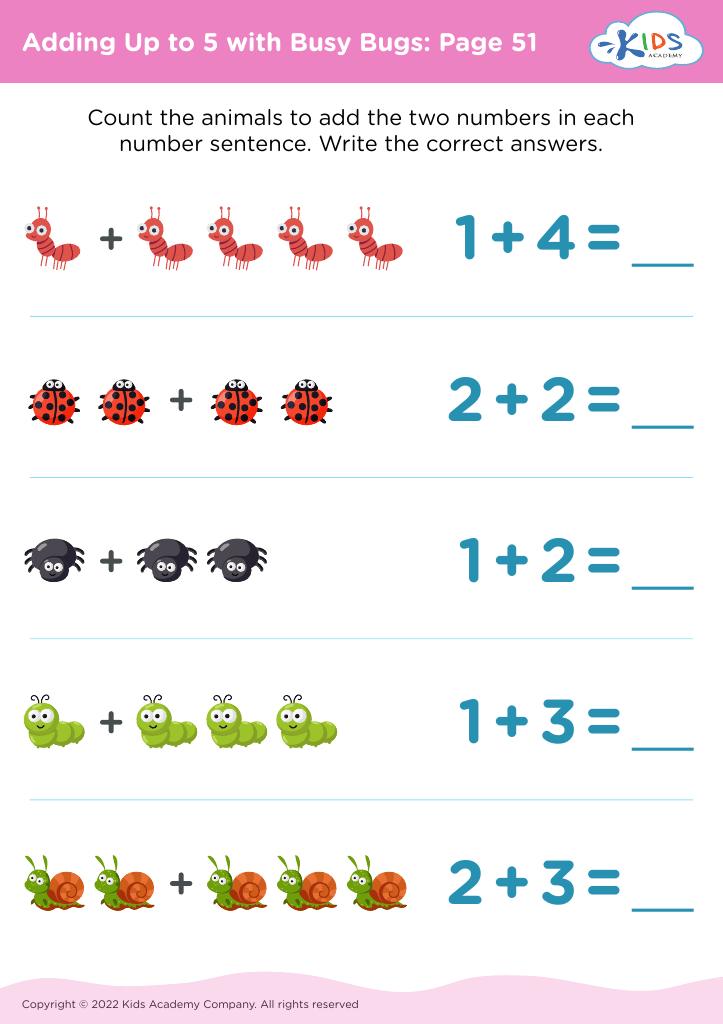
Adding Up to 5 with Busy Bugs: Page 51
Worksheet
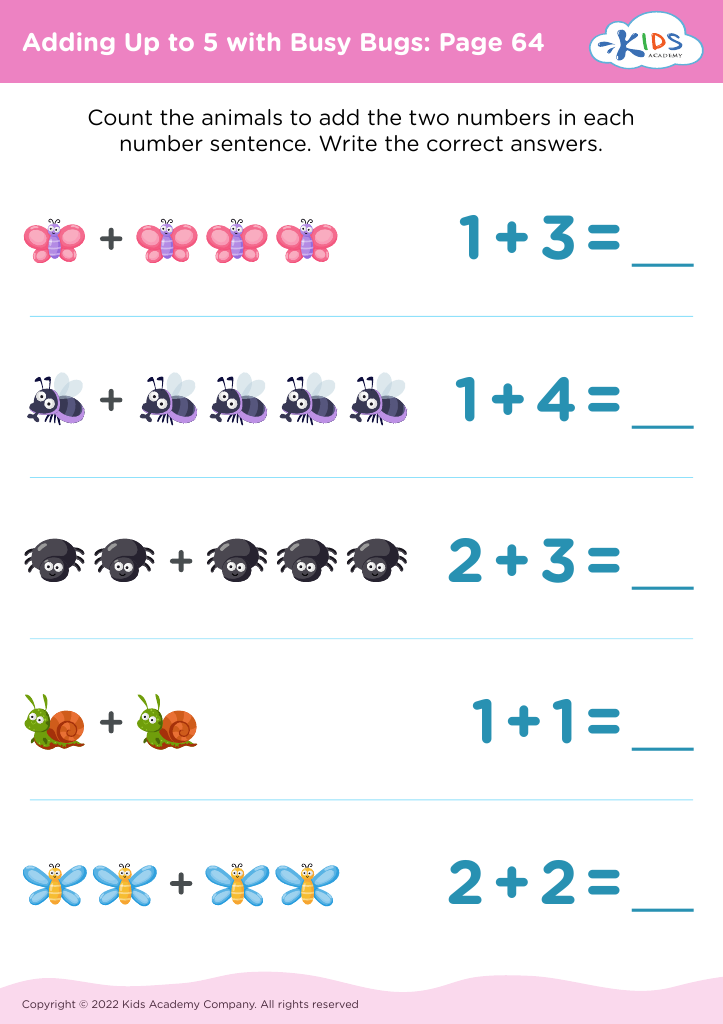
Adding Up to 5 with Busy Bugs: Page 64
Worksheet
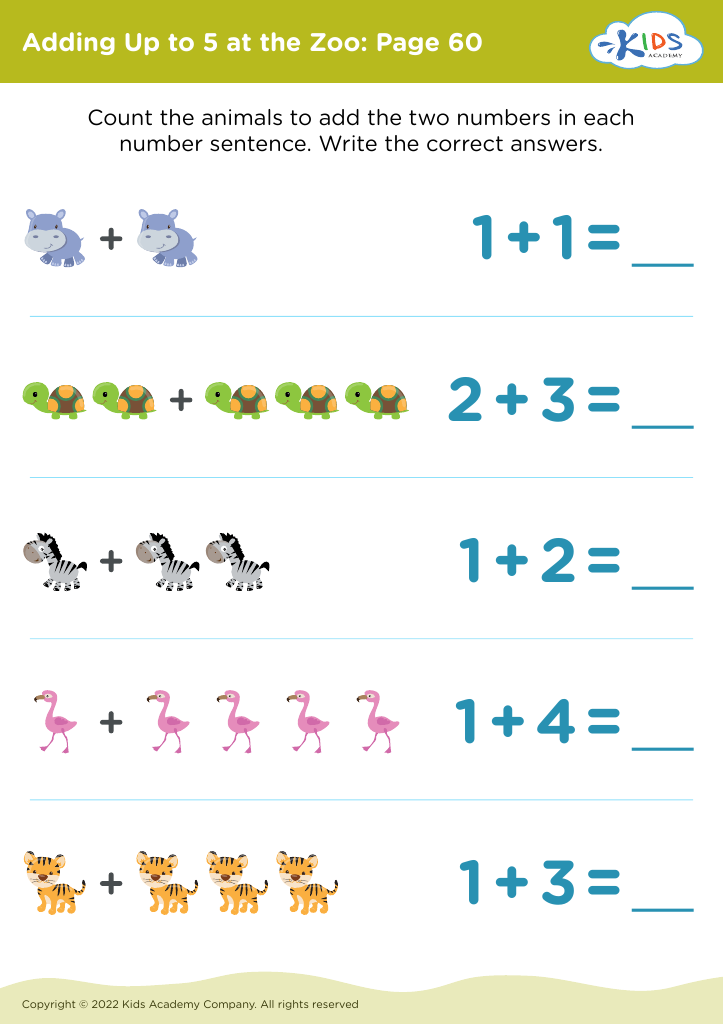
Adding Up to 5 at the Zoo: Page 60
Worksheet
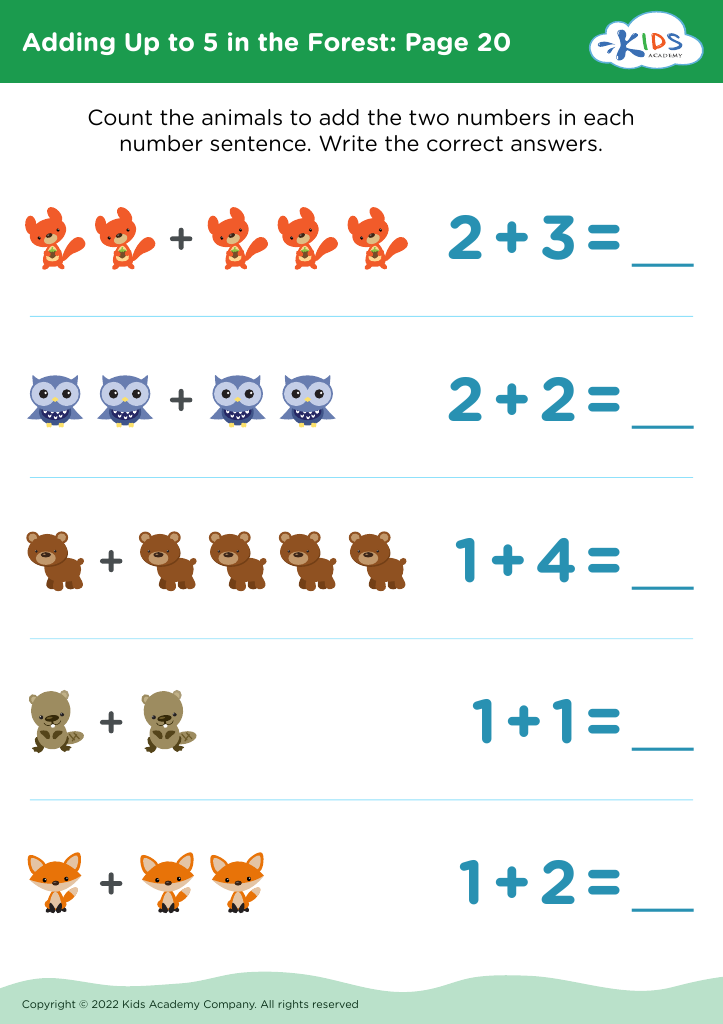
Adding Up to 5 in the Forest: Page 20
Worksheet
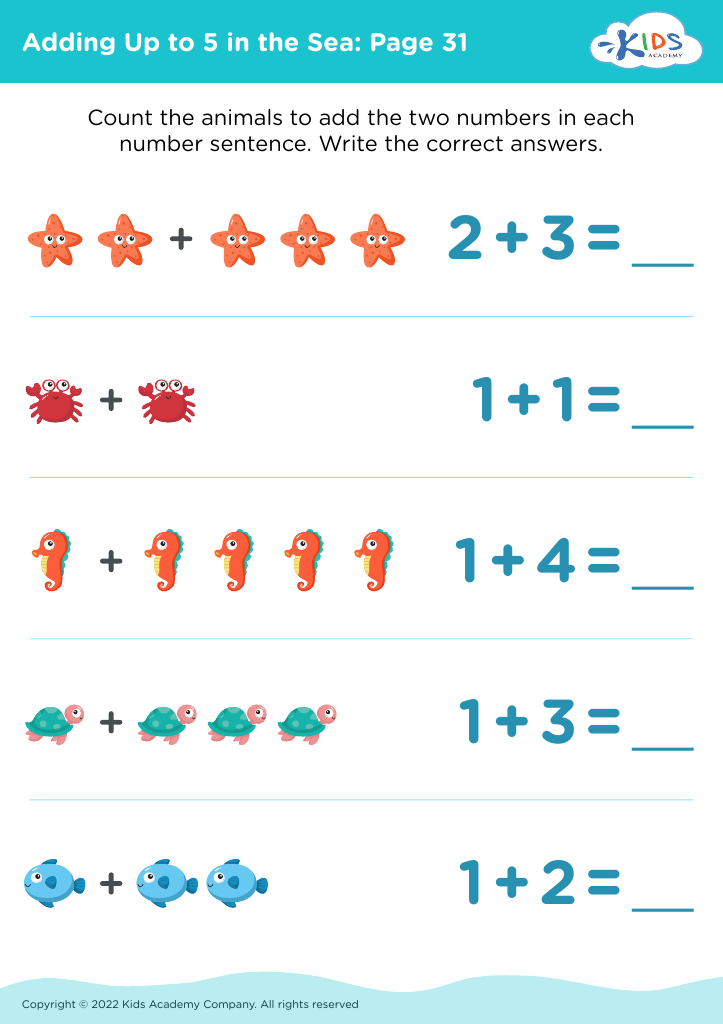
Adding Up to 5 in the Sea: Page 31
Worksheet
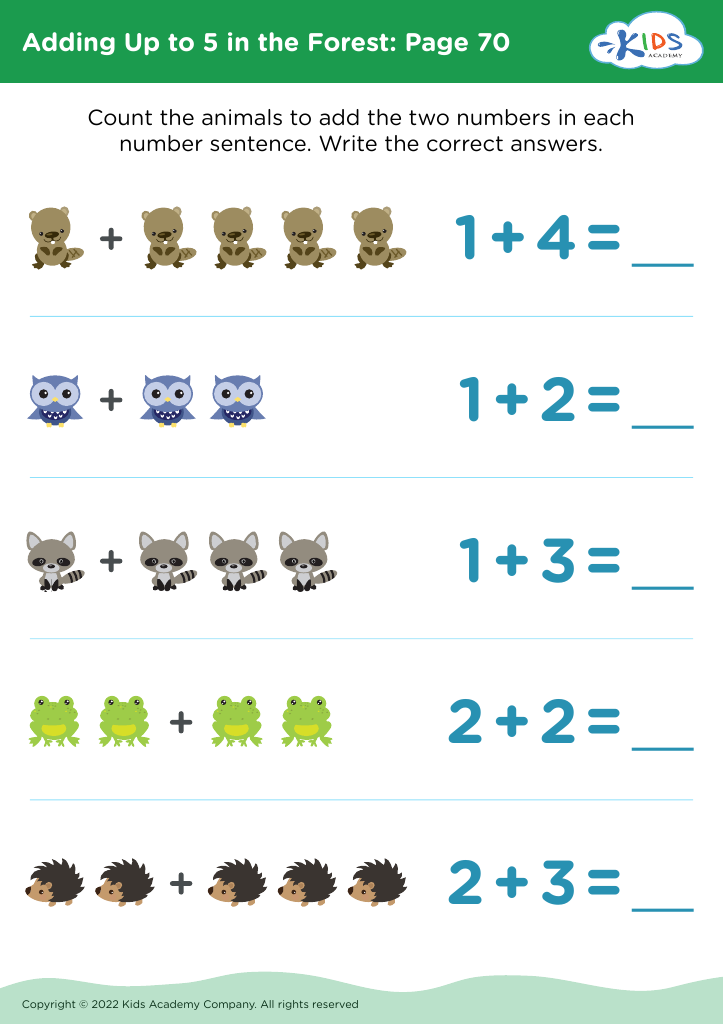
Adding Up to 5 in the Forest: Page 70
Worksheet
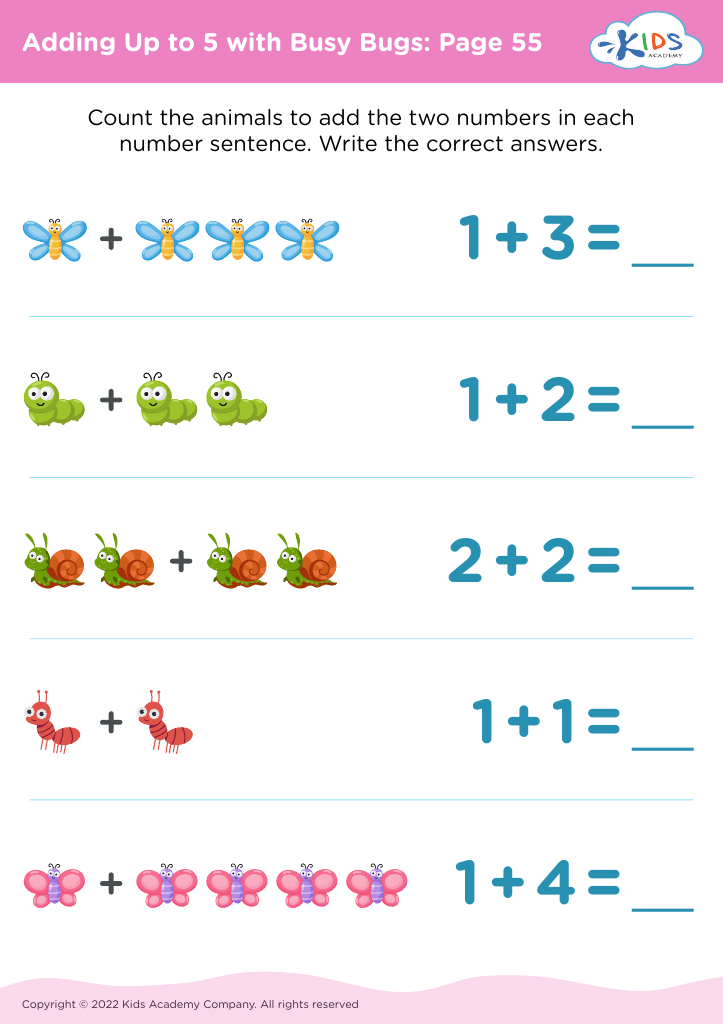
Adding Up to 5 with Busy Bugs: Page 55
Worksheet
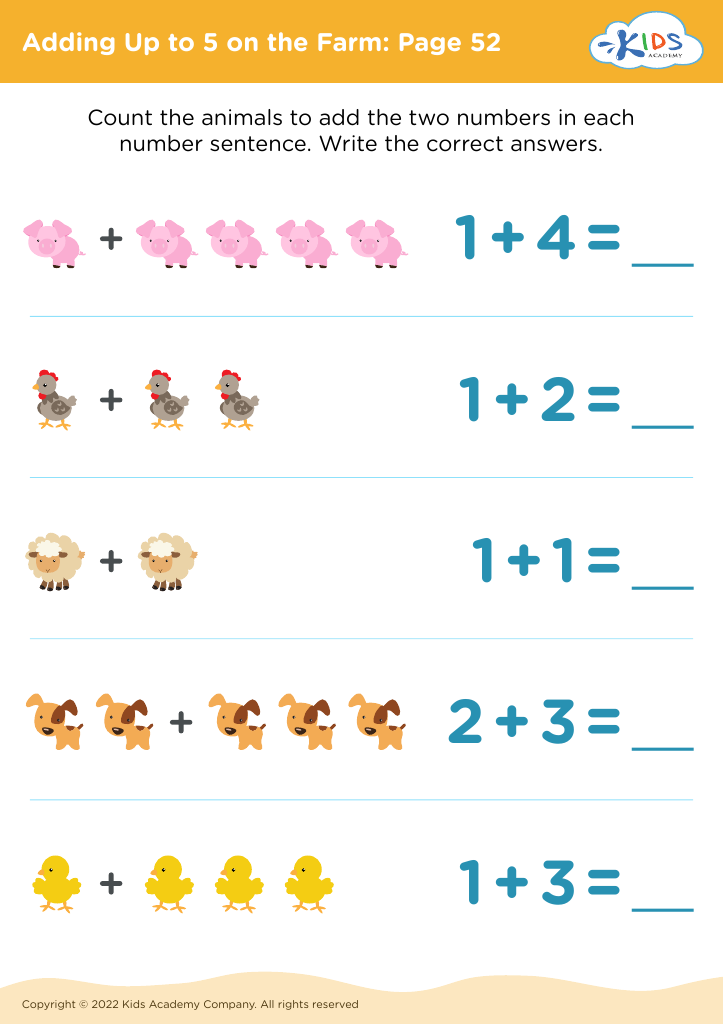
Adding Up to 5 on the Farm: Page 52
Worksheet
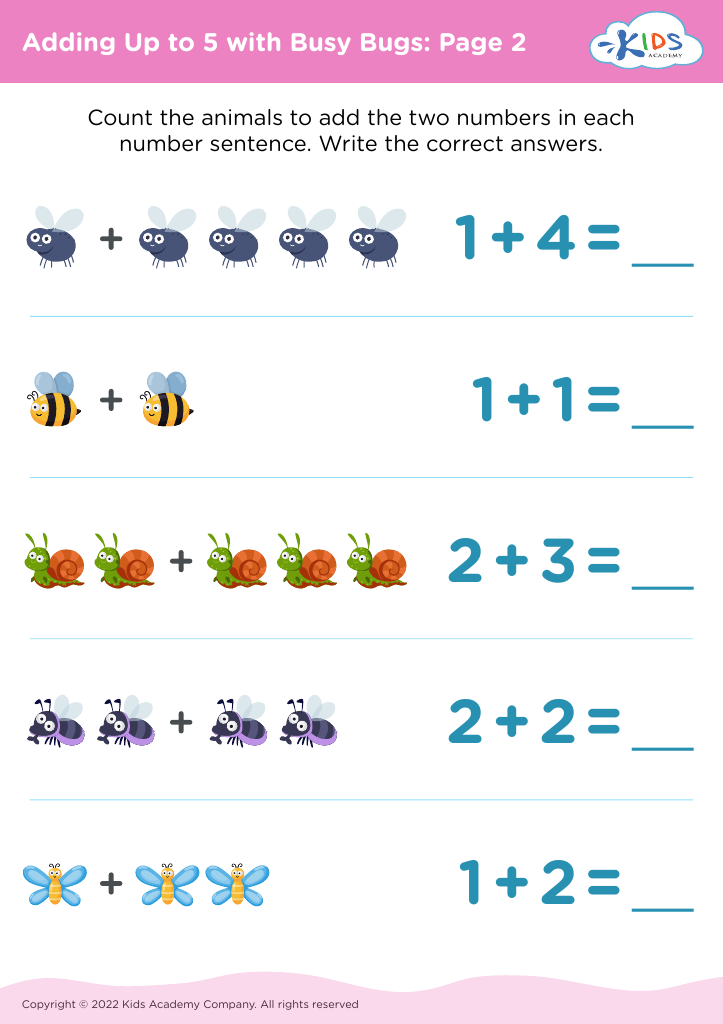
Adding Up to 5 with Busy Bugs: Page 2
Worksheet
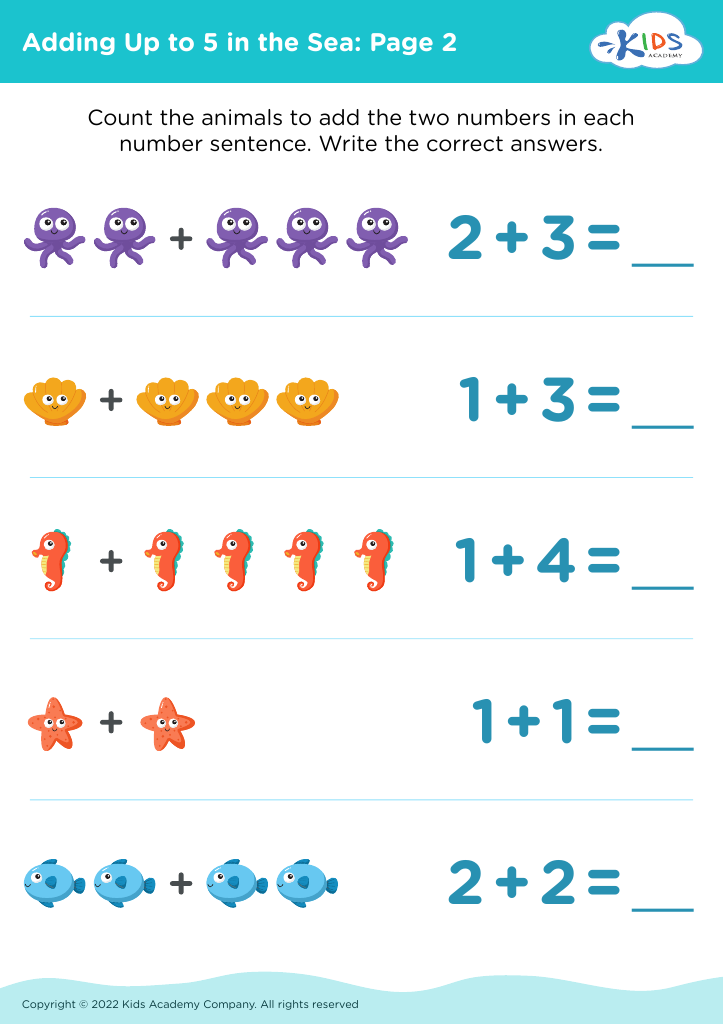
Adding Up to 5 in the Sea: Page 2

Adding Up to 5 in the Sea: Page 2

Adding Up to 5 in the Sea: Page 2
Worksheet
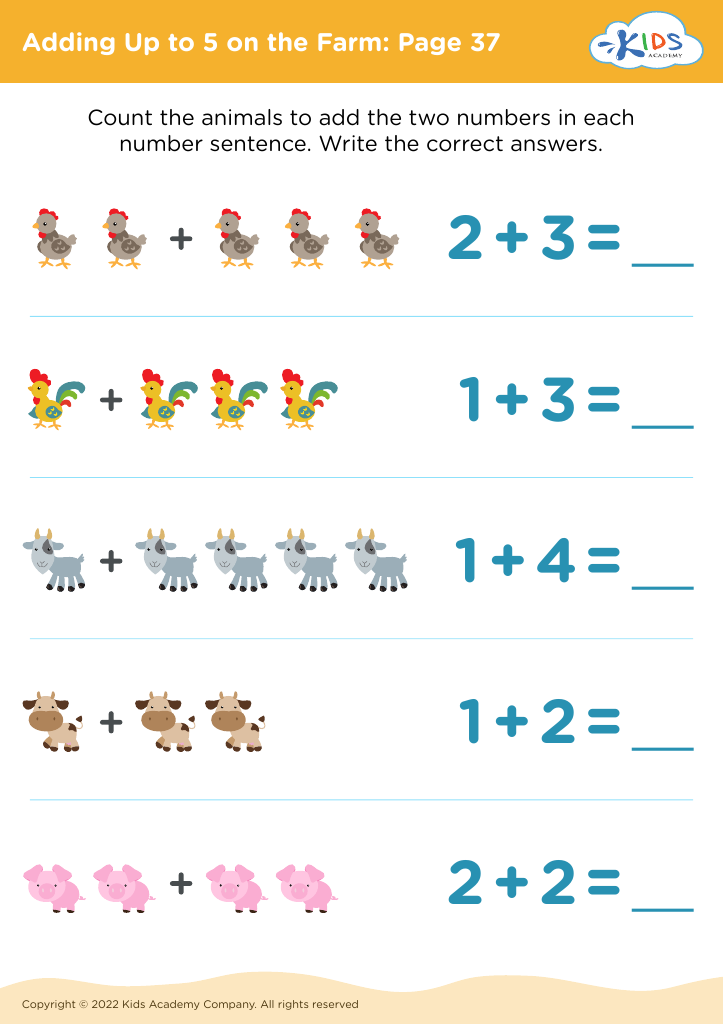
Adding Up to 5 on the Farm: Page 37
Worksheet
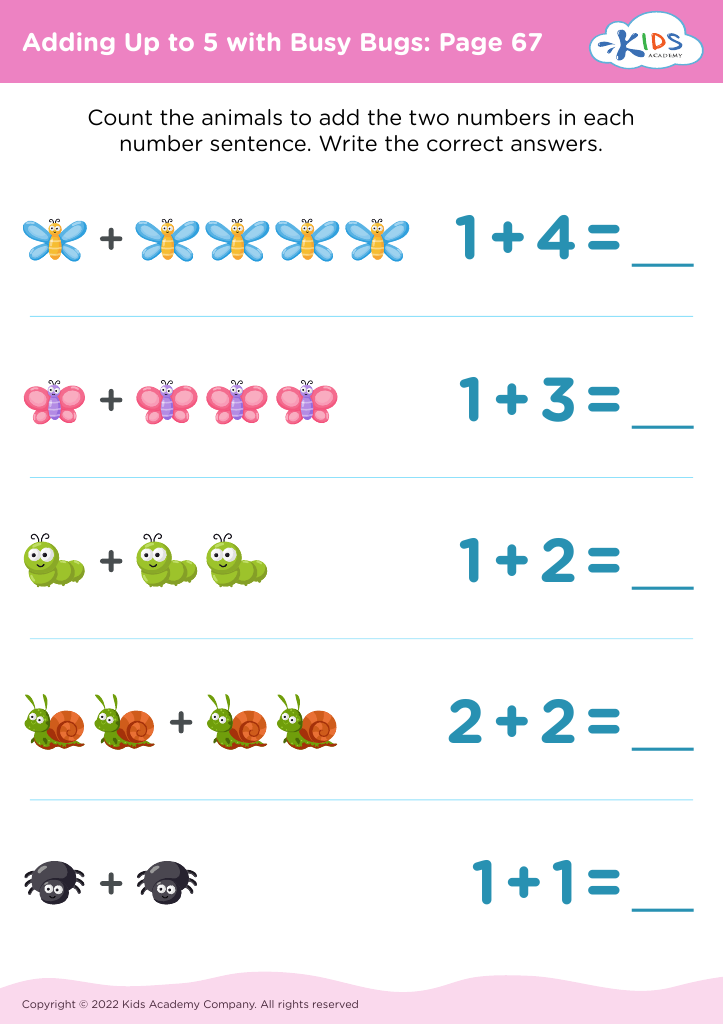
Adding Up to 5 with Busy Bugs: Page 67
Worksheet
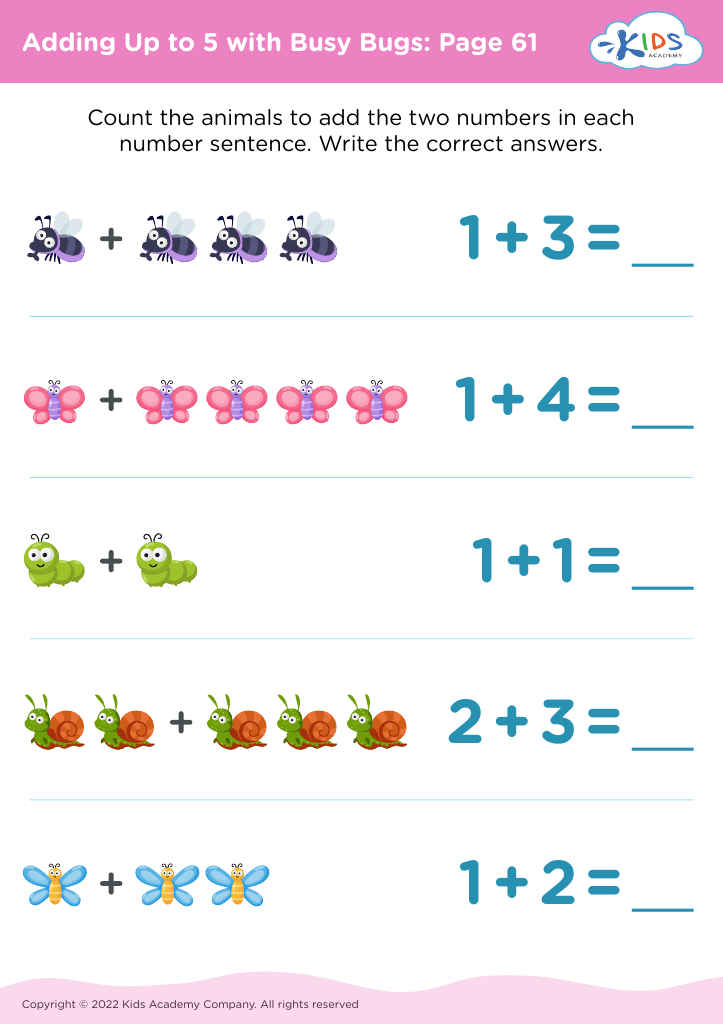
Adding Up to 5 with Busy Bugs: Page 61
Worksheet
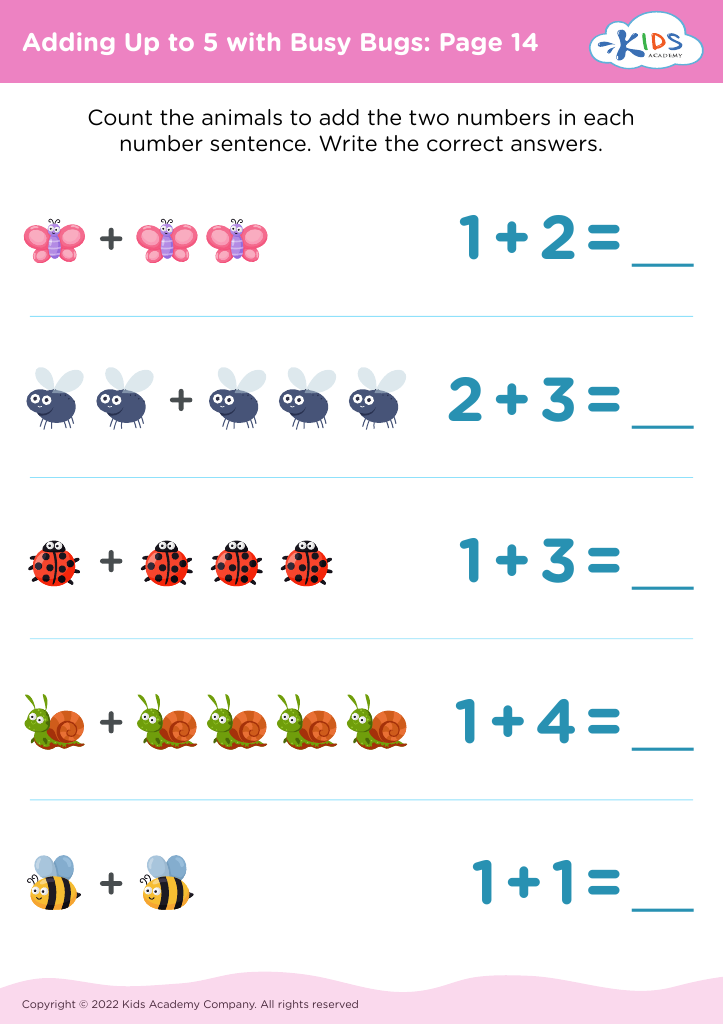
Adding Up to 5 with Busy Bugs: Page 14
Worksheet


Counting practice, especially focusing on adding up to 5, is essential for children aged 3-7 as it lays the foundation for their future math skills. Engaging in counting helps children develop number sense, which is critical for understanding quantities and mathematical concepts. Mastering the basics of addition up to 5 equips young learners with the ability to solve more complex problems later on, supporting their cognitive development.

Moreover, counting fosters problem-solving abilities as children learn to combine numbers and explore different approaches to reach a total. This interactive process often encourages critical thinking and enhances memory, as children practice recalling numbers and their relationships. Additionally, counting can be integrated with various activities such as games, songs, and everyday tasks, making learning enjoyable and interactive.

Teachers and parents should prioritize counting practice because it not only boosts children's confidence in mathematics but also supports language development as they articulate numbers and quantities. A strong grasp of simple addition is crucial in future learning stages, including subtraction and more advanced operations. Thus, nurturing these skills early on contributes significantly to a child’s overall academic success and lays the groundwork for lifelong learning.