Counting proficiency Adding Up to 5 Worksheets for Ages 3-7
9 filtered results
-
From - To
Boost counting proficiency and number sense with our engaging "Adding Up to 5 Worksheets" designed for ages 3-7. These expertly crafted worksheets help young learners develop foundational math skills in a fun and interactive way. Through a variety of exercises, children will practice counting, number recognition, and simple addition, all tailored to their developmental stage. Perfect for both classroom and home use, our worksheets make learning math enjoyable and effective. Watch as your child builds confidence and a love for numbers with these essential resources from Kids Academy. Start your child's math journey today!
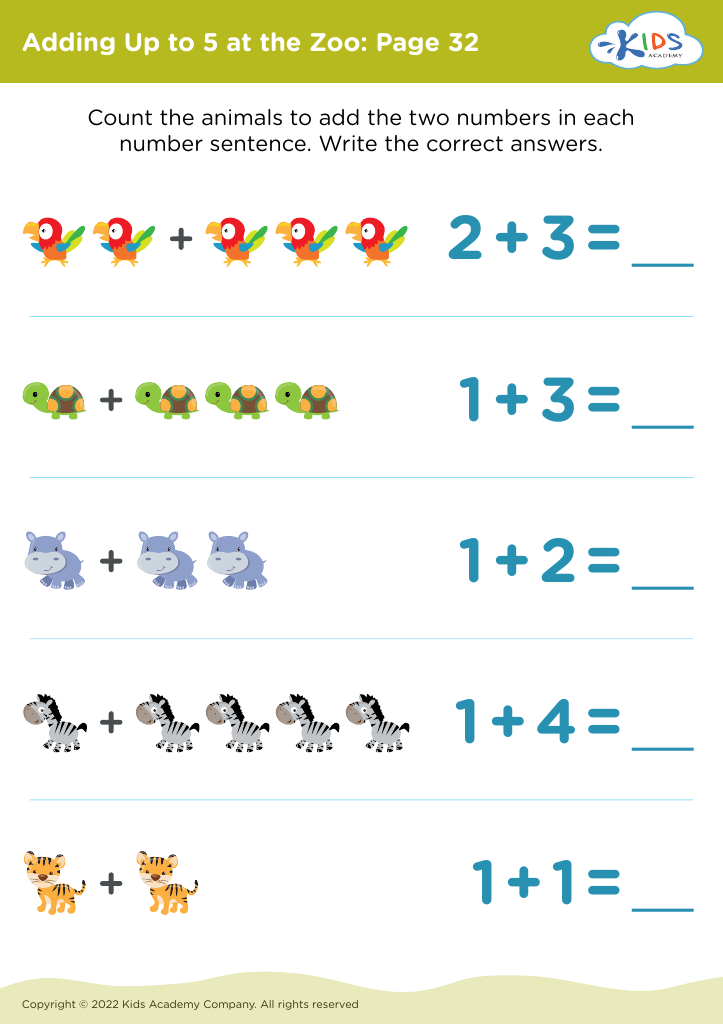
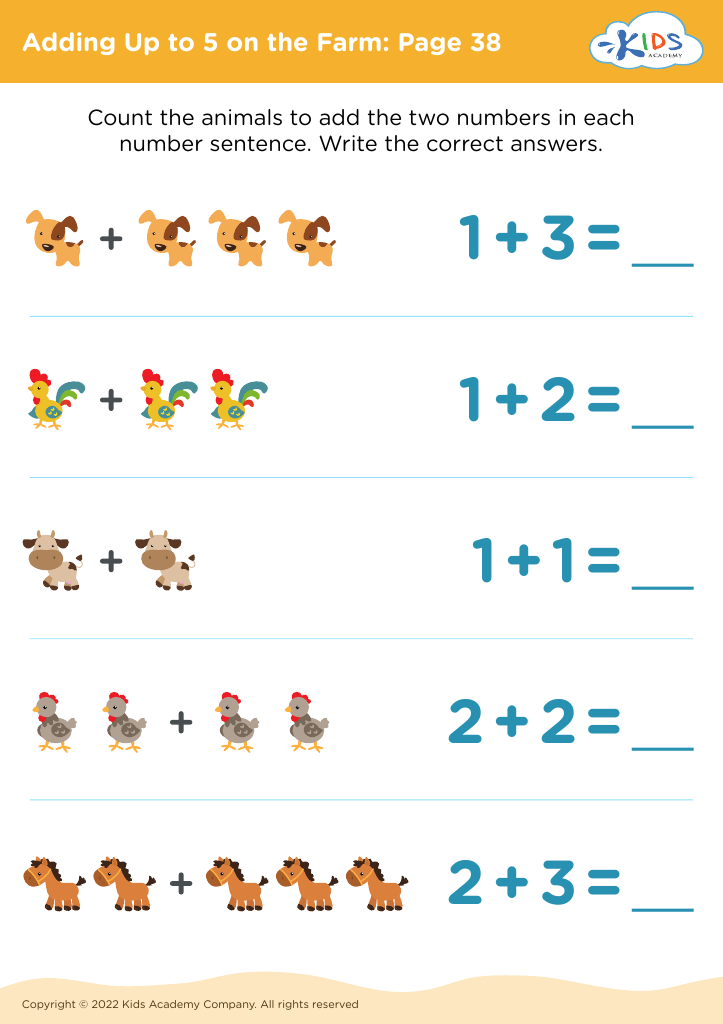
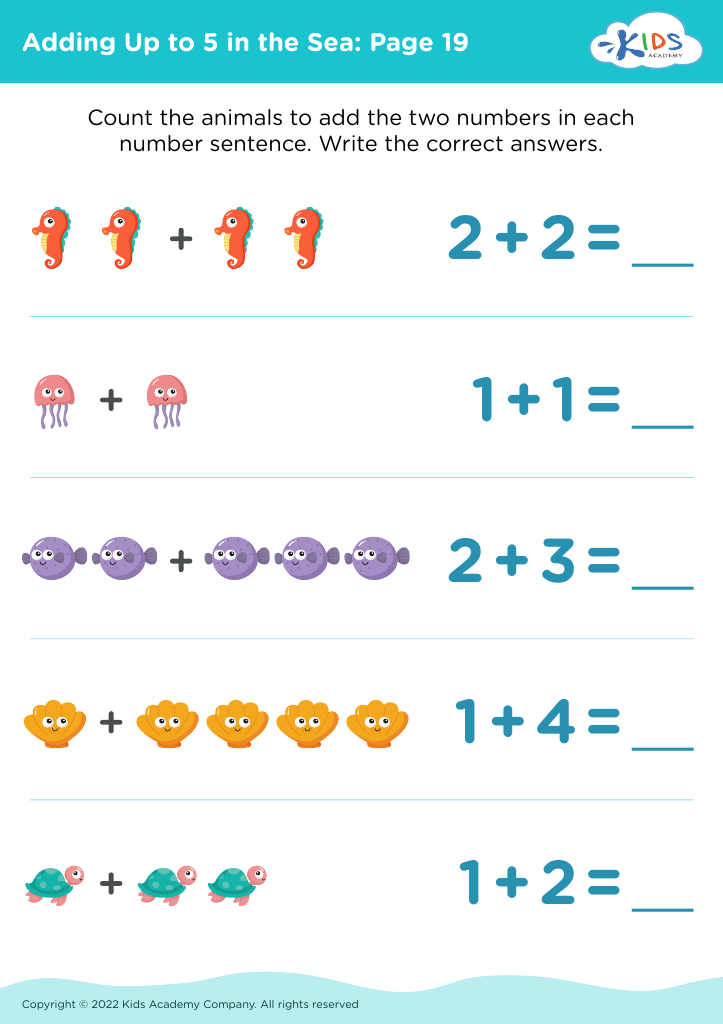
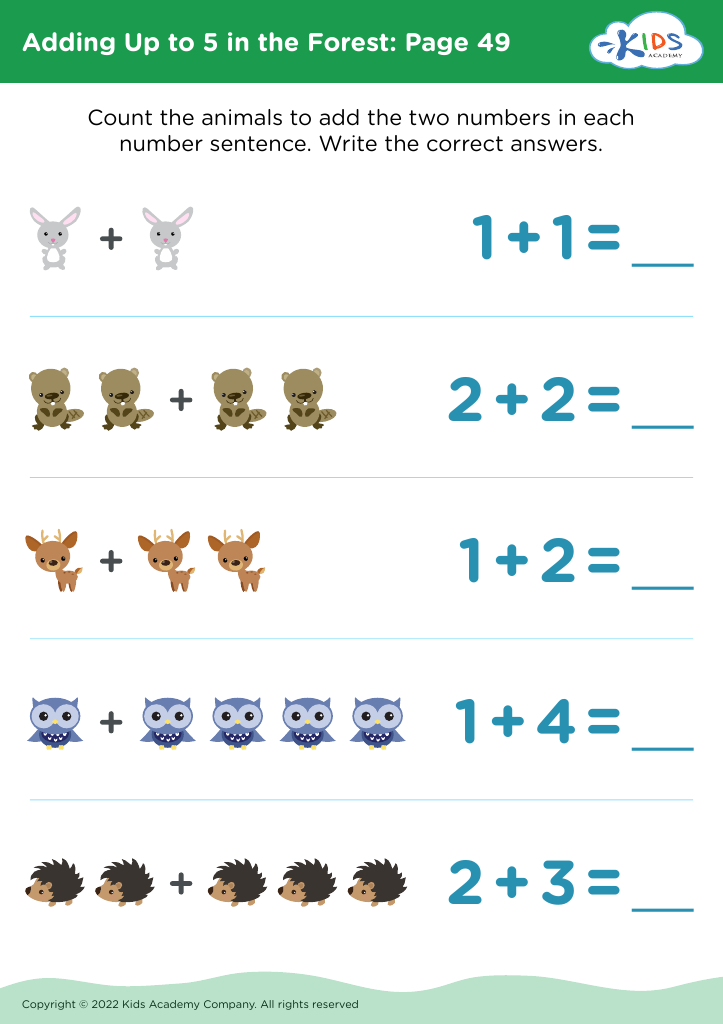
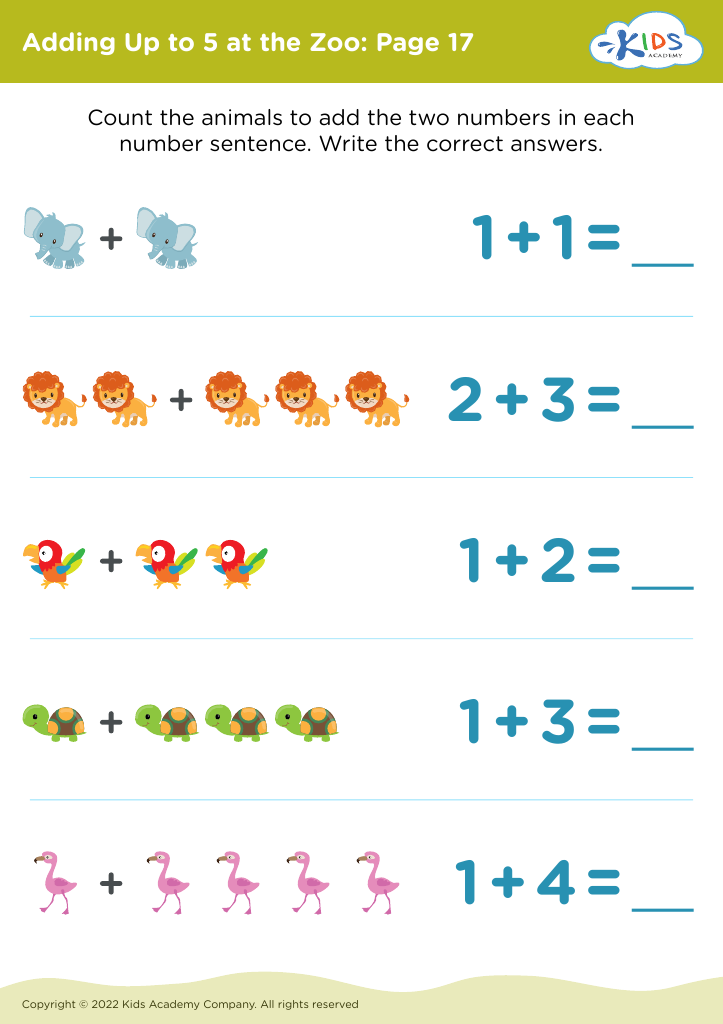
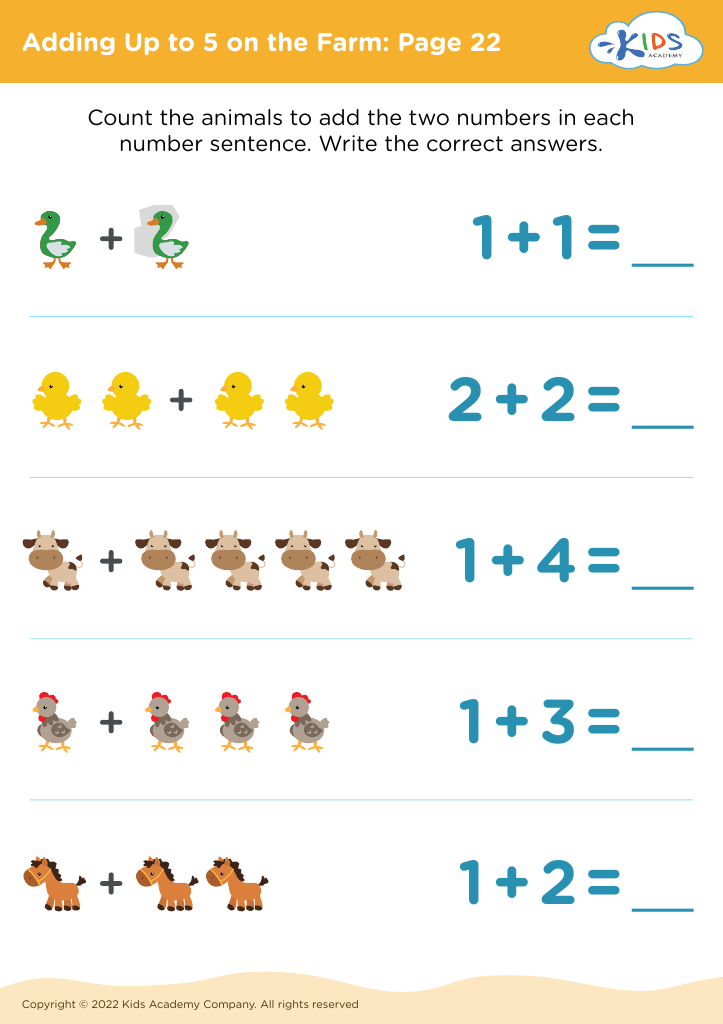
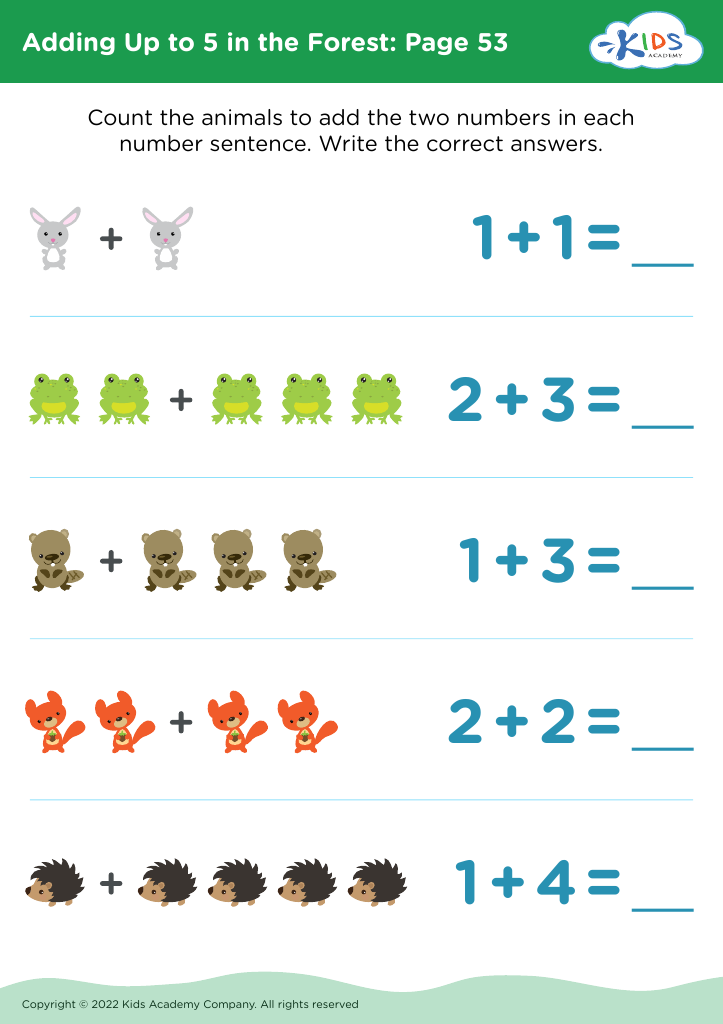
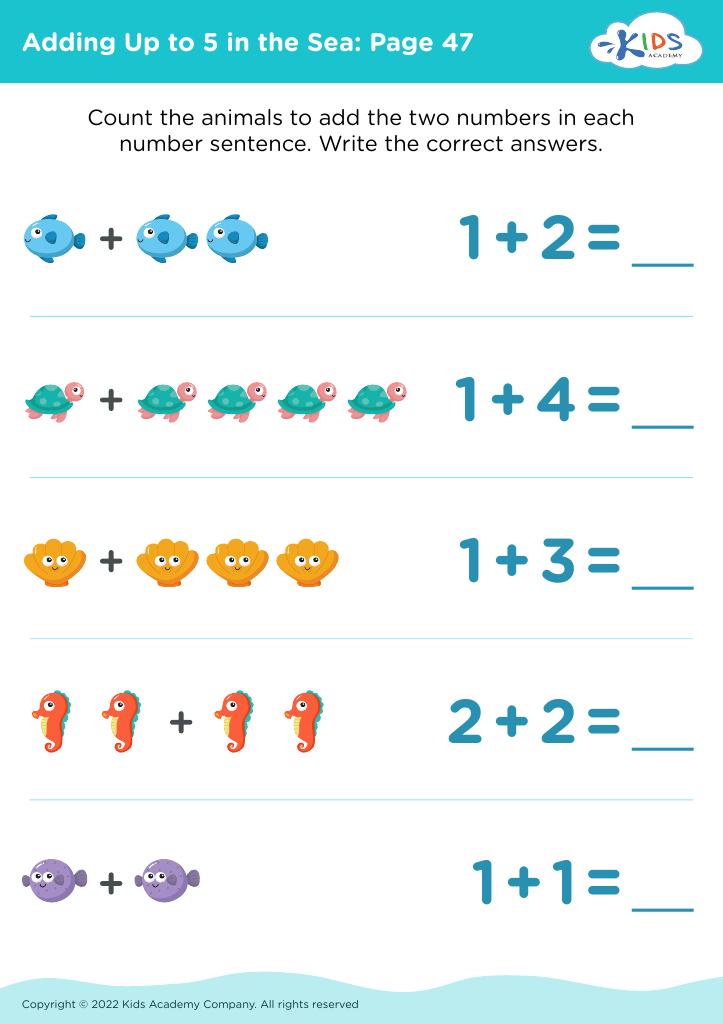
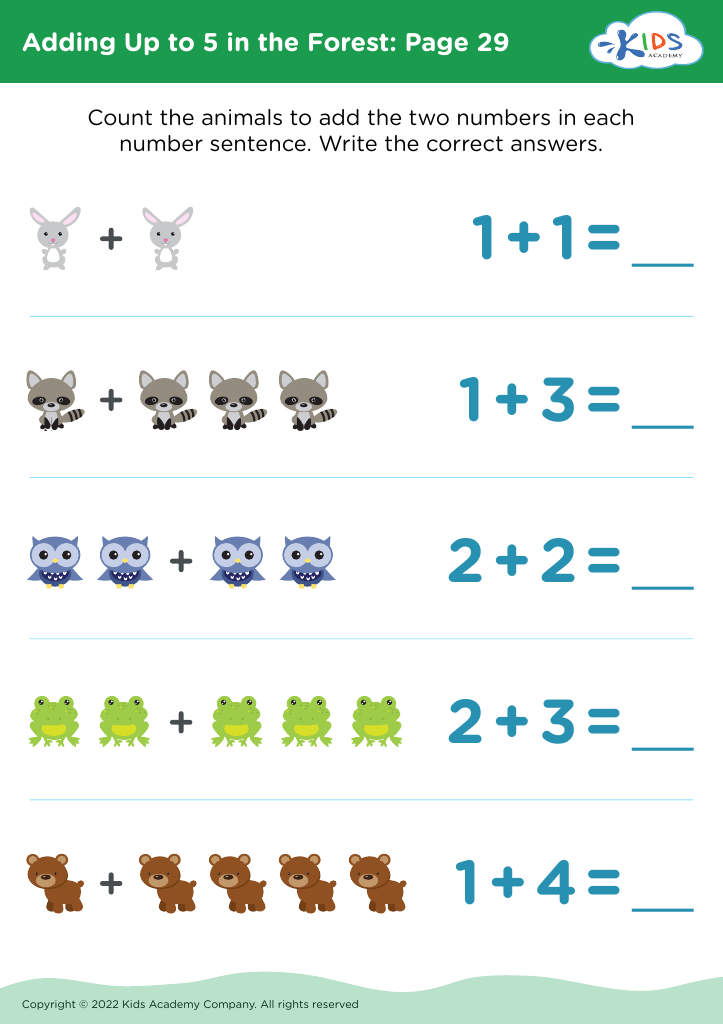








Counting proficiency and the ability to add up to 5 are fundamental skills for young children, aged 3-7, due to several critical reasons. This period marks essential cognitive, social, and emotional development milestones. First, mastering these skills lays the groundwork for more advanced mathematical learning. Children who can confidently count and perform basic addition understand number concepts better, which aids future arithmetic, algebra, and problem-solving skills.
Second, early counting fosters number sense, helping children comprehend quantities, order, and the relationship between numbers. This sense goes beyond math; it influences various daily activities and decision-making processes, from sharing toys to understanding time sequences.
Additionally, practicing counting and simple addition enhances cognitive skills such as memory, focus, and logical thinking. These exercises stimulate brain areas involved in these processes, providing cognitive gymnastics crucial for young minds.
From a social perspective, math activities develop collaboration and communication skills. Children learn to express numerical ideas and understand others, crucial for interacting in group settings both in and out of the classroom.
Finally, achieving small mathematic milestones boosts self-esteem and confidence in learning. Celebrating their progress instills a positive attitude towards education, setting children up for a successful academic journey. Thus, investing in counting skills up to 5 is a key focus for the holistic development of young children.








