Math problem-solving Adding Up to 5 Worksheets for Ages 3-7
3 filtered results
-
From - To
Our Math Problem-Solving Adding Up to 5 Worksheets for ages 3-7 provide a fantastic, engaging learning experience for young minds. Designed to strengthen addition skills and build confidence, these worksheets feature a variety of fun activities with colorful visuals that make learning math enjoyable. Each worksheet encourages critical thinking and problem-solving through simple addition problems that sum up to 5. Perfect for both classroom and home use, our worksheets support early math development and lay a strong foundation for future mathematical success. With Kids Academy, your child will love the journey of mastering their first steps in math!
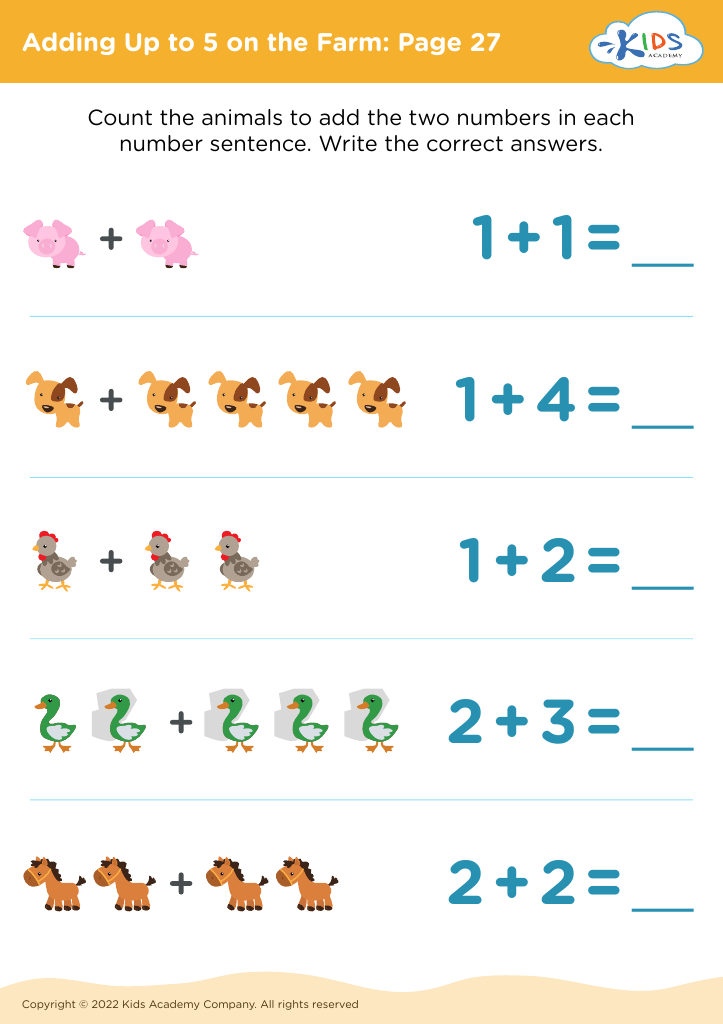
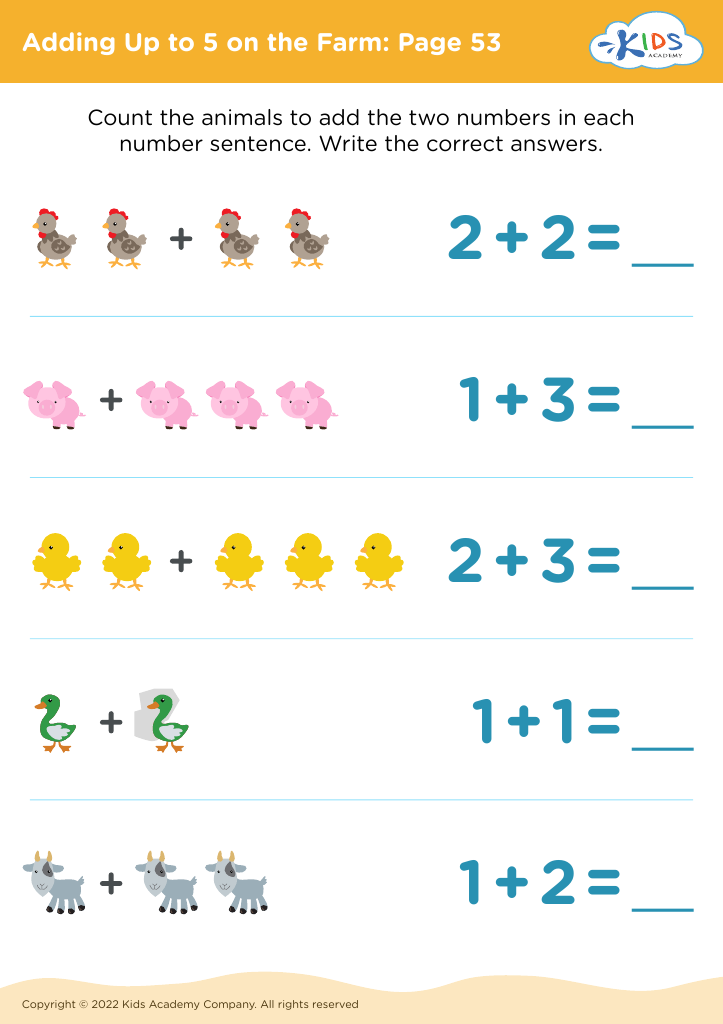
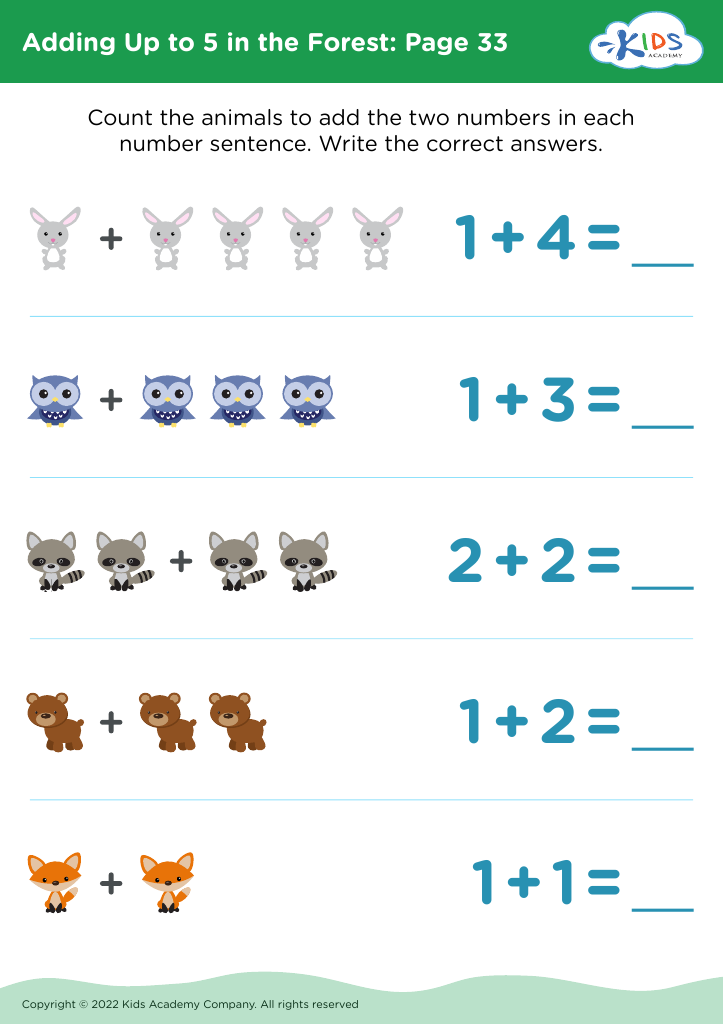








Parents and teachers should prioritize mathematical problem-solving involving sums up to 5 for children aged 3-7 because it lays a crucial foundation for further mathematical understanding and cognitive development. Early exposure to basic addition helps children develop numeracy, a core skill that influences future learning in both mathematics and other problem-solving disciplines.
Understanding how to add numbers up to 5 enhances a child’s number sense, enabling them to comprehend quantities and their relationships. This foundational understanding fosters confidence as children approach more complex arithmetic later on. In addition, engaging young children in short, hands-on activities with tangible objects, such as counting blocks or fingers, nurtures their fine motor skills and spatial awareness.
Focusing on addition up to 5 supports the development of critical thinking and reasoning in young minds. It encourages pattern recognition, basic logic, and mental math skills, transforming abstract concepts into manageable, concrete experiences that young kids can grasp. Positive reinforcement in these early stages builds self-esteem and a love for learning, which is imperative for long-term academic success.
Moreover, mastering these essential skills in a supportive environment promotes a growth mindset, where children believe their abilities can improve with effort. Thus, investing time in teaching foundational math through engaging activities equips children with the tools to thrive academically and in everyday interactions.








