Filters

349 filtered results

Clear all filters
Favorites
With answer key
Interactive

349 filtered results

Difficulty Level

Grade


Check out this FREE Trial Lesson on Adding Up to 5 for age 3-7!

L

Favorites
With answer key
Interactive
  • 3-7
  • Number Recognition
  • Adding Up to 5
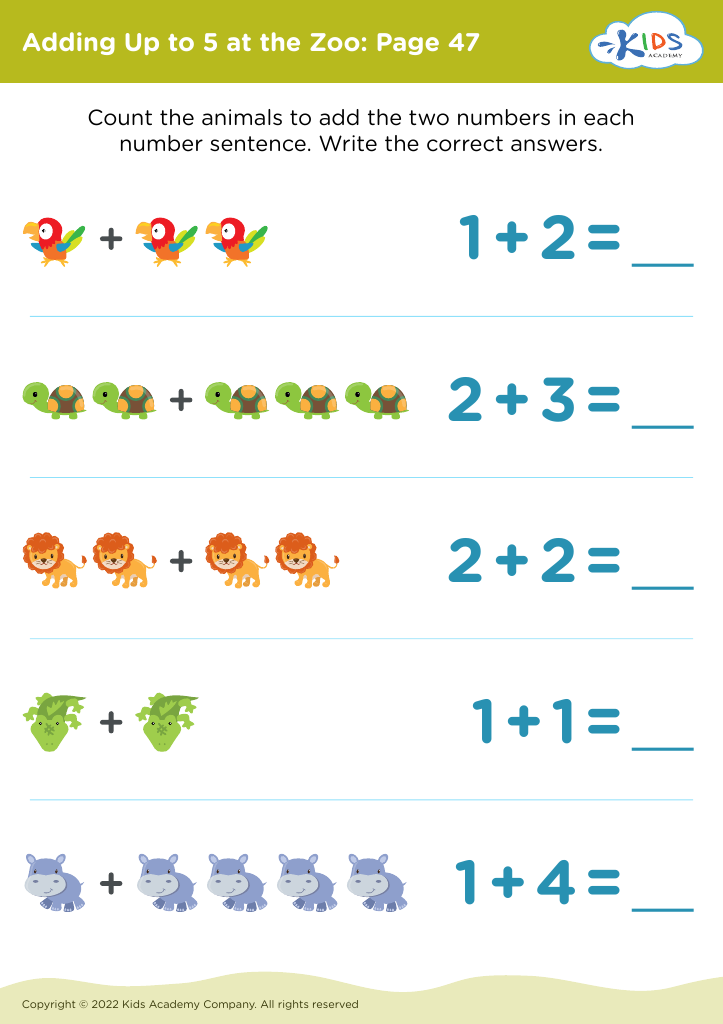
Adding Up to 5 at the Zoo: Page 47
Worksheet
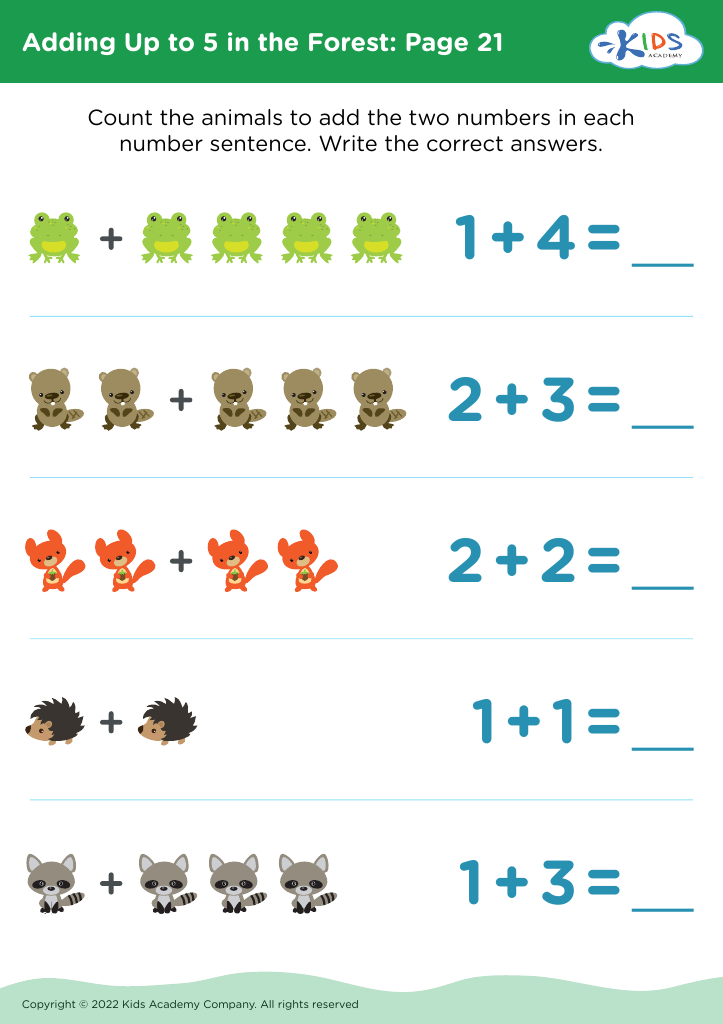
Adding Up to 5 in the Forest: Page 21
Worksheet
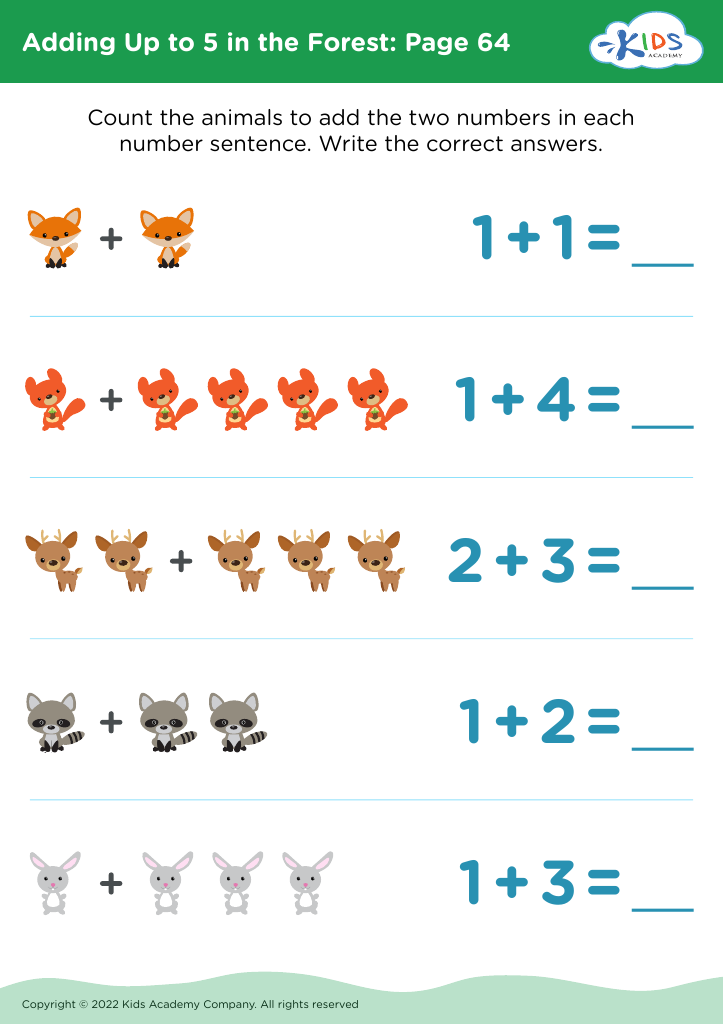
Adding Up to 5 in the Forest: Page 64
Worksheet
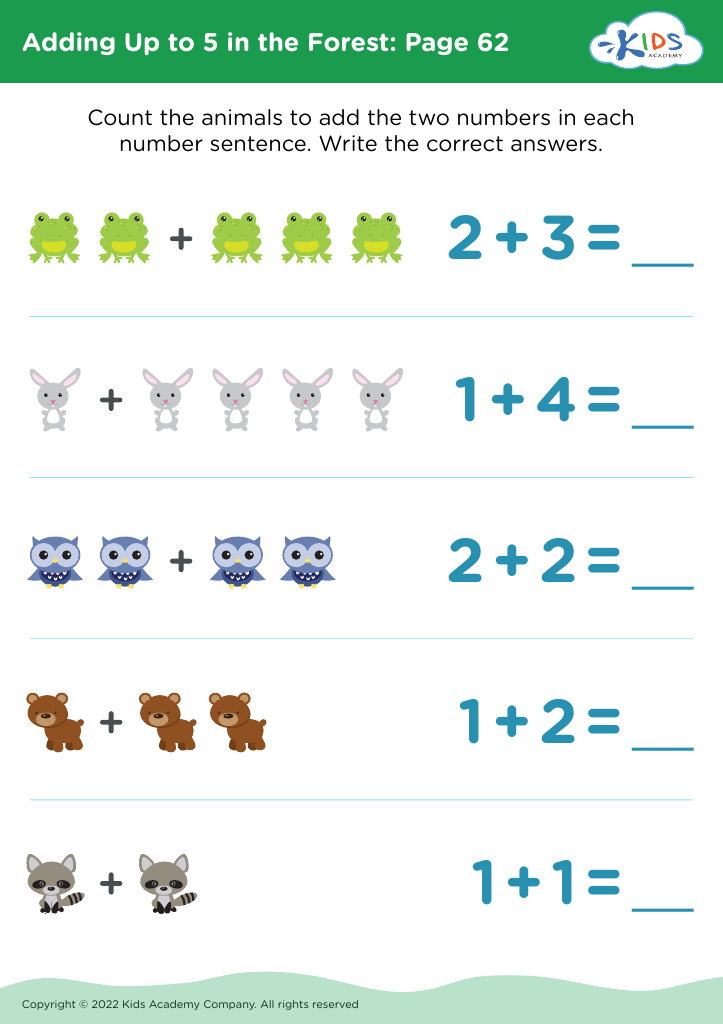
Adding Up to 5 in the Forest: Page 62
Worksheet
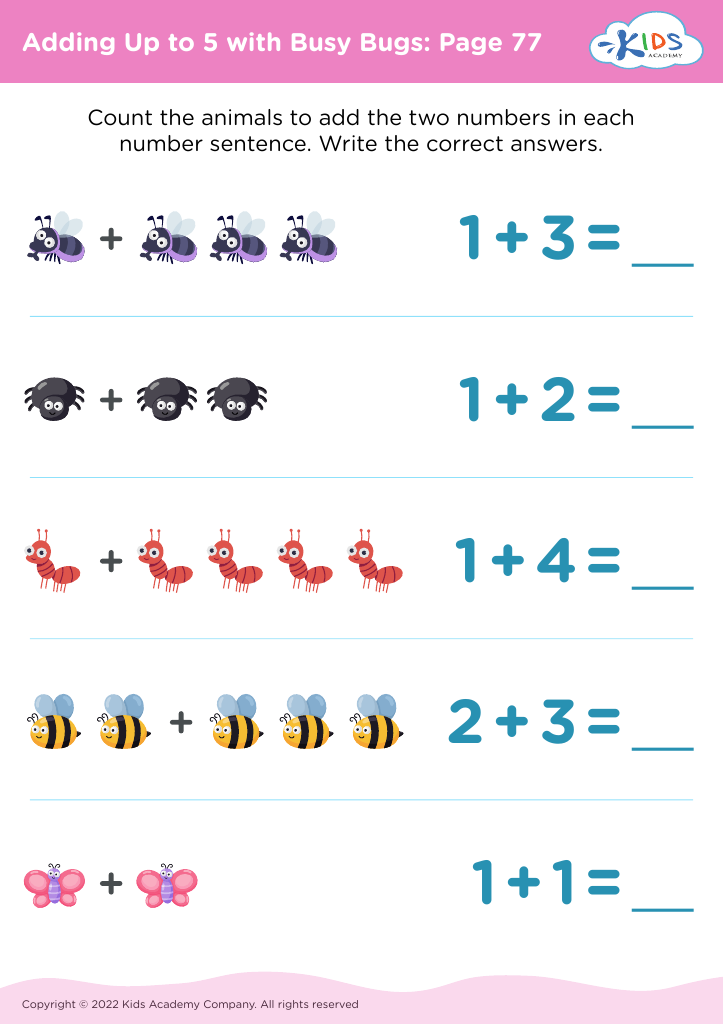
Adding Up to 5 with Busy Bugs: Page 77
Worksheet
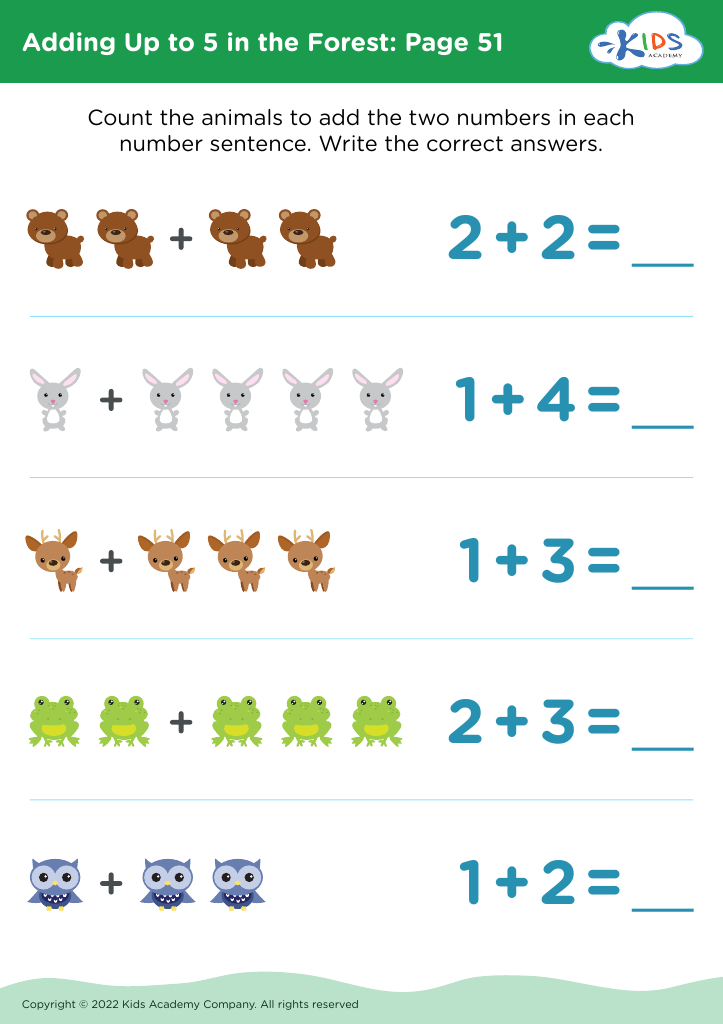
Adding Up to 5 in the Forest: Page 51
Worksheet
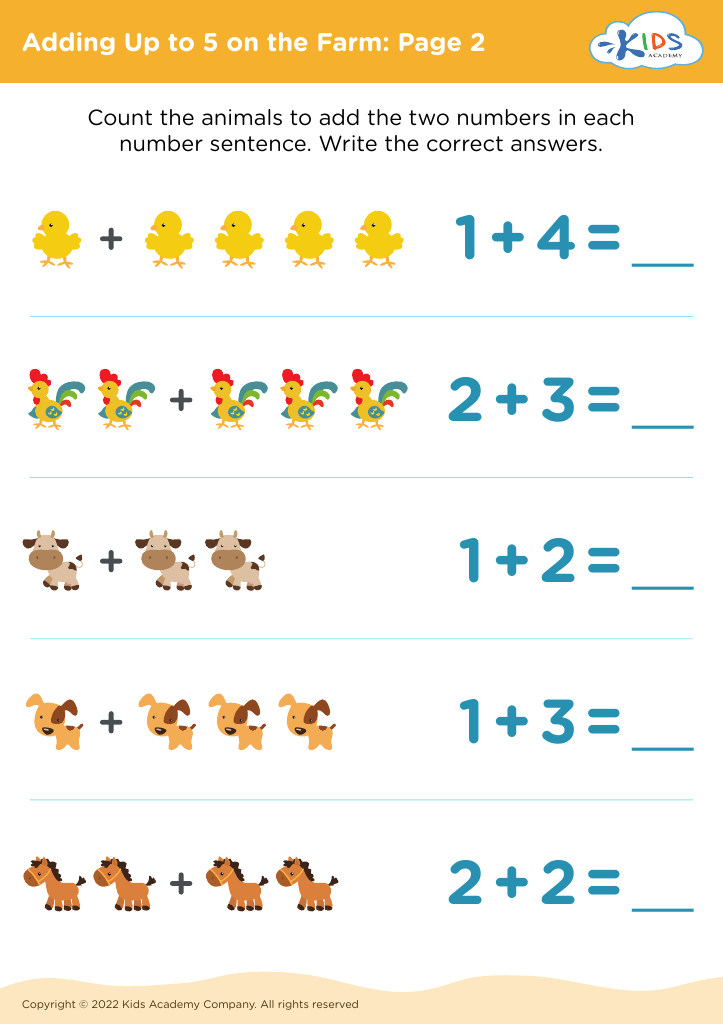
Adding Up to 5 on the Farm: Page 2
Worksheet
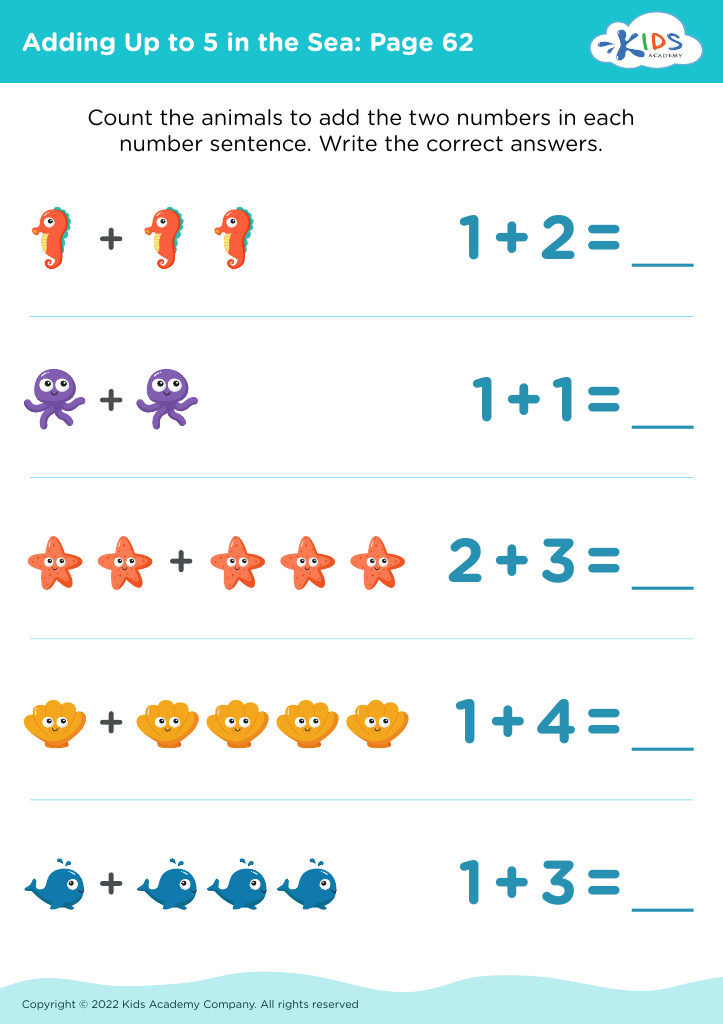
Adding Up to 5 in the Sea: Page 62
Worksheet
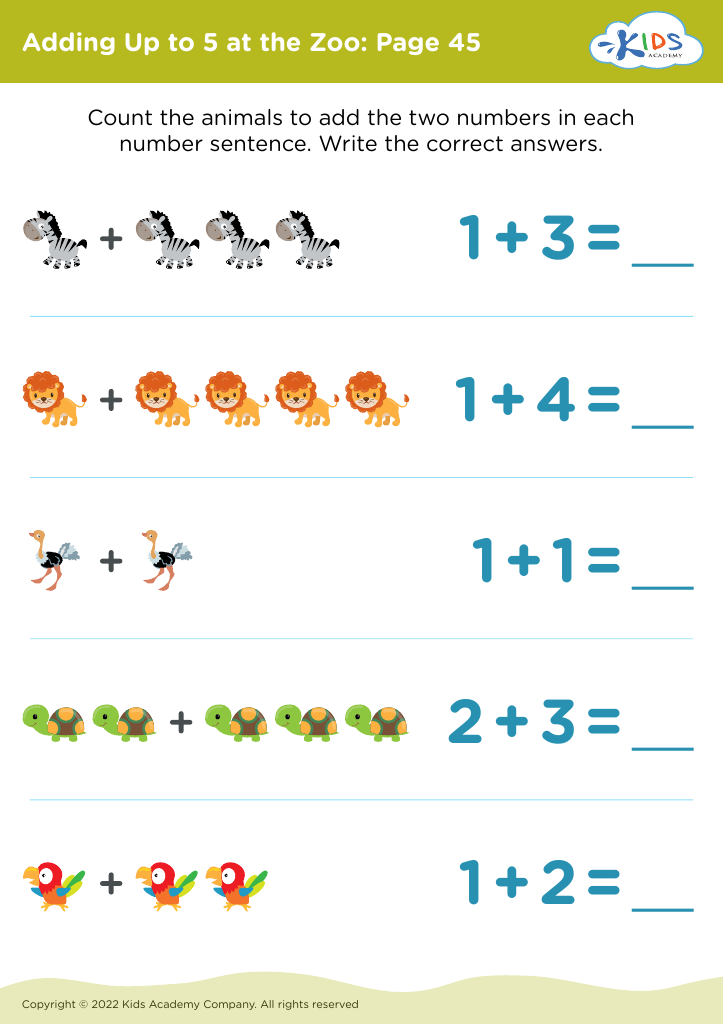
Adding Up to 5 at the Zoo: Page 45
Worksheet
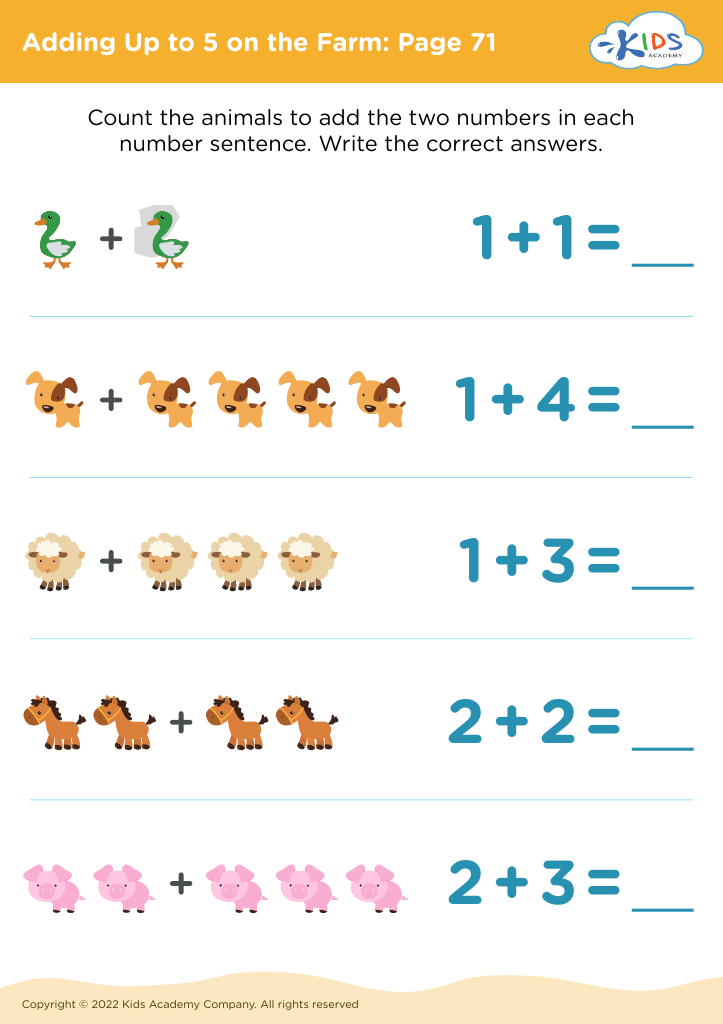
Adding Up to 5 on the Farm: Page 71
Worksheet
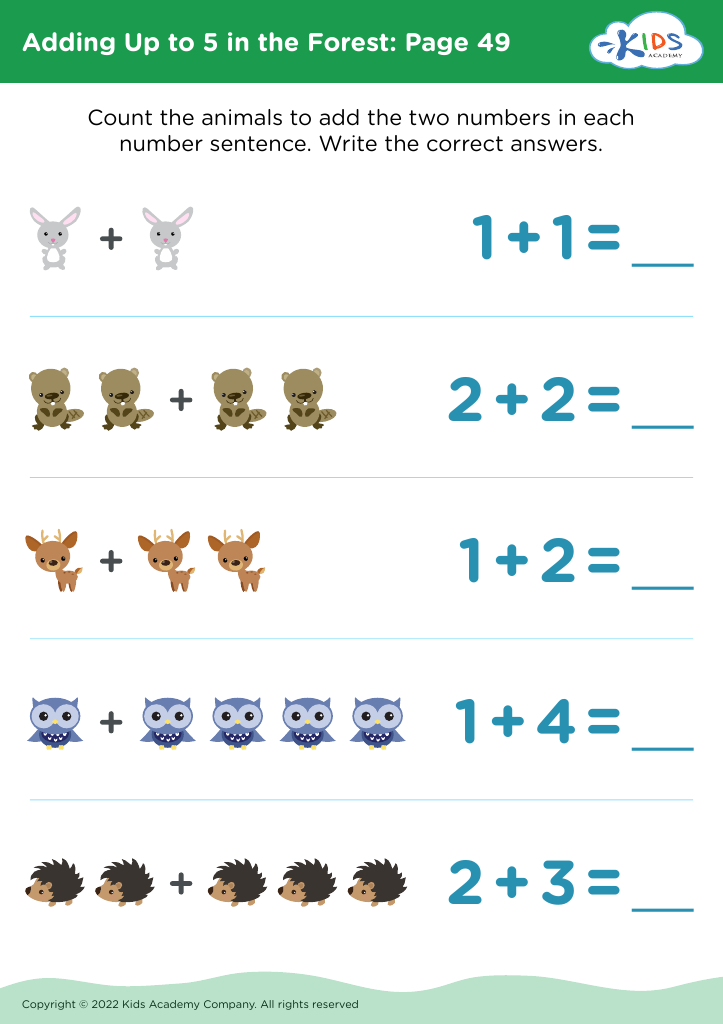
Adding Up to 5 in the Forest: Page 49
Worksheet
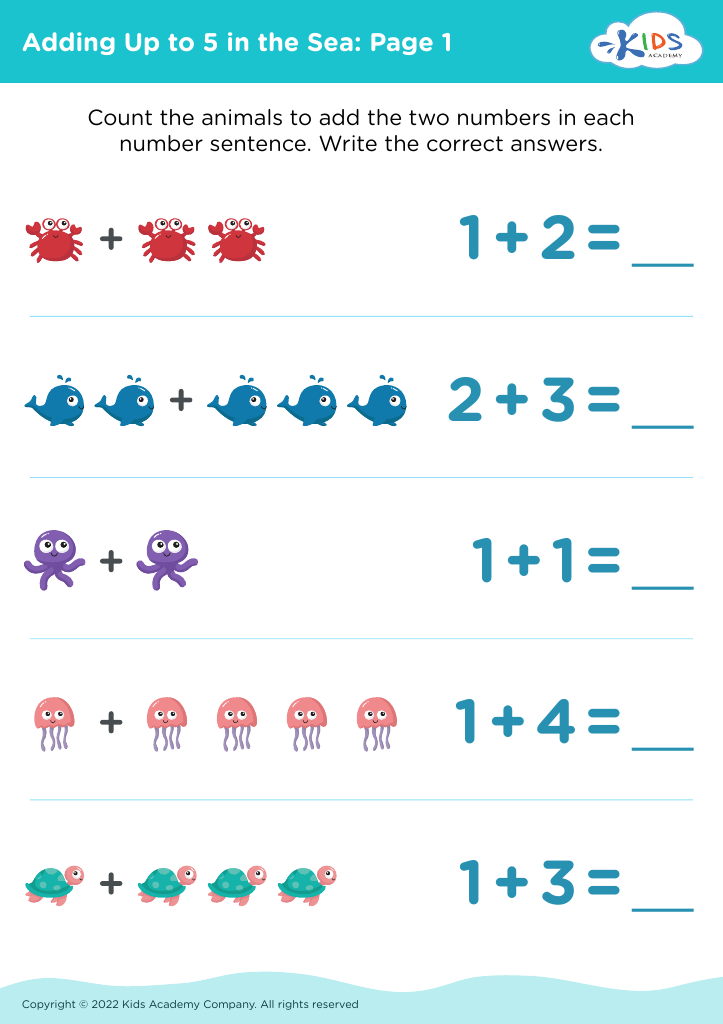
Adding Up to 5 in the Sea: Page 1

Adding Up to 5 in the Sea: Page 1

Adding Up to 5 in the Sea: Page 1
Worksheet
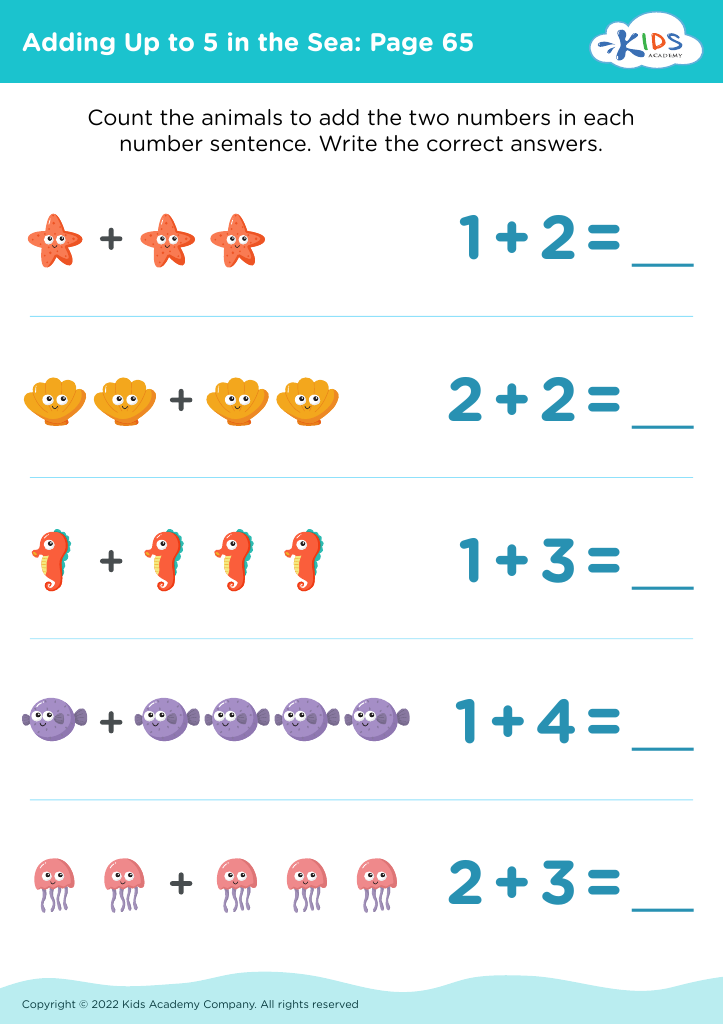
Adding Up to 5 in the Sea: Page 65
Worksheet
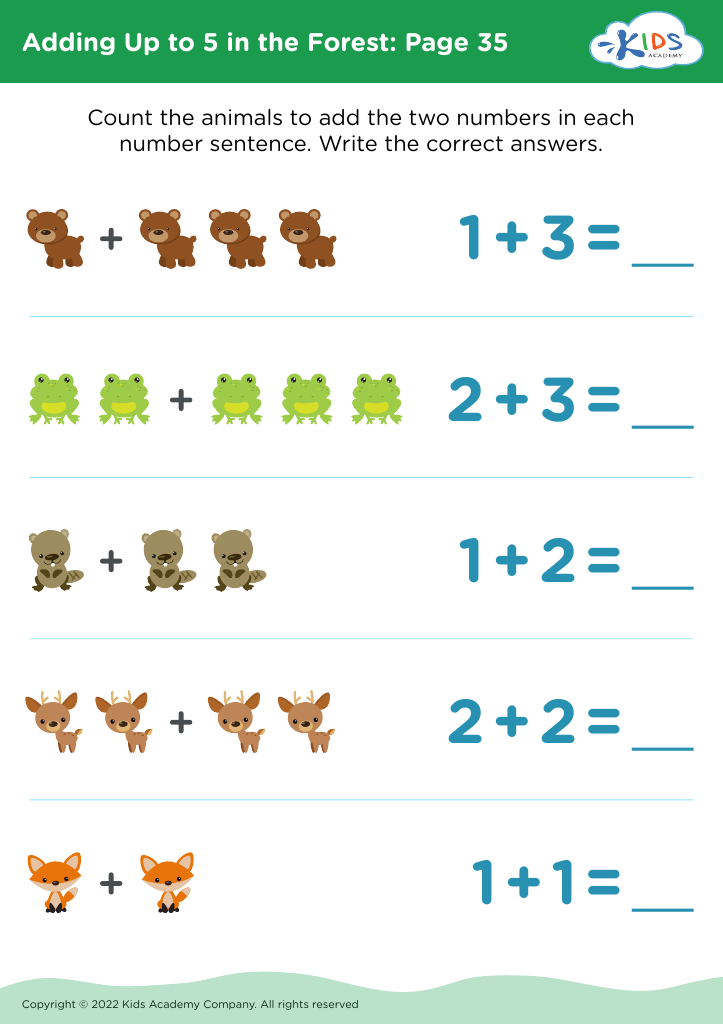
Adding Up to 5 in the Forest: Page 35
Worksheet
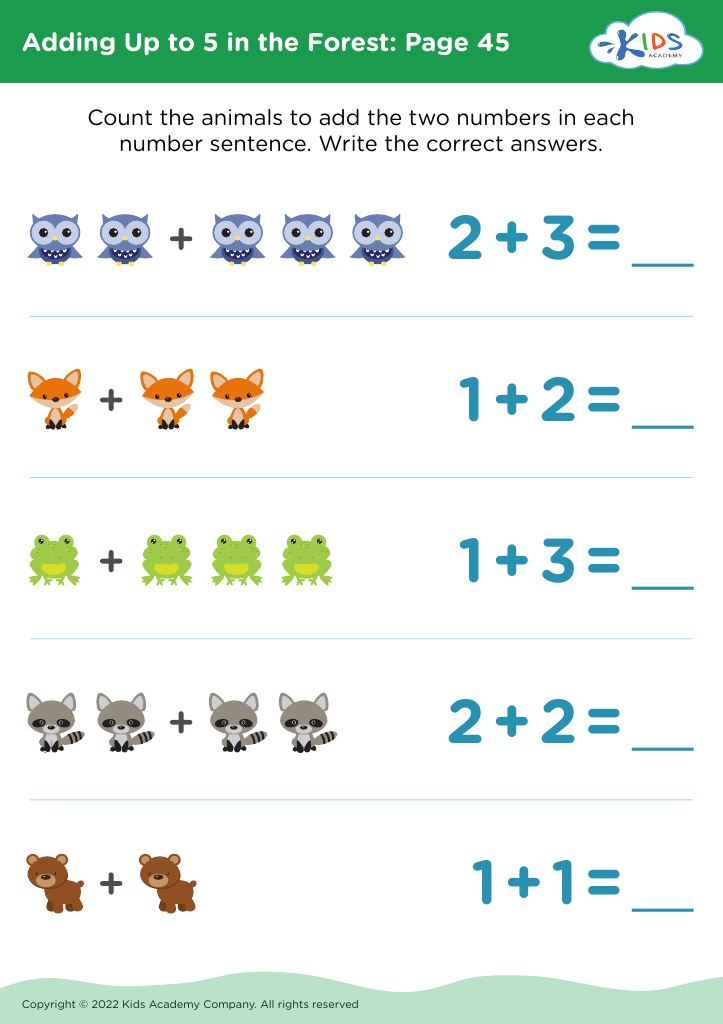
Adding Up to 5 in the Forest: Page 45
Worksheet
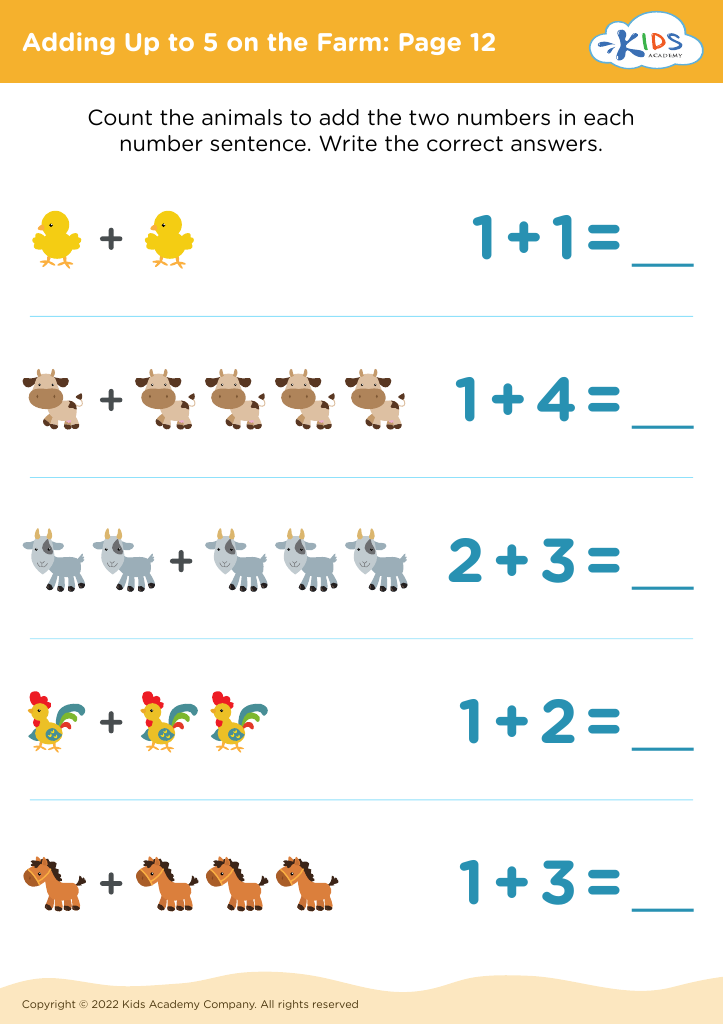
Adding Up to 5 on the Farm: Page 12
Worksheet
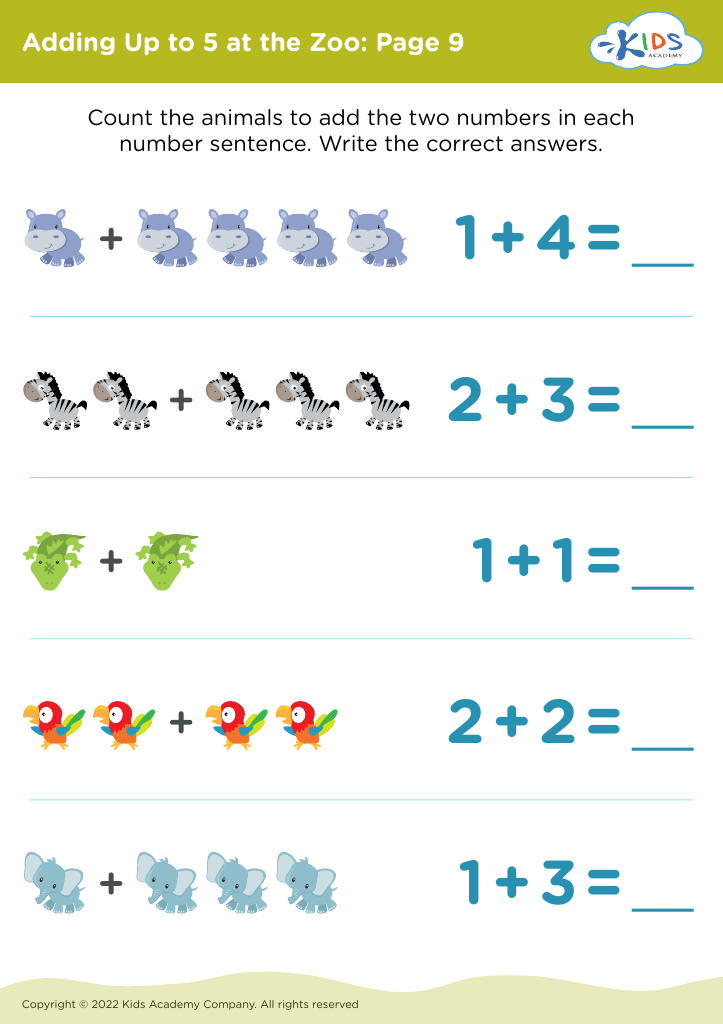
Adding Up to 5 at the Zoo: Page 9

Adding Up to 5 at the Zoo: Page 9

Adding Up to 5 at the Zoo: Page 9
Worksheet
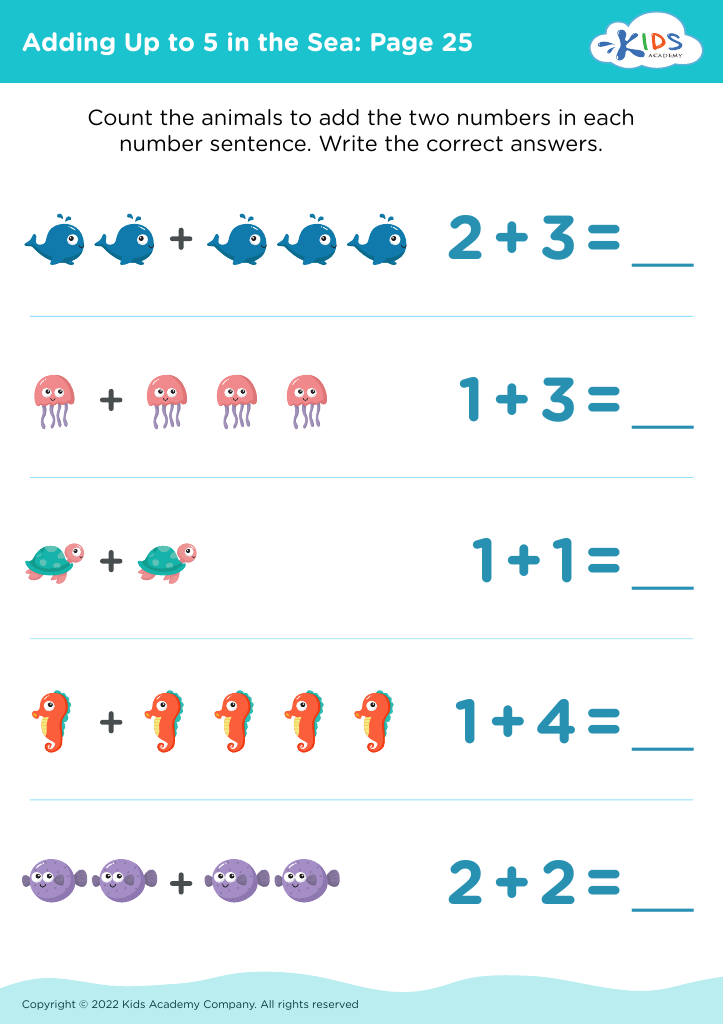
Adding Up to 5 in the Sea: Page 25
Worksheet
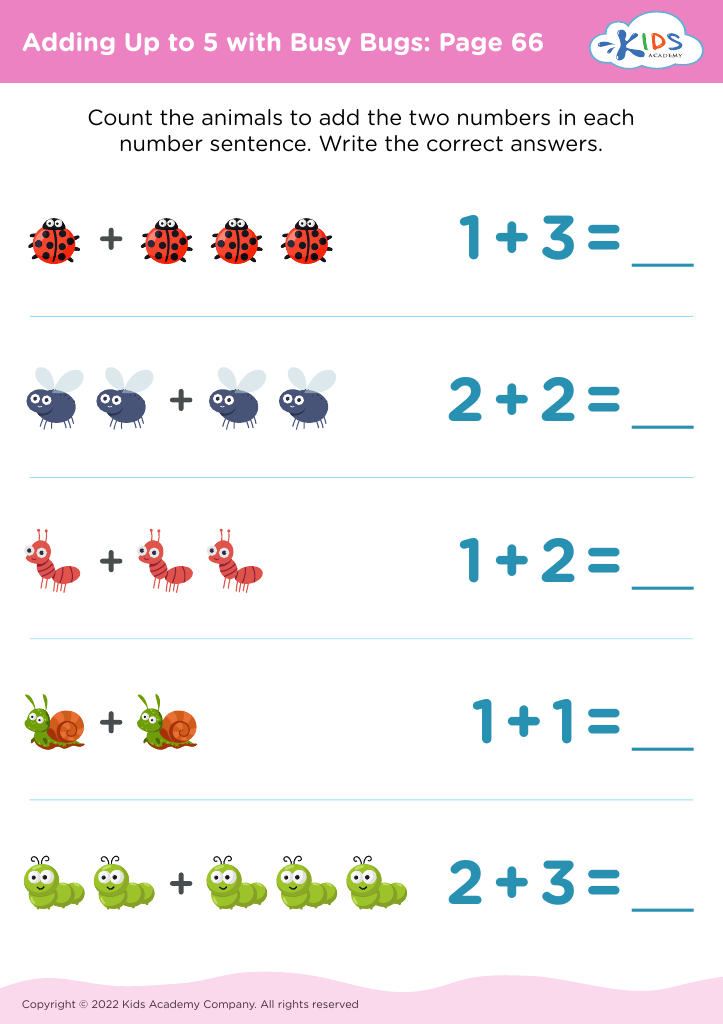
Adding Up to 5 with Busy Bugs: Page 66
Worksheet
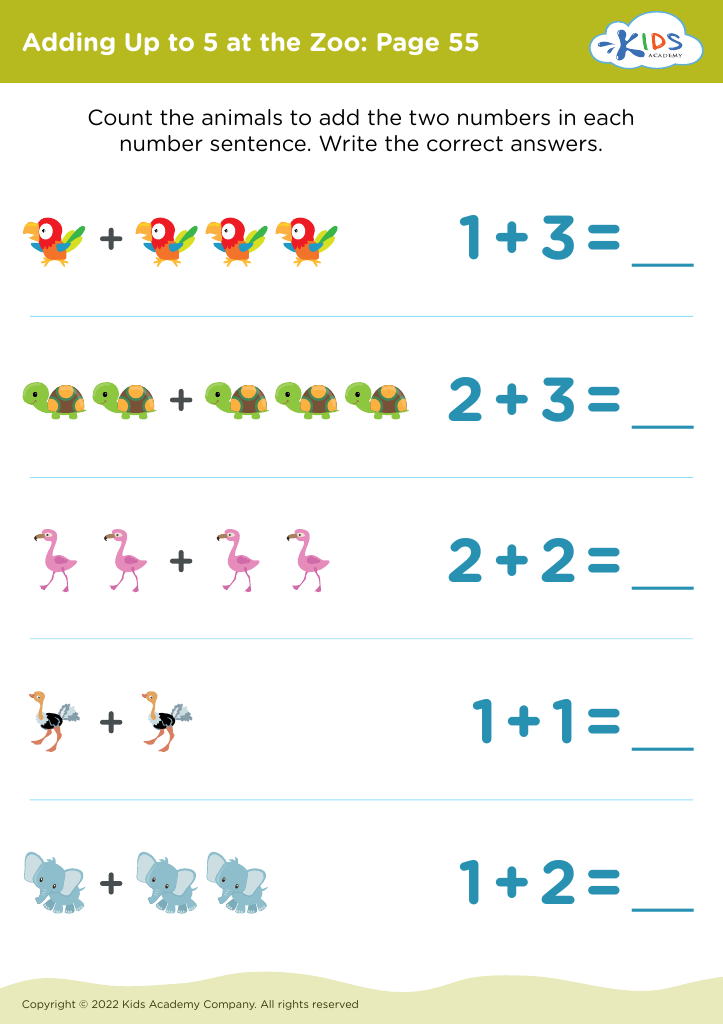
Adding Up to 5 at the Zoo: Page 55
Worksheet
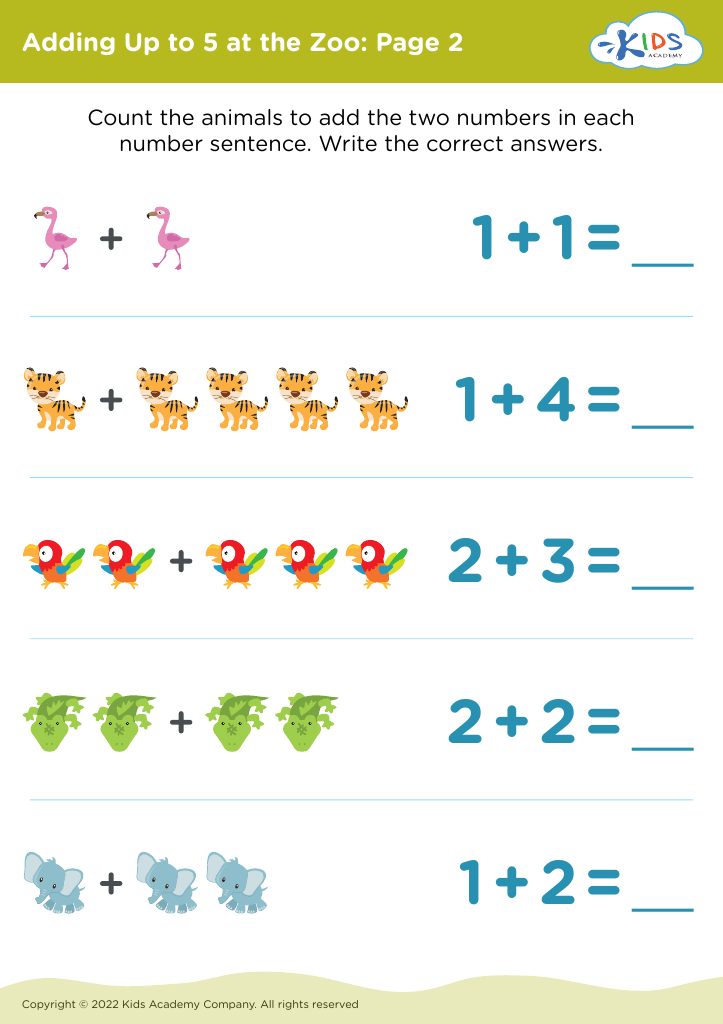
Adding Up to 5 at the Zoo: Page 2

Adding Up to 5 at the Zoo: Page 2

Adding Up to 5 at the Zoo: Page 2
Worksheet
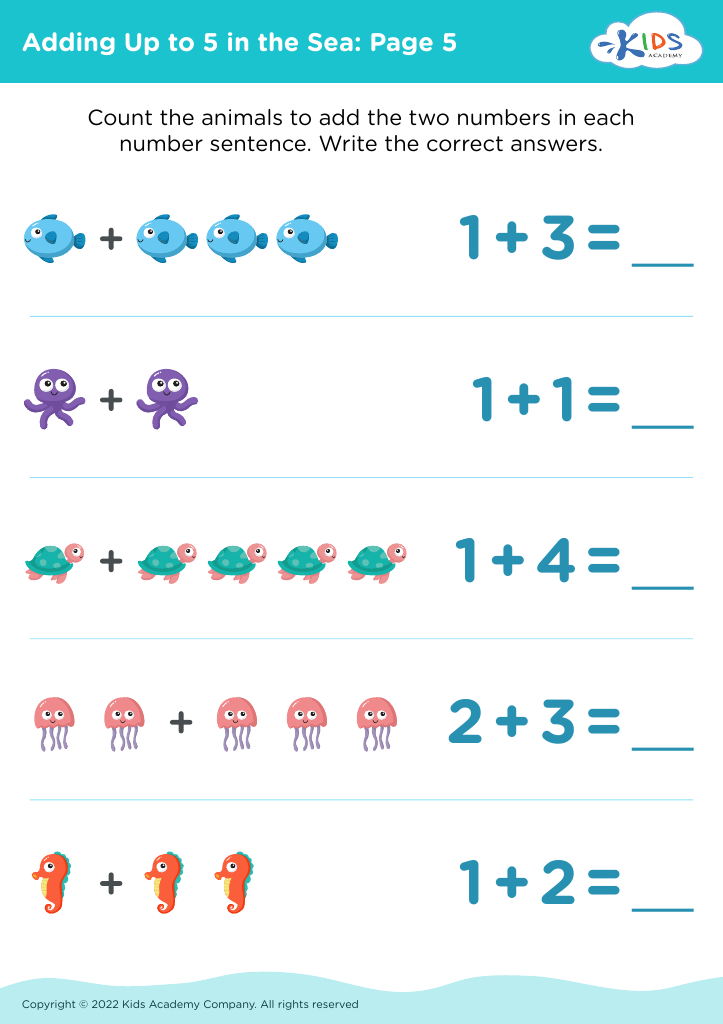
Adding Up to 5 in the Sea: Page 5

Adding Up to 5 in the Sea: Page 5

Adding Up to 5 in the Sea: Page 5
Worksheet
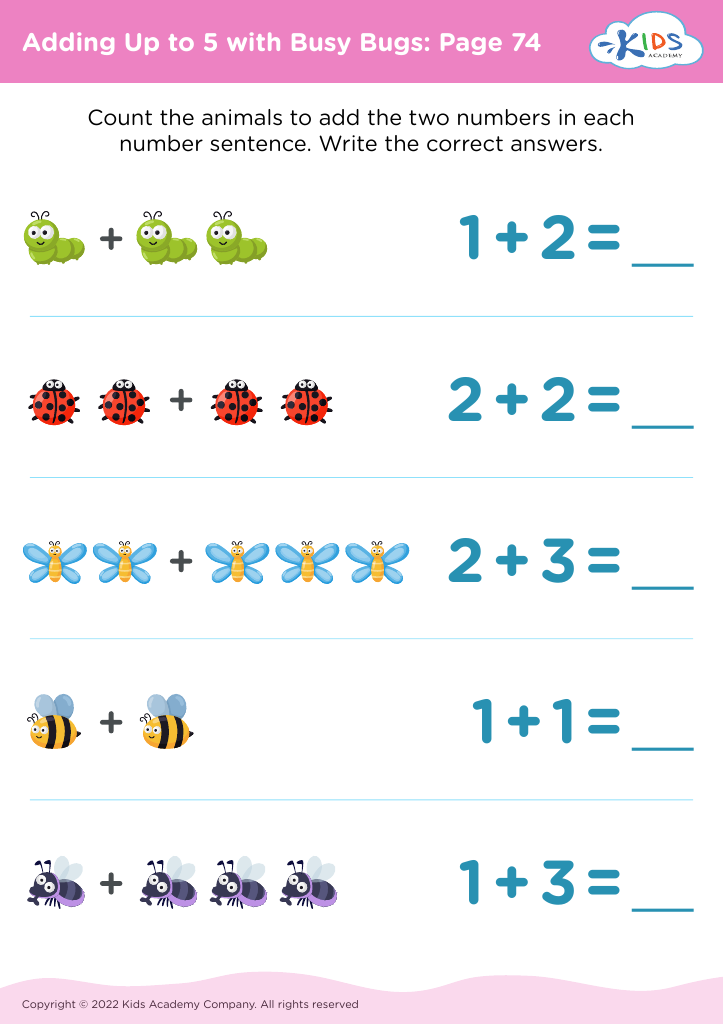
Adding Up to 5 with Busy Bugs: Page 74
Worksheet
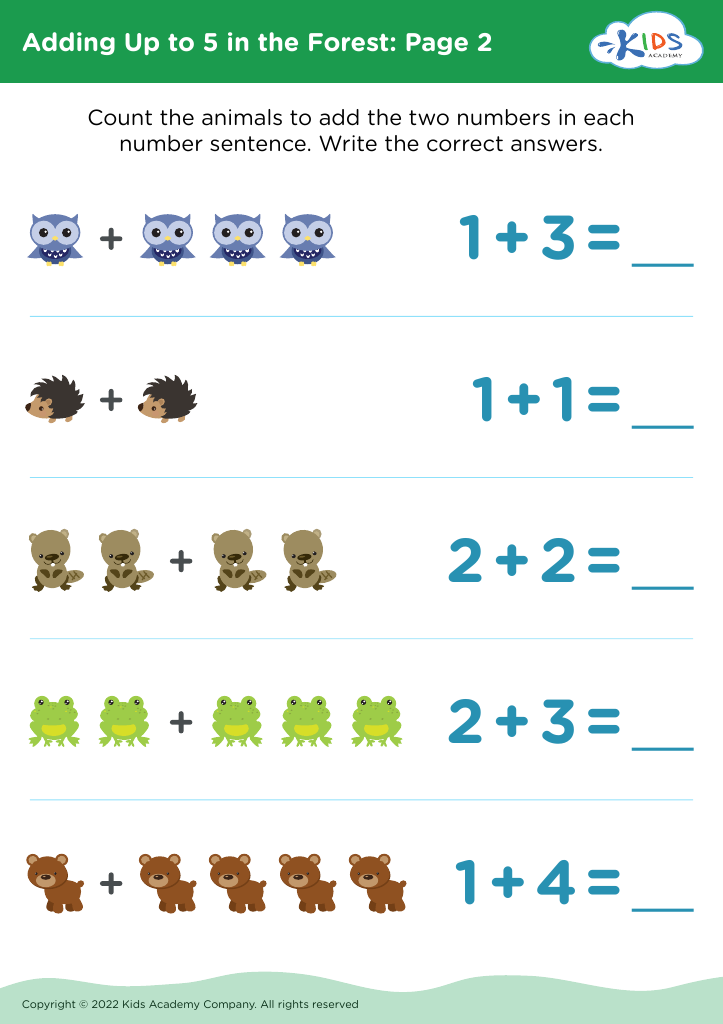
Adding Up to 5 in the Forest: Page 2
Worksheet


Number recognition and basic arithmetic skills, such as adding up to 5, are foundational elements in early childhood education. For children ages 3-7, mastering these skills paves the way for future math understanding and overall academic success.

Parents and teachers should prioritize number recognition because it helps children develop critical cognitive abilities. Recognizing numbers allows kids to engage with their environment, understand quantities in everyday life, and build a strong mathematical vocabulary. Early mastery of concepts like “adding up to 5” encourages reasoning, problem-solving, and logical thinking.

Furthermore, these early math skills contribute to a child's confidence and motivation. Children who feel competent in basic math are more likely to embrace complex concepts in later grades. Additionally, social interactions often involve counting or sharing, and proficiency enables children to participate more fully with their peers.

Moreover, fostering a love for math at a young age helps in shaping positive attitudes toward learning. Engaging in fun activities that combine number recognition with play can strengthen these skills while keeping children enthusiastic about learning. Therefore, recognizing the importance of number recognition and adding up to 5 is essential for parents and teachers in supporting early developmental milestones.