Problem-Solving Skills Adding Up to 5 Worksheets for Ages 3-7 - Page 2
37 filtered results
-
From - To




%20(1).jpg)


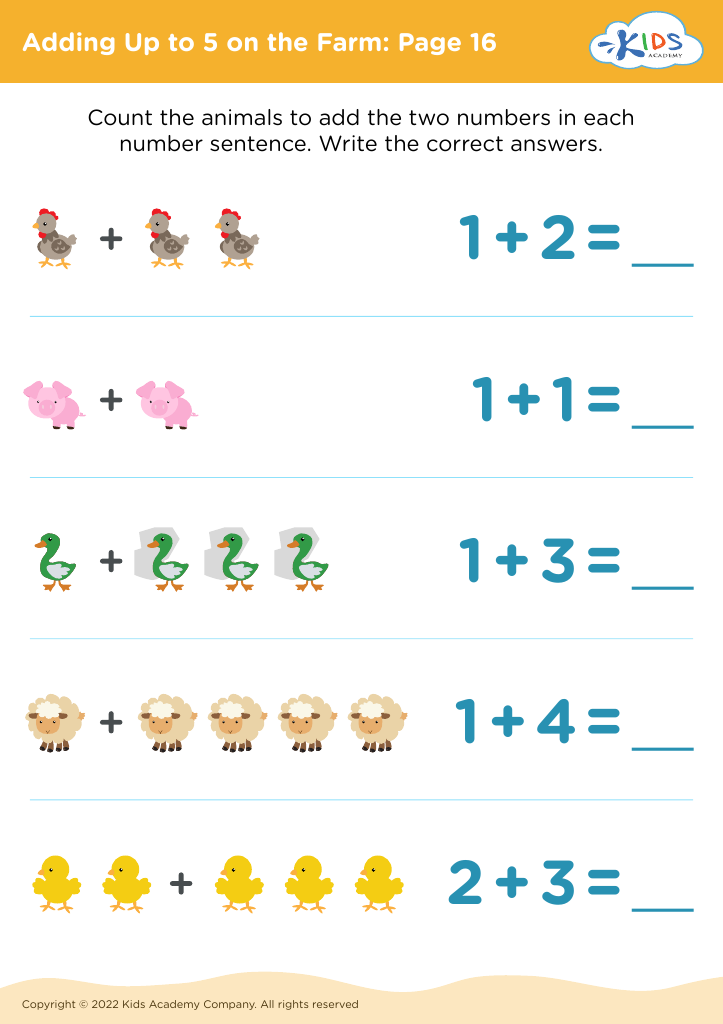
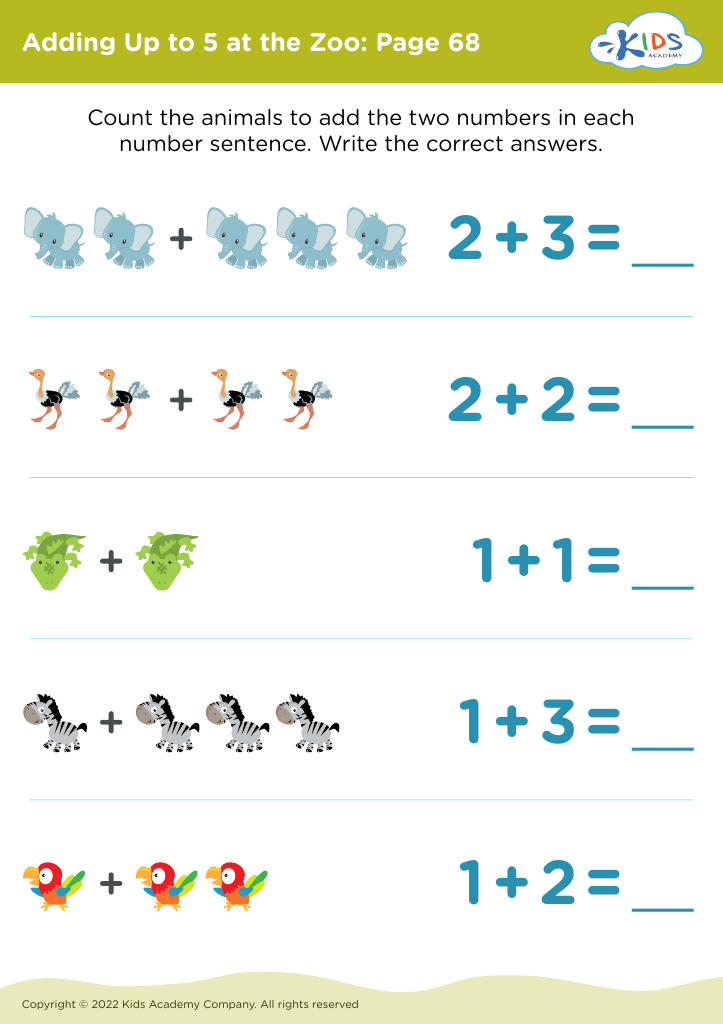
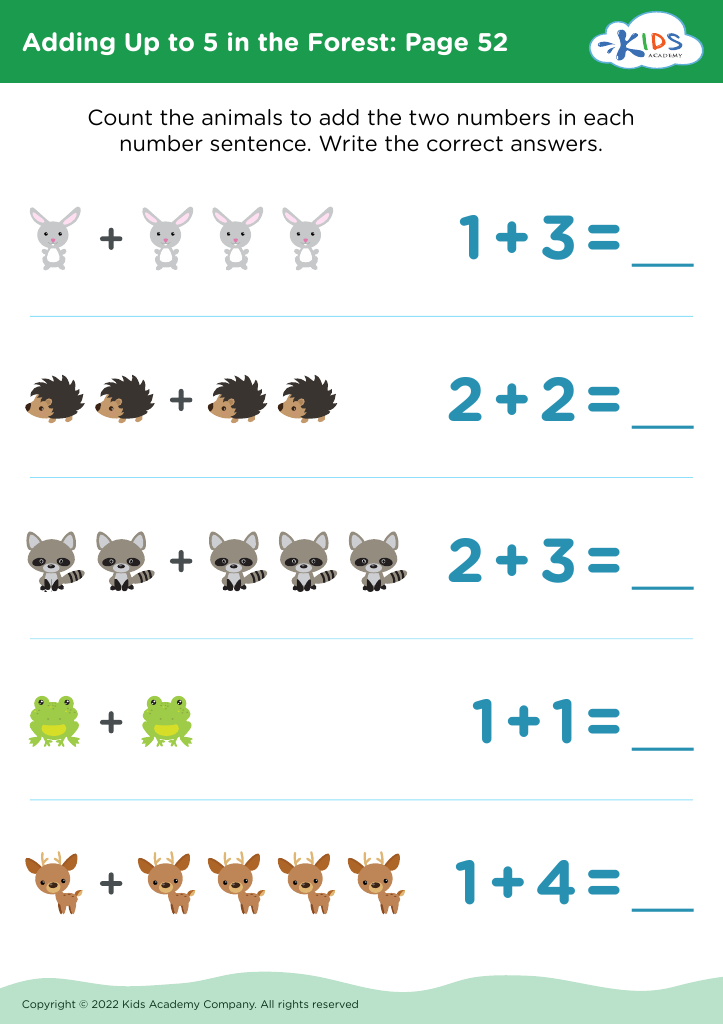
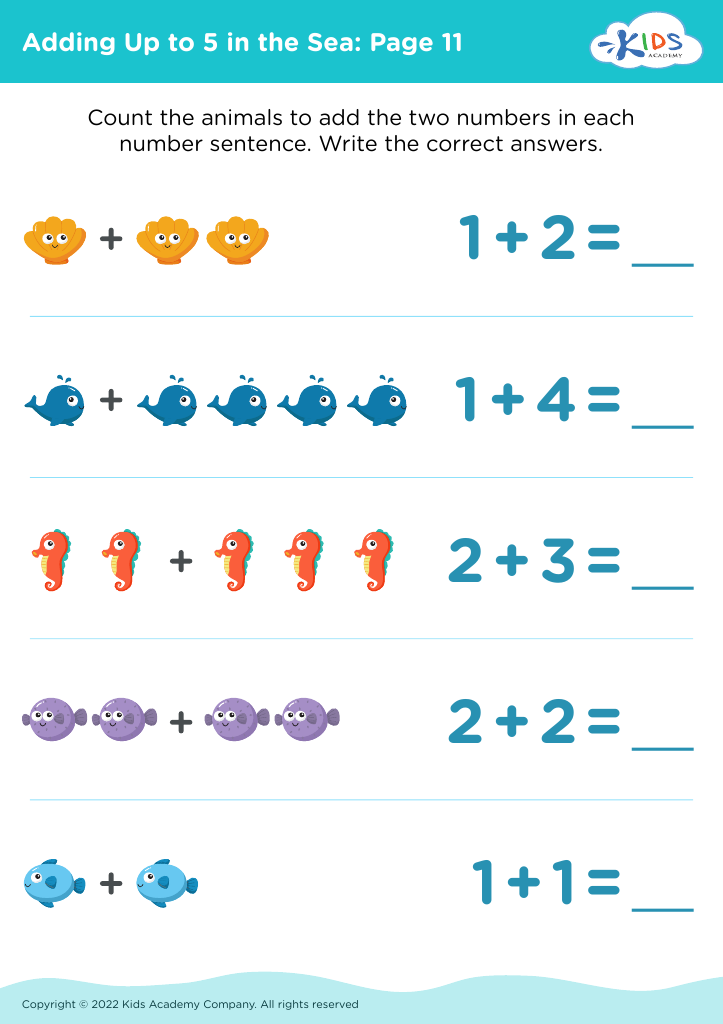
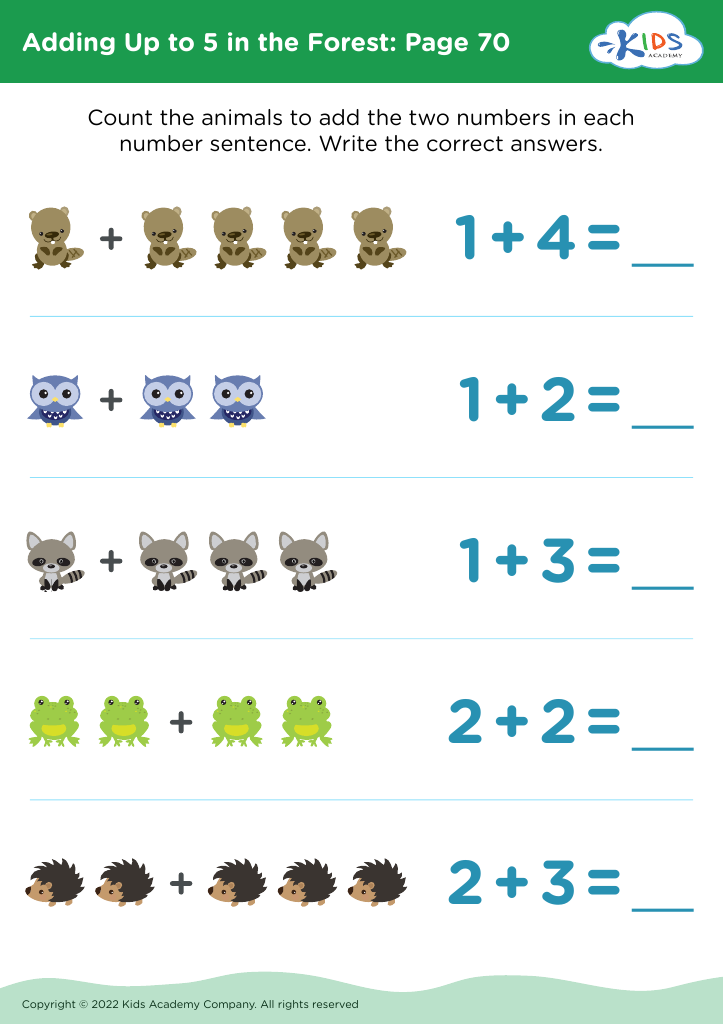
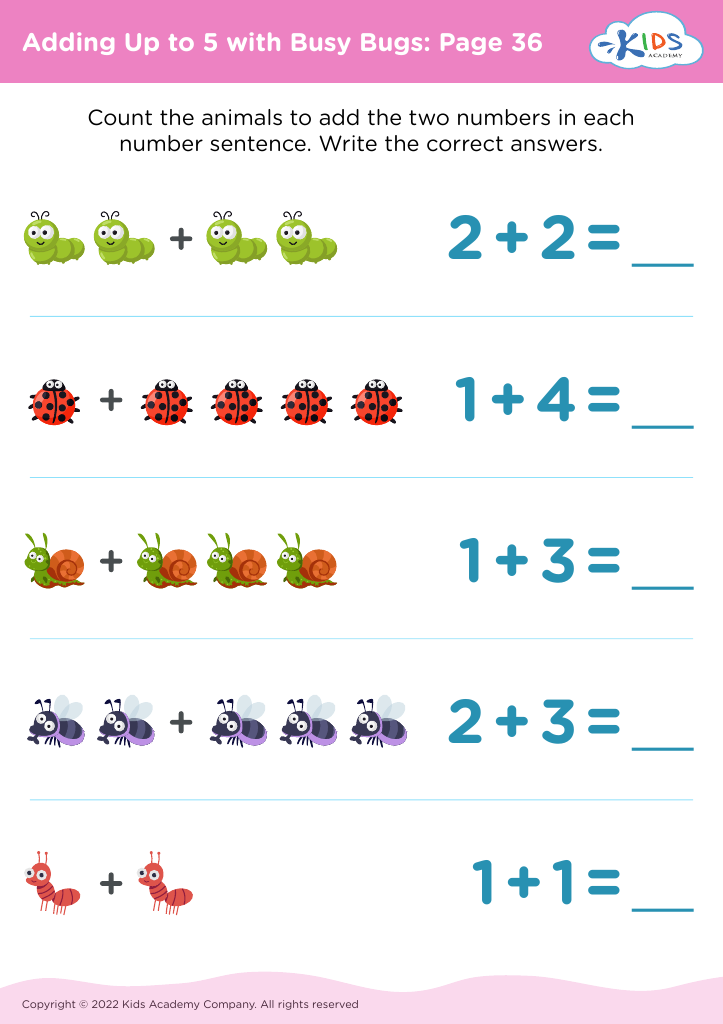
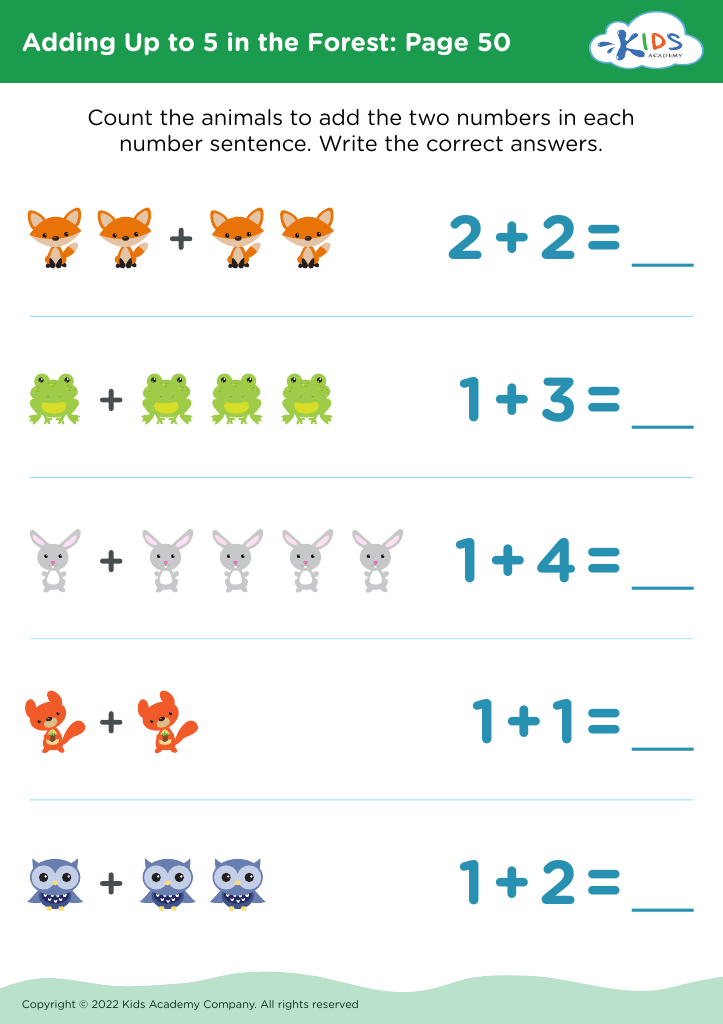
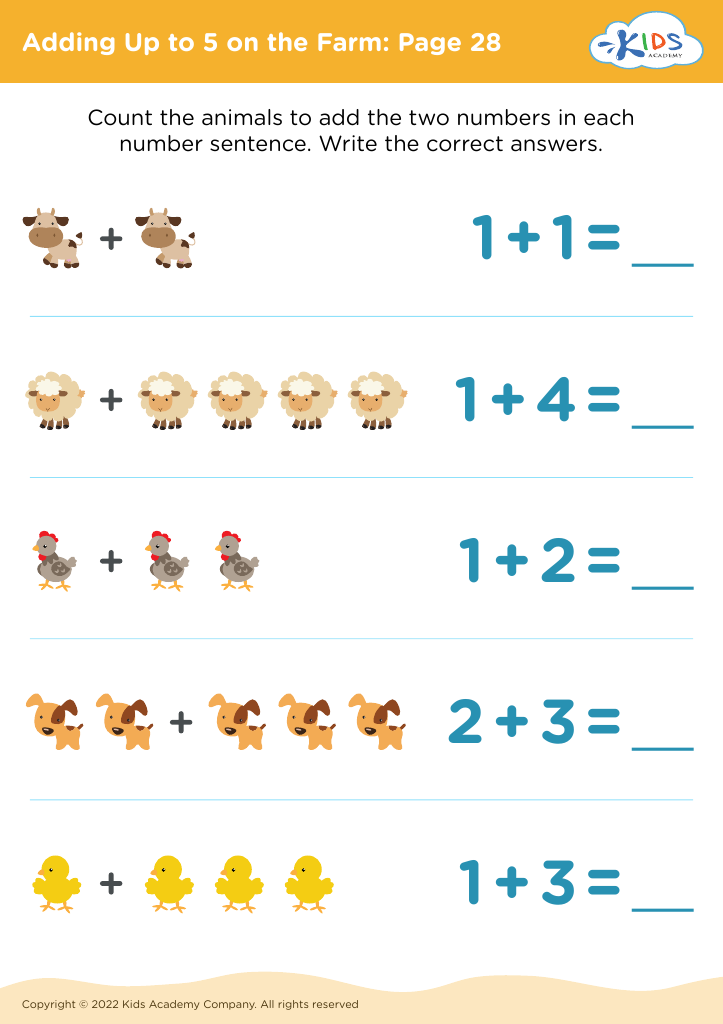
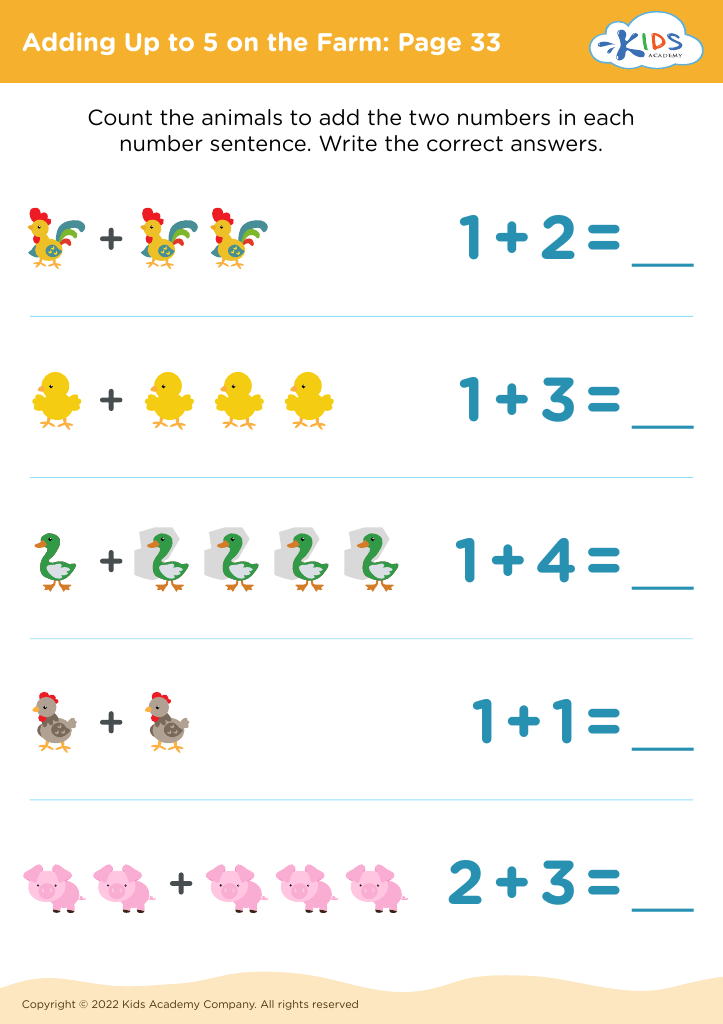
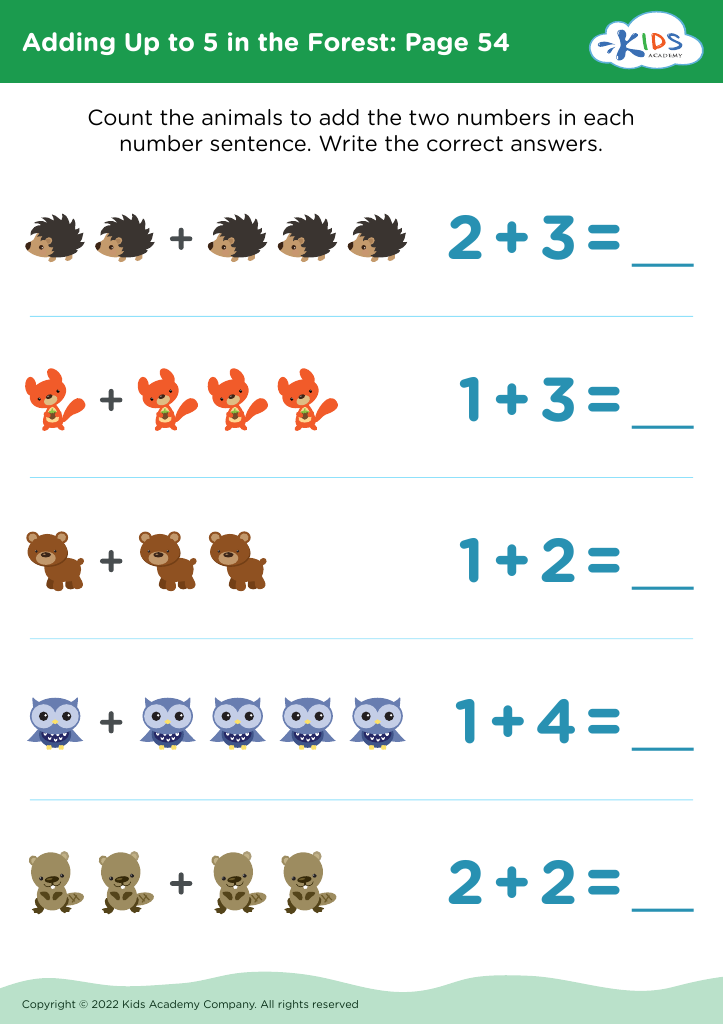
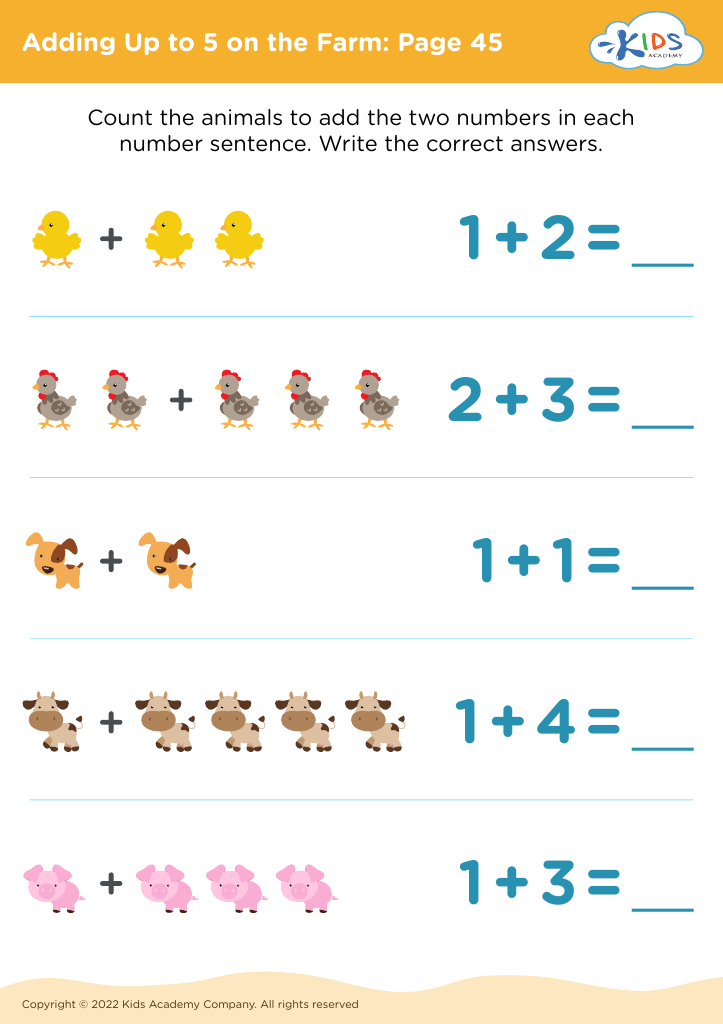
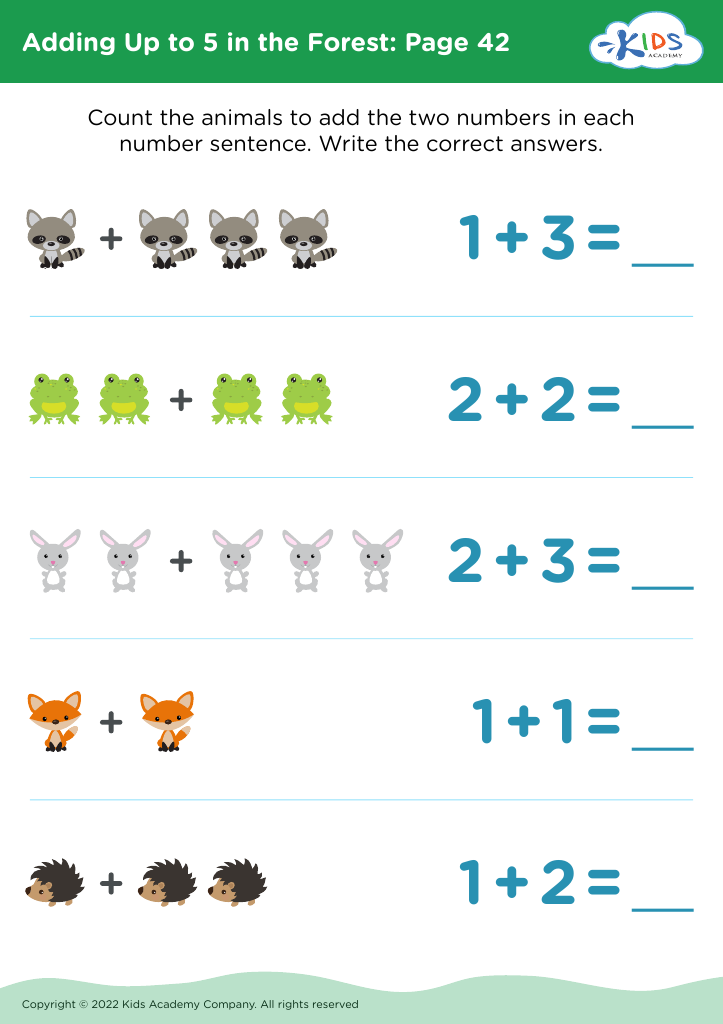
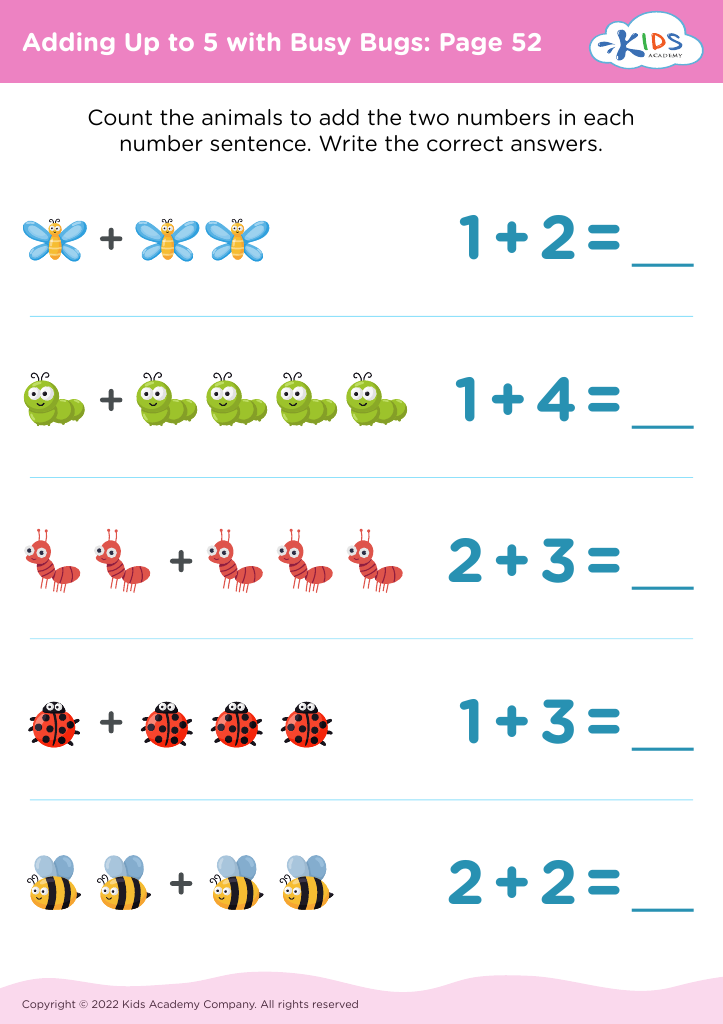
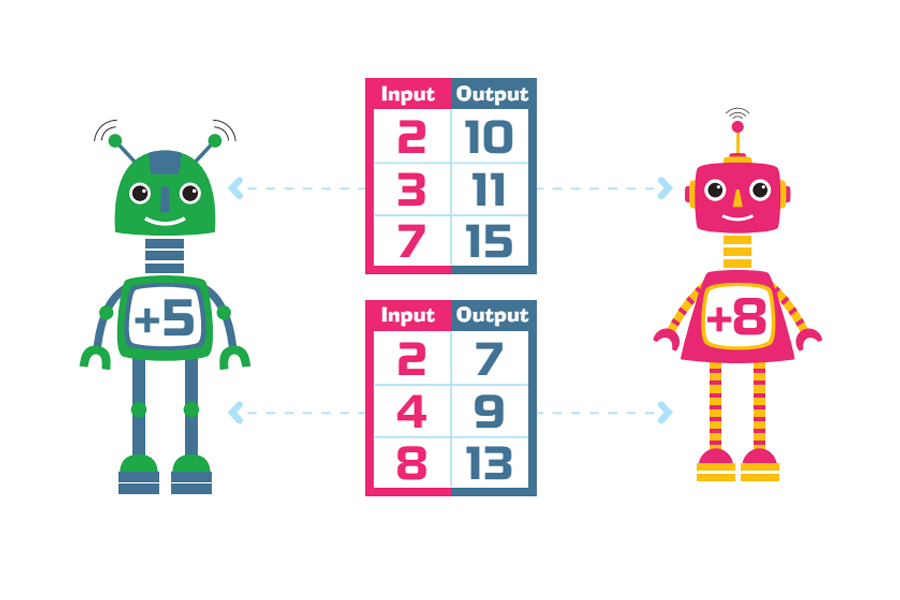
Parents and teachers should prioritize developing problem-solving skills that involve adding up to five for children aged 3-7 because these early math skills are foundational for future academic success. First, understanding basic addition concepts encourages logical thinking and problem-solving abilities, skills critical in everyday life. For young children, recognizing patterns and understanding that numbers represent quantities helps build cognitive skills that are transferable to other subject areas.
These early math activities, whether through play or structured exercises, promote a child's confidence and enjoyment in learning. Children who master basic concepts of addition at an early age often find subsequent math challenges less intimidating and more engaging. The ability to add up to five also lays the groundwork for number sense, enabling children to comprehend more complex operations like subtraction, multiplication, and division as they progress in their education.
Moreover, fostering problem-solving skills early on helps children develop perseverance and attention to detail, two essential traits for academic and professional success. Active involvement from parents and teachers in nurturing these skills creates a supportive learning environment, encouraging a growth mindset and resilience. Therefore, emphasizing simple addition strengthens essential mathematic understanding and paves the way for a lifetime of learning and problem-solving abilities.








