Understanding numbers Adding Up to 5 Worksheets for Ages 3-7
3 filtered results
-
From - To
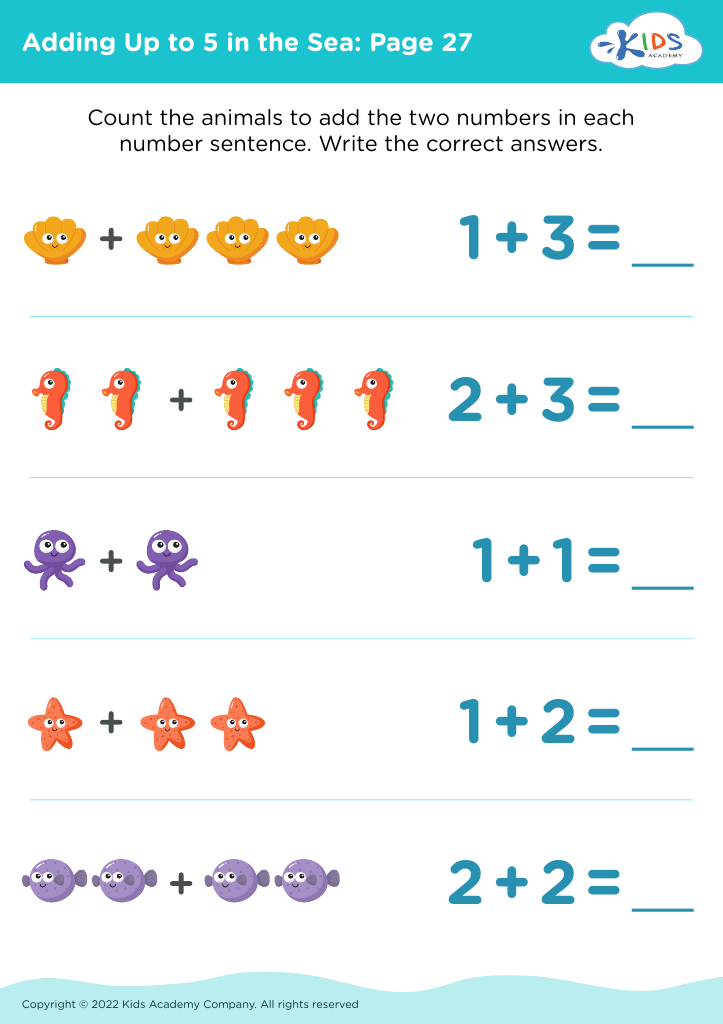
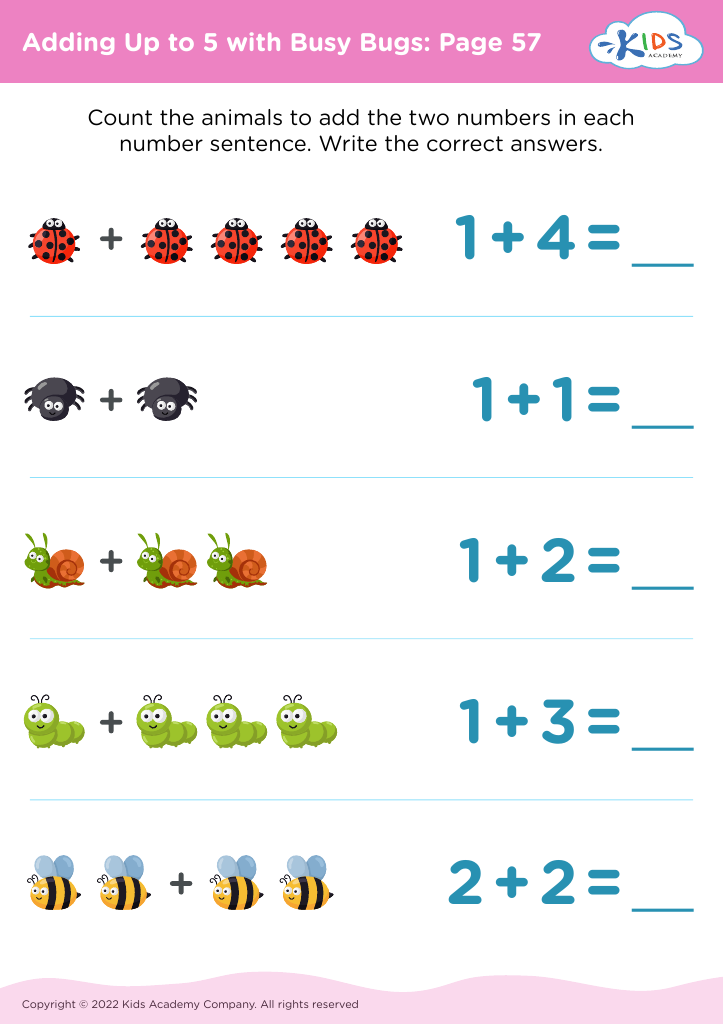
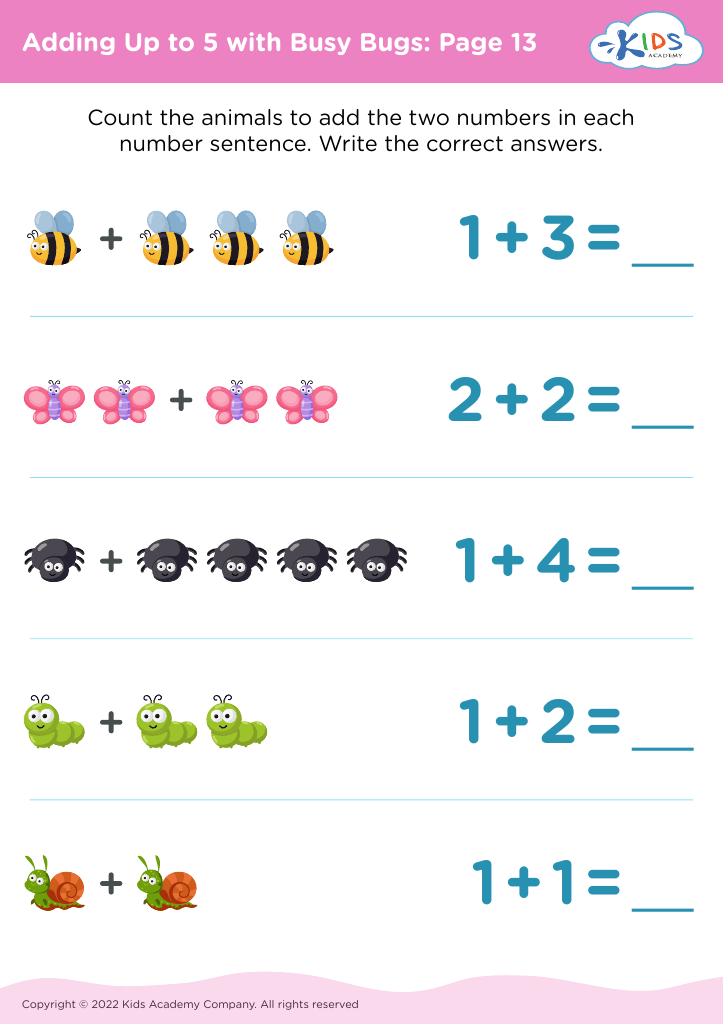
Welcome to our "Understanding Numbers – Adding Up to 5" worksheets designed for children aged 3-7! These engaging, printable resources are perfect for young learners to develop foundational math skills. Through fun activities and colorful illustrations, children will explore number recognition and practice addition with totals up to 5. Each worksheet promotes critical thinking and enhances problem-solving abilities, making math enjoyable and accessible. Ideal for use in both classrooms and homes, our worksheets provide a structured yet playful approach, ensuring children build confidence and competence in their early math journey. Start fostering a love for numbers today!




.jpg)



Understanding numbers and the concept of adding up to 5 is crucial for children aged 3-7, as it lays the foundation for their mathematical abilities. At this early stage, children are developing essential cognitive skills that greatly influence their future academic success. When parents and teachers focus on this fundamental concept, they enable children to grasp the basics of addition and number recognition, which are vital for more complex math concepts later on.
Mastering simple addition helps boost a child's confidence and encourages a positive attitude towards mathematics. Engaging with numbers through interactive games, visuals, and hands-on activities allows children to break down abstract concepts and relate them to real-life situations. Furthermore, a solid understanding of adding up to 5 cultivates critical thinking and problem-solving skills, preparing children to tackle challenges both in school and daily life.
Beyond math, building numerical fluency also fosters social skills, as children often collaborate in games or group activities involving counting and addition. This early number sense ultimately supports children's overall cognitive development and equips them with the skills necessary to navigate increasingly complex subjects as they progress in their education. In summary, focusing on numbers and simple addition is vital for laying the groundwork for future learning and success.








