Visual perception improvement Adding Up to 5 Worksheets for Ages 3-7
5 filtered results
-
From - To
Enhance your child's learning experience with our "Visual Perception Improvement: Adding Up to 5 Worksheets" designed for ages 3-7. These engaging worksheets focus on developing crucial visual perception skills while introducing basic addition concepts. Your child will enjoy fun, interactive exercises that promote visual discrimination, spatial awareness, and problem-solving abilities. Each worksheet offers colorful illustrations and age-appropriate challenges, making math enjoyable and accessible. By integrating visual perception improvement with simple math practice, your child will build a solid foundation for future learning. Discover the perfect blend of creativity and education as you help your young learner excel with these valuable resources!
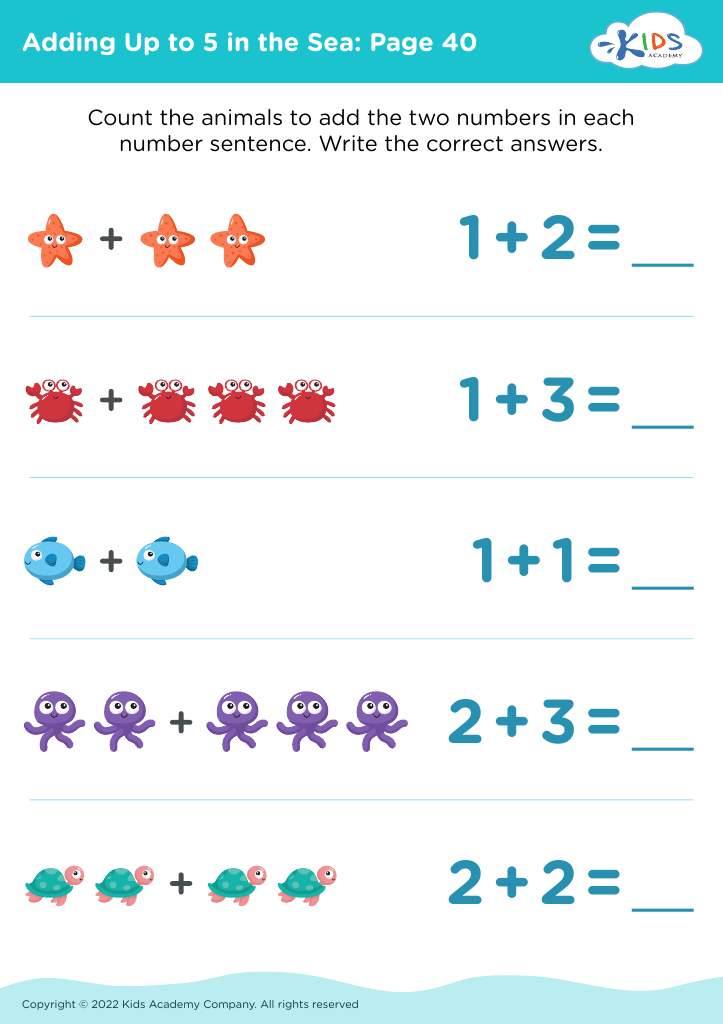
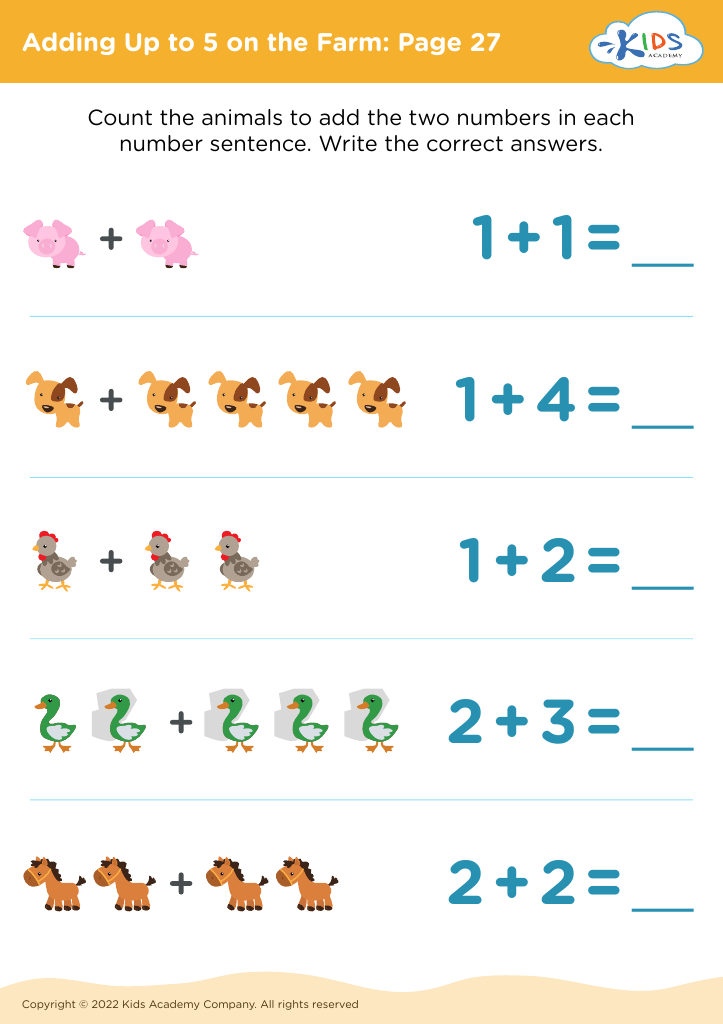
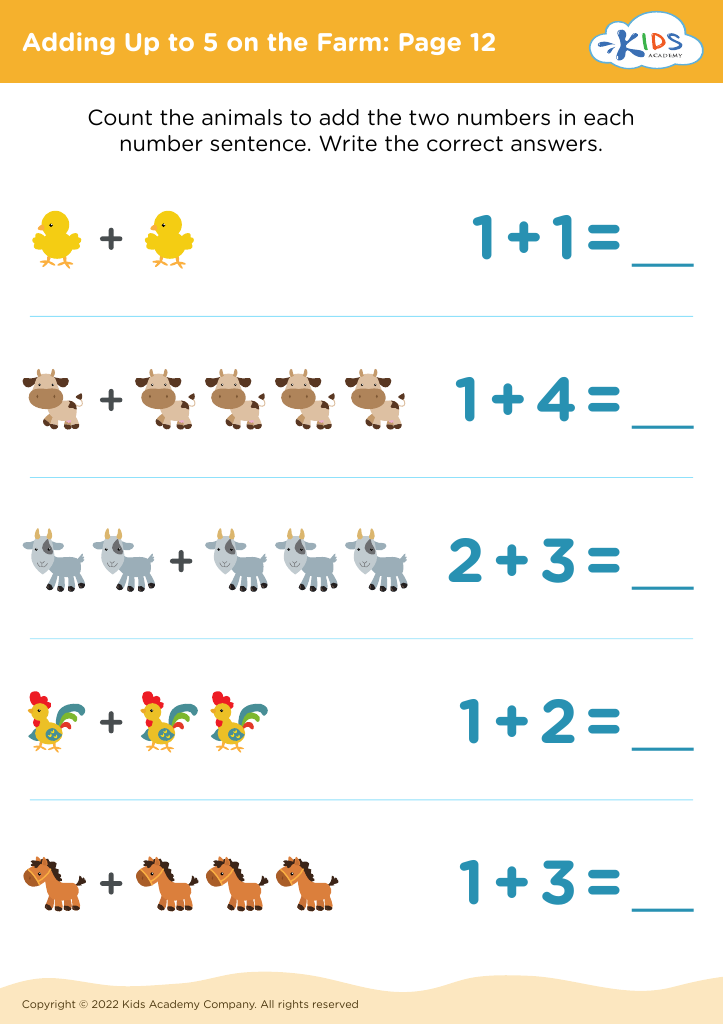
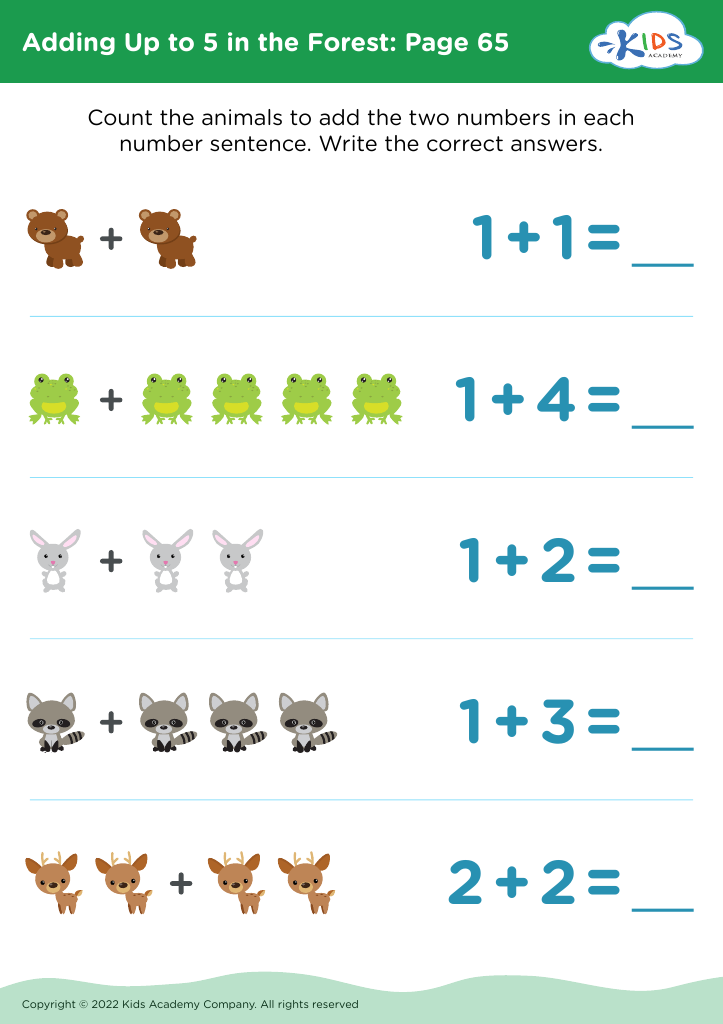
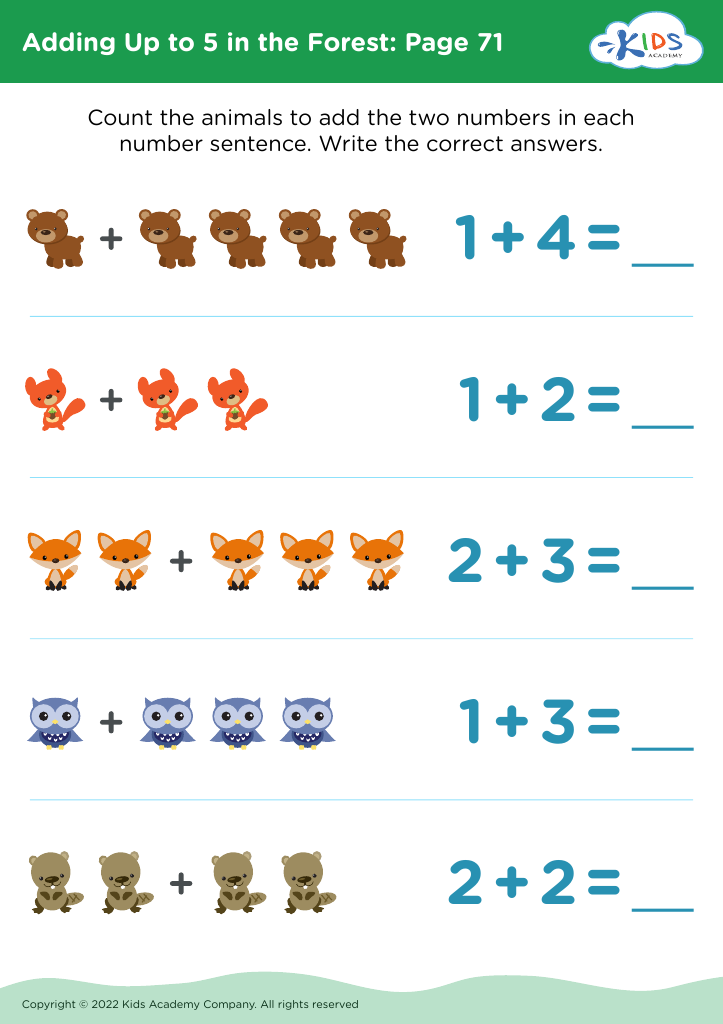








Visual perception is a critical cognitive skill that enables children to interpret and understand visual information in their environment. For children aged 3-7, improving visual perception is essential for various developmental milestones, particularly in early math skills such as "Adding Up to 5."
Parents and teachers should care about enhancing this skill because strong visual perception is foundational for learning. Children need to recognize numbers, shapes, and patterns, which are central to basic math concepts. When children can perceive and differentiate visual information effectively, they become more confident in their ability to solve problems and engage with numbers.
Moreover, visual perception influences a child's ability to follow instructions, cross-check answers, and understand abstract concepts. As they learn to add numbers and visualize outcomes, they develop crucial problem-solving abilities that extend beyond math. This builds confidence and fosters a positive attitude toward learning.
Additionally, improving visual perception at a young age can lead to better performance in other subjects, enhancing overall academic success. Investing in this skill supports not just immediate math proficiency but also sets the stage for lifelong learning, enabling children to thrive in school and beyond.








