Color Identification Adding up to 50 Worksheets for Ages 3-7
7 filtered results
-
From - To
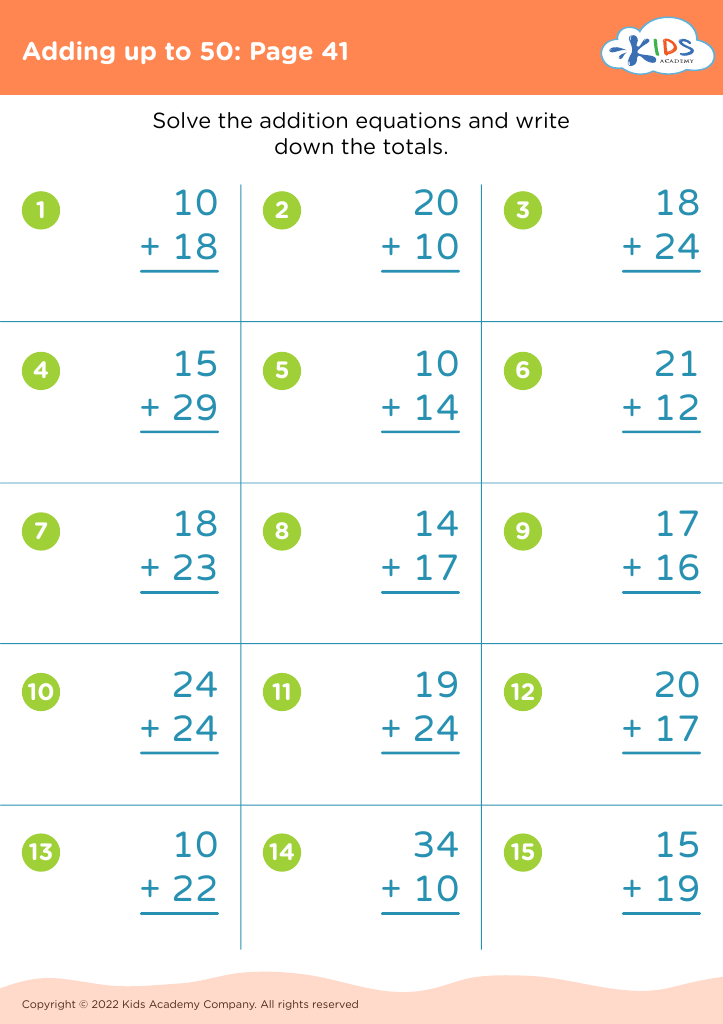
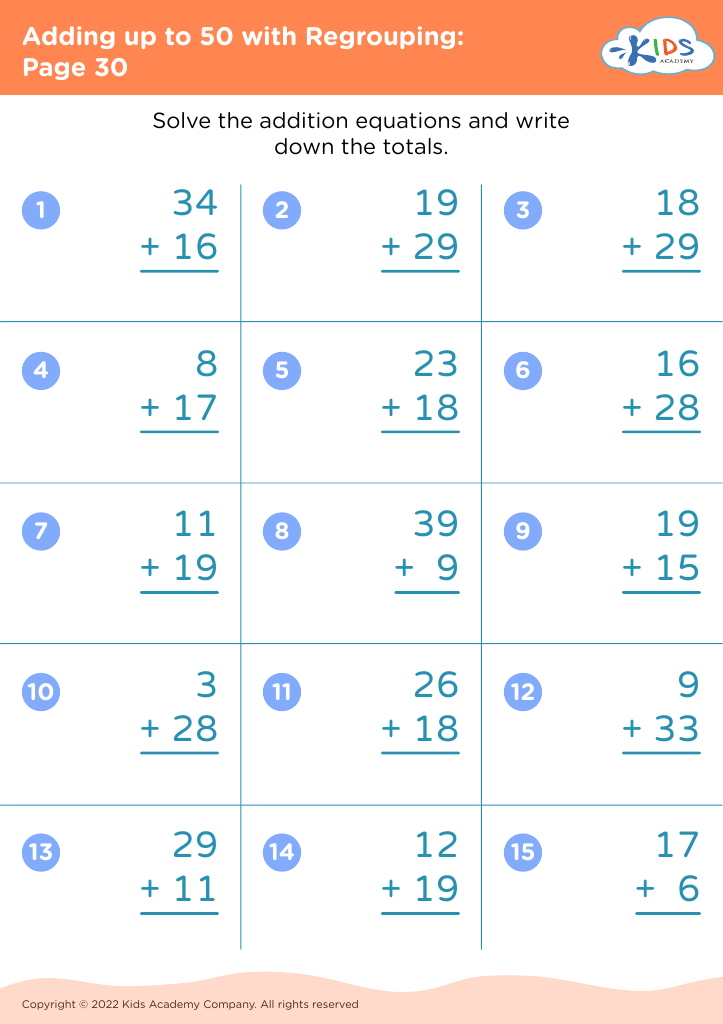
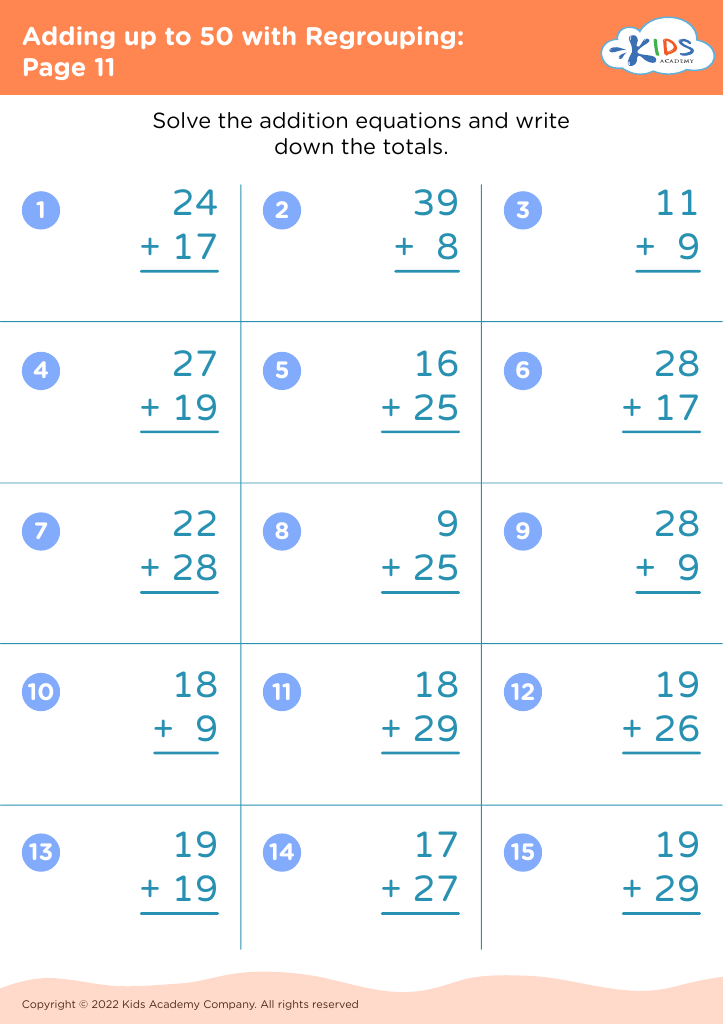
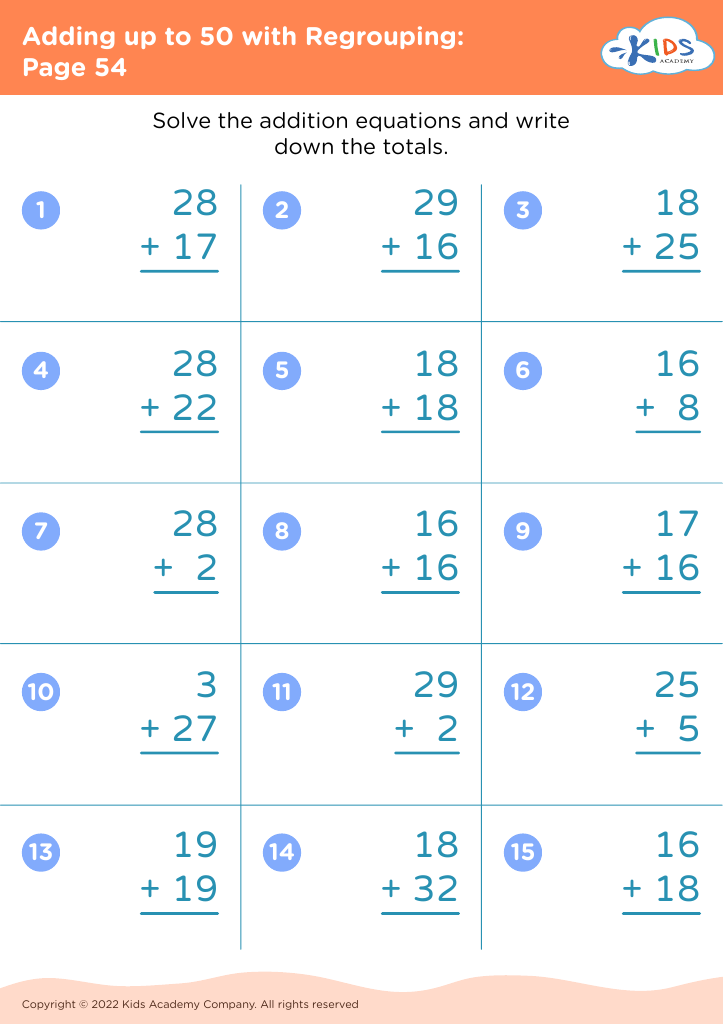
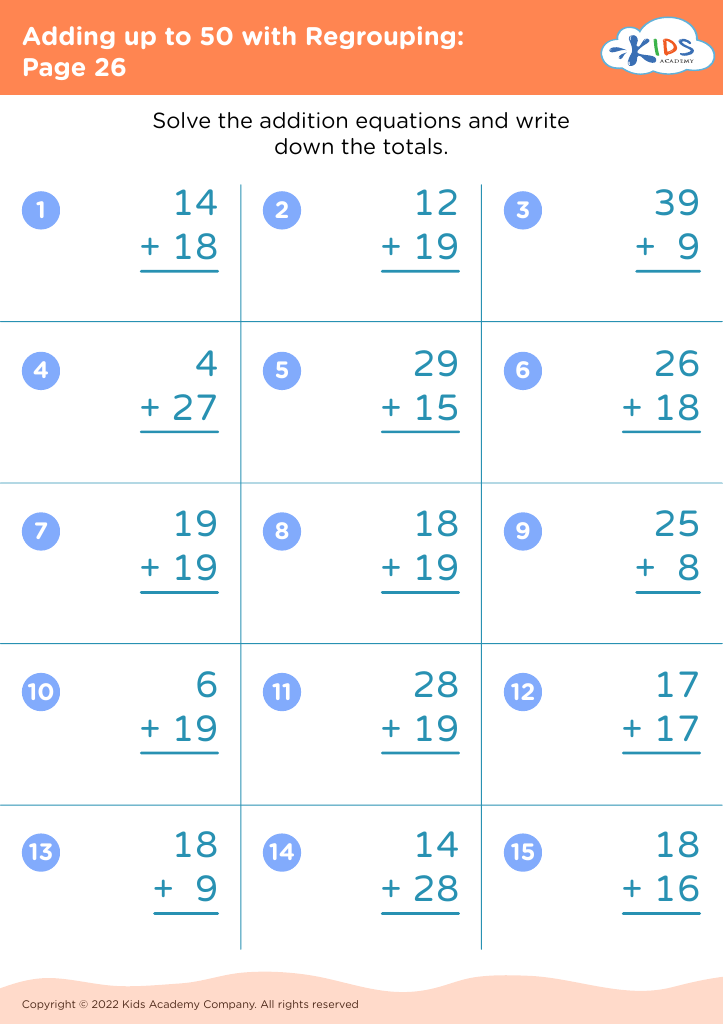
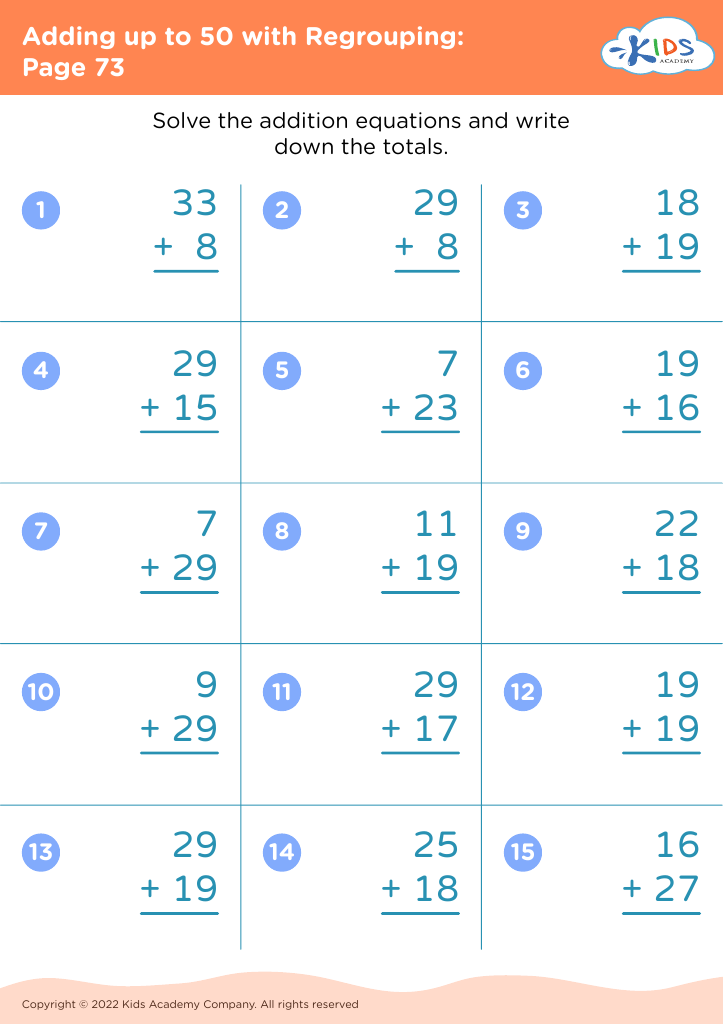
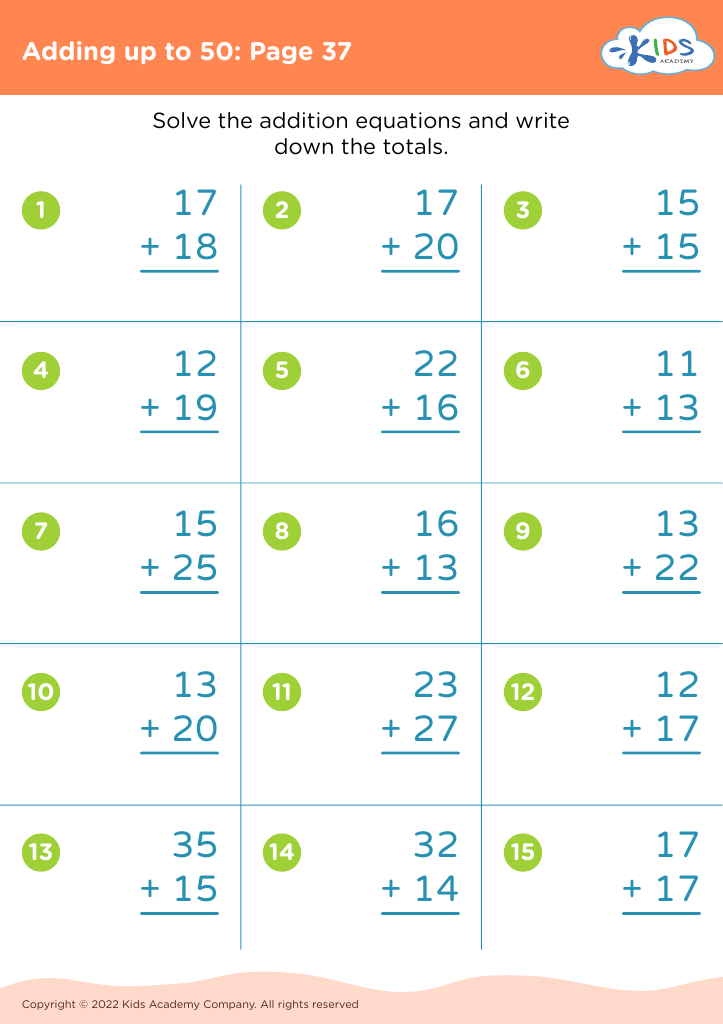
Unlock your child's potential with our engaging "Color Identification Adding up to 50 Worksheets" designed for ages 3-7! These interactive sheets blend the excitement of color recognition with essential math skills, helping young learners enhance their counting and addition abilities while emphasizing color associations. Each worksheet is crafted to promote cognitive development through fun activities that encourage critical thinking and problem-solving. Ideal for both home and classroom settings, these worksheets provide a stimulating way for kids to learn as they color, count, and add up to 50. Get started today and watch your child's confidence and skills grow!




Color identification and the ability to visually distinguish colors is a fundamental skill for children aged 3-7. It serves as the foundation for numerous educational and developmental milestones. Learning about colors helps enhance a child’s vocabulary and cognitive abilities, allowing them to describe their surroundings accurately and express their feelings more effectively. Recognizing colors also plays a vital role in artistic expression, as children engage in creative activities like drawing and painting.
When combined with numerical skills, such as adding up to 50, color identification can lead to a more engaging and interactive learning experience. Teachers and parents can use bright and vivid colors to make math concepts more approachable and enjoyable for young learners. For instance, colored objects can be grouped for addition exercises, reinforcing both color recognition and basic mathematical concepts.
By emphasizing these foundational skills, caregivers ensure children are ready for more complex concepts in later grades. These skills also foster critical thinking and problem-solving abilities, which are essential in a child’s overall academic journey. Essentially, nurturing a child's understanding of colors and basic math establishes a solid groundwork for future learning and development.








