Comparing Fractions Adding up to 50 Worksheets for Ages 3-7
30 filtered results
-
From - To
Discover our engaging "Comparing Fractions Adding up to 50" worksheets designed specifically for children ages 3-7! These interactive printables help young learners develop essential math skills by comparing fractions in fun and meaningful ways. With vibrant illustrations and relatable examples, your child will enjoy exploring relationships between fractional values while enhancing their understanding of numbers. Perfect for supplementary learning at home or in the classroom, these worksheets encourage critical thinking and boost confidence in math. Help your little ones grasp the concept of fractions while having fun! Check out our collection today to make math a fantastic adventure for your child!
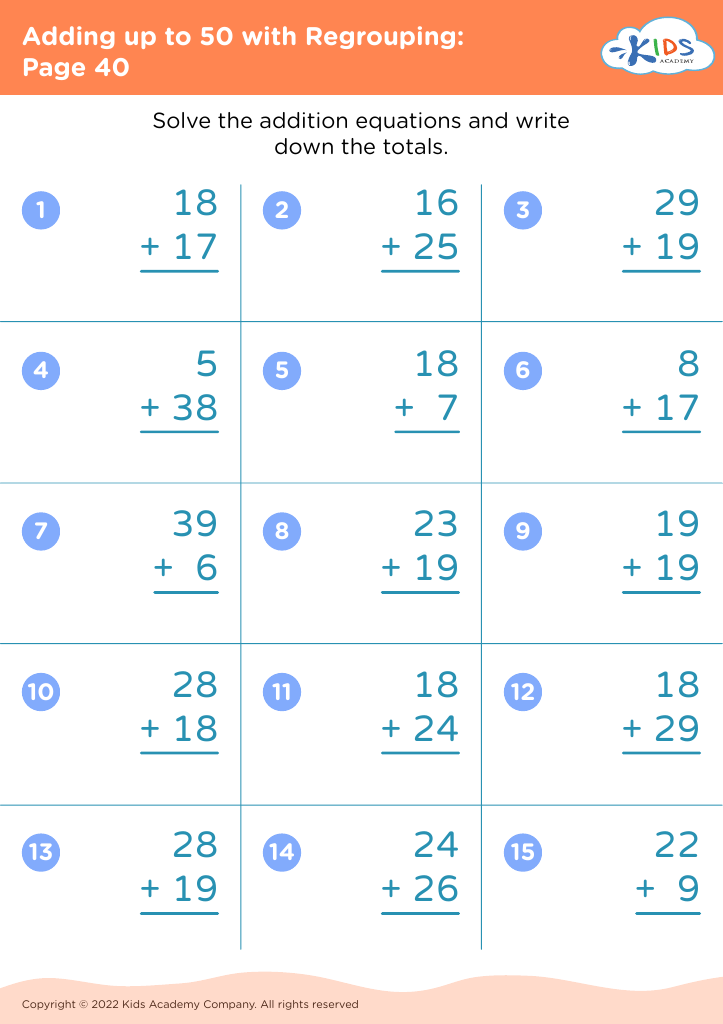
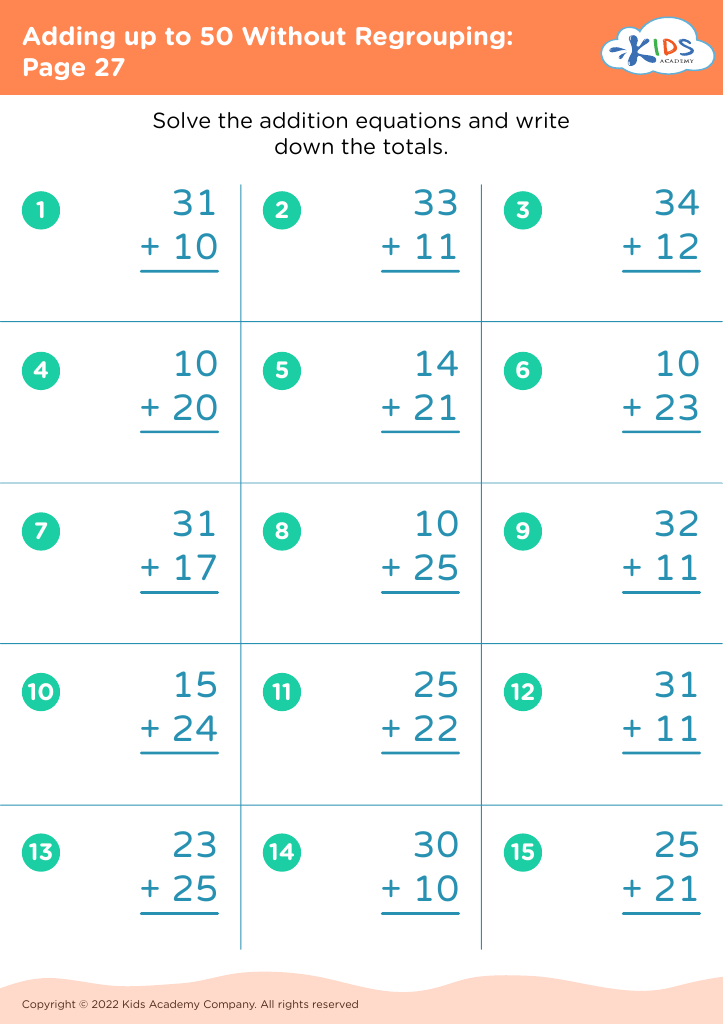
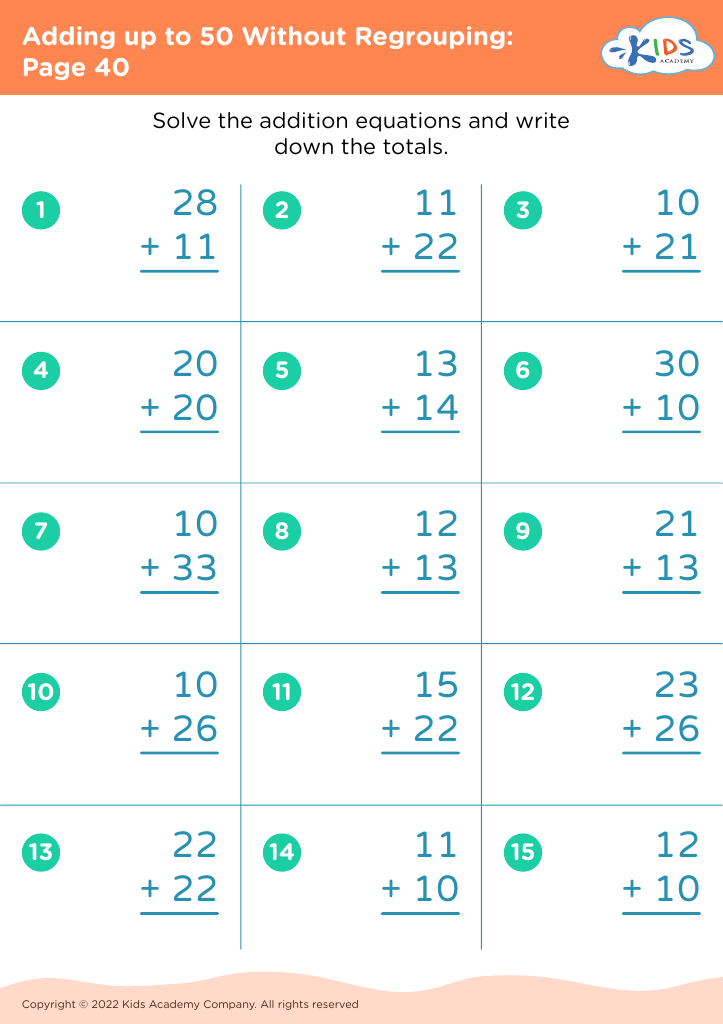
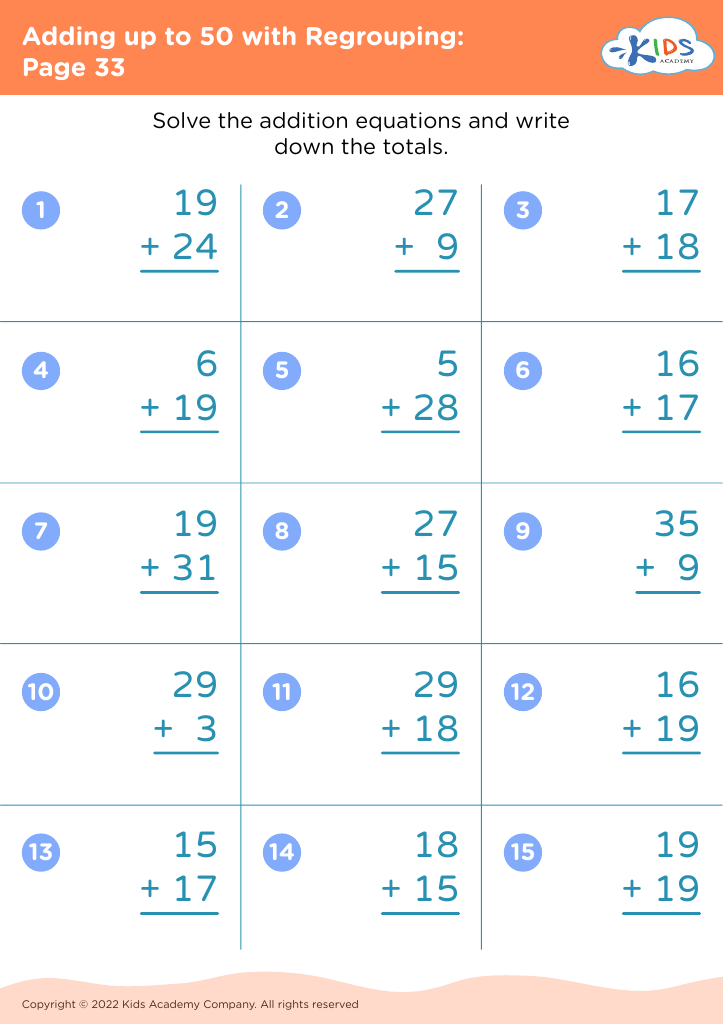
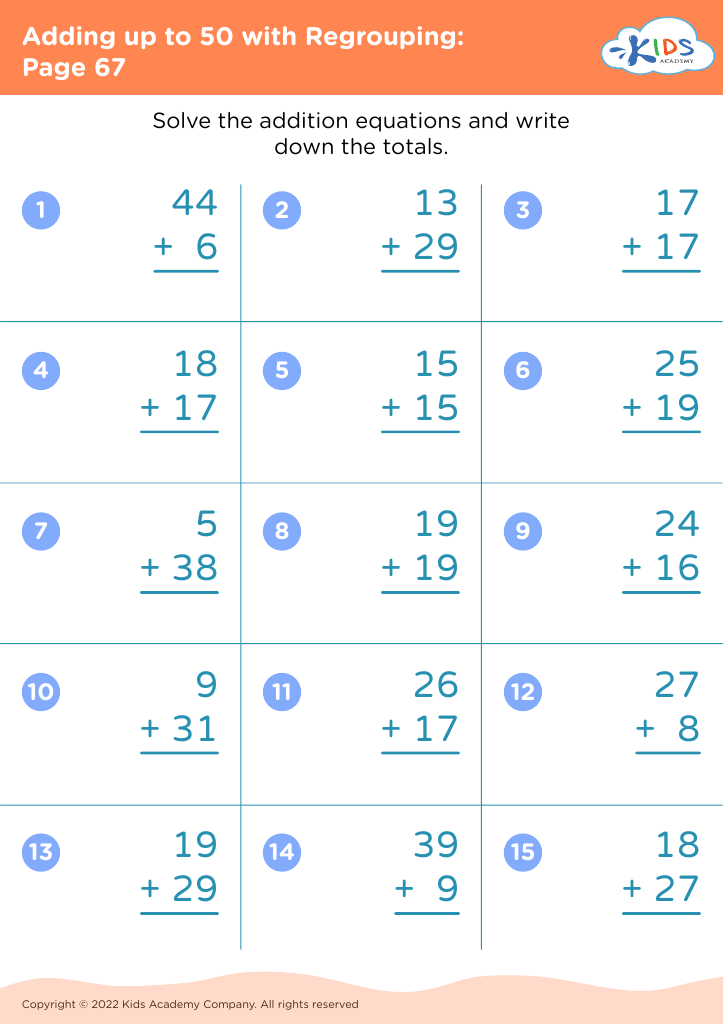
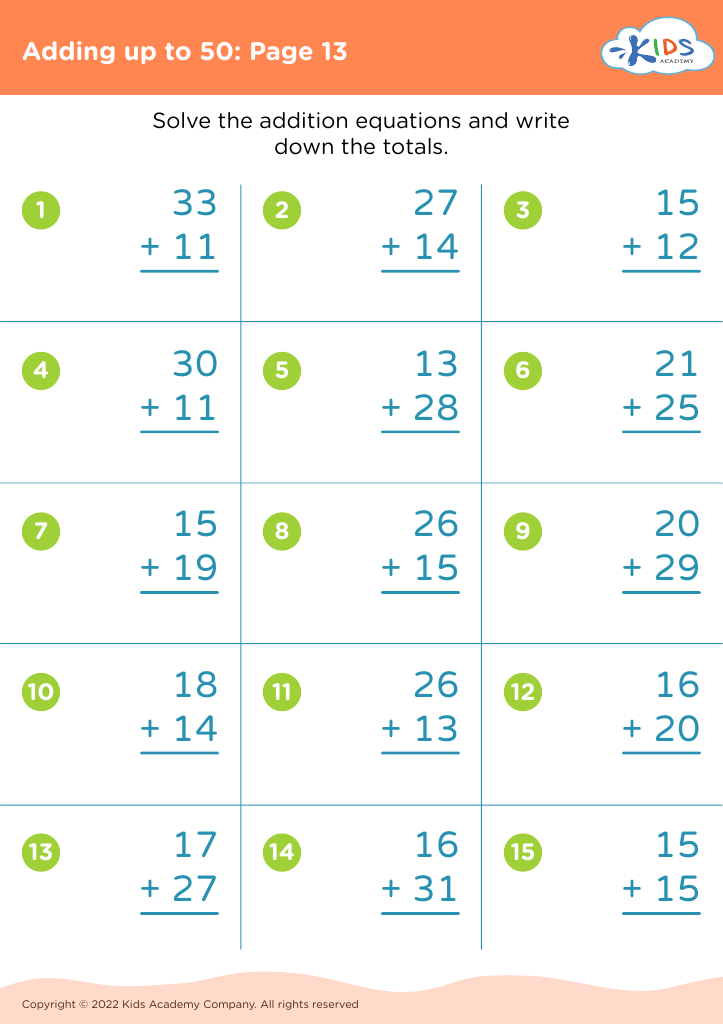
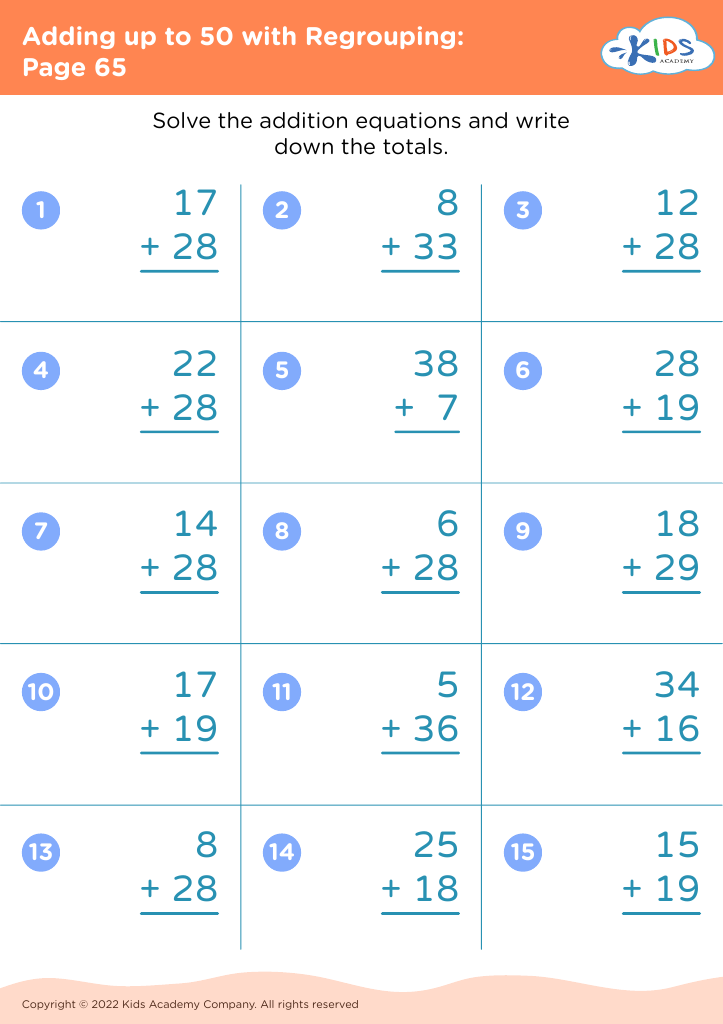
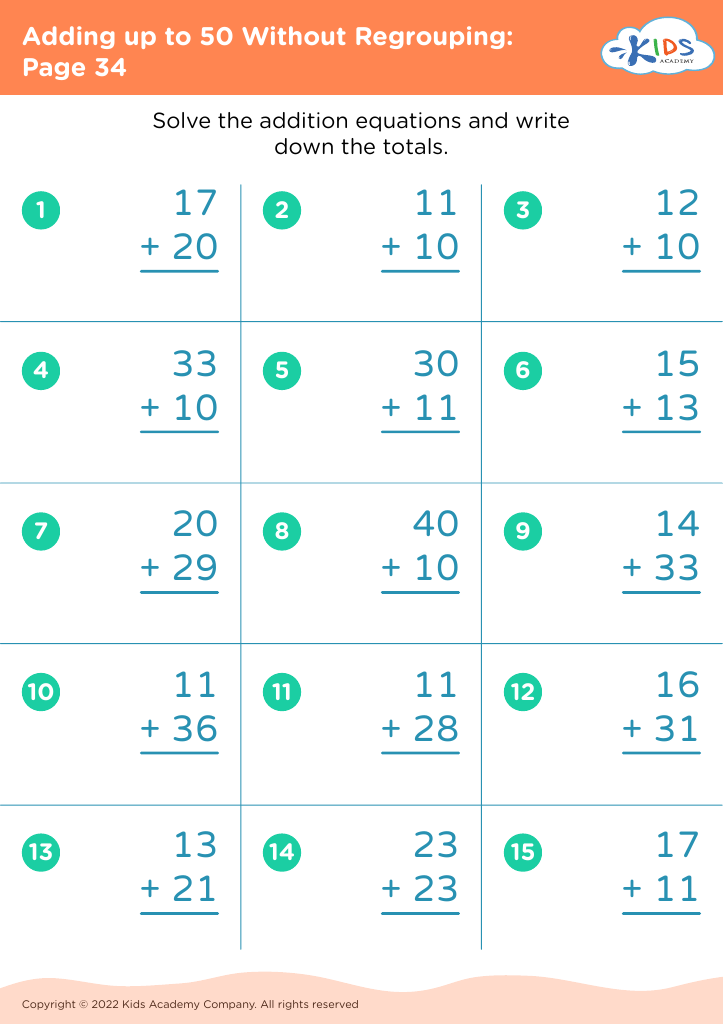
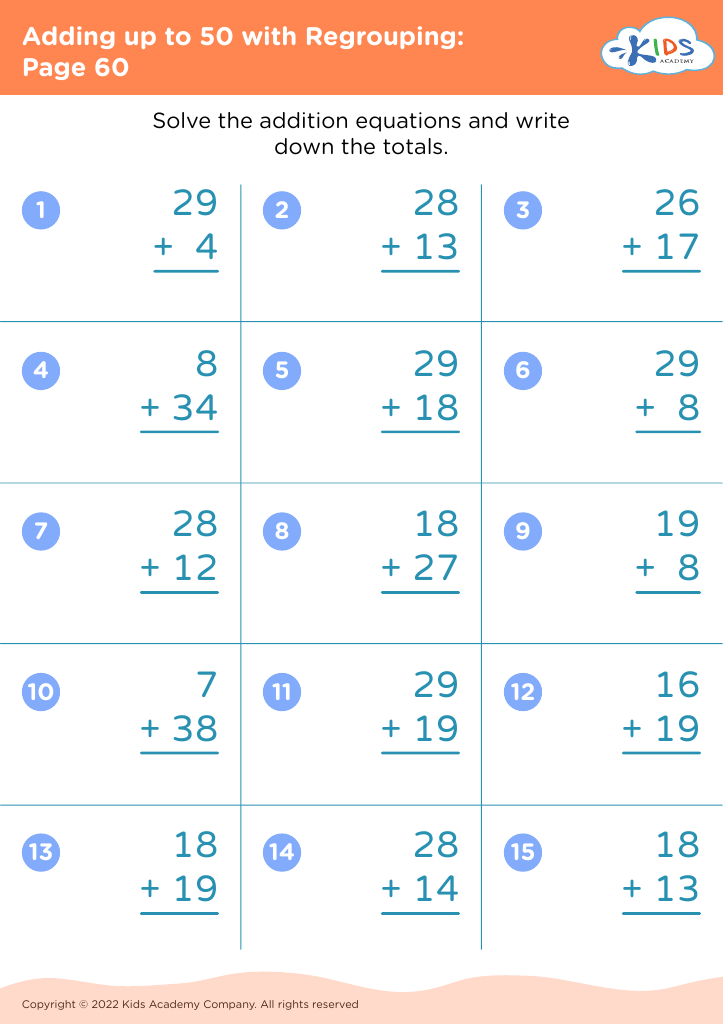
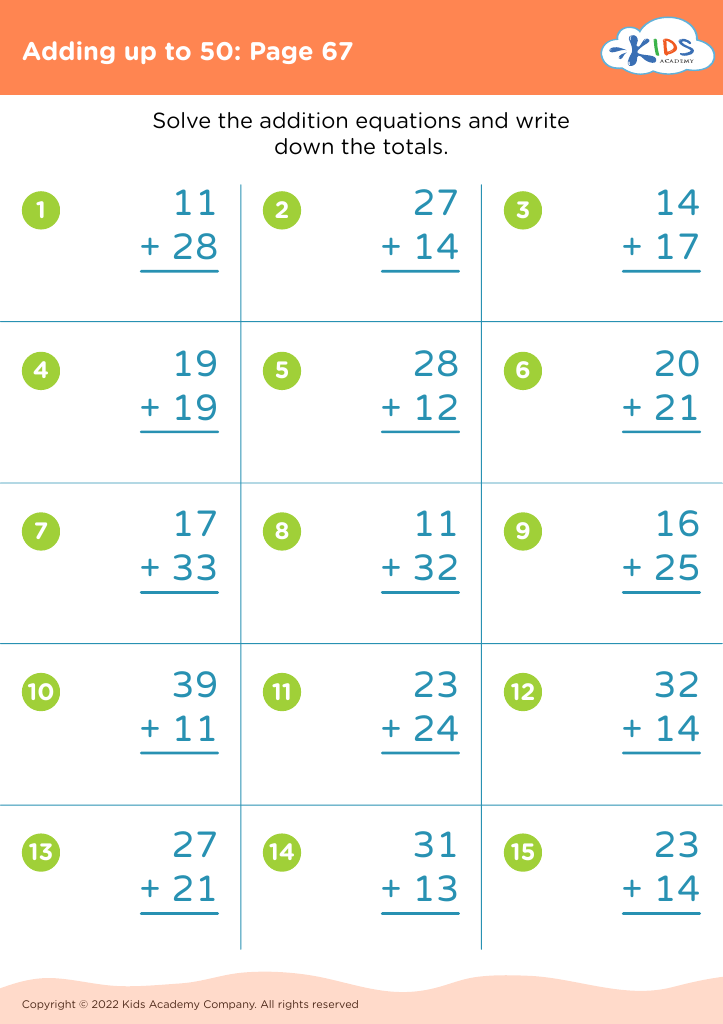
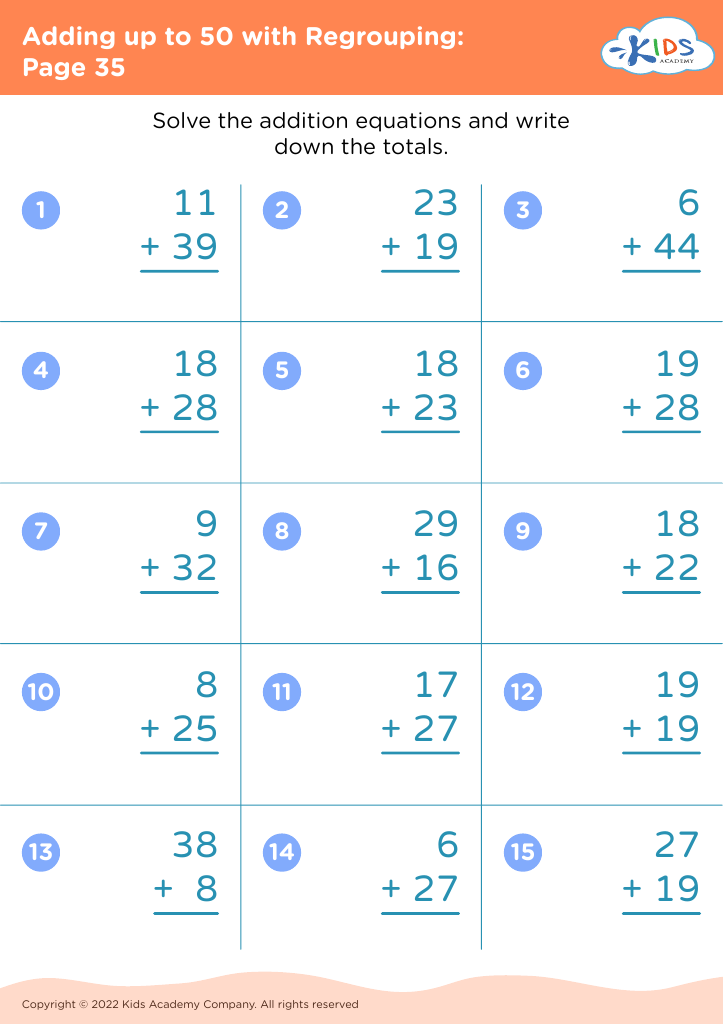
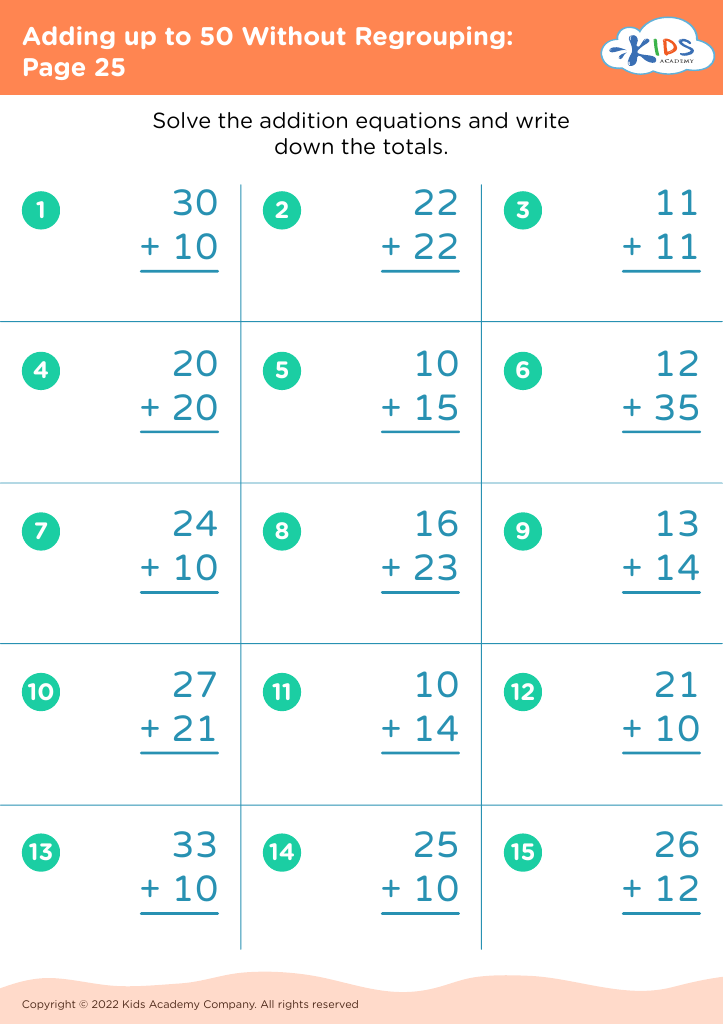
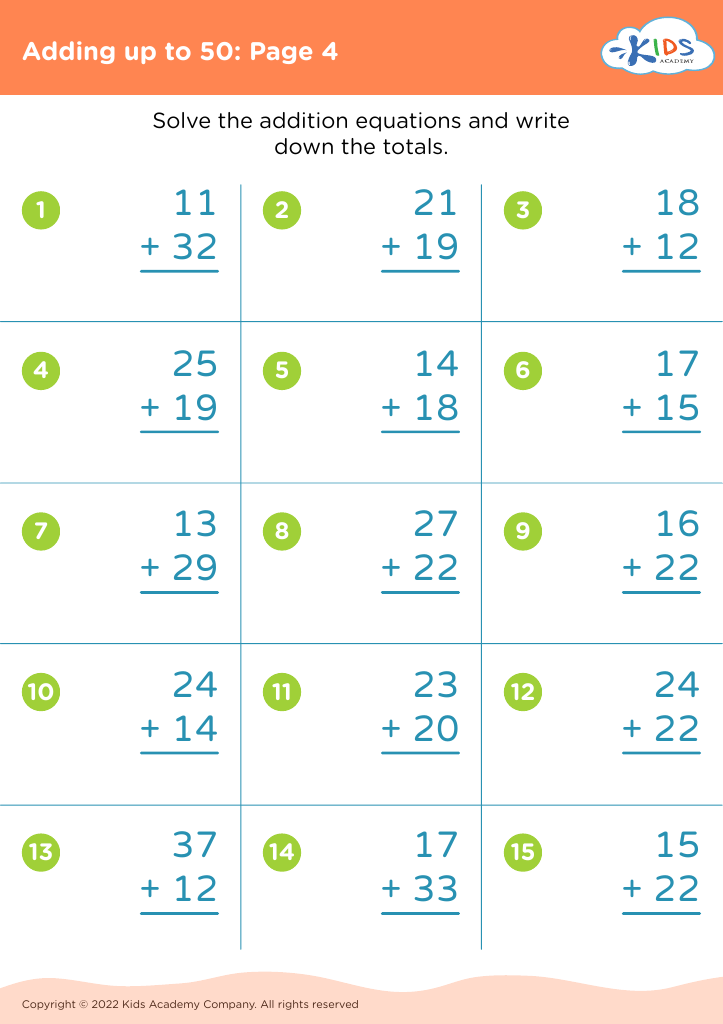
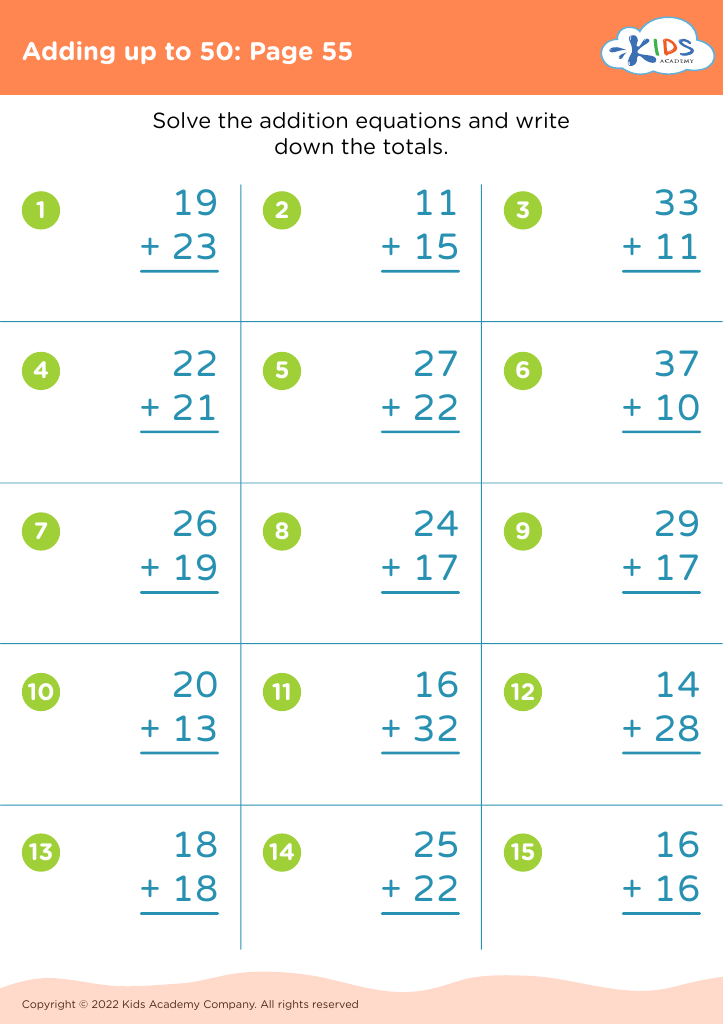
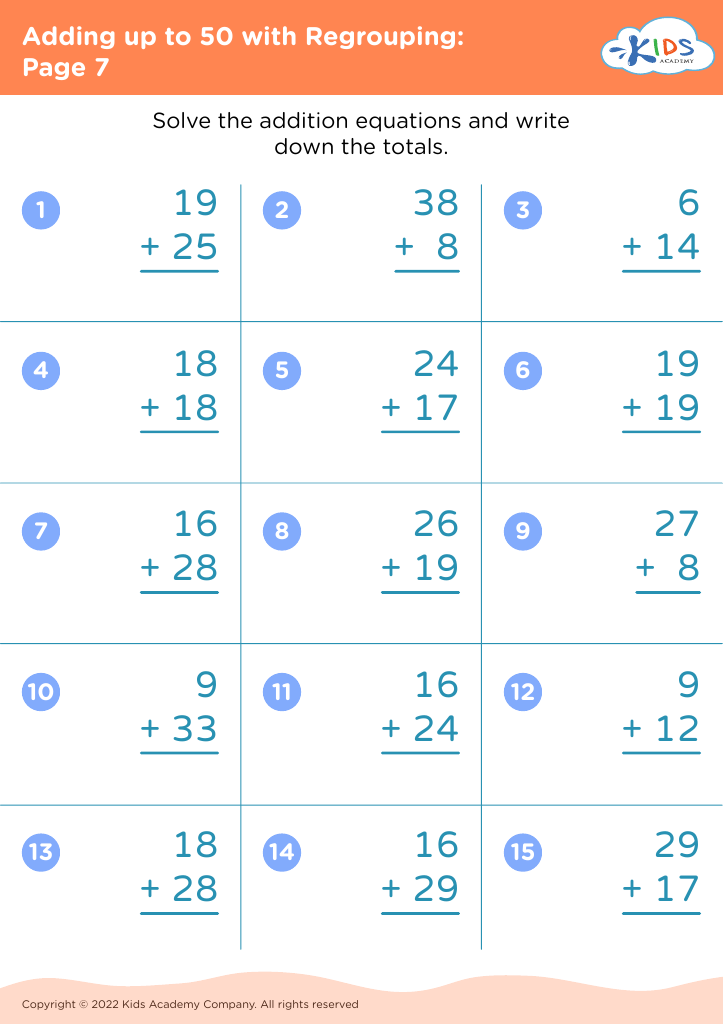
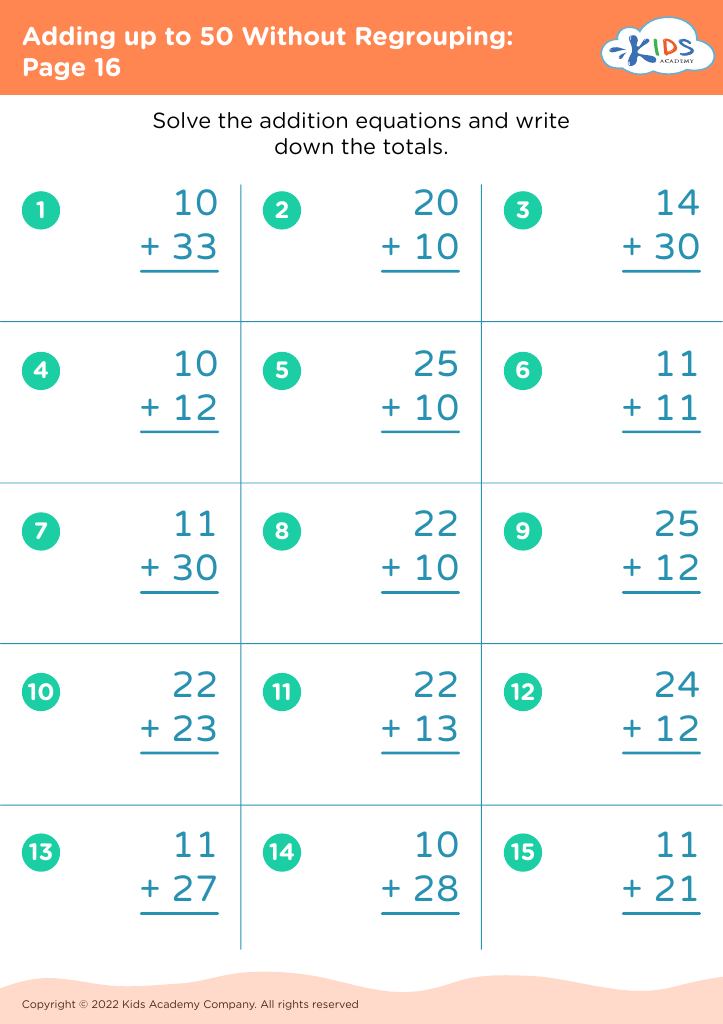
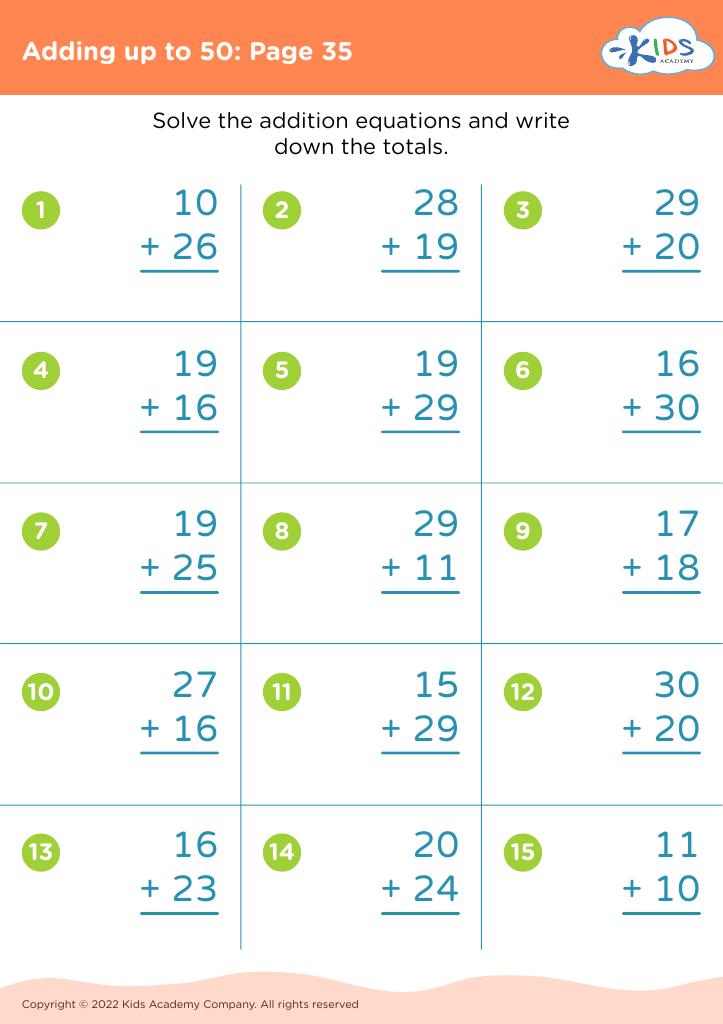
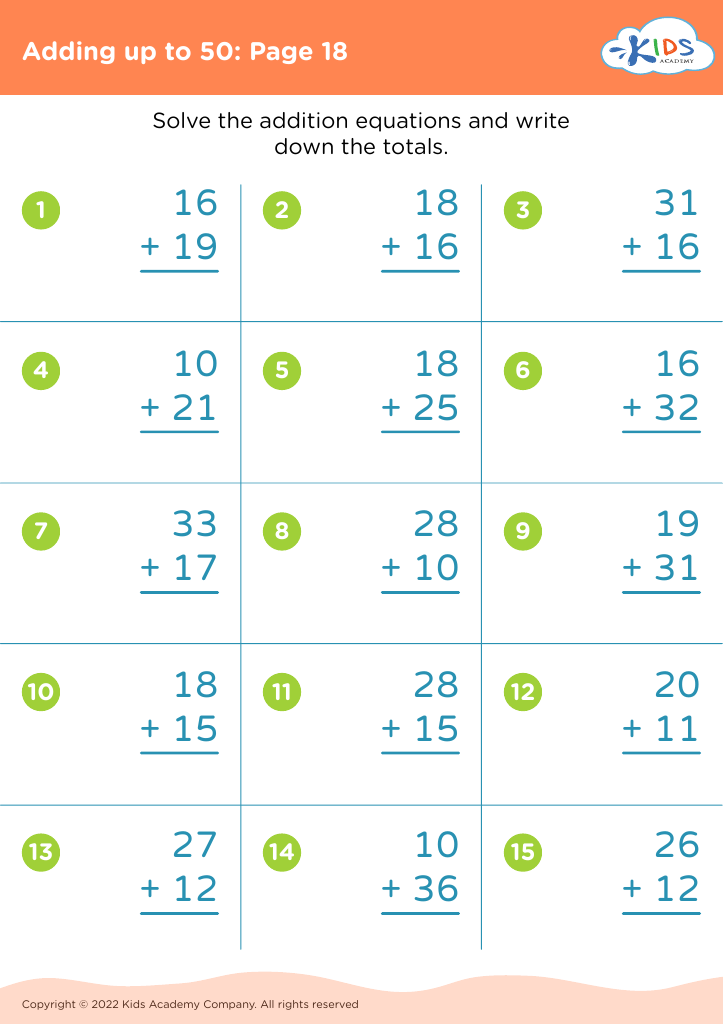
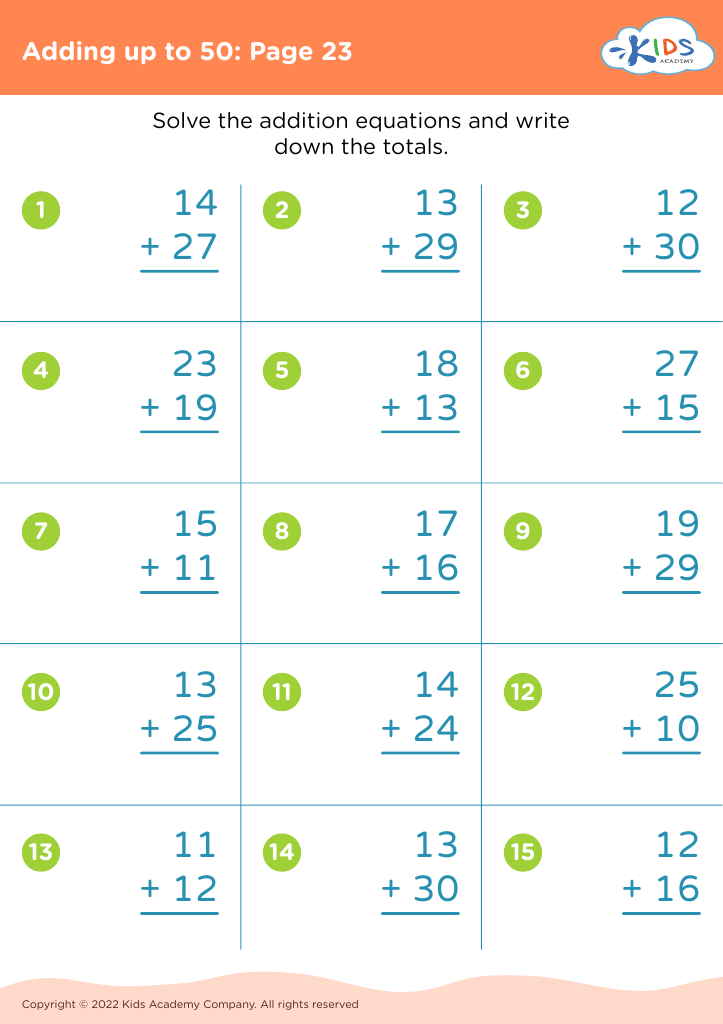
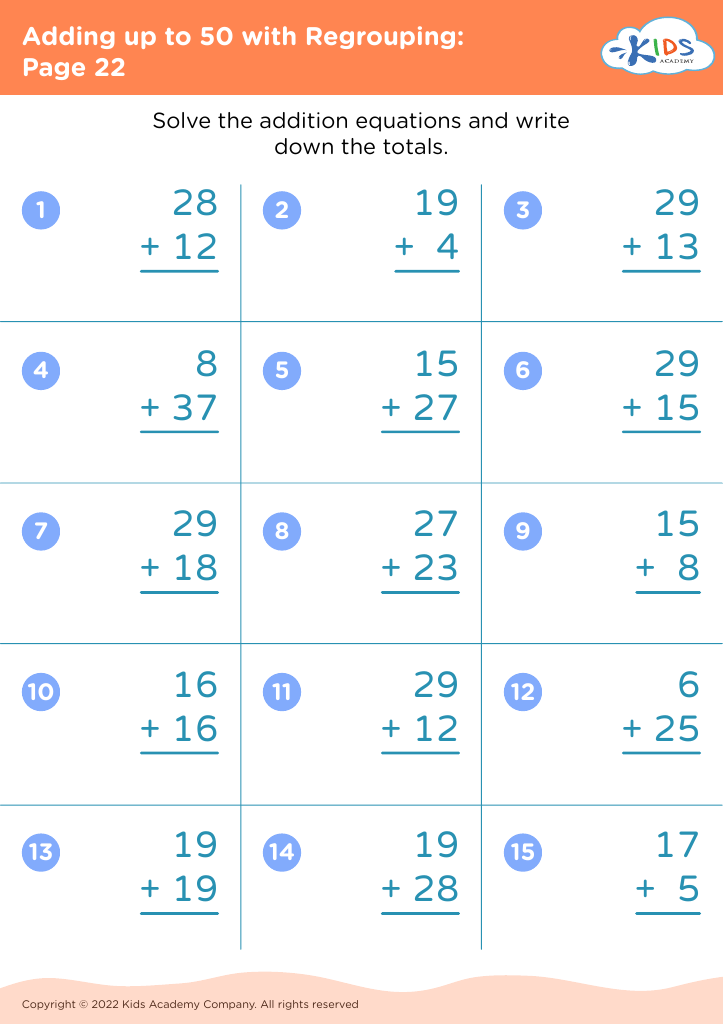
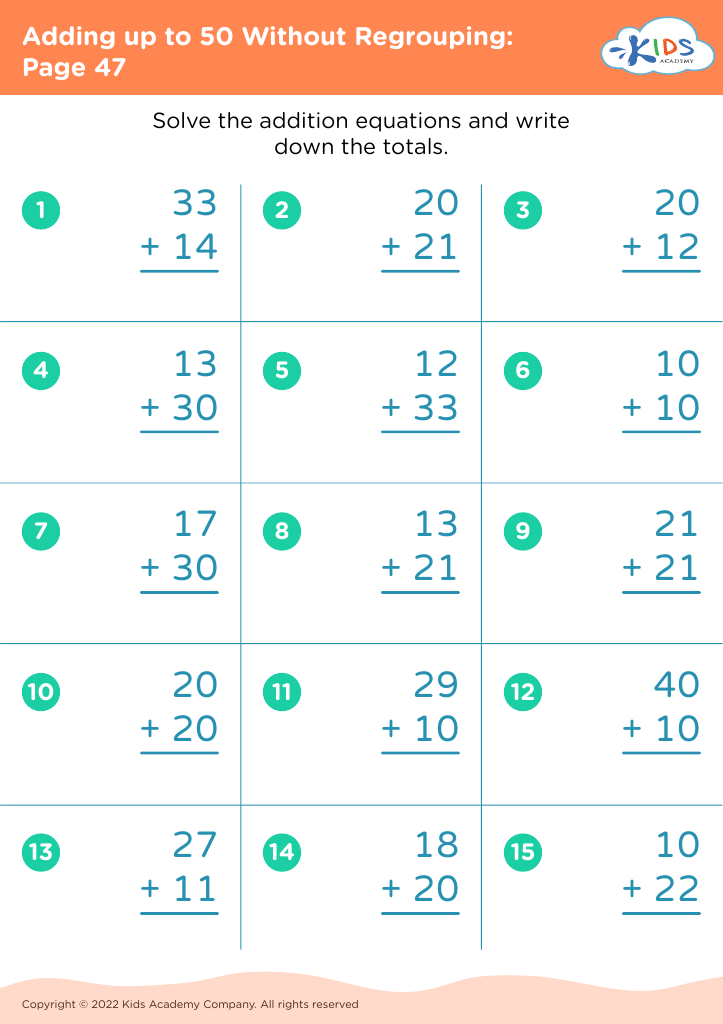
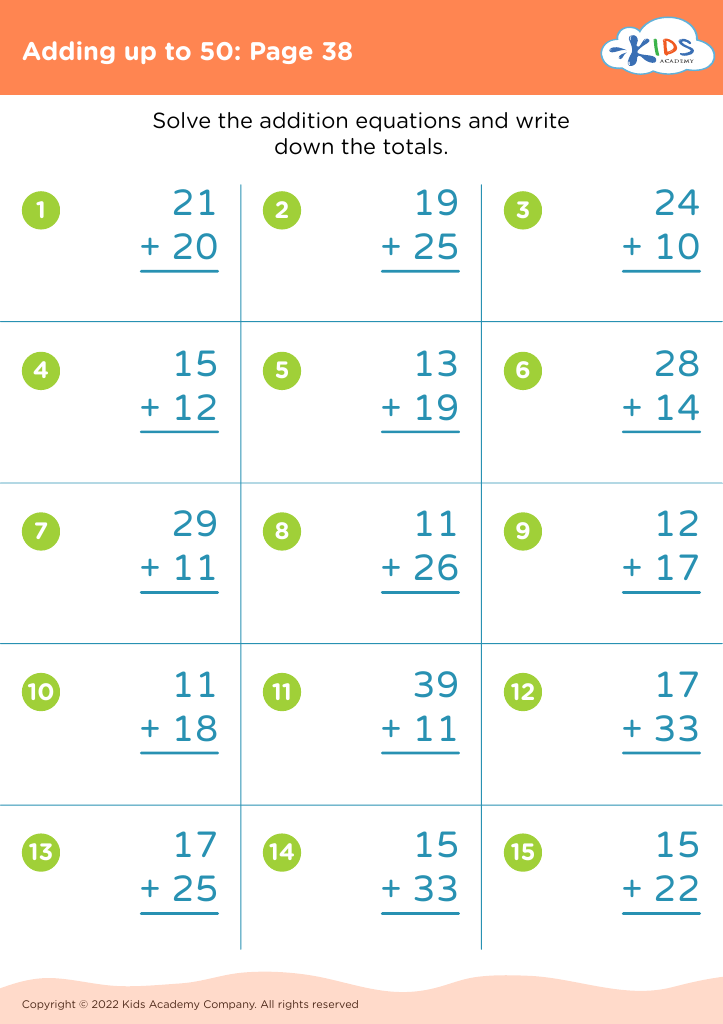
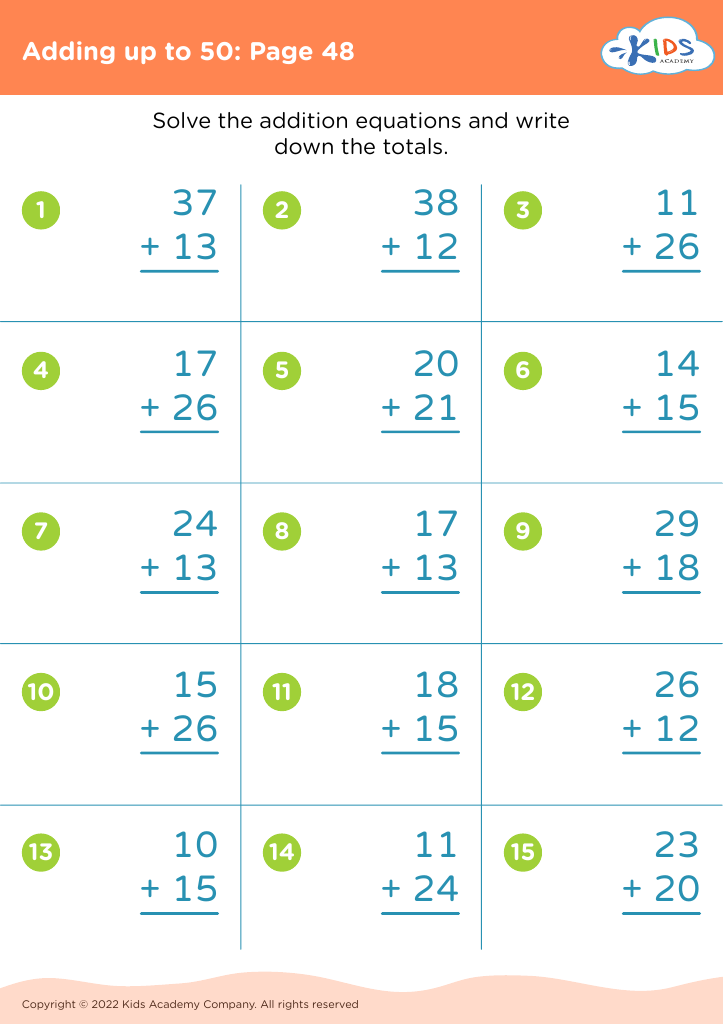
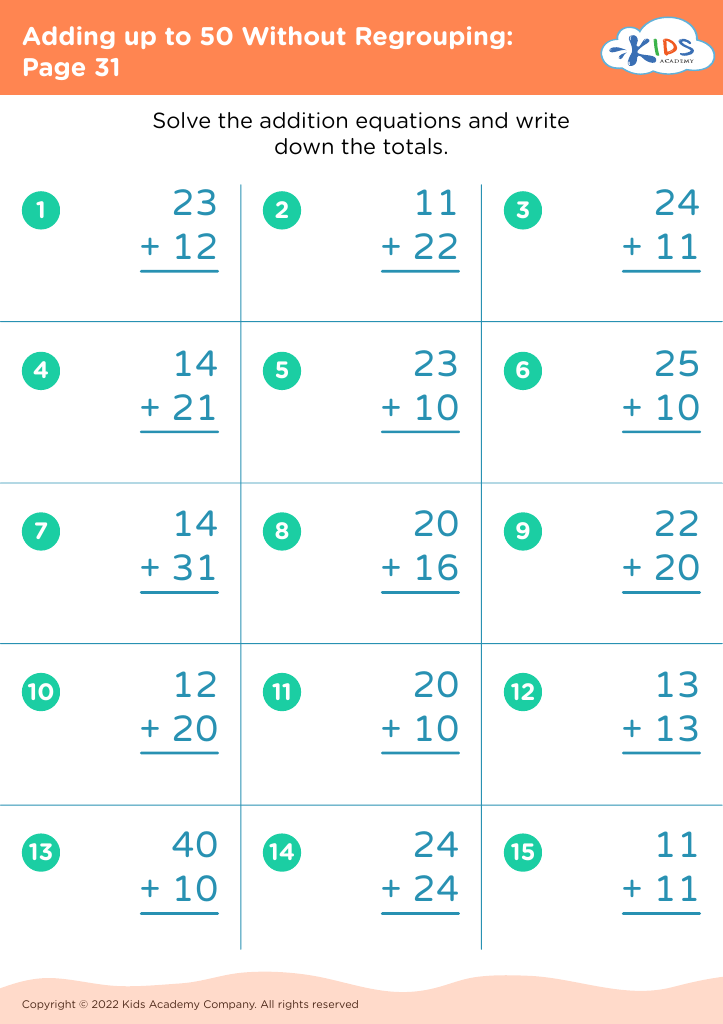




Comparing fractions is a fundamental skill that helps young learners grasp mathematical concepts and prepares them for more complex arithmetic. For children aged 3-7, understanding fractions lays the groundwork for effective problem-solving and critical thinking. Engaging with fractions, especially in a fun and relatable context like adding up to 50, helps children identify and compare parts of a whole.
Parents and teachers should prioritize this skill, as it fosters number sense, promotes analytical reasoning, and boosts confidence in math. As children experiment with comparing fractions, they learn about relationships between numbers, the importance of equivalent values, and the concept of division. These lessons translate beyond mathematics; they enhance logical reasoning which is essential in daily life.
Moreover, comparing fractions can easily be tied into playful activities or games that resonate with young learners, making learning enjoyable and less intimidating. When parents and teachers actively support children in these exercises, they encourage a positive attitude towards math. This early foundation ultimately leads to better performance in later educational milestones, reinforcing the idea that fractions and arithmetic can be engaging, accessible, and deeply rewarding. Thus, understanding and comparing fractions is not just about math; it's about cultivating lifelong learning habits.








