Develop critical thinking Adding up to 50 Worksheets for Ages 3-7
3 filtered results
-
From - To
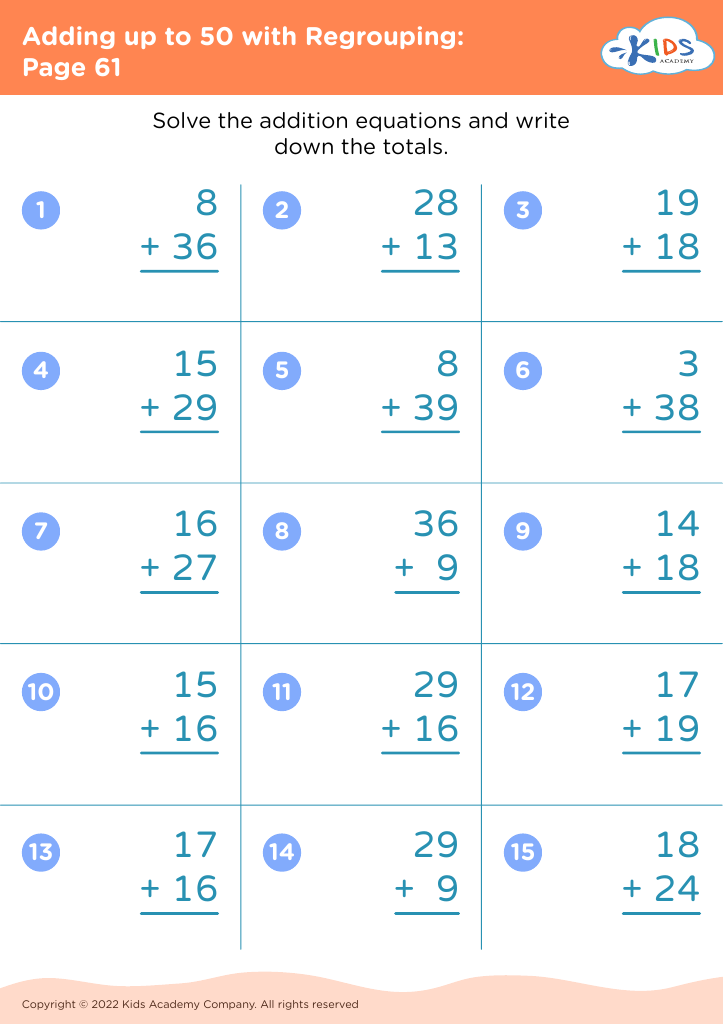
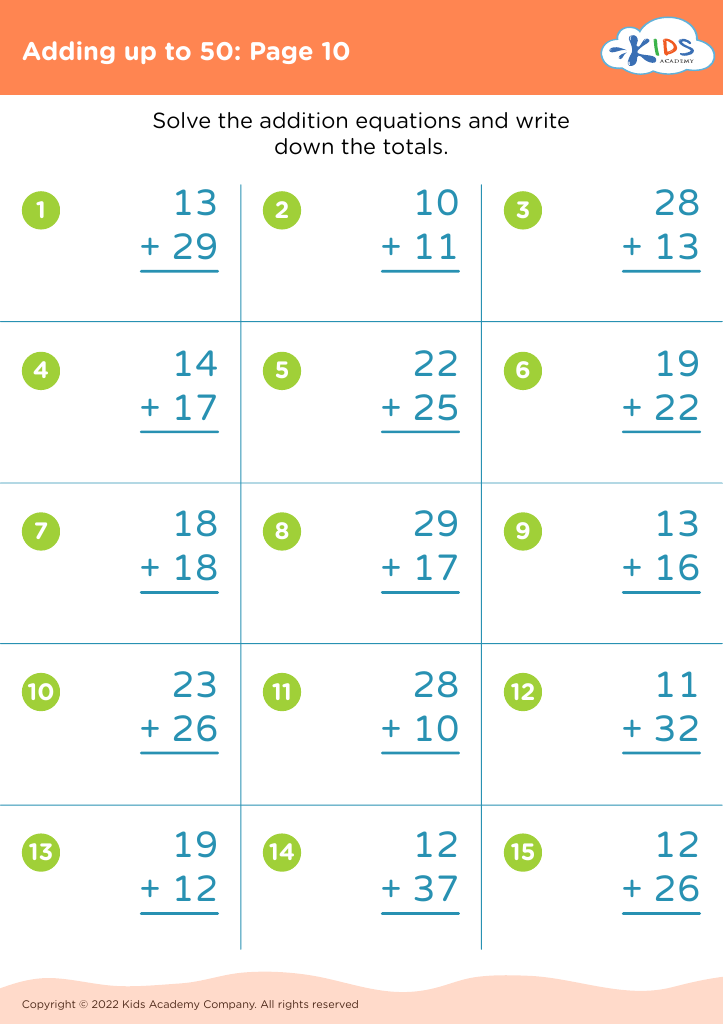
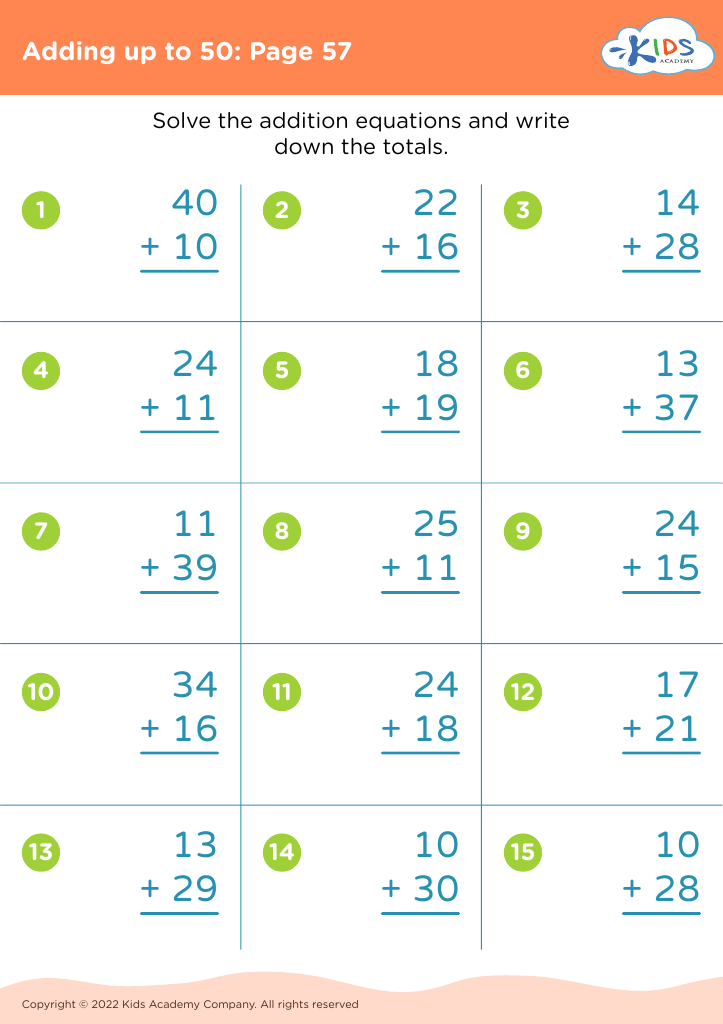
Unlock your child's potential with our "Develop Critical Thinking: Adding Up to 50 Worksheets" designed for ages 3-7! This comprehensive collection features 50 engaging worksheets that not only enhance math skills but also foster critical thinking abilities. Children will explore addition concepts through games and challenges, promoting problem-solving and analytical skills while building a strong math foundation. Each worksheet is crafted to captivate young minds, encouraging independent thinking and creativity. With varying difficulty levels, these resources cater to every learner’s needs, making math fun and interactive. Support your child’s journey to confident learning today!




Developing critical thinking skills in young children aged 3-7 is crucial for their cognitive and social development. At this stage, children are naturally curious and eager to explore the world around them. Encouraging critical thinking helps them make sense of their experiences, ask questions, and solve problems effectively. Teachers and parents play a vital role by providing an enriching environment that fosters this kind of thinking.
When children engage in critical thinking, they learn to evaluate information, consider different perspectives, and make informed decisions. This empowers them to navigate challenges with confidence and resilience. Additionally, critical thinking lays the foundation for academic success; children become adept at analyzing and synthesizing information, skills essential for later learning.
Moreover, nurturing critical thinking can enhance children’s communication, collaboration, and creativity—essential life skills that transcend the classroom. As they learn to articulate their thoughts and reasons, they build self-esteem and social skills, forming healthier relationships with peers.
Ultimately, fostering critical thinking in early childhood not only enriches individual learning experiences but also prepares children for a complex world where innovation and adaptability are paramount. Therefore, parents and teachers should prioritize this invaluable skill set, understanding its long-lasting impact on a child’s growth and potential.








