Recognizing Patterns Adding up to 50 Worksheets for Ages 3-7
7 filtered results
-
From - To
Unlock the excitement of math for young learners with our "Recognizing Patterns Adding up to 50 Worksheets for Ages 3-7." Specifically designed to enhance early math skills, these engaging worksheets guide children through interactive exercises, helping them identify patterns and master addition concepts. With colorful visuals and simple instructions, these worksheets ensure learning is fun and effective. Tailored for children ages 3-7, they lay a solid foundation in arithmetic, encouraging confidence and competence. Perfect for teachers, parents, and homeschoolers, these resources are ideal for fostering a love of math from an early age. Download now from Kids Academy and watch your child excel!
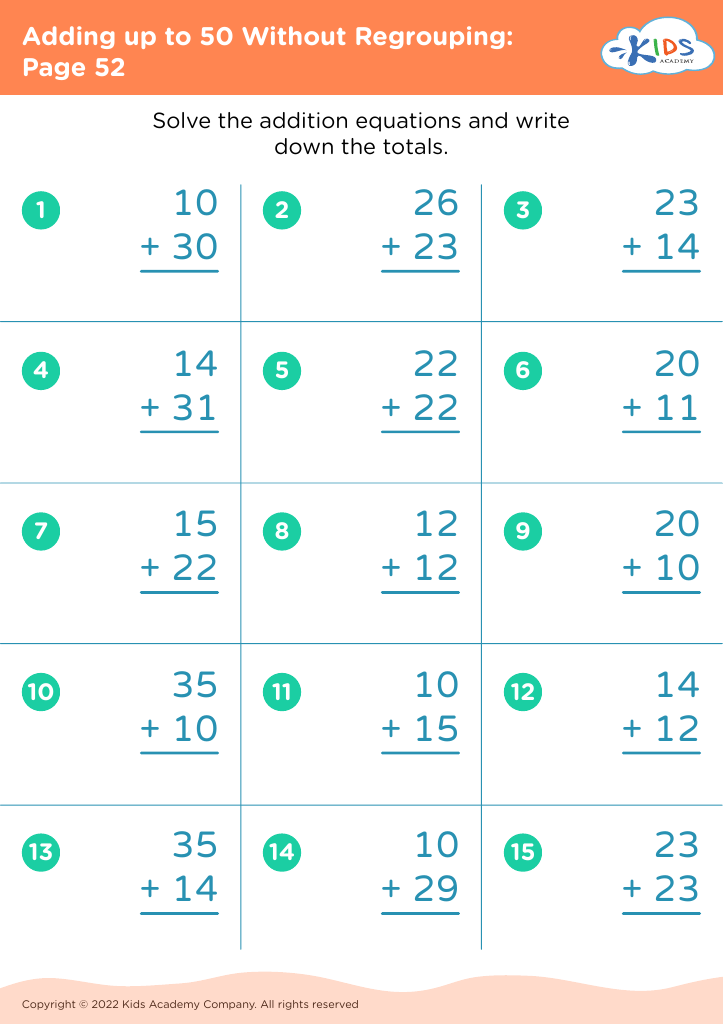
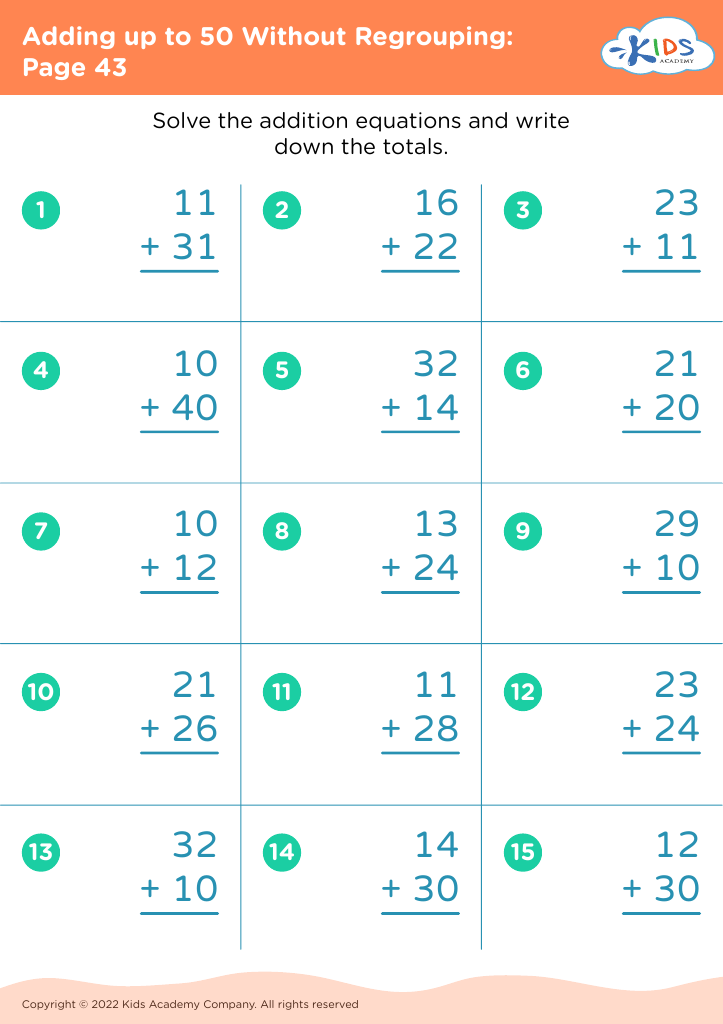
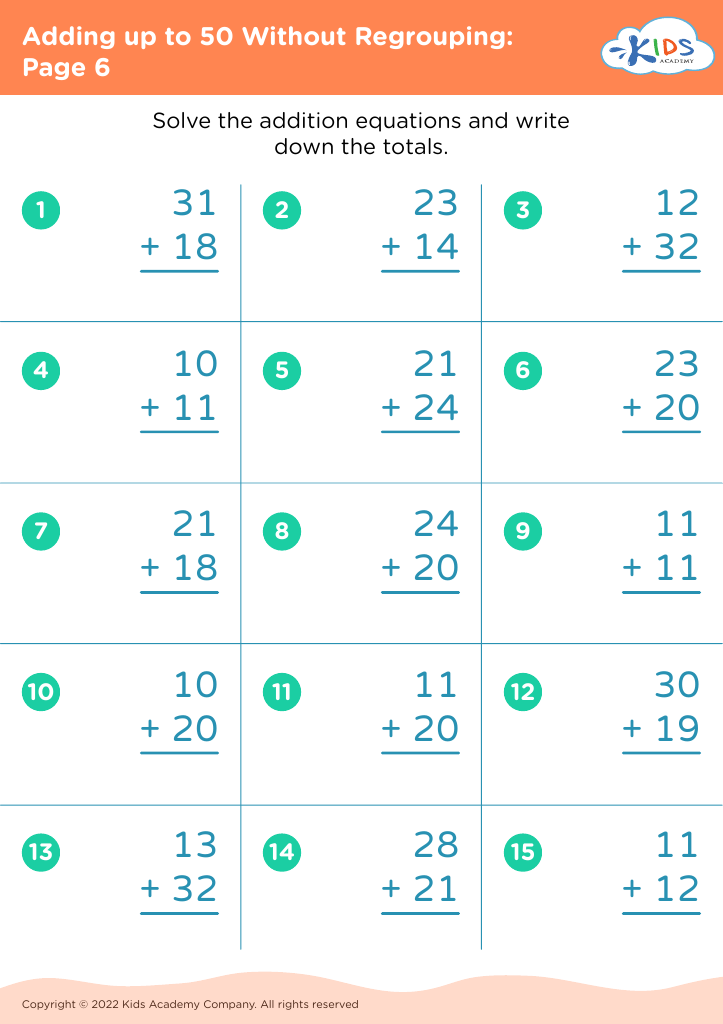
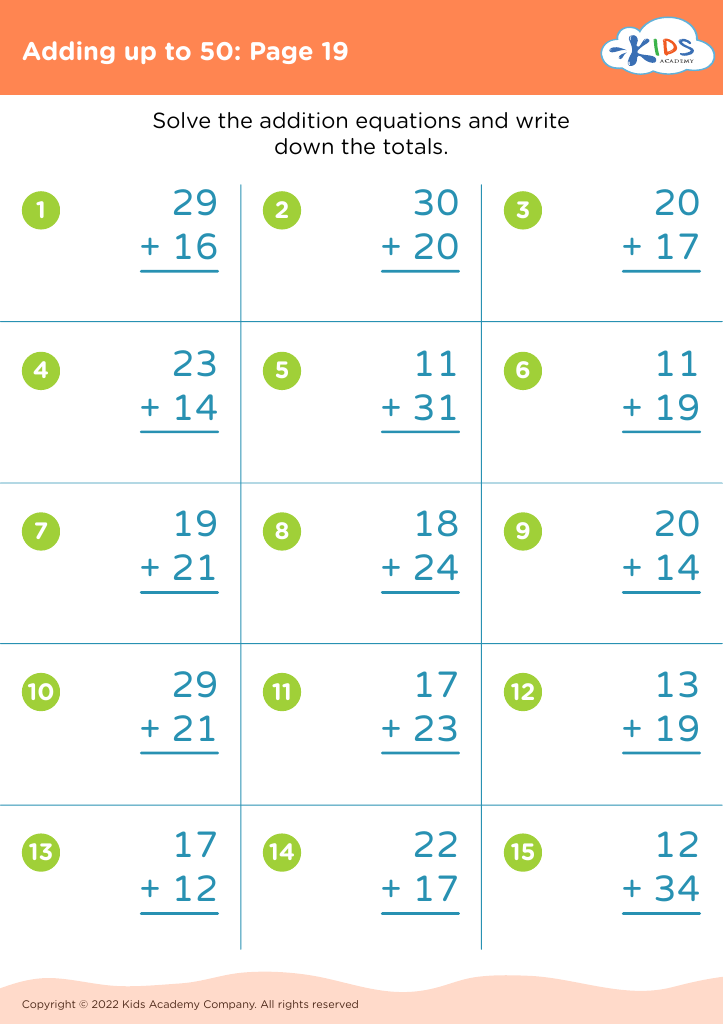
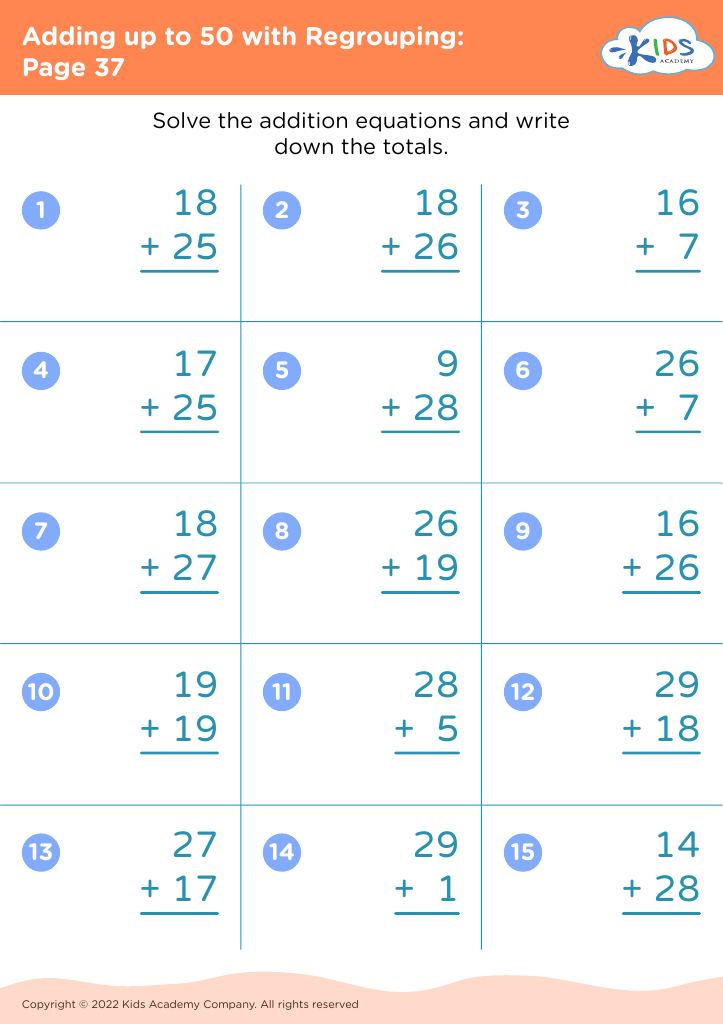
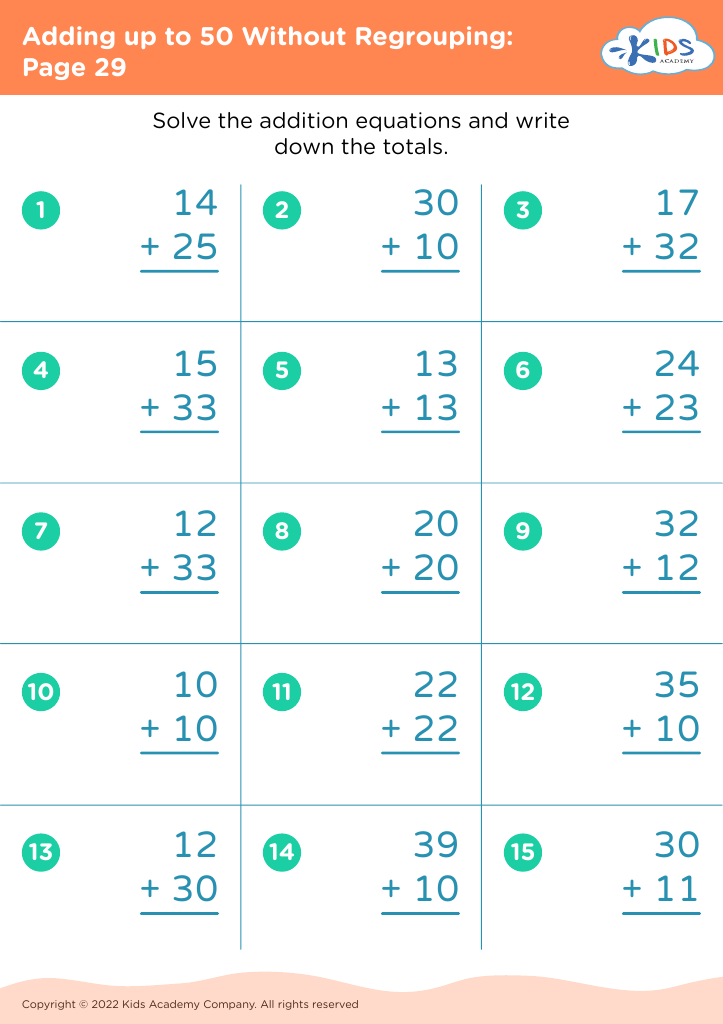
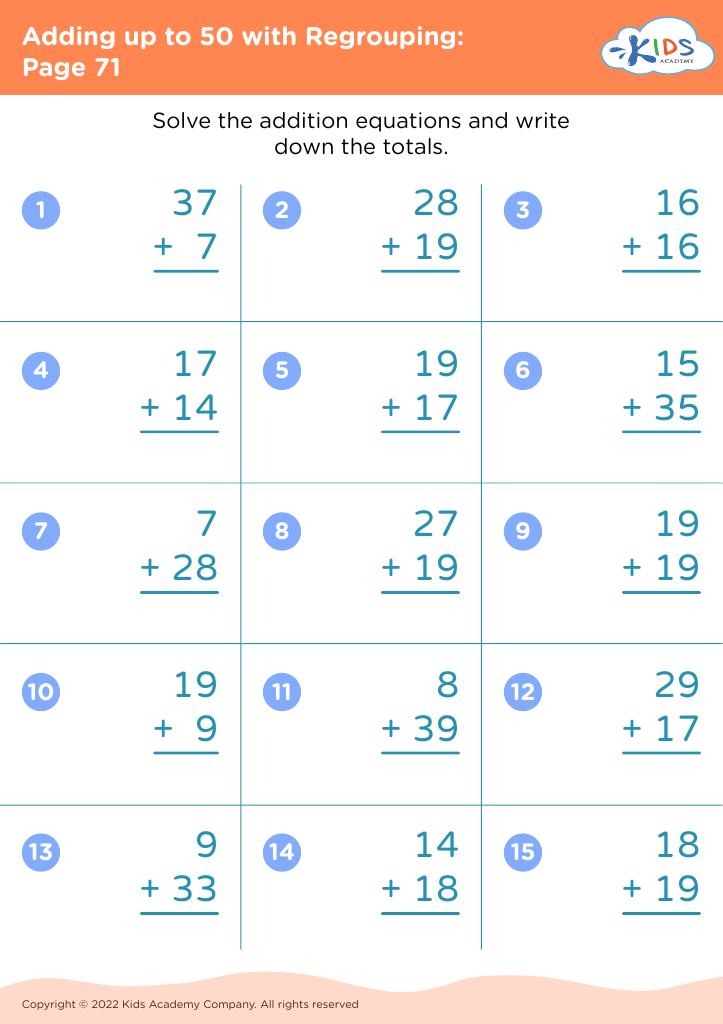




Recognizing patterns and understanding basic addition up to 50 play an essential role in the early development of children ages 3 to 7. These skills form a fundamental building block for more complex mathematical thinking and problem-solving. When young children learn to identify and create patterns, they sharpen their observational skills and improve their ability to make predictions, both crucial for cognitive development. This understanding of patterns also lays the groundwork for recognizing sequences, which is critical for comprehension in subjects like mathematics, reading, and science.
Adding up to 50 allows children to build a strong number sense early on. It teaches them the concept of quantity and the relationship between numbers, which are critical for all future math learning. Practicing basic addition helps children become familiar with incremental numerical increases and understand how numbers combine to form other numbers. This familiarity is crucial, as it enables young students to solve more complex problems with confidence as they advance in their education.
Moreover, engaging in these activities enhances fine motor skills, attention span, and can improve their language skills through verbalizing numbers and operations. At this age, learning through play and interactive activities makes math fun and relatable, helping maintain a child's natural curiosity and love for learning.








