Shape Recognition Adding up to 50 Worksheets for Ages 3-7
9 filtered results
-
From - To
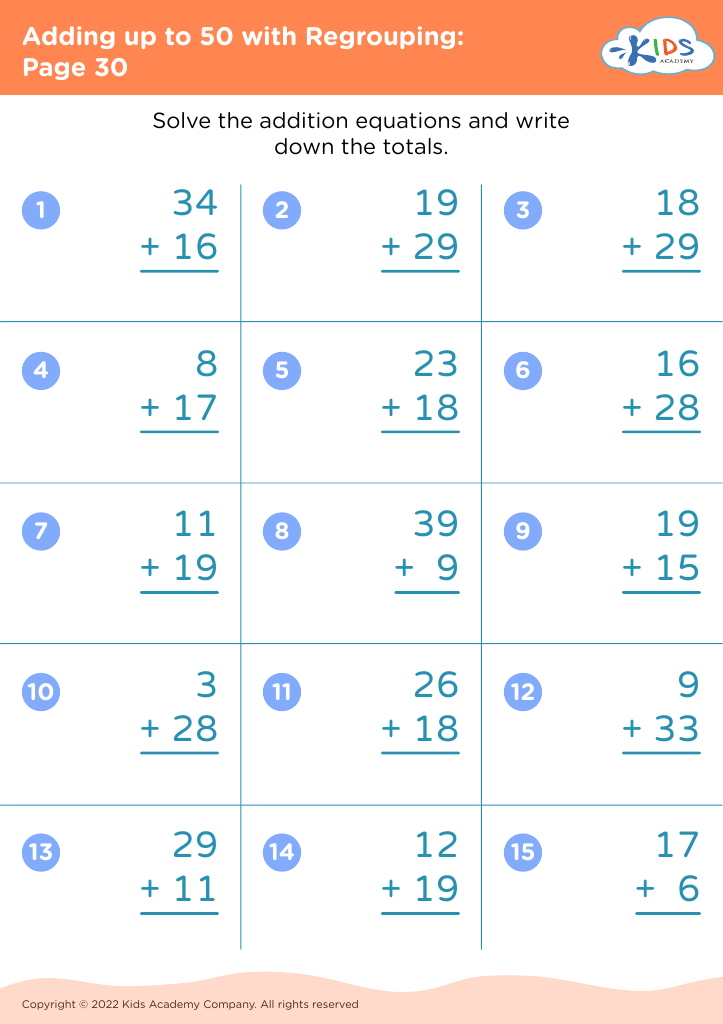
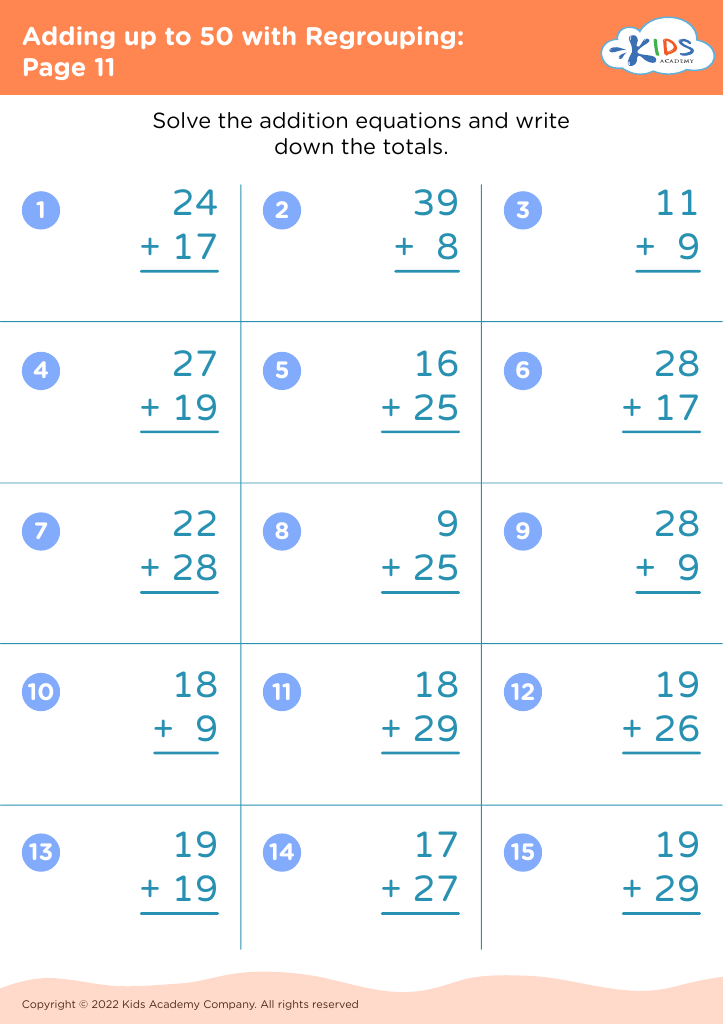
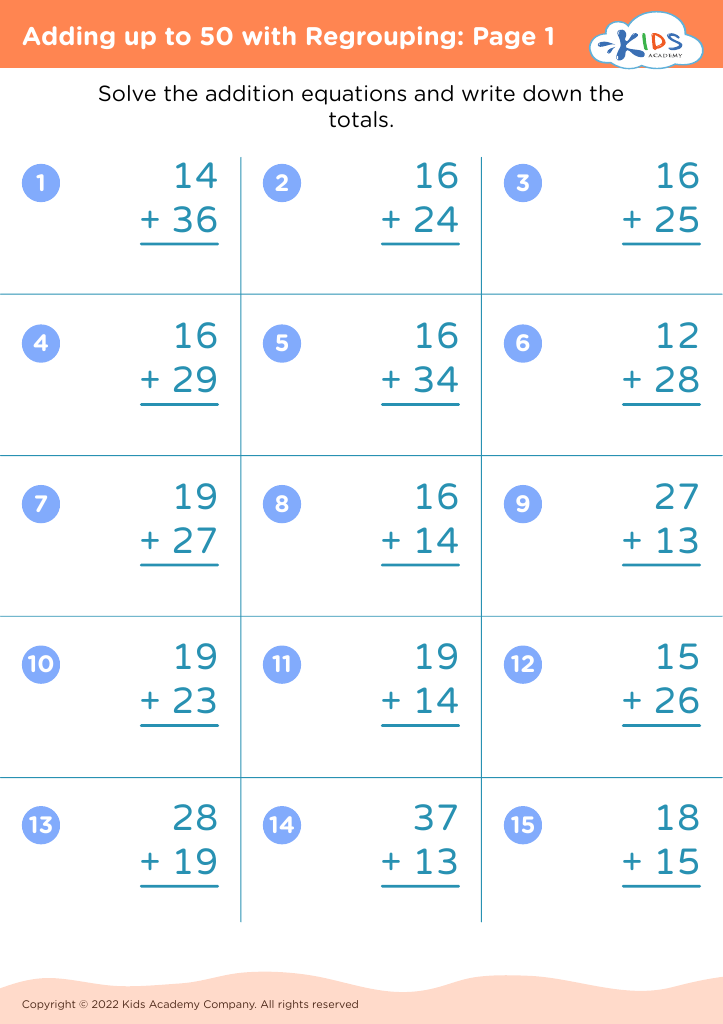
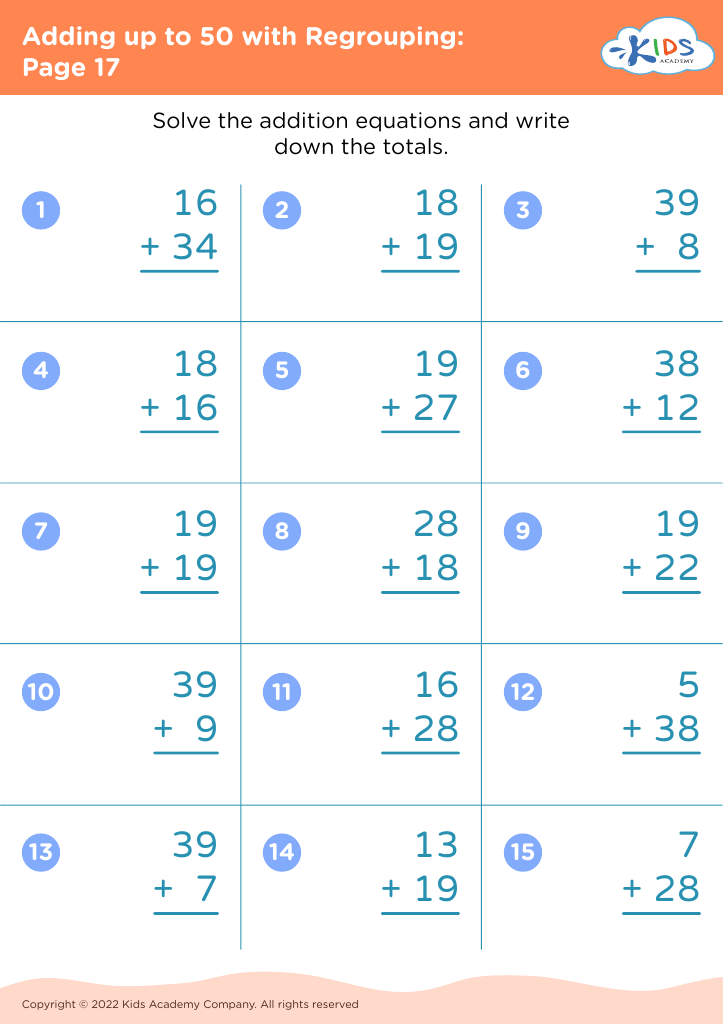
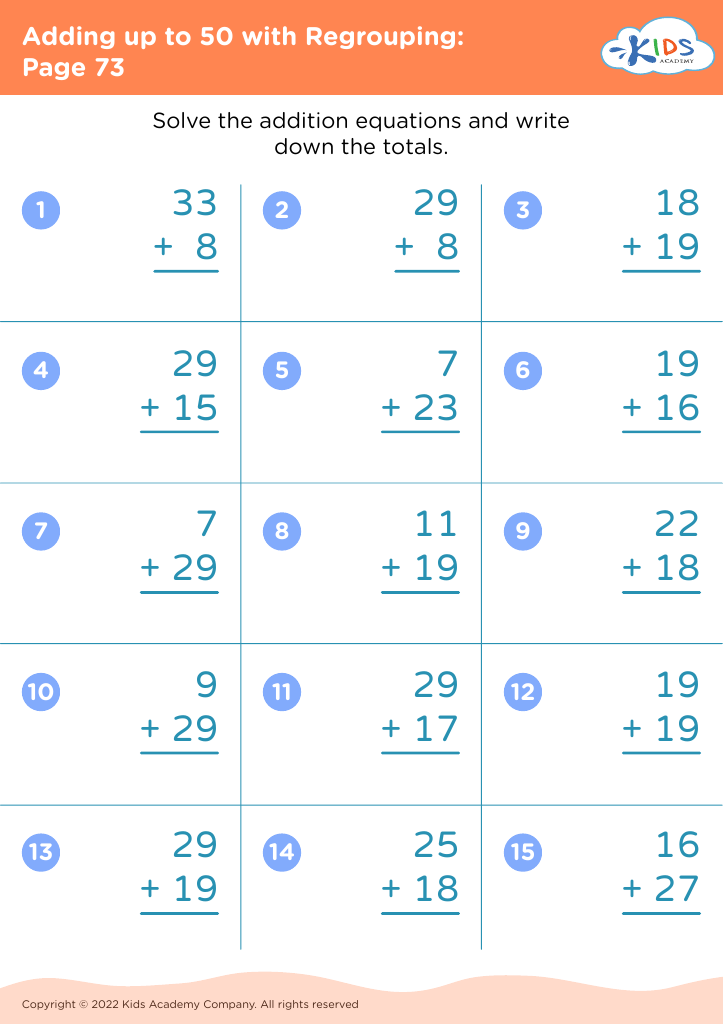
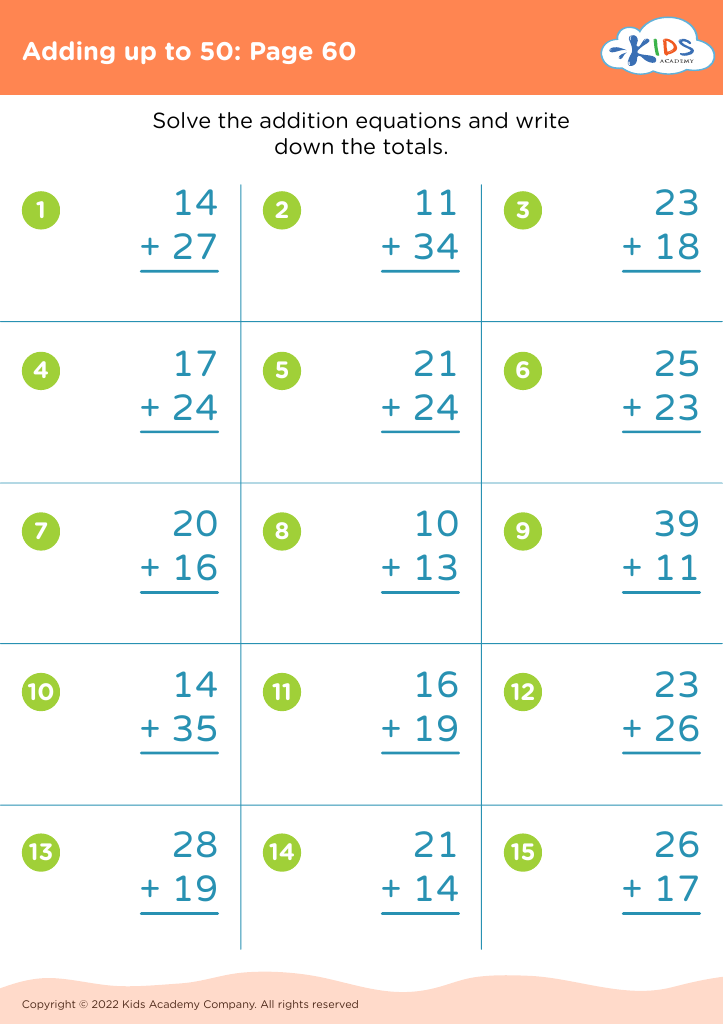
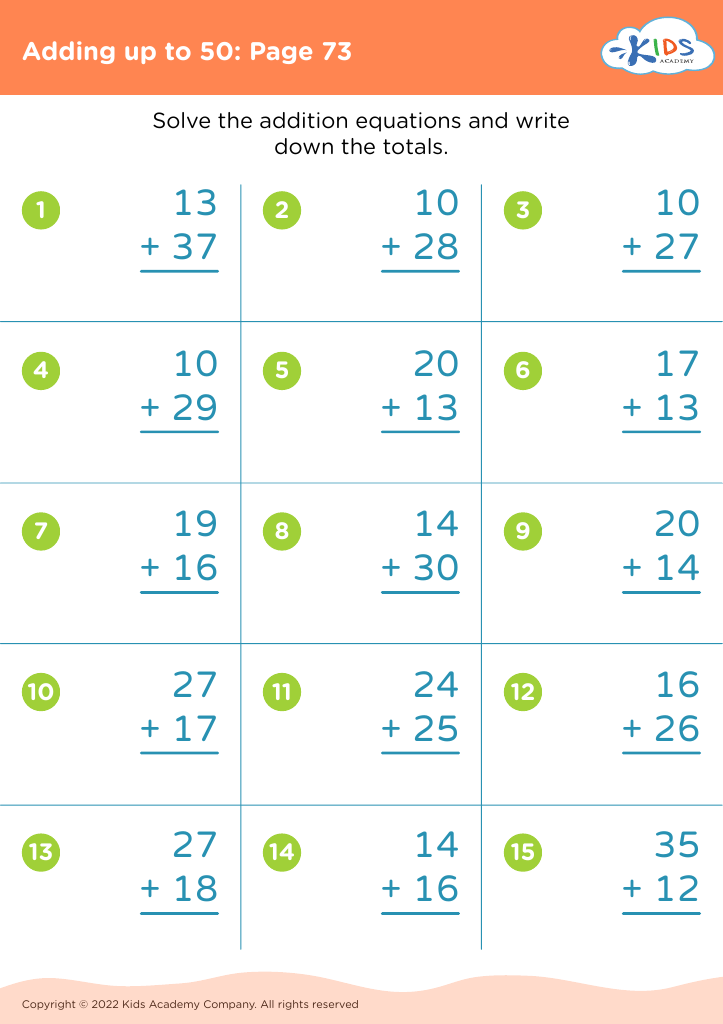
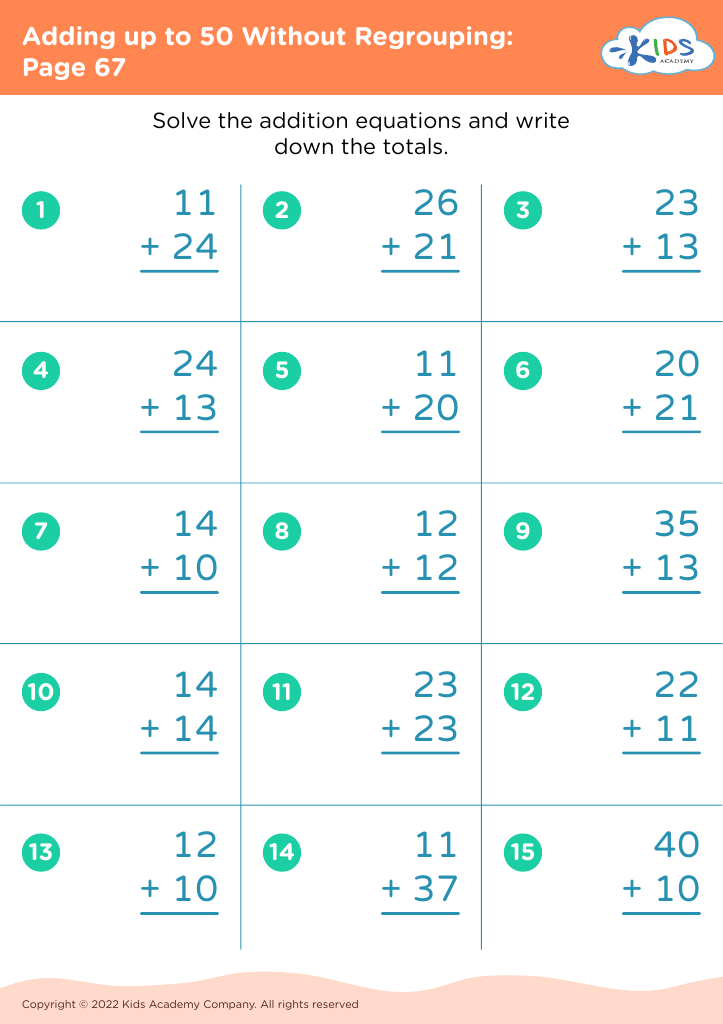
Our "Shape Recognition Adding up to 50 Worksheets for Ages 3-7" are designed to develop early math skills through engaging activities. These printables combine fun shape identification exercises with basic addition up to 50, fostering foundational skills in a playful manner. Perfect for preschoolers and young learners, our worksheets are crafted to strengthen cognitive abilities and enhance both shape recognition and arithmetic skills. Ideal for classroom or at-home learning, these resources promote interactive and enjoyable education, aligning with early childhood developmental milestones. Empower your child's learning journey with our expertly designed worksheets, turning math practice into a delightful adventure.
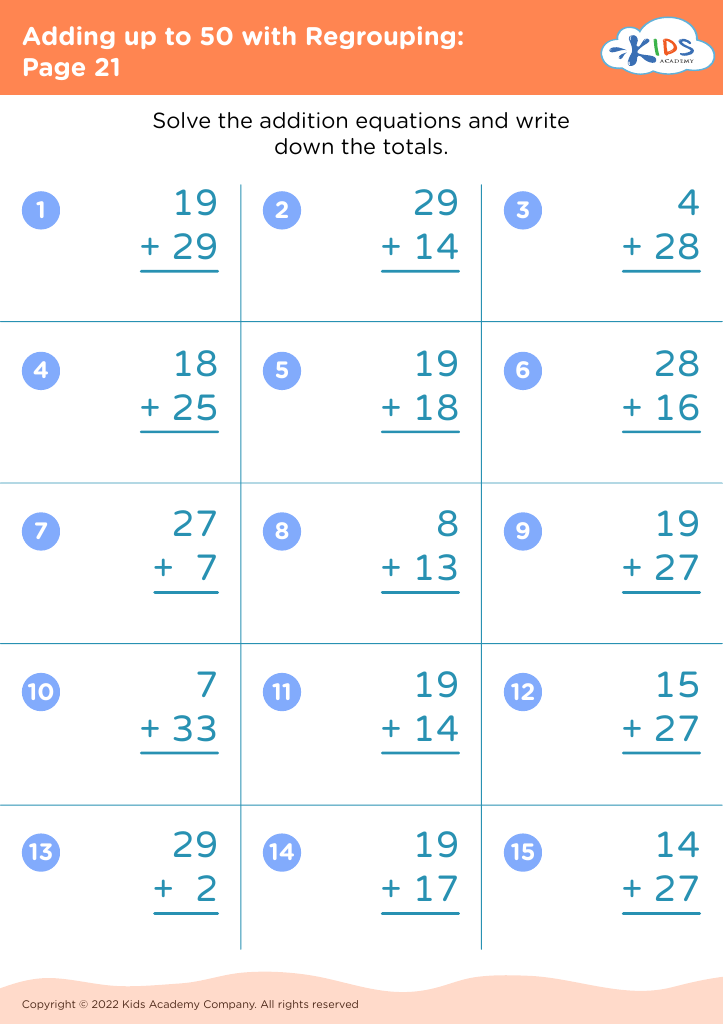




Parents and teachers should prioritize shape recognition activities in early childhood education because they are foundational for mathematical and cognitive development. Recognizing and understanding shapes contributes to spatial awareness, vital for solving math problems, puzzles, and real-world challenges involving space and dimensions. For ages 3-7, learning through shape recognition can significantly enhance a child’s understanding of numbers and geometry, laying the groundwork for more advanced math concepts.
Additionally, shape recognition helps improve fine motor skills as children use their hands to draw, trace, or manipulate shapes, enhancing hand-eye coordination and writing skills. The process also strengthens language development as children learn shape names and describe their properties, enriching their vocabulary and communication abilities.
Importantly, recognizing shapes contributes to critical thinking and problem-solving. Children learn to categorize, differentiate and group objects based on similarities and differences. This analytical skill is crucial for literacy and numerical tasks.
When activities regular include educational content that adds up to 50, it reinforces counting and basic arithmetic in an engaging, manageable way, providing a fun and educational entry point into the math world. Consequently, early shape recognition activities are a multidisciplinary tool essential for fostering a holistic developmental foundation in young children.








