Hand-eye Coordination Adding with Busy Bugs Worksheets for Ages 3-7
5 filtered results
-
From - To
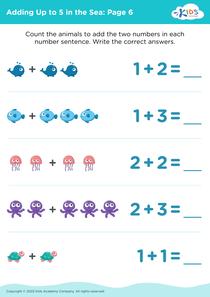
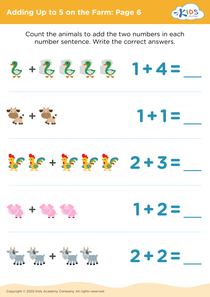
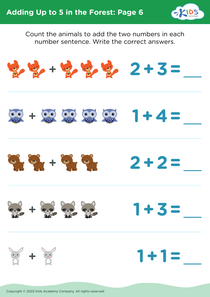
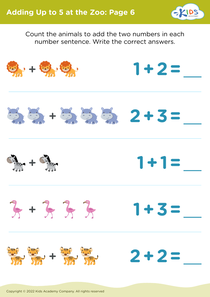
Boost your child's hand-eye coordination and math skills with our "Adding with Busy Bugs" worksheets, designed specifically for ages 3-7. These engaging worksheets combine fun, colorful illustrations of busy bugs with simple addition problems that encourage young learners to practice their counting and number recognition. As children connect the dots and match bugs, they enhance their fine motor skills while completing math challenges. Perfect for home or classroom use, these foundational activities promote learning through play, making math accessible and enjoyable. Download our printable worksheets today and watch your little learners thrive as they develop essential skills with every busy bug they meet!
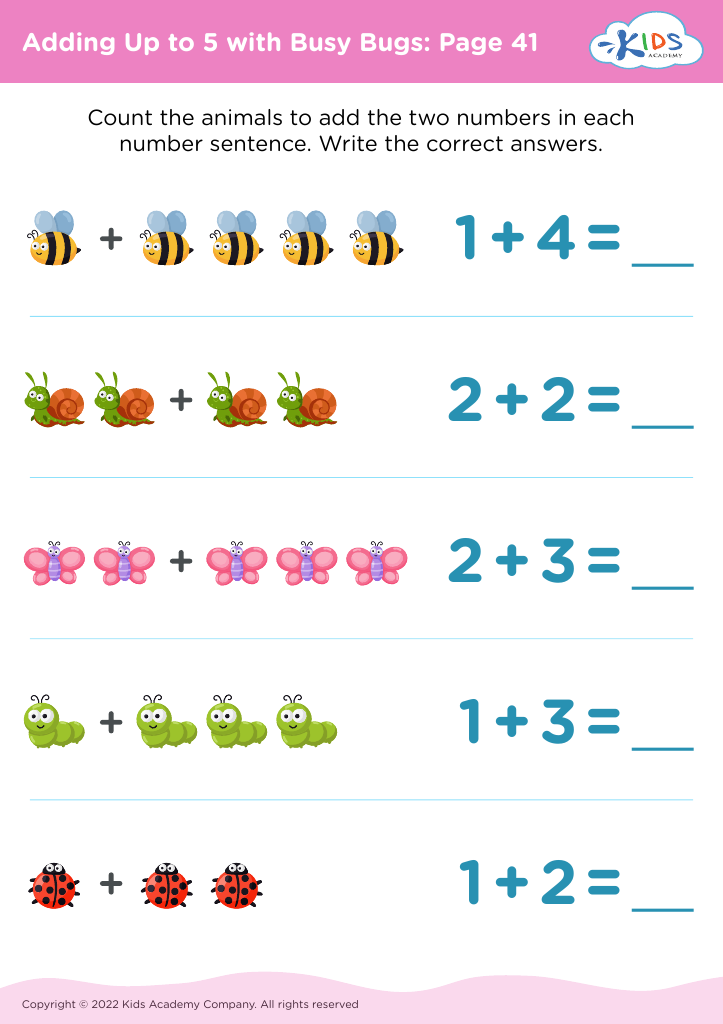
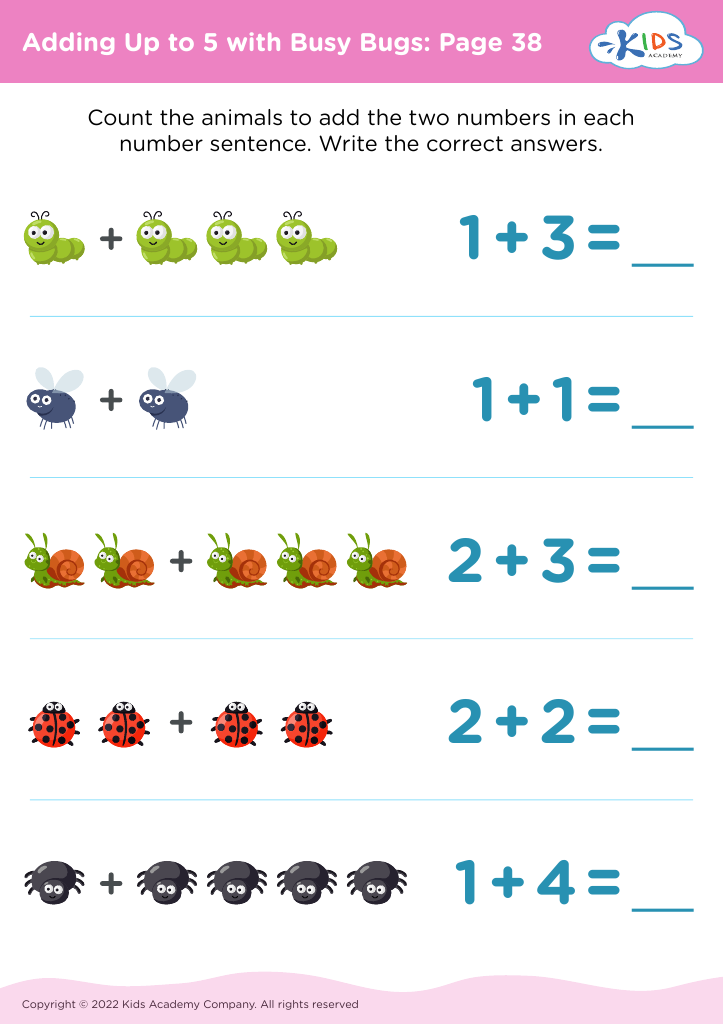
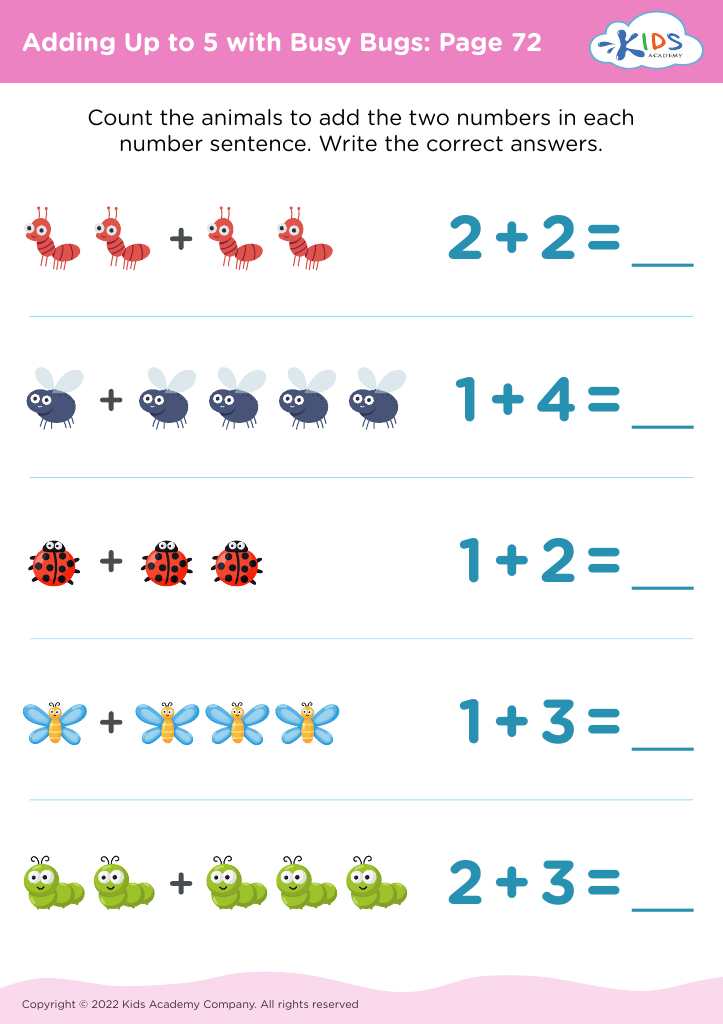
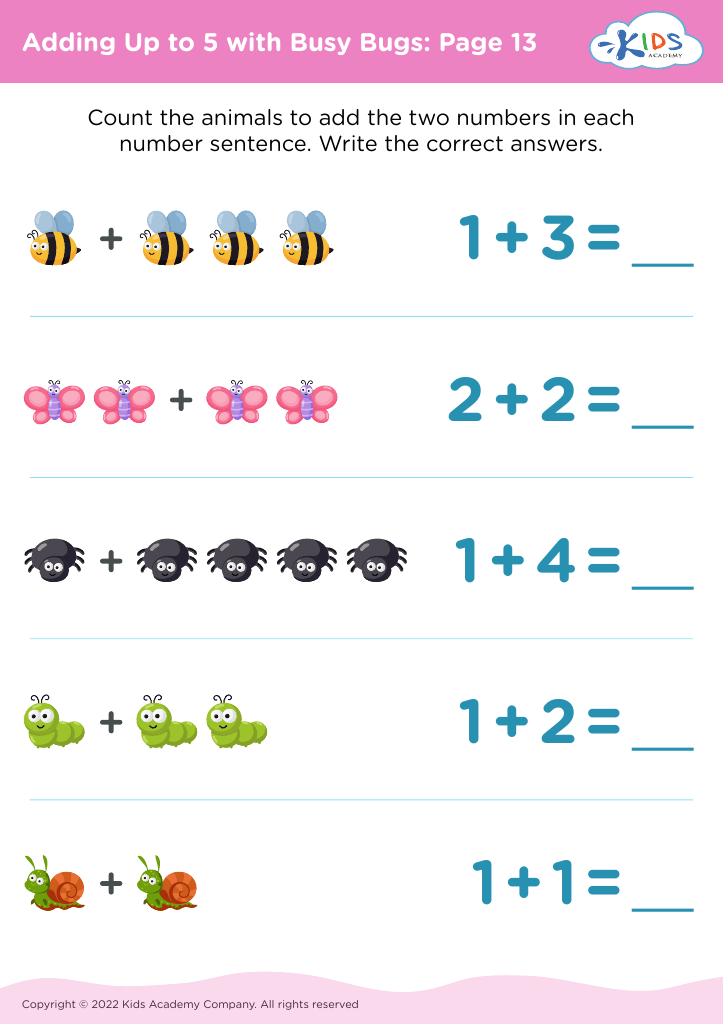
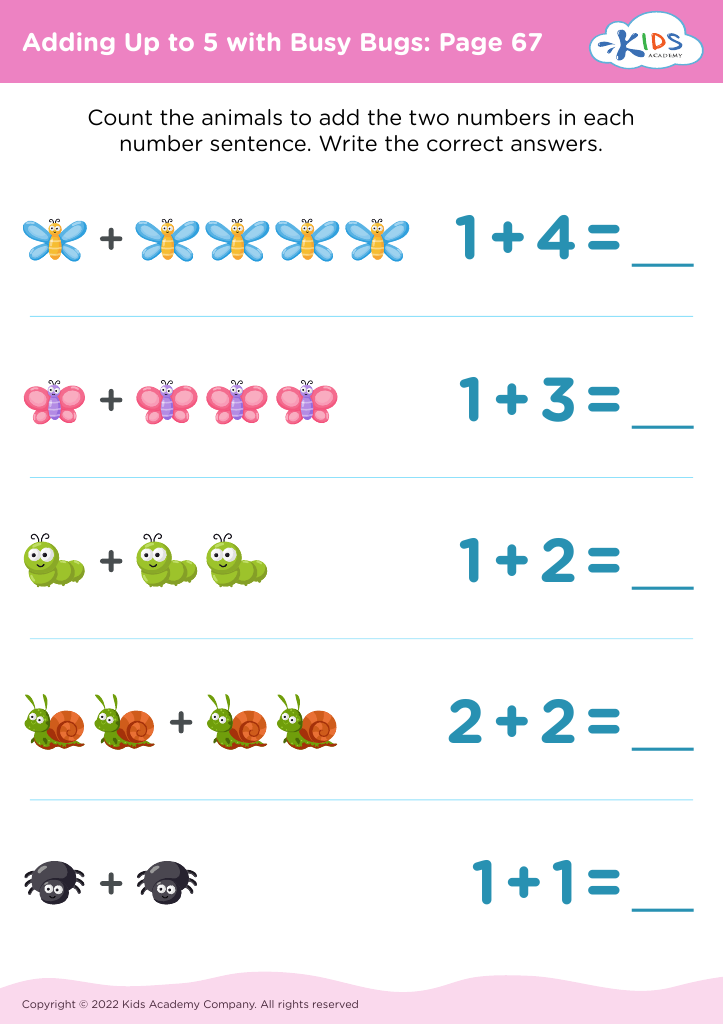



Hand-eye coordination is a crucial developmental skill for children, particularly between the ages of 3-7, as it directly impacts their ability to engage with the world around them. This coordination is essential for various tasks such as writing, drawing, catching a ball, and even everyday activities like buttoning clothes and using utensils. By integrating fun activities such as “Busy Bugs,” which employs engaging movements and interactive elements, parents and teachers can significantly enhance these skills in young children.
“Busy Bugs” provides a playful and structured way for children to develop fine motor skills, improve focus, and enhance their spatial awareness. The program captivates their imagination and allows them to practice coordination in a supportive environment, making learning enjoyable rather than a chore.
Furthermore, enhancing hand-eye coordination early can foster a sense of achievement and boost confidence among children. As parents and teachers facilitate these development processes, they play a pivotal role in nurturing a child’s growth trajectory, preparing them for academic and social interactions down the line. In summary, by prioritizing hand-eye coordination through engaging programs like “Busy Bugs,” adults can lay a solid foundation for children’s learning and physical abilities, ultimately supporting their overall development.