Number comprehension Addition and Subtraction Word Problems Worksheets for Ages 3-7
6 filtered results
-
From - To
Discover our exciting collection of Number Comprehension Addition and Subtraction Word Problems Worksheets for Ages 3-7, designed to spark young minds and foster early math skills. These engaging worksheets offer fun and practical problems, encouraging kids to develop their addition and subtraction abilities through relatable scenarios and captivating illustrations. Ideal for home or classroom use, they actively enhance number comprehension and problem-solving skills in a supportive and interactive way. Give your child a head start in math with these meticulously crafted exercises, ensuring learning is both enjoyable and educational. Download now to inspire a love for math in your child!
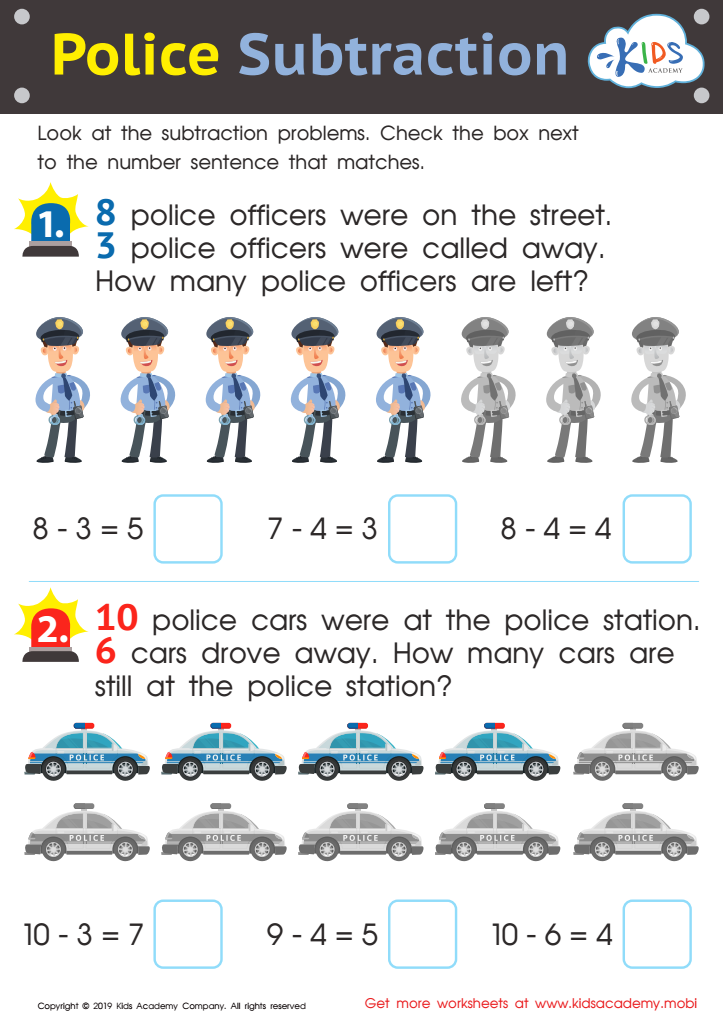
Police Subtraction Worksheet
 Assign to My Students
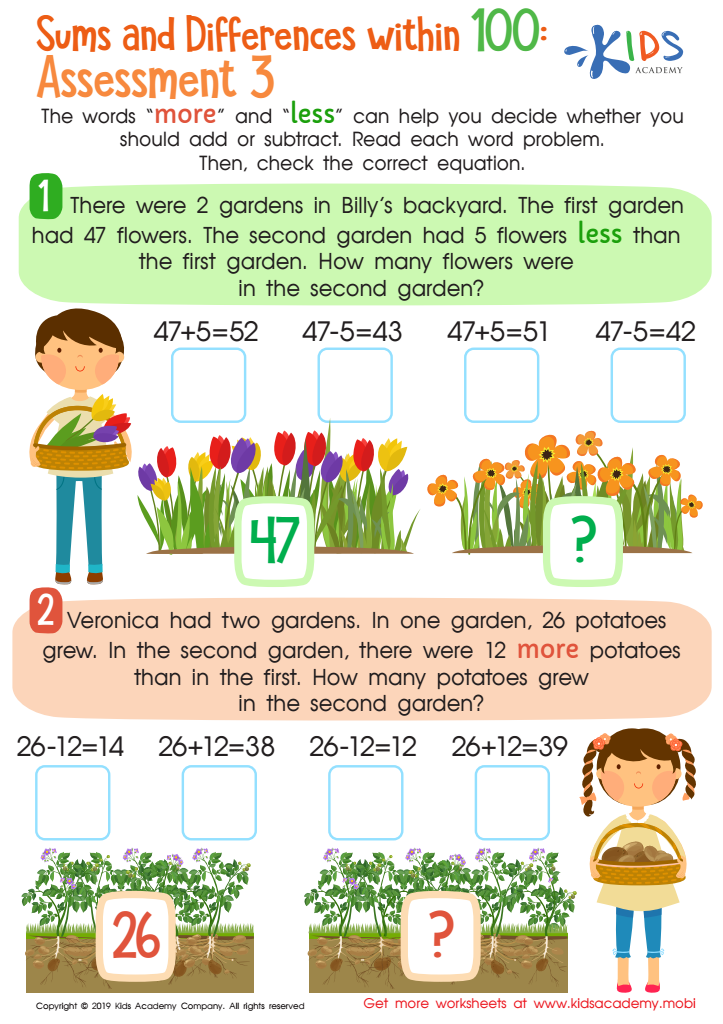
Sums and Differences Within 1 - Assessment 1 Worksheet
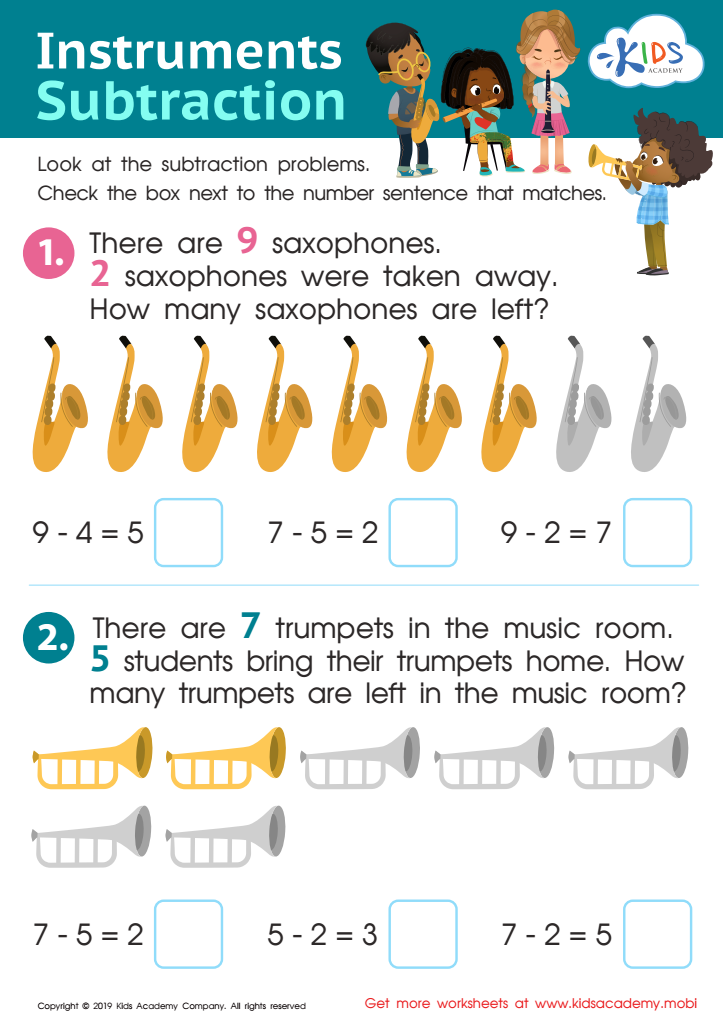
Instrument Subtraction Worksheet
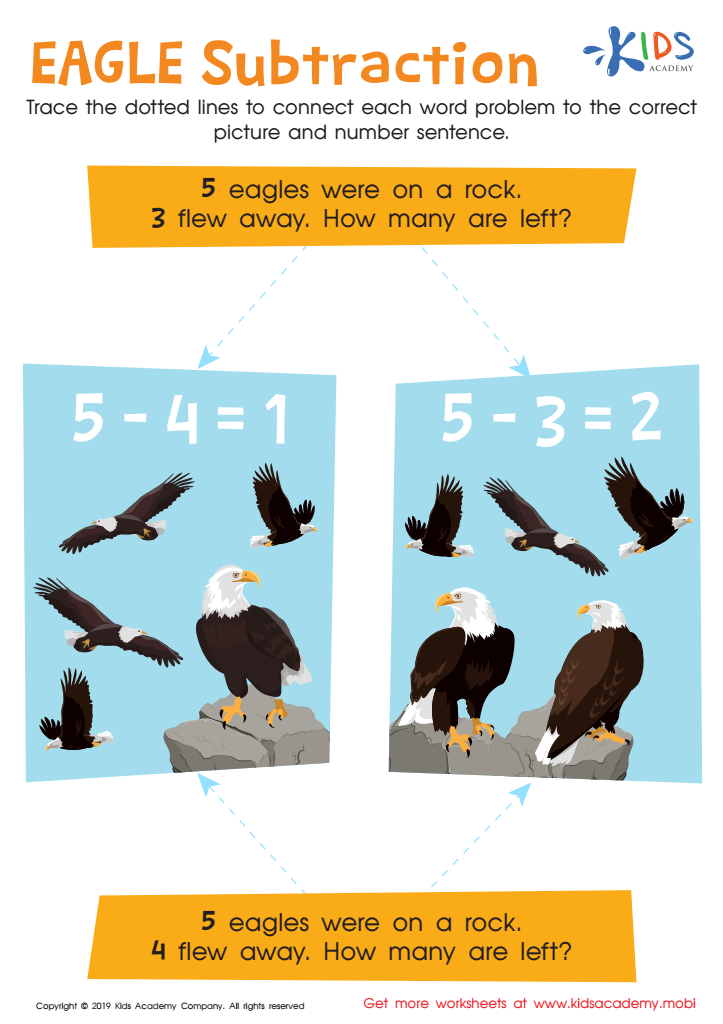
Eagle Subtraction Worksheet
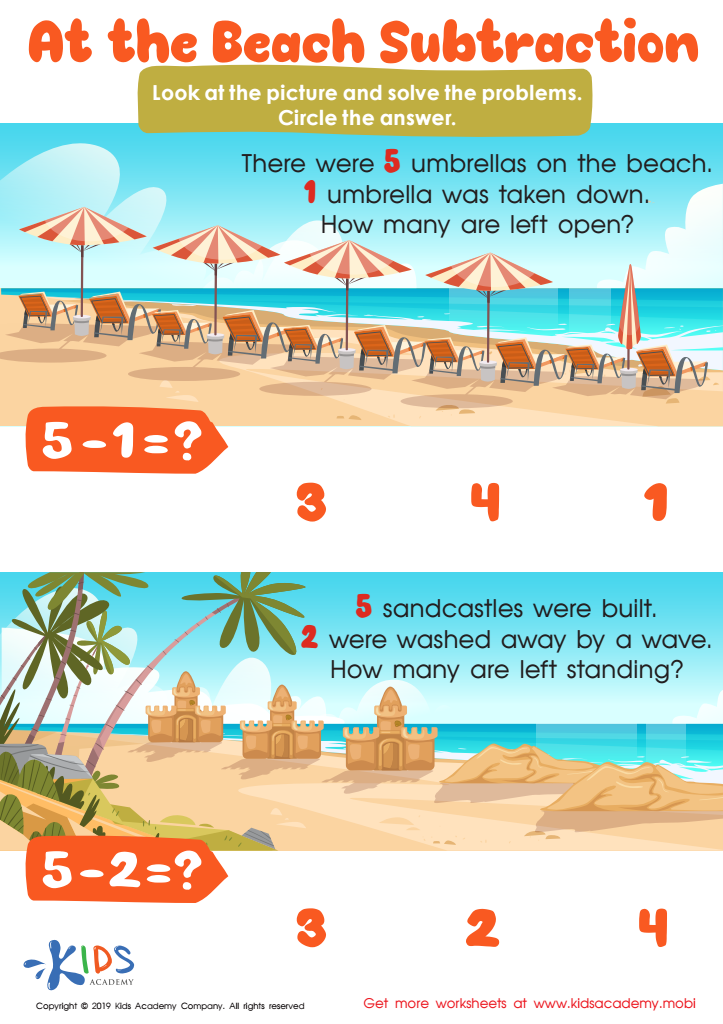
At the Beach Subtraction Worksheet
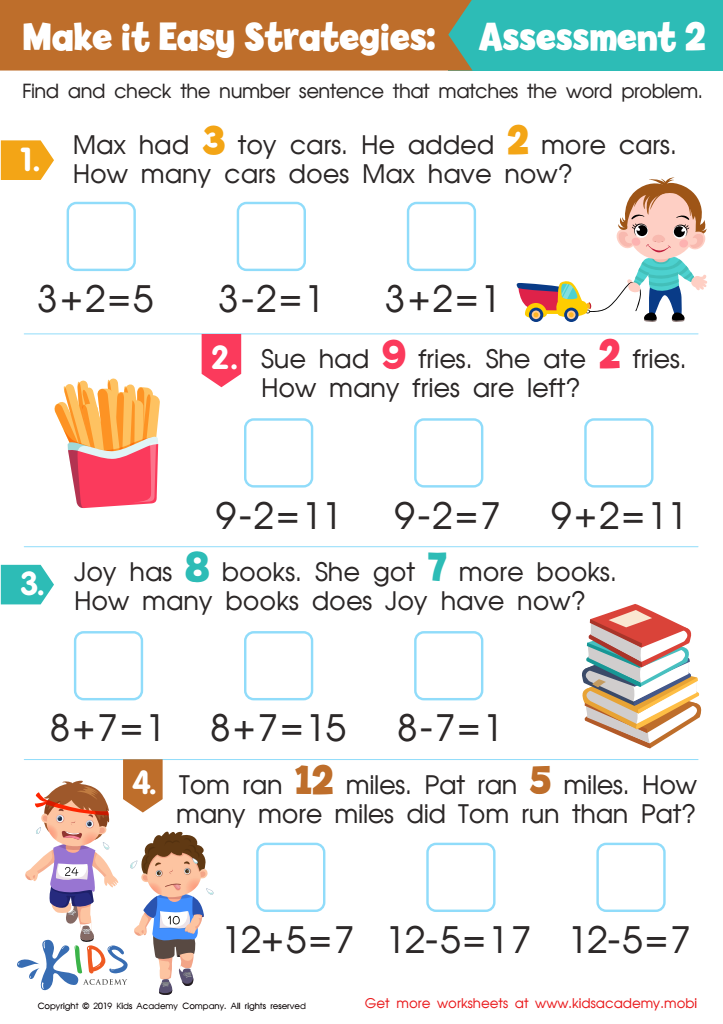
Make it Easy Strategies: Assessment 2 Worksheet








Parents and teachers play crucial roles in early childhood development, and instilling a strong grasp of number comprehension, especially through addition and subtraction word problems, is vital for children ages 3-7. This period is crucial as it sets the foundation for future mathematical understanding and cognitive development. Engaging with word problems does more than teach basic arithmetic; it enhances critical thinking, fosters reasoning skills, and encourages problem-solving abilities.
Young minds are incredibly receptive and absorb information quickly. By introducing addition and subtraction word problems, children learn to translate everyday scenarios into mathematical concepts, bridging the gap between abstract numbers and real-life application. This helps develop both their numerical and language skills simultaneously, promoting a holistic educational approach.
Moreover, tackling word problems strengthens perseverance and attention to detail. When children grapple with these problems, they learn to approach tasks methodically and adopt a positive attitude towards challenges. Early exposure to mathematics also reduces anxiety towards the subject in later years, fostering a lifelong interest and competence in STEM (Science, Technology, Engineering, and Mathematics).
Engaging children in number comprehension from an early stage empowers them with essential life skills that contribute to academic success and confidently navigating real-world tasks. Highlighting the importance of this foundational learning phase ultimately nurtures well-rounded, problem-solving individuals equipped for future academic and everyday challenges.