Addition up to 5 Addition & Subtraction Worksheets for Ages 3-7
4 filtered results
-
From - To
Introduce your young learners to the basics of math with our "Addition up to 5" worksheets, ideal for ages 3-7. These engaging printable resources from Kids Academy provide a fun, interactive way to teach children fundamental addition and subtraction concepts. Each worksheet is designed to help your child practice adding and subtracting numbers up to 5. Perfect for preschoolers and early elementary students, these activities foster essential math skills in a playful and educational manner. Inspire their curiosity and build a strong mathematical foundation with our expertly crafted worksheets. Explore and download today to start their learning journey!
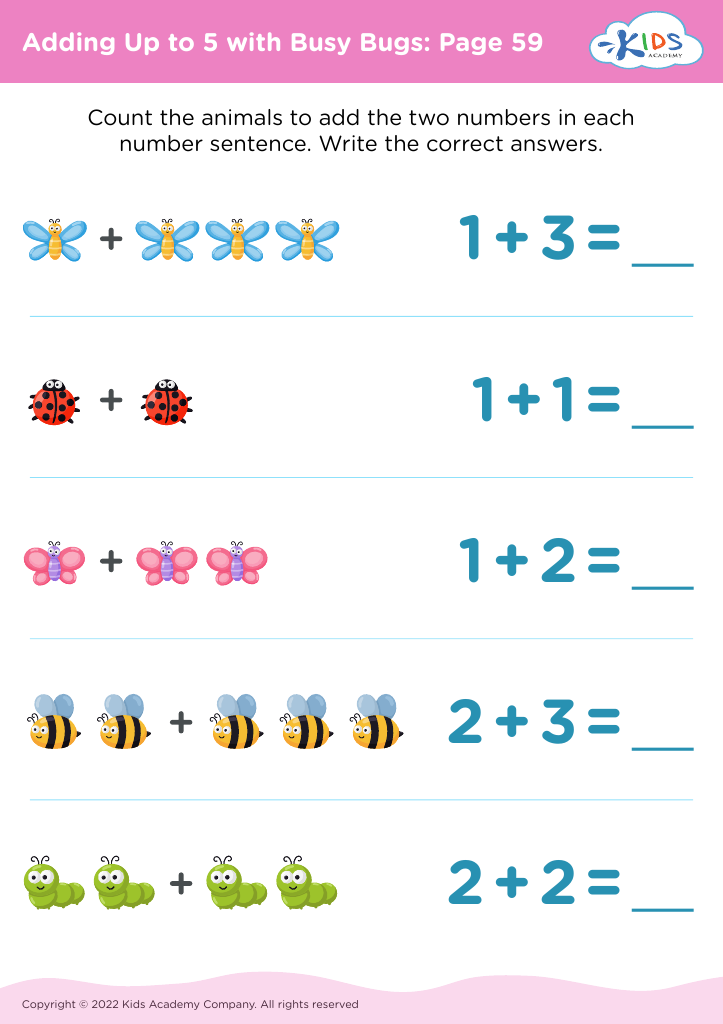
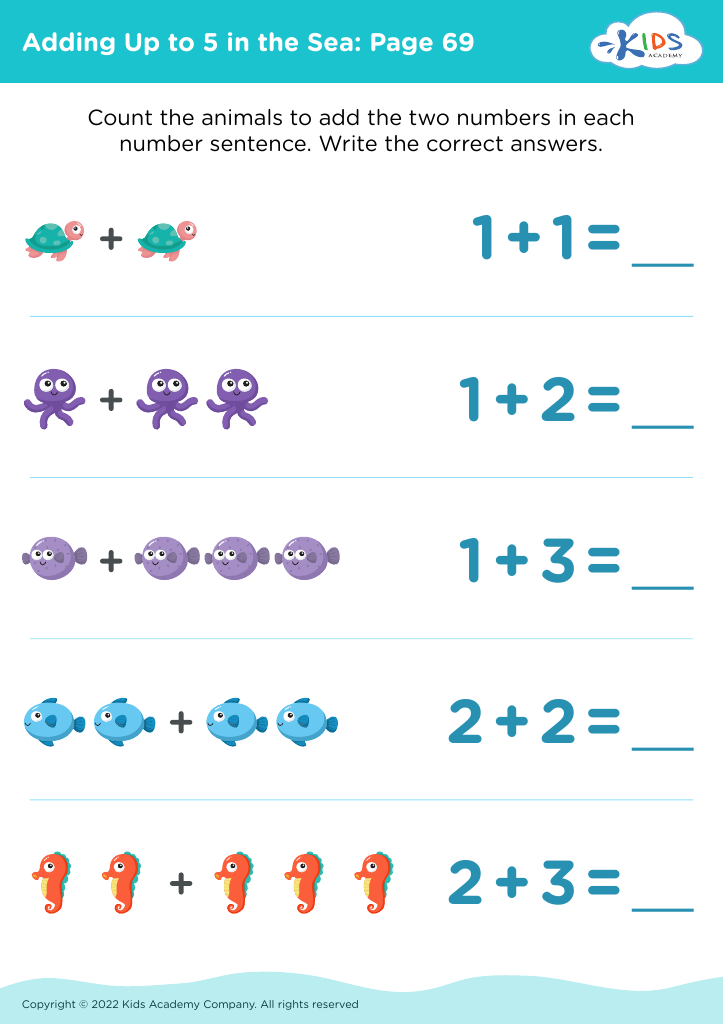
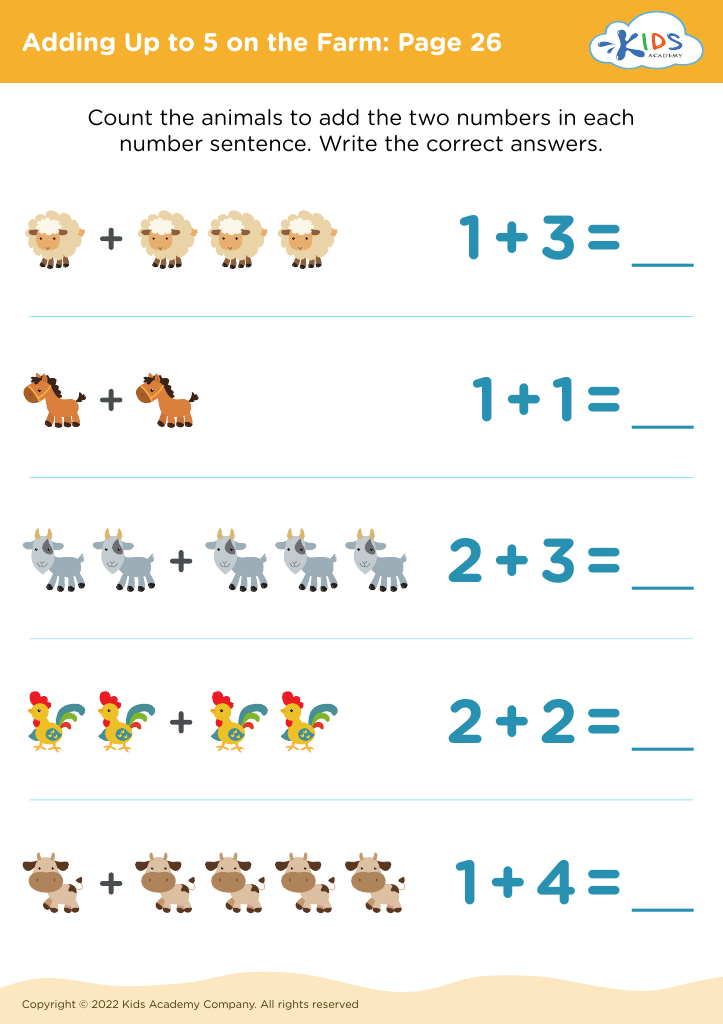
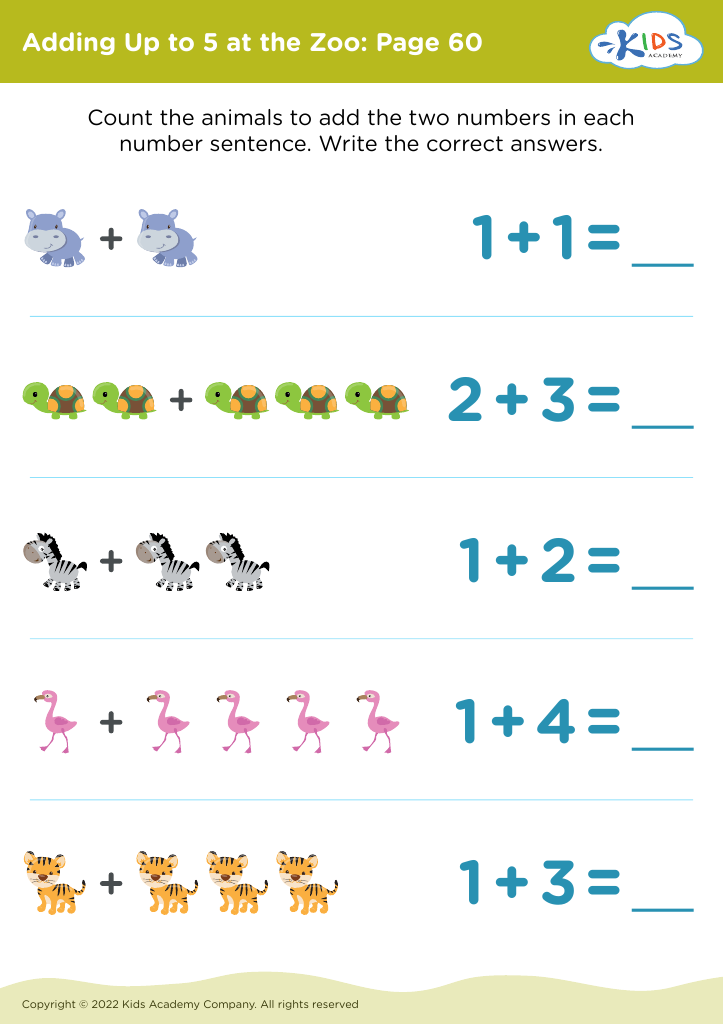








Understanding addition and subtraction up to 5 is crucial for children ages 3 to 7 as it lays the foundation for more complex math skills. At this tender age, young learners are developing their cognitive and analytical abilities. When parents and teachers emphasize basic arithmetic, it helps children to build a solid number sense, which is essential for future math learning.
First, mastering addition and subtraction up to 5 develops problem-solving skills. Children learn to approach a problem using simple strategies that can be built upon as they progress. This is pivotal for developing logical thinking.
Second, these foundational skills are aligned with everyday activities. For example, children may have 3 apples and get 2 more, making a total of 5 apples. These real-world applications help cement their understanding.
Furthermore, grasping these concepts boosts self-confidence. Success in small tasks encourages them and builds resilience to tackle more challenging problems without fear.
Finally, early math skills are a strong predictor of later academic success, not just in math but across subjects. Paying attention to this age group's arithmetic learning helps set a trajectory for a lifetime of learning and achievement. Hence, parents and teachers should actively engage children in addition and subtraction from an early age.








