
Basic subtraction Addition & Subtraction Worksheets for Ages 3-7
8 filtered results
Difficulty Level
Grade
Age
-
From - To
Subject
Activity
Standards
Unlock a world of learning with our Basic Addition & Subtraction Worksheets for kids aged 3-7. Designed to make math fun and engaging, these worksheets help children grasp foundational concepts effortlessly. Perfect for early learners, our activities range from simple subtraction to introductory addition, combining visual aids and interactive tasks. Enhance your child's arithmetic skills, increase confidence, and make math a delightful experience. With practice, little ones will master essential math skills, setting the stage for future success. Join us in turning learning into an adventure! Visit our site and download today's free worksheets.
Favorites
With answer key
Interactive
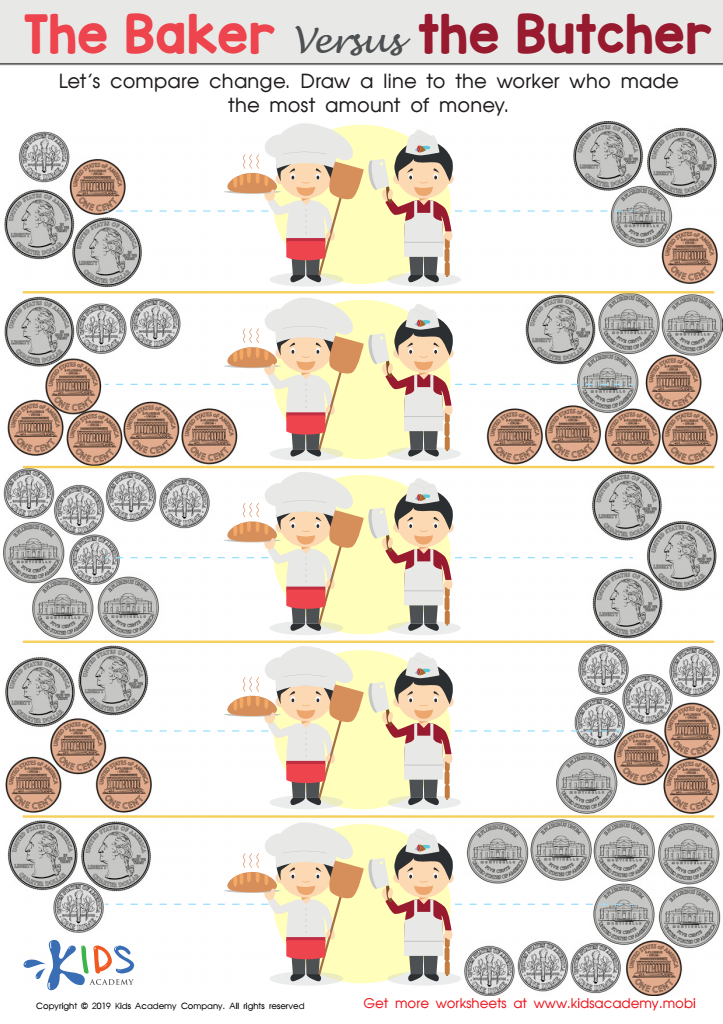
The Baker versus the Butcher Worksheet
At the baker’s and butcher’s, there are plenty of delicious treats and meals! With this worksheet, your kids can see who made more money at the end of the day. Have them trace a line to the worker who made the most amount of money. They’ll have fun while learning the basics of business and money!
 Assign to My Students
The Baker versus the Butcher Worksheet
Worksheet
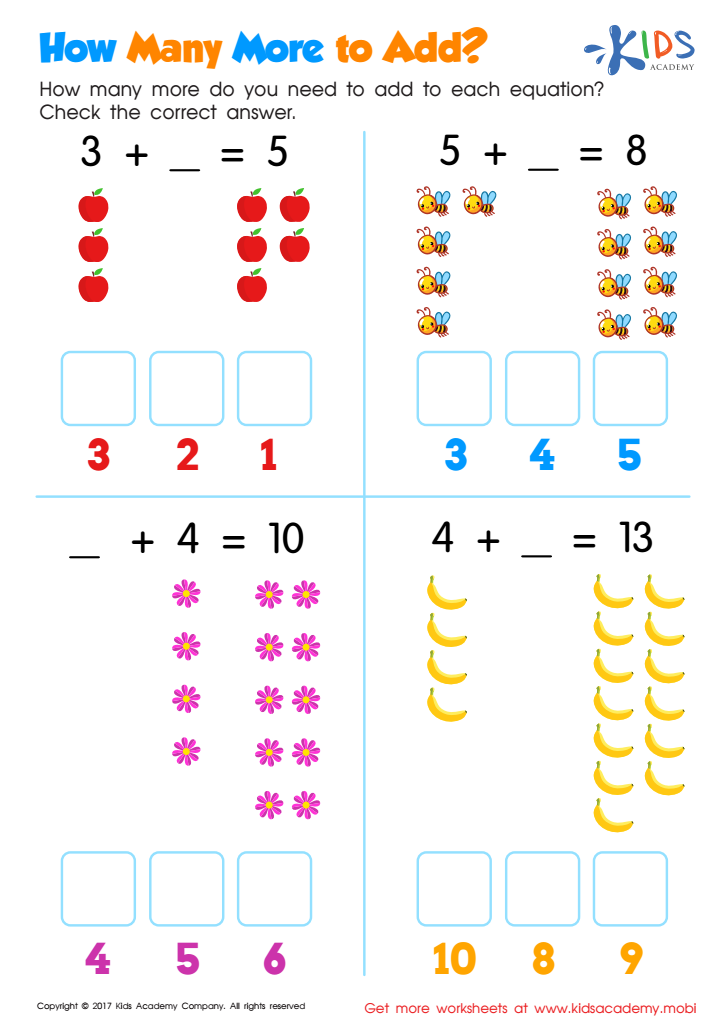
How Many More to Add Worksheet
Sharpen your child's math skills with this pdf worksheet. Help them figure out how many apples, bees, flowers and bananas are needed to reach the answer given. The possible answers are provided at the bottom of the boxes. Have some fun doing some addition and subtraction magic together and get those math skills sharpened!
How Many More to Add Worksheet
Worksheet
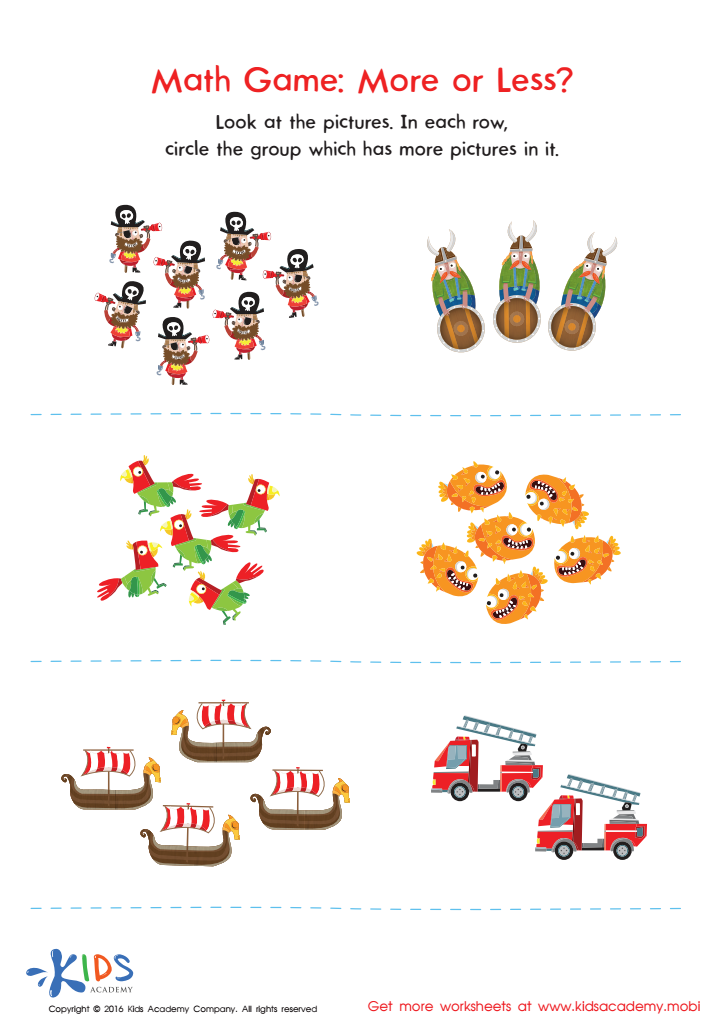
More or Less Worksheet
Counting and understanding quantity are essential skills for kindergarteners. Get your free printable more or less worksheet now!
More or Less Worksheet
Worksheet
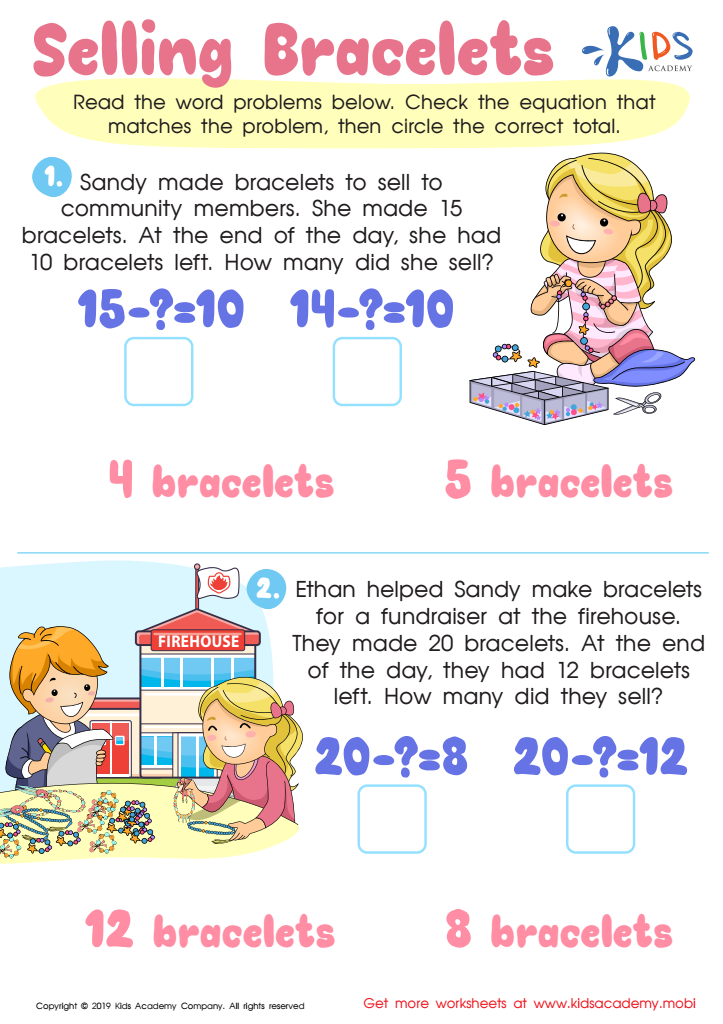
Selling the Bracelets Worksheet
Engage your kids with learning by making it fun! Try this creative worksheet: your kids can practice subtraction while making bracelets. Download the pdf; read the two word problems to them and help them choose the correct total. Have fun! (80 words)
Selling the Bracelets Worksheet
Worksheet
Join Kids Academy for Free
Who is primarily going to use this learning content?








Early exposure to basic addition and subtraction is crucial for children ages 3-7 as these foundational skills lay the groundwork for future mathematical understanding and problem-solving abilities. Parents and teachers should care deeply for several reasons:
-
Cognitive Development: Basic arithmetic operations like addition and subtraction enhance cognitive functions such as memory, attention, and logical thinking. These skills are essential for academic success across subjects.
-
Confidence Building: Early proficiency in math fosters confidence, enabling children to tackle more complex mathematical concepts with less anxiety as they advance in their education. Feeling confident in math can also translate into a positive attitude toward learning in general.
-
Real-Life Applications: Understanding addition and subtraction is not confined to the classroom; these skills are fundamental to daily life. Early grasp of basic arithmetic helps children manage tasks such as counting toys, distributing snacks, or understanding the concept of time.
-
Mathematical Language and Literacy: Learning numbers and basic operations helps children grasp mathematical vocabulary and concepts, which are critical for effective communication of more advanced ideas during later stages of education.
Ultimately, investing time and effort into teaching young children basic addition and subtraction equips them with essential tools for their future academic and real-life success.








