Filters

305 filtered results

Clear all filters
Favorites
With answer key
Interactive

305 filtered results

Difficulty Level

Grade


Check out this FREE Trial Lesson on Addition & Subtraction for age 3-7!

Making 18

Favorites
With answer key
Interactive
  • 3-7
  • Counting practice
  • Addition & Subtraction
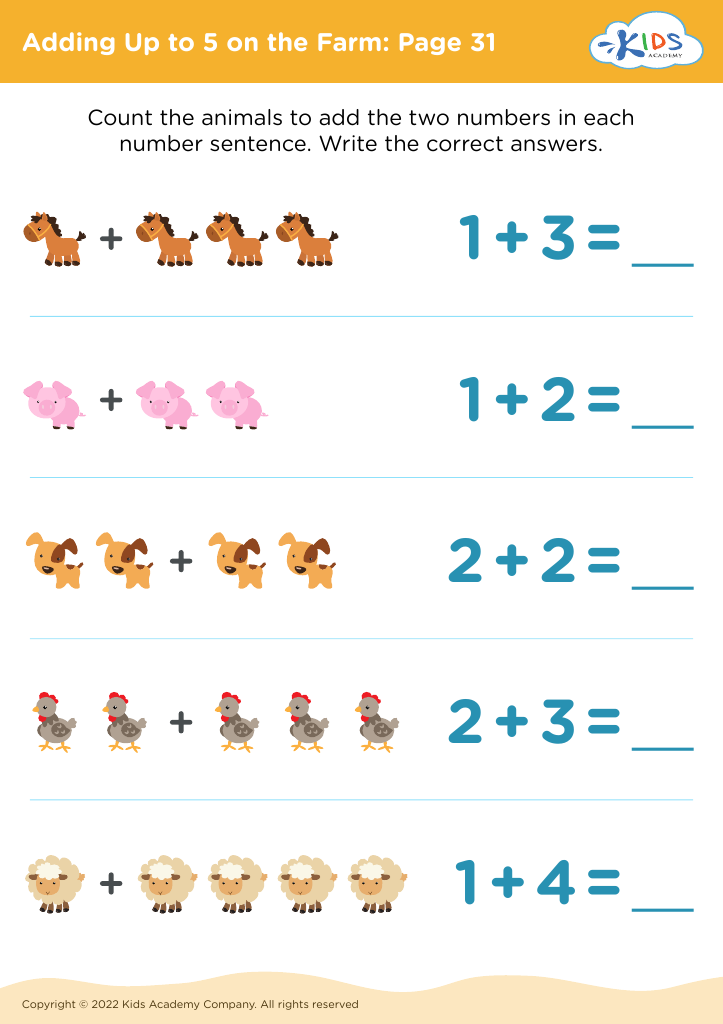
Adding Up to 5 on the Farm: Page 31
Worksheet
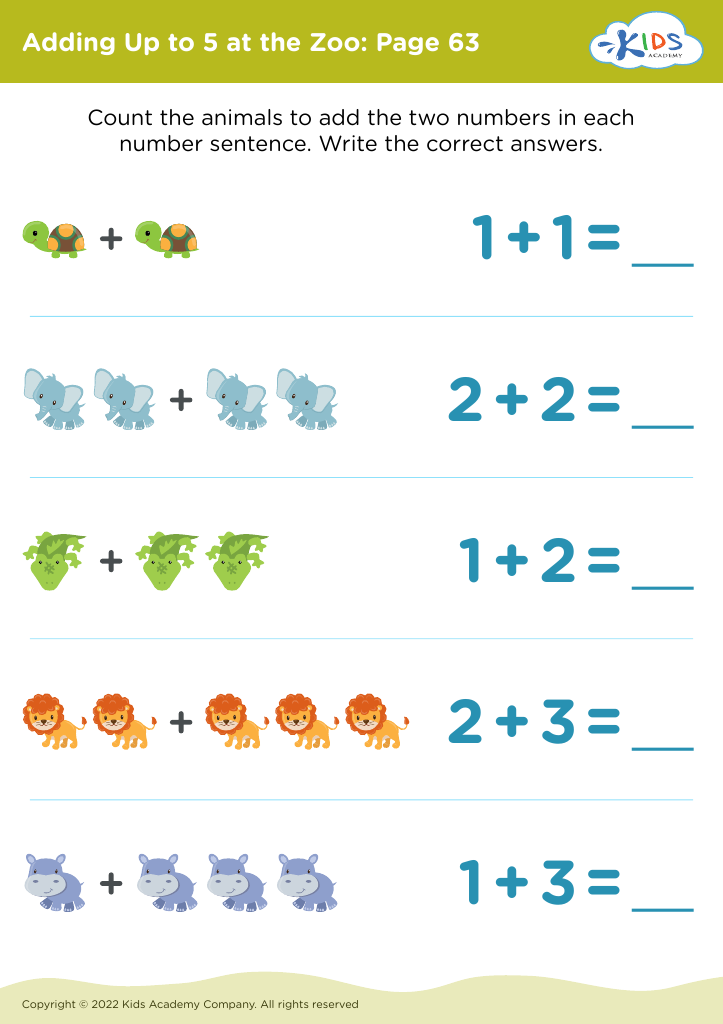
Adding Up to 5 at the Zoo: Page 63
Worksheet
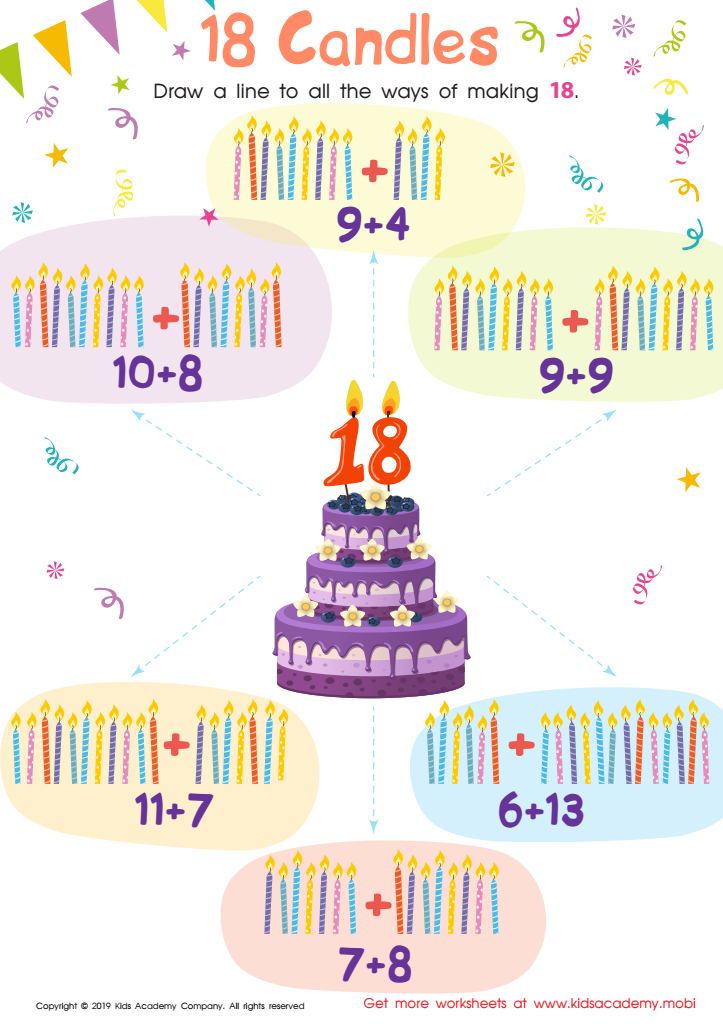
18 Candles Worksheet

18 Candles Worksheet

This worksheet is great for introducing your students to addition and subtraction. Help your kids solve the simple equations on it and draw a line from the birthday cake with 18 on it to all the solutions. Practice like this will prepare them to tackle more complex math problems.
18 Candles Worksheet
Worksheet
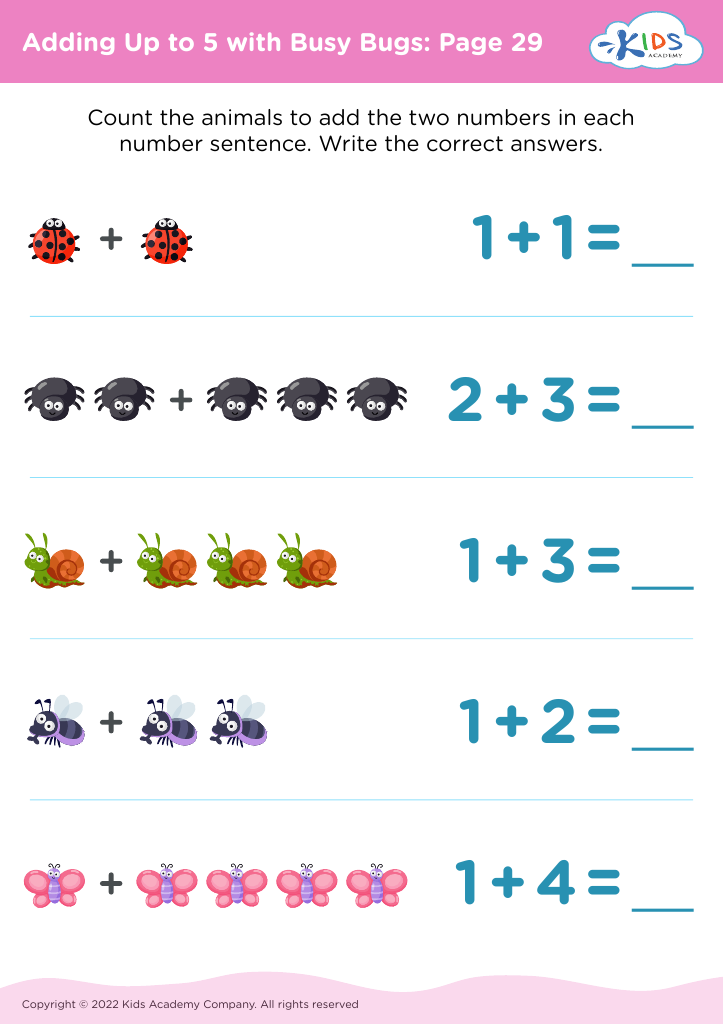
Adding Up to 5 with Busy Bugs: Page 29
Worksheet
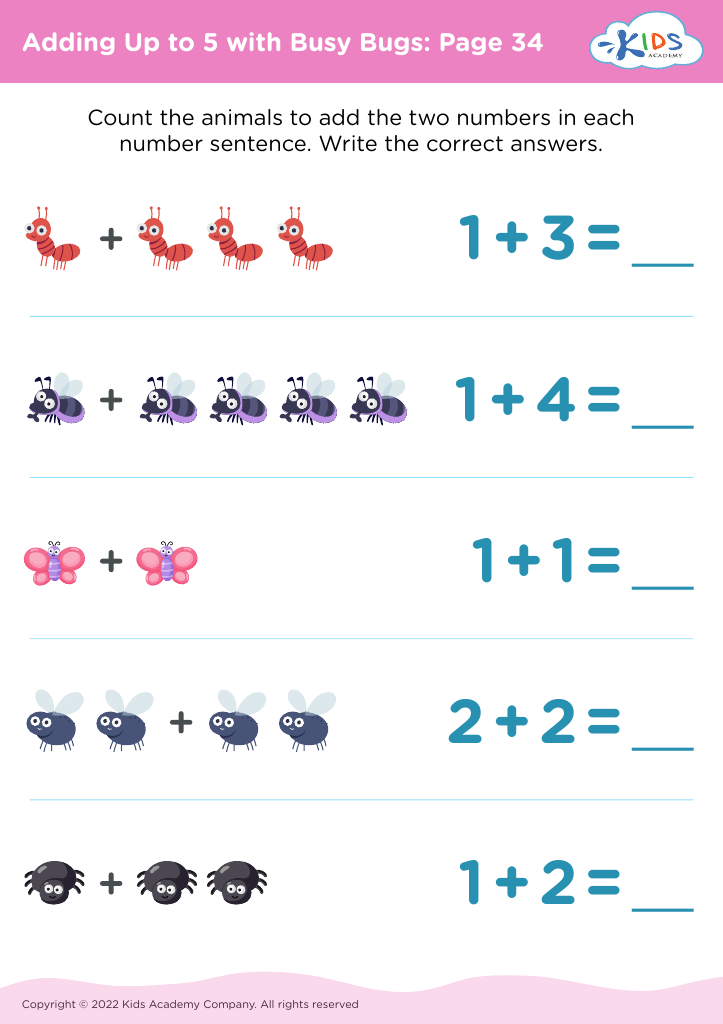
Adding Up to 5 with Busy Bugs: Page 34
Worksheet
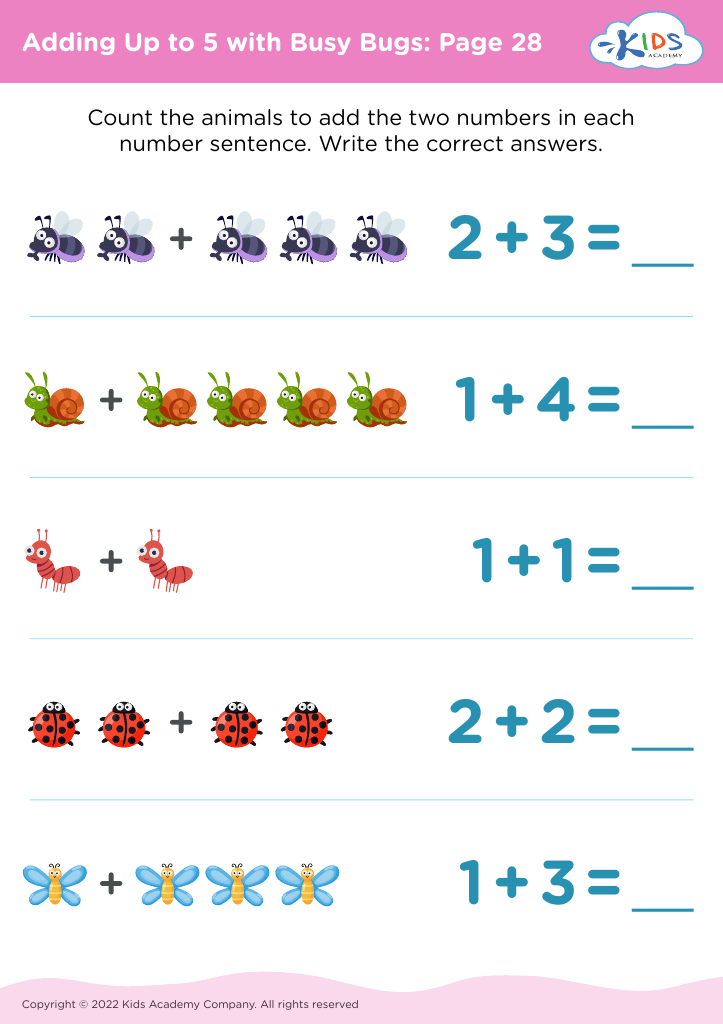
Adding Up to 5 with Busy Bugs: Page 28
Worksheet
Simple Addition PDF Worksheet

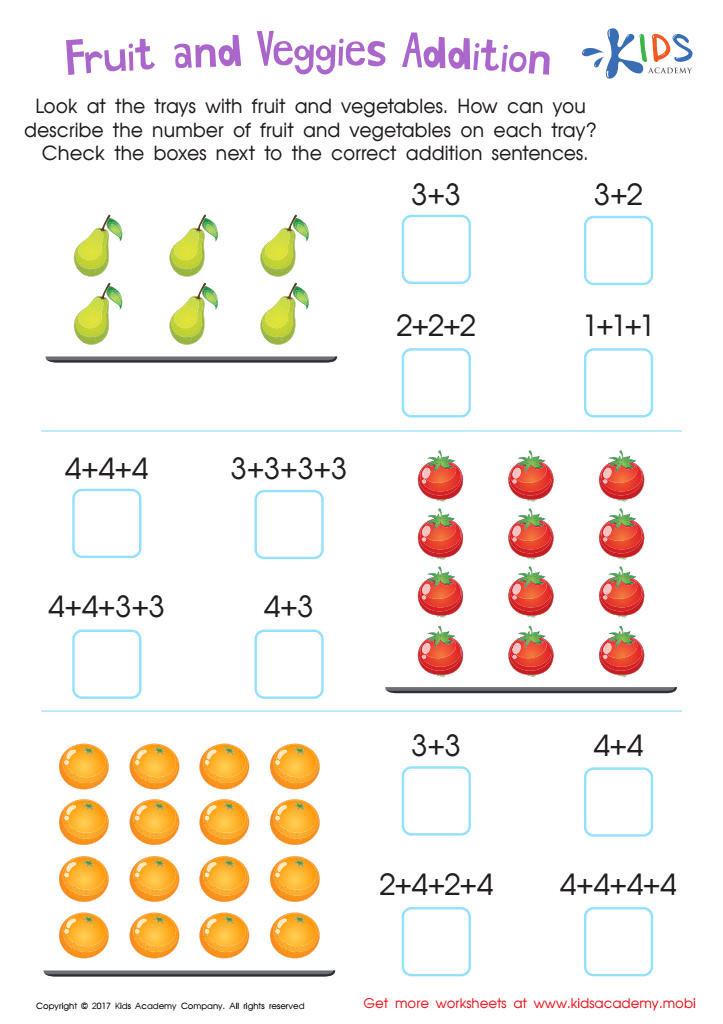
Fruit and Veggies Worksheet
It promotes problem-solving and analytical skills as kids match pictures to correct addition sentences. Help your child go beyond simple addition with this PDF worksheet!
Fruit and Veggies Worksheet
Worksheet
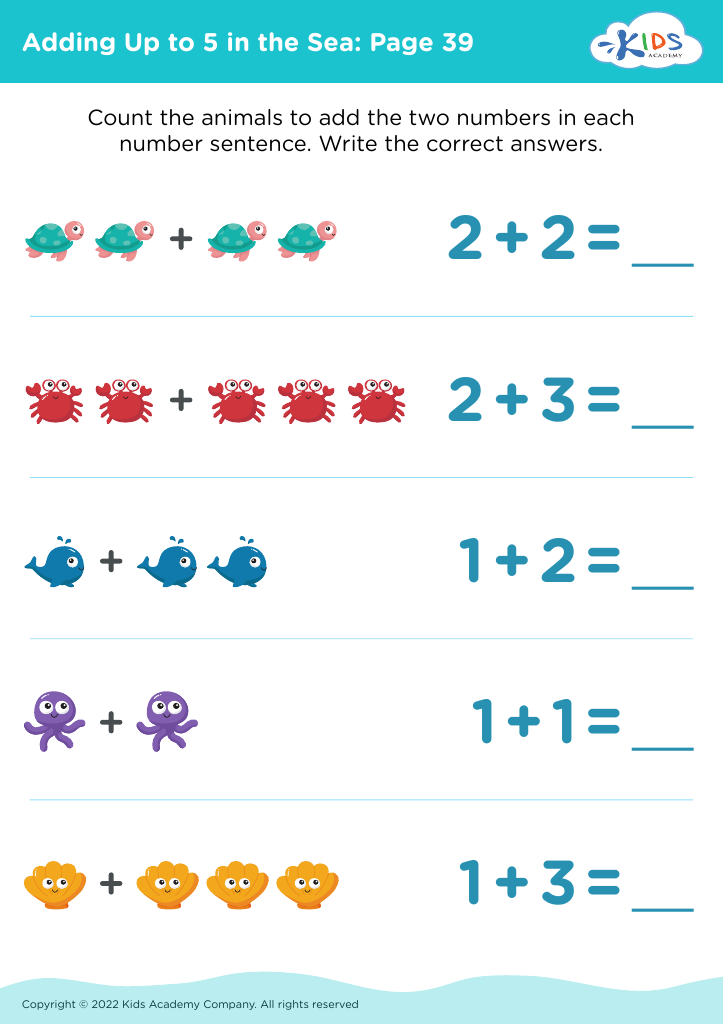
Adding Up to 5 in the Sea: Page 39
Worksheet
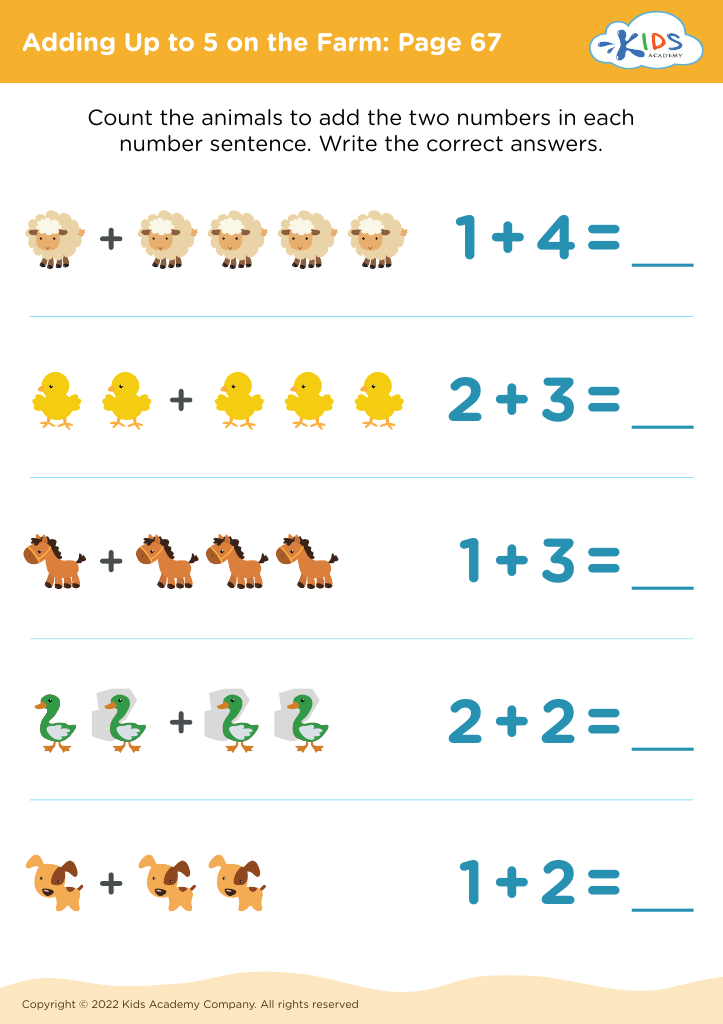
Adding Up to 5 on the Farm: Page 67
Worksheet
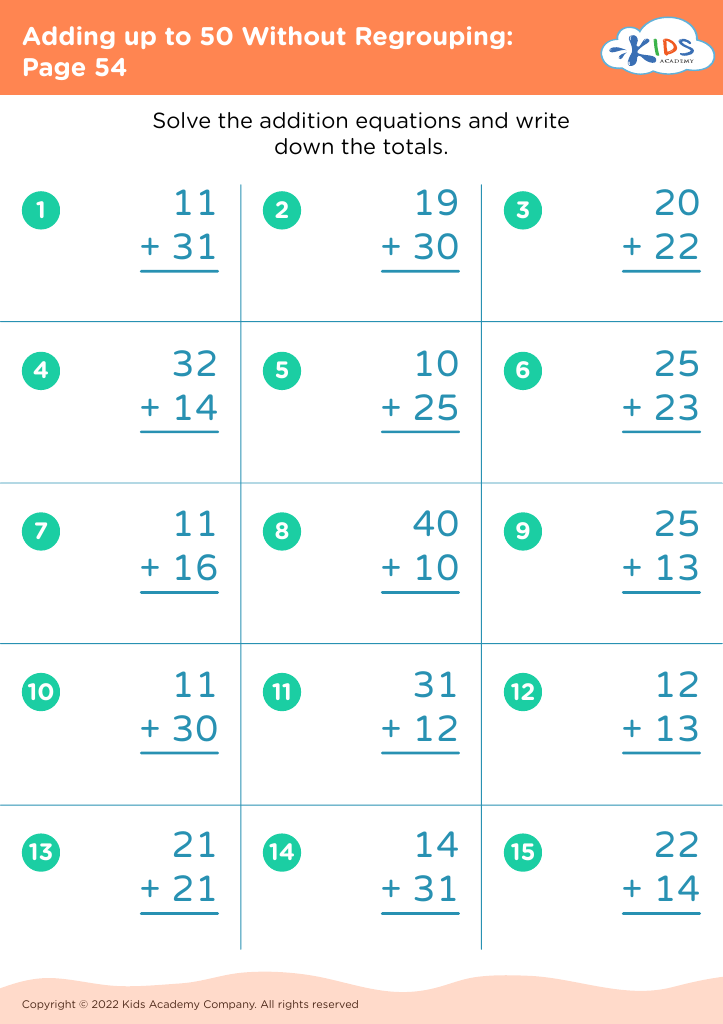
Adding up to 50 Without Regrouping: Page 54
Worksheet
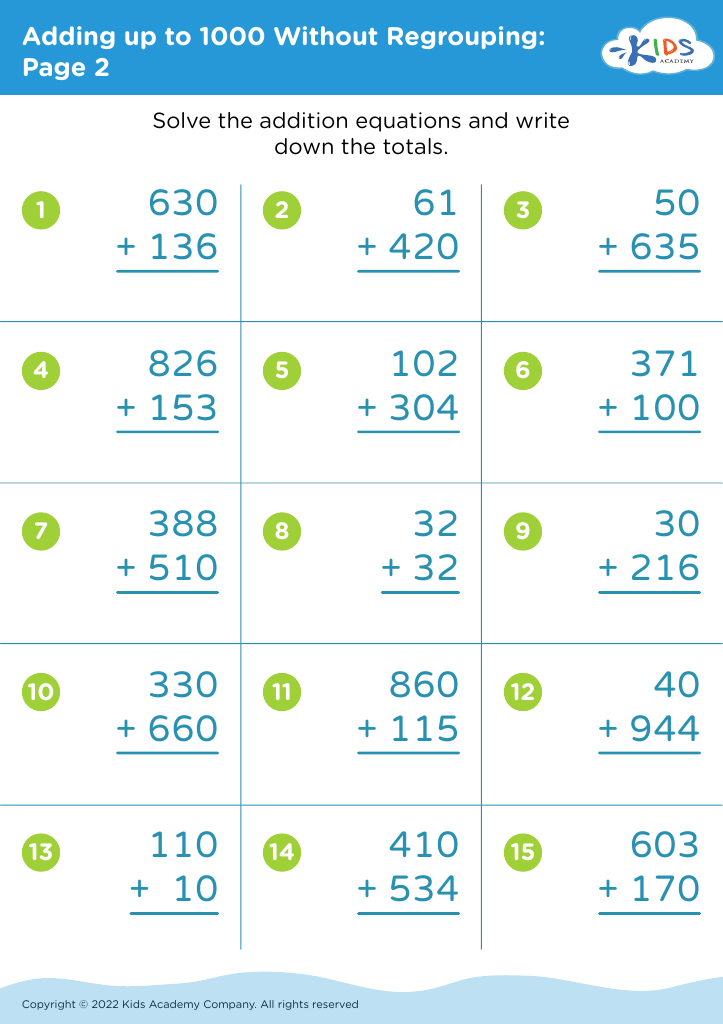
Adding up to 1000 Without Regrouping: Page 2
Worksheet
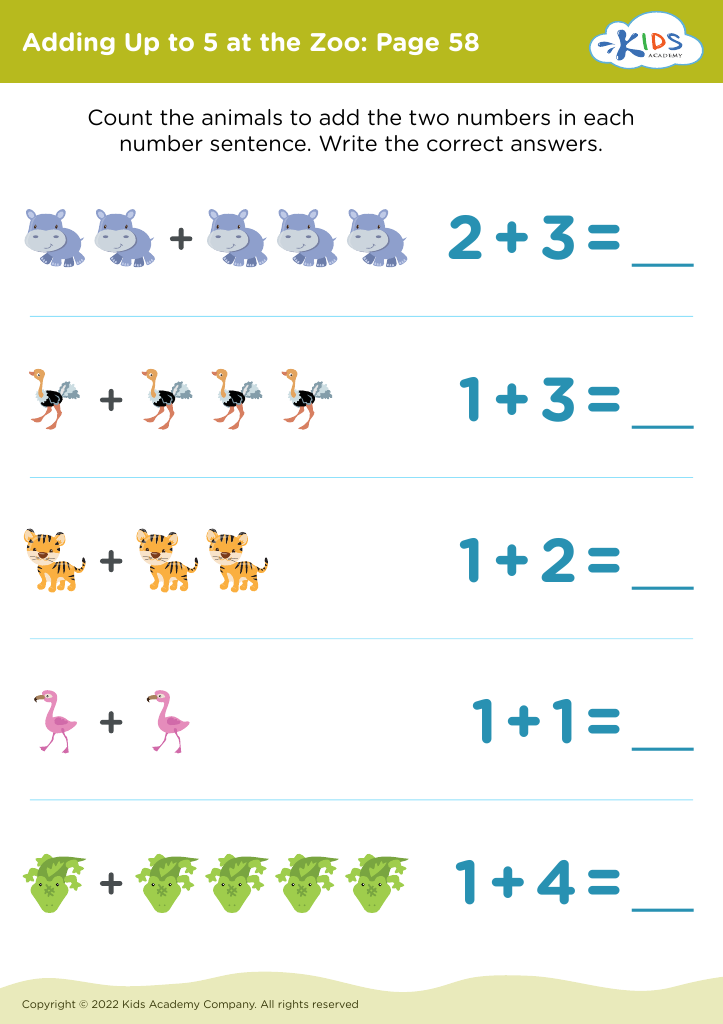
Adding Up to 5 at the Zoo: Page 58
Worksheet
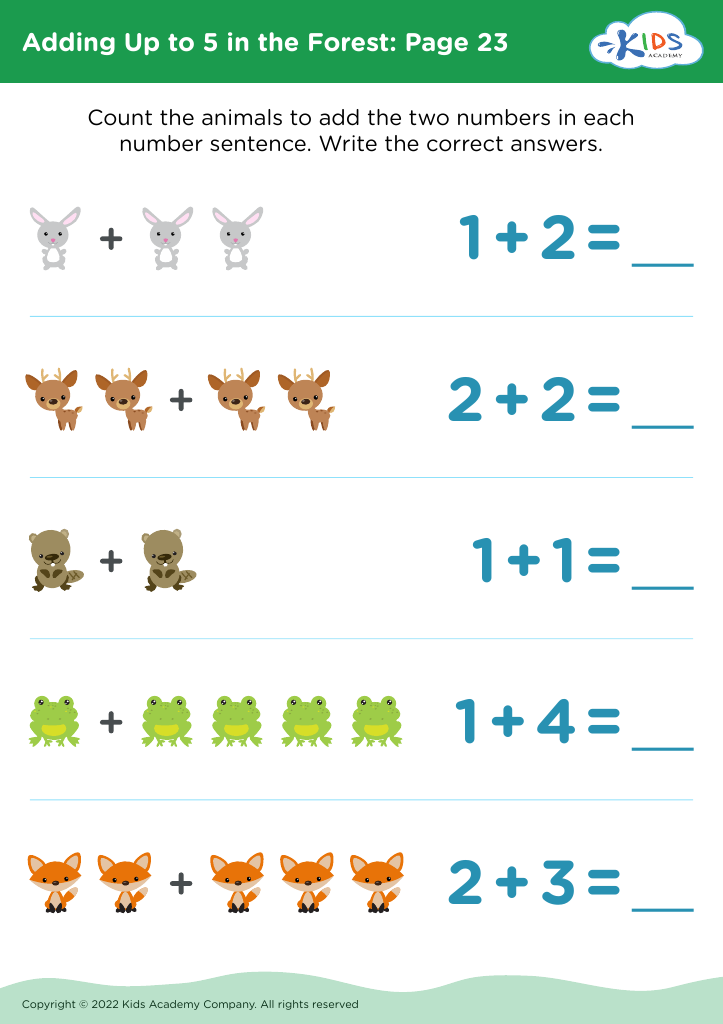
Adding Up to 5 in the Forest: Page 23
Worksheet
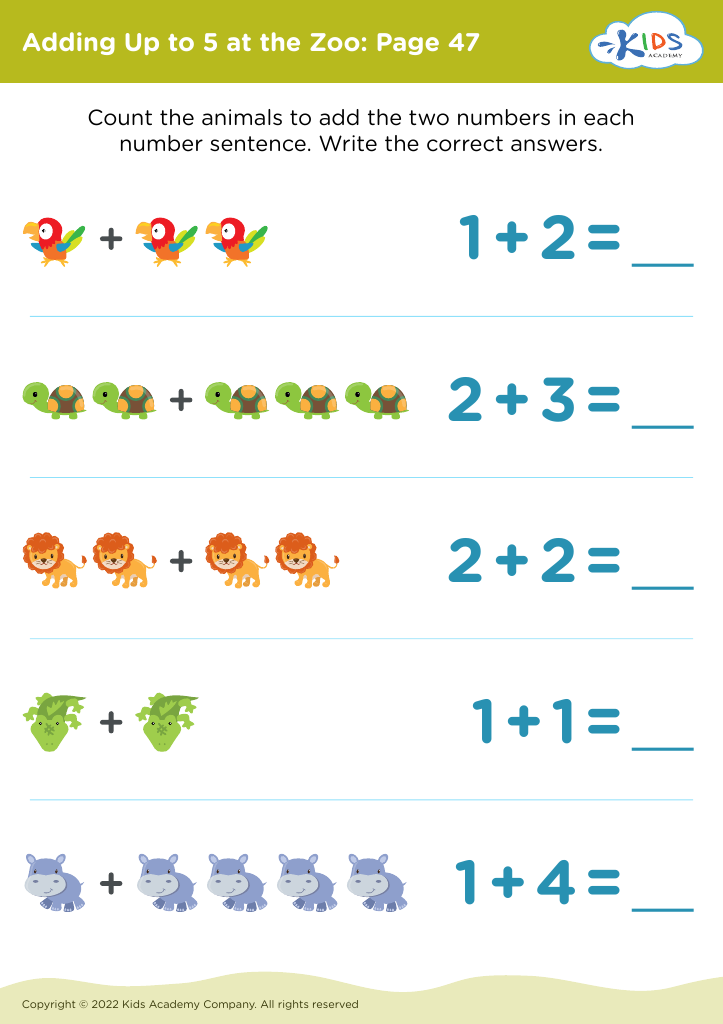
Adding Up to 5 at the Zoo: Page 47
Worksheet
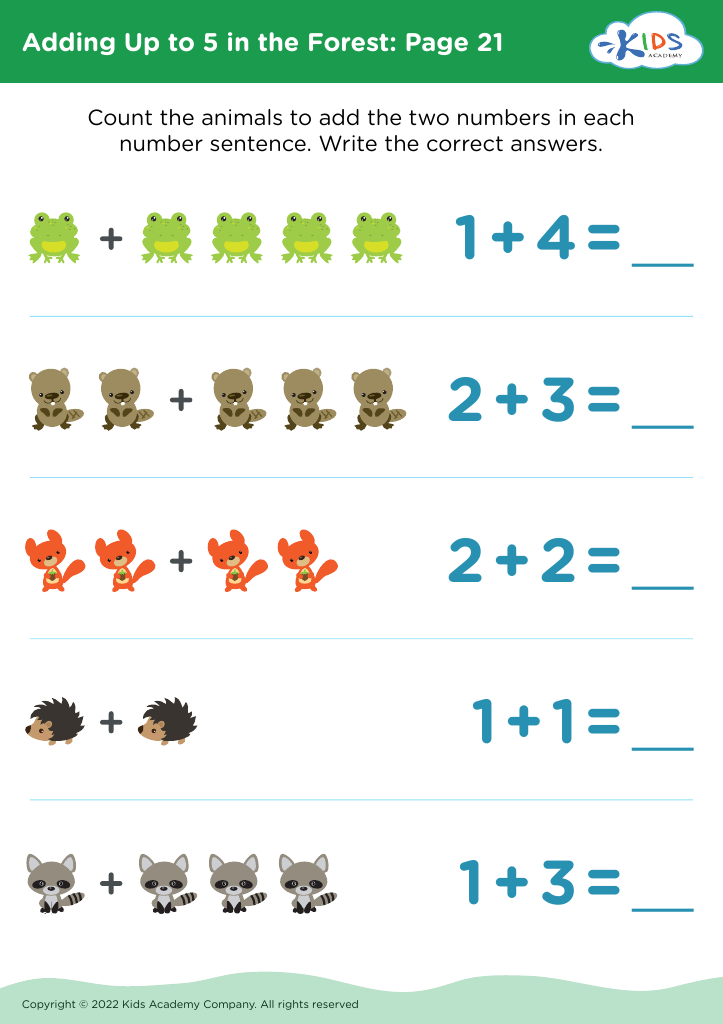
Adding Up to 5 in the Forest: Page 21
Worksheet
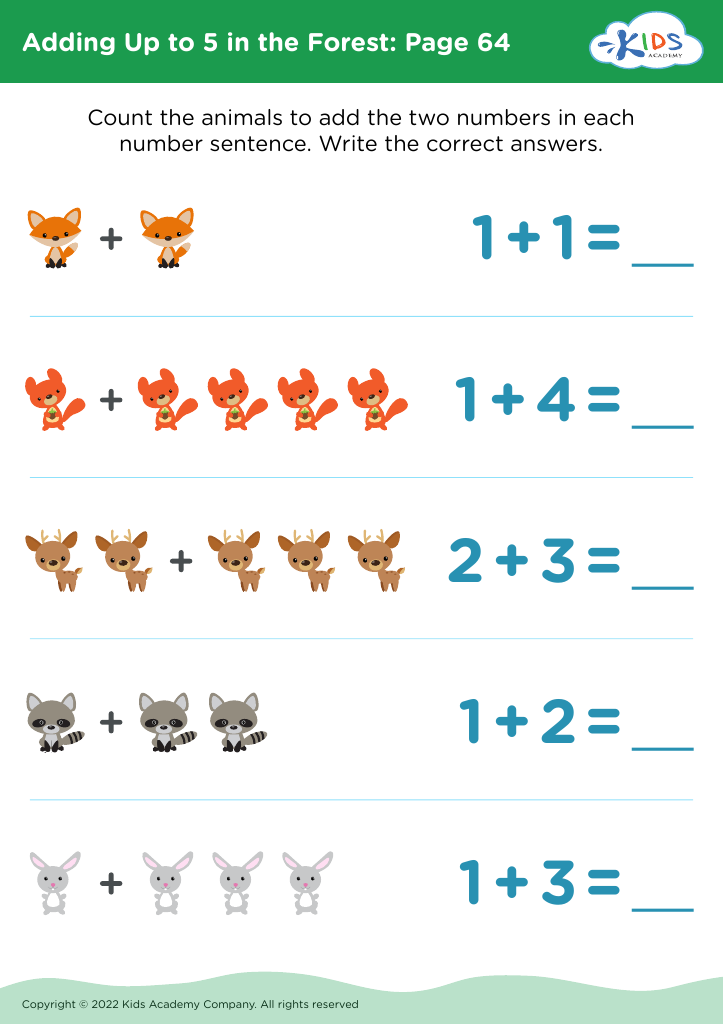
Adding Up to 5 in the Forest: Page 64
Worksheet
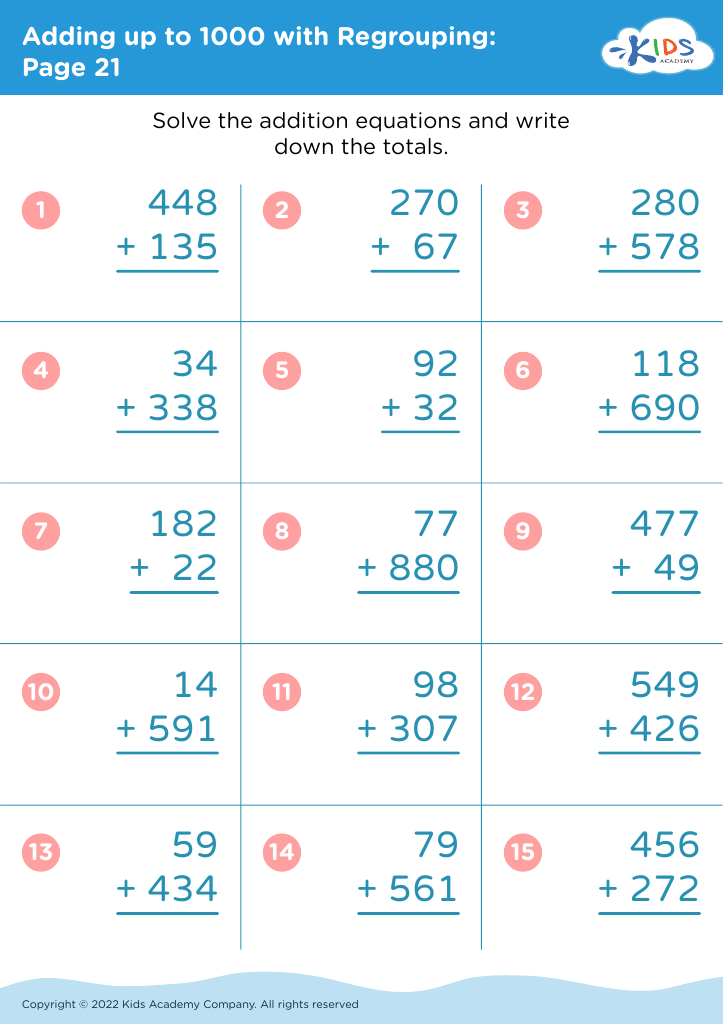
Adding up to 1000 with Regrouping: Page 21
Worksheet
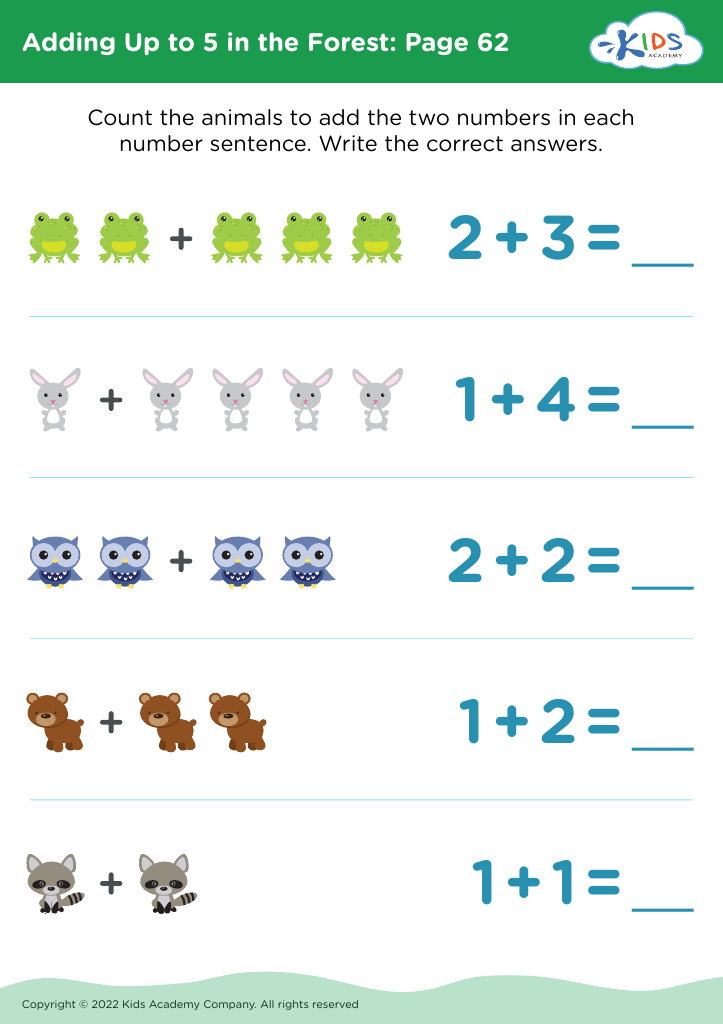
Adding Up to 5 in the Forest: Page 62
Worksheet
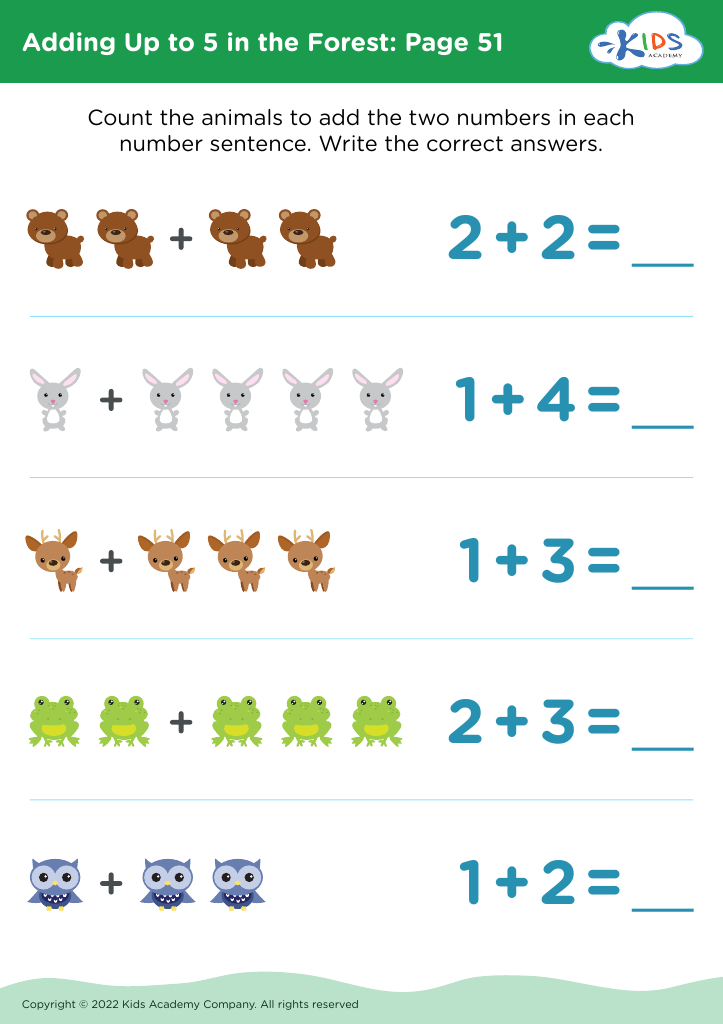
Adding Up to 5 in the Forest: Page 51
Worksheet
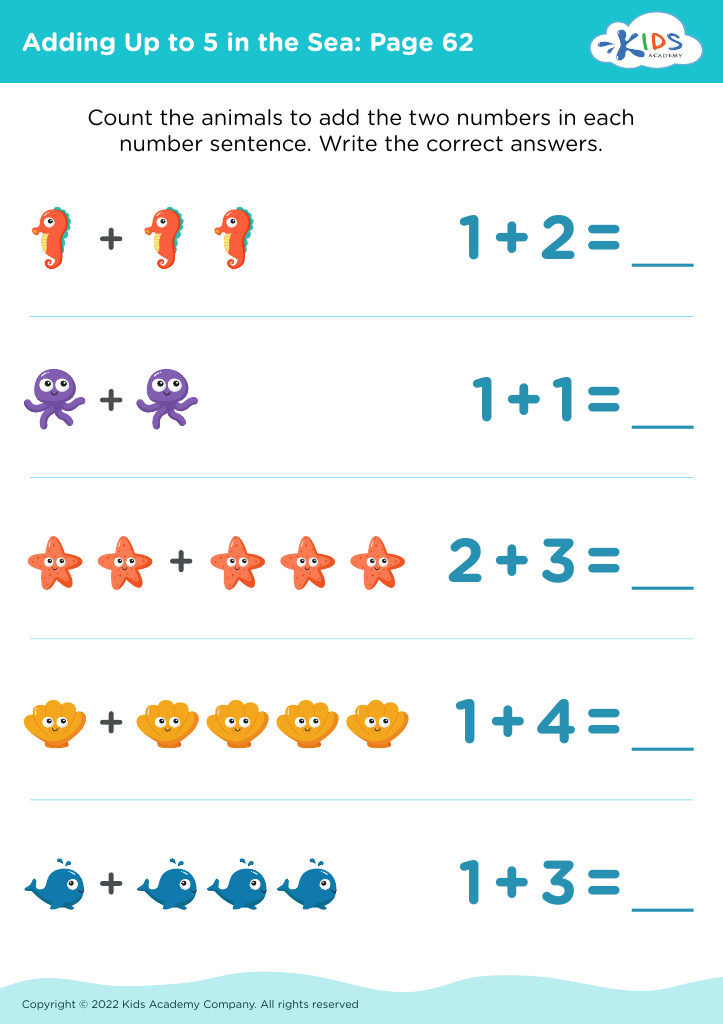
Adding Up to 5 in the Sea: Page 62
Worksheet
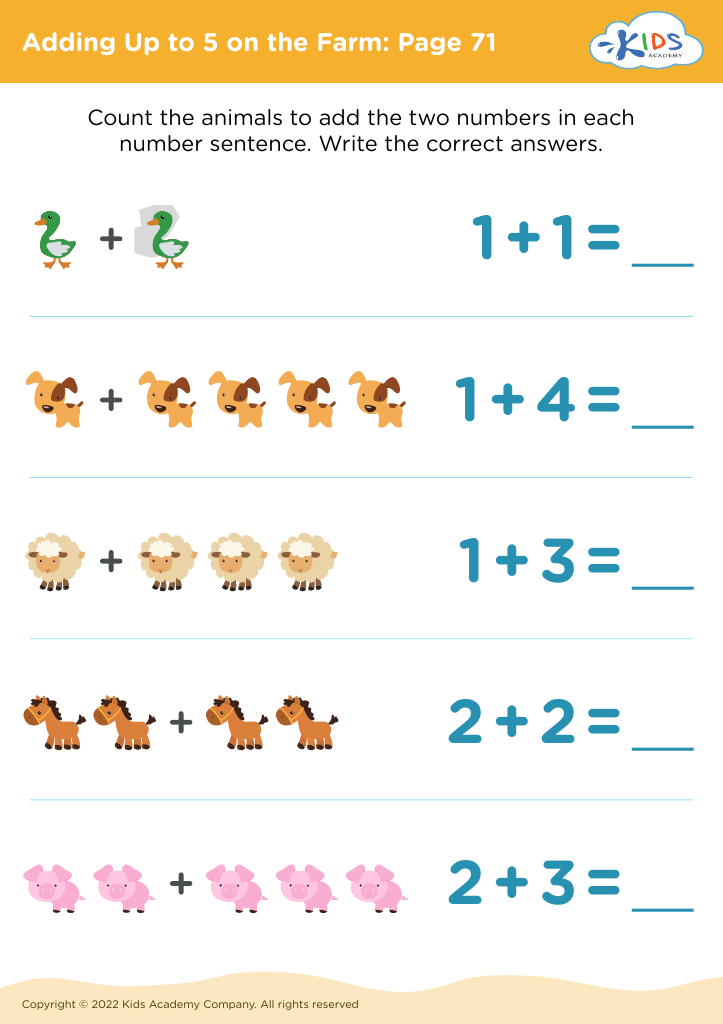
Adding Up to 5 on the Farm: Page 71
Worksheet
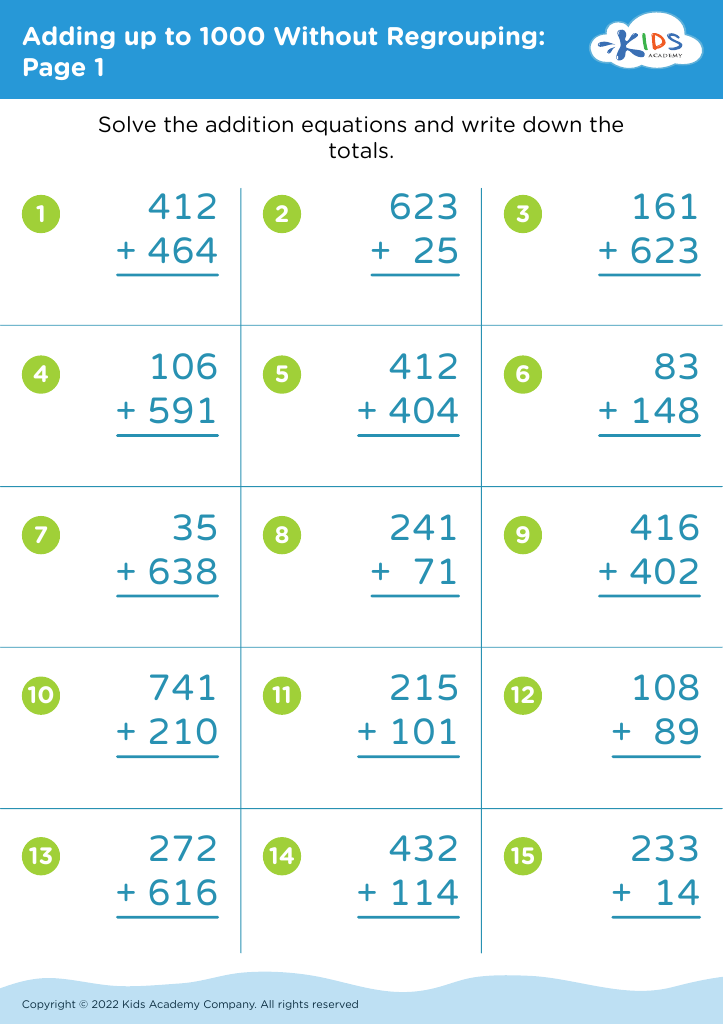
Adding up to 1000 Without Regrouping: Page 1
Worksheet
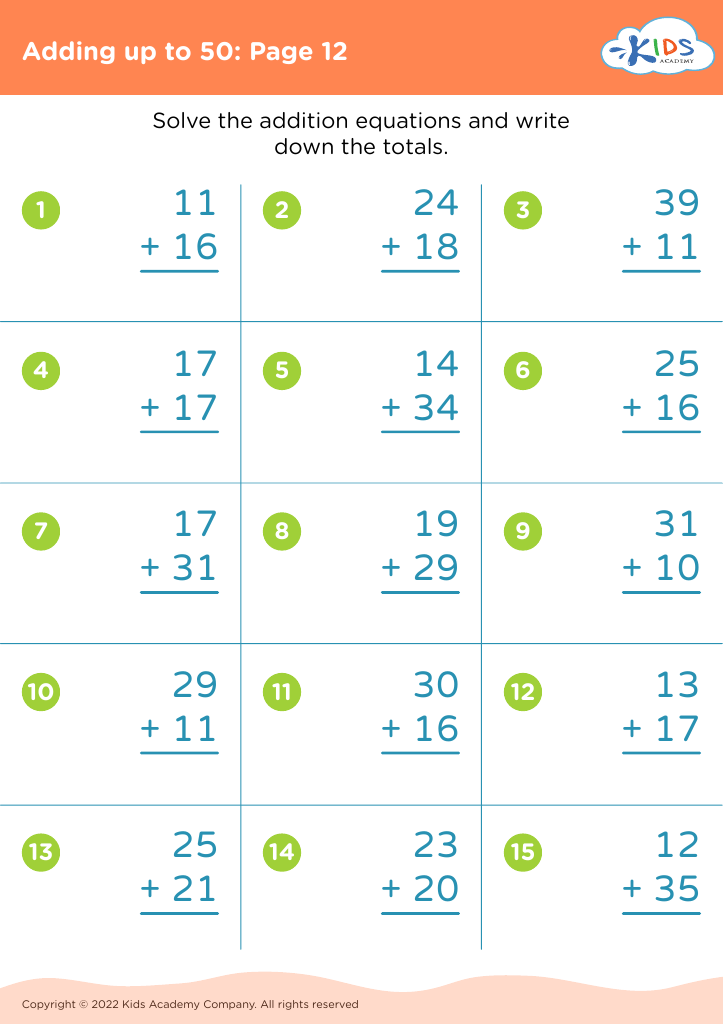
Adding up to 50: Page 12

Adding up to 50: Page 12

Adding up to 50: Page 12
Worksheet
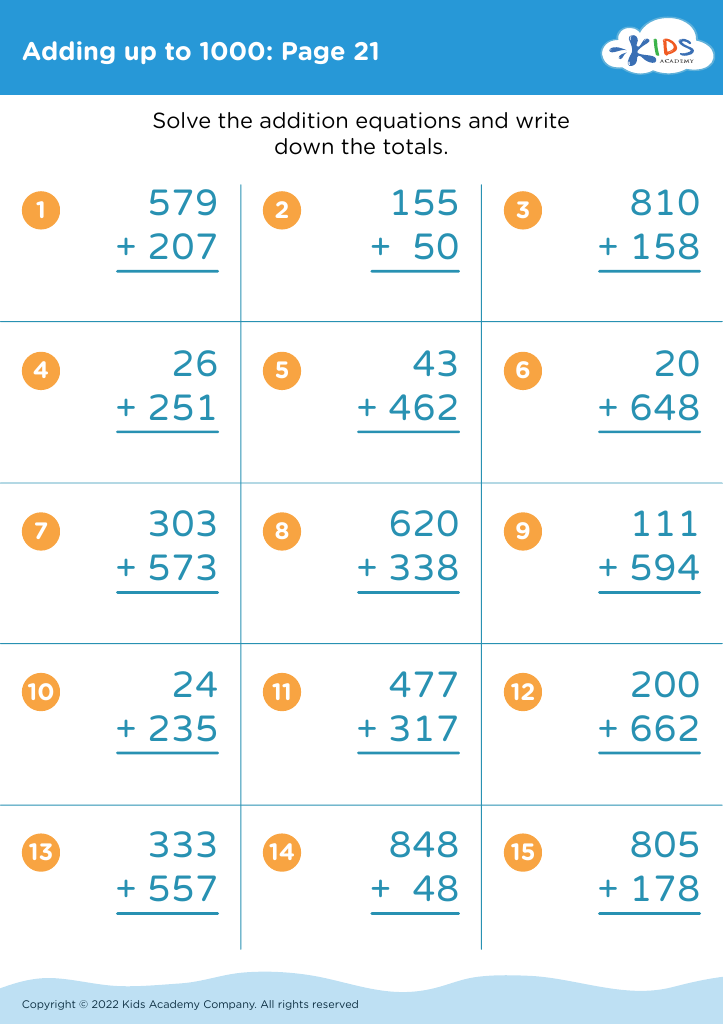
Adding up to 1000: Page 21

Adding up to 1000: Page 21

Adding up to 1000: Page 21
Worksheet


Counting practice, along with addition and subtraction, is crucial for children aged 3-7 as it lays the foundation for their mathematical understanding. This early stage is a time when children's brains are highly receptive to absorbing new concepts. Engaging in counting helps develop number sense, which is essential for more complex math later on.

Practicing addition and subtraction stimulates critical thinking and problem-solving skills. Children learn to recognize relationships between numbers and develop strategies to approach mathematical problems. This can boost their confidence as they see their progress, and a positive attitude toward math is essential for lifelong learning.

Moreover, incorporating these skills into daily activities, such as counting objects during play or subtraction during snack time, makes learning interactive and fun. It enables parents and teachers to turn everyday situations into teaching moments.

Lastly, early mathematical skills are linked to later academic success. Students who grasp foundational concepts in early childhood are more likely to excel in more advanced courses. By prioritizing counting and basic arithmetic, parents and teachers play a vital role in setting the stage for a child's future in math and overall education, encouraging a lasting interest in learning.