
Develop addition skills Addition & Subtraction Worksheets for Ages 3-7
4 filtered results
Difficulty Level
Grade
Age
-
From - To
Subject
Activity
Standards
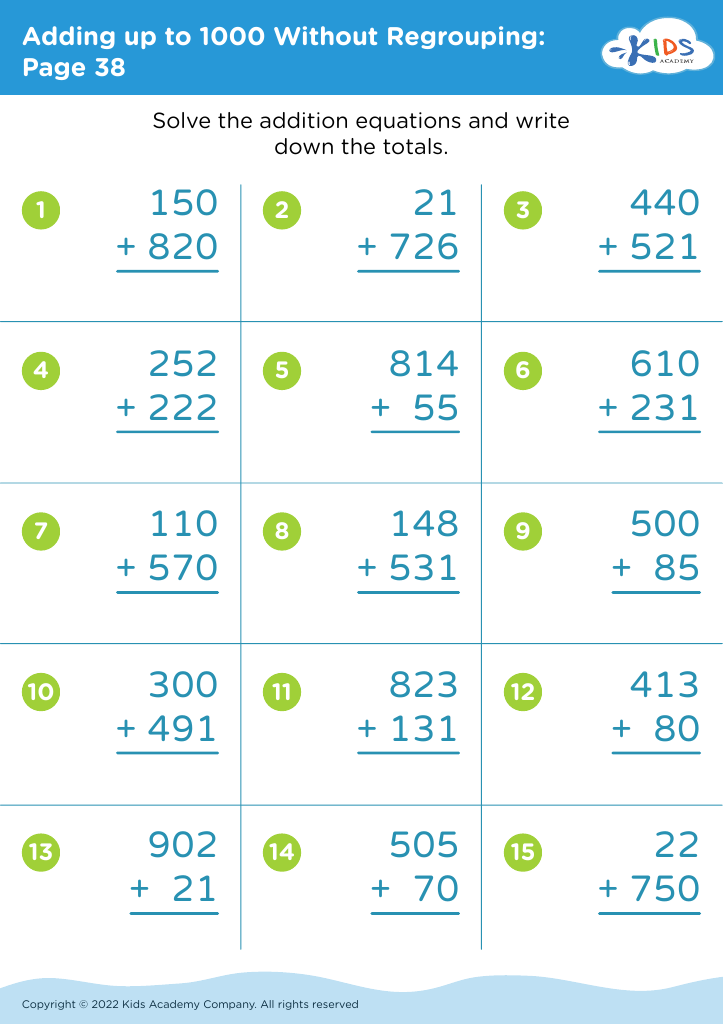
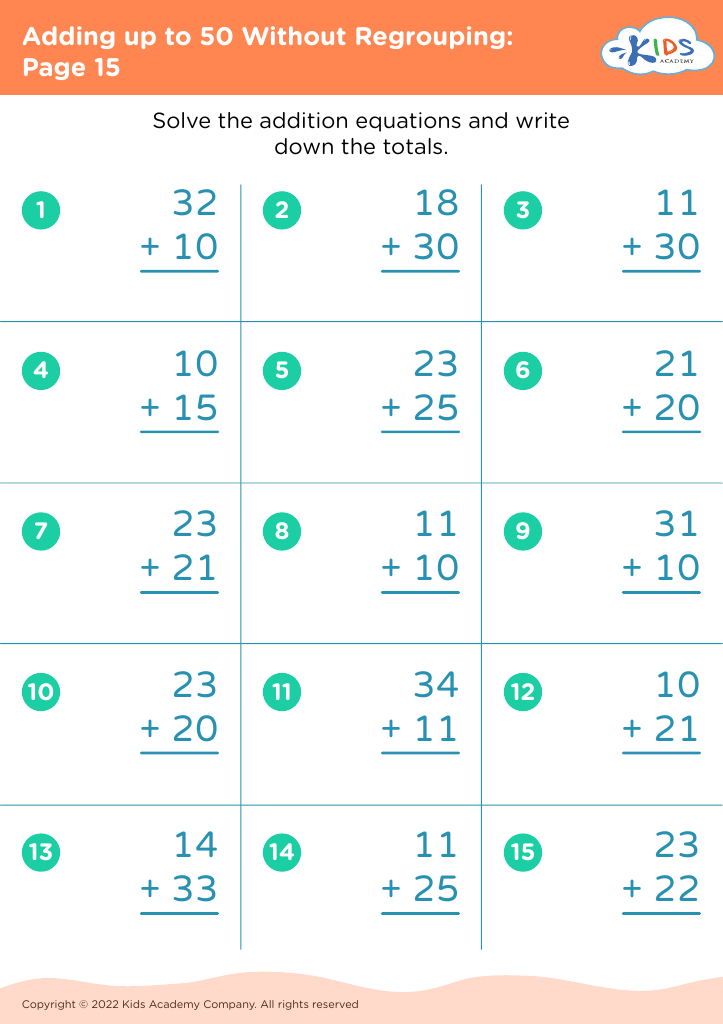
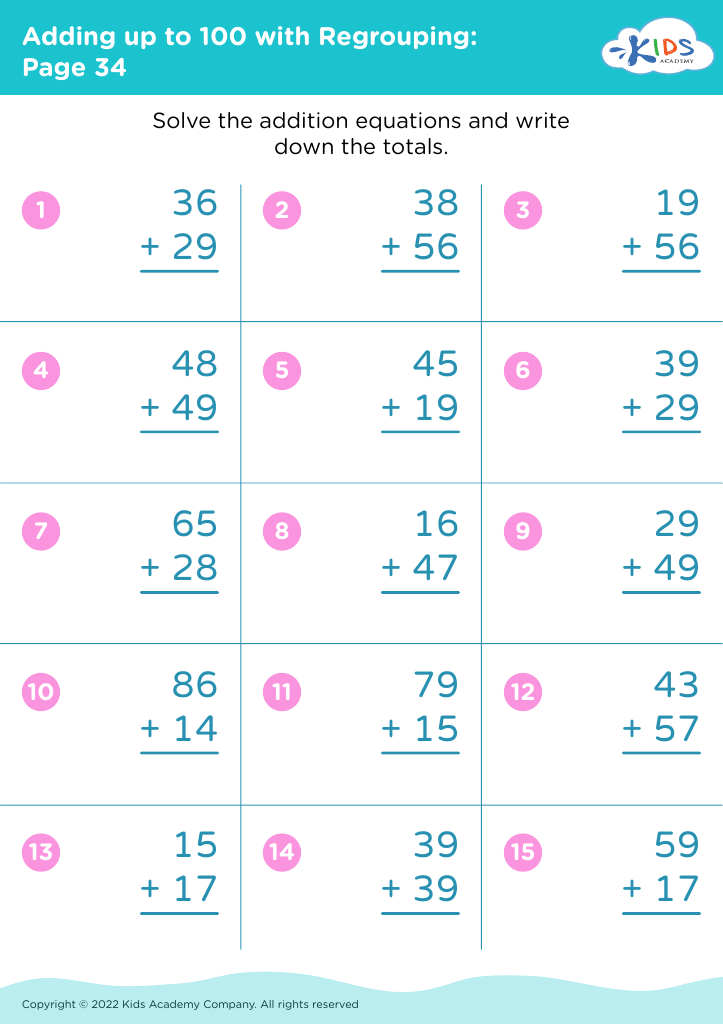
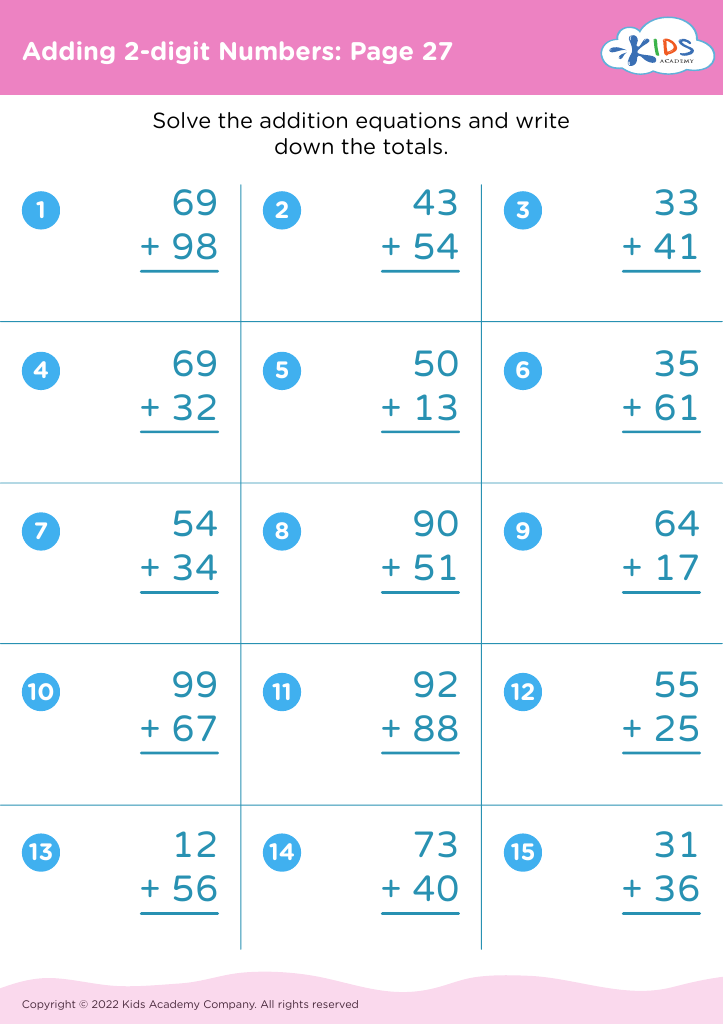
Boost your child's math confidence with our engaging Addition & Subtraction Worksheets designed for ages 3-7. Tailored to develop essential addition skills, these worksheets transform learning into a fun adventure. Each printable activity combines colorful visuals and interactive tasks to captivate young minds and foster a strong foundation in mathematics. Ideal for early learners, our worksheets enhance number recognition, counting proficiency, and basic arithmetic understanding. Perfect for parents and educators seeking to supplement classroom learning or enrich at-home practice, our expertly crafted resources ensure a positive, productive, and enjoyable math experience for your little ones.
Favorites
With answer key
Interactive
Learning Skills
Join Kids Academy for Free
Who is primarily going to use this learning content?








Developing addition and subtraction skills in children aged 3-7 is crucial for several reasons. Firstly, these foundational math skills are essential for more complex mathematical concepts. By mastering basic addition and subtraction, children build a solid foundation that enables them to understand and solve more complicated problems in later grades.
Secondly, early math skills are strongly linked to future academic success across various subjects. Studies show that children proficient in early math typically perform better in reading and other areas. This relates to their ability to recognize patterns, improve problem-solving skills, and develop logical thinking, which are valuable across the curriculum.
Thirdly, practicing these skills at a young age instills confidence and a positive attitude towards learning. Children who uncover the logic and patterns in math are often more curious and engaged learners. This positive experience can foster a long-term love for learning, benefiting their overall academic journey.
Moreover, for parents and teachers, understanding a child’s progress in addition and subtraction helps identify any early learning gaps or difficulties. Addressing these issues promptly can prevent future struggles and ensure each child receives the support they need.
In essence, helping children develop basic addition and subtraction skills is not just about math; it’s a foundational step that plays a pivotal role in their overall cognitive and academic development.








