Developing problem-solving abilities Addition & Subtraction Worksheets for Ages 3-7
5 filtered results
-
From - To
Enhance your child's problem-solving skills with our engaging Addition and Subtraction Worksheets, specially designed for ages 3-7! These worksheets provide a fun and interactive way to help young learners master essential math concepts. Each activity encourages critical thinking, honing skills in addition and subtraction through colorful illustrations and relatable scenarios. As kids tackle these exercises, they build confidence in their abilities and develop a stronger understanding of numerical relationships. Perfect for parents and educators, our resources ensure a supportive learning environment. Download now and watch your child flourish as they embrace the joy of problem-solving in math!
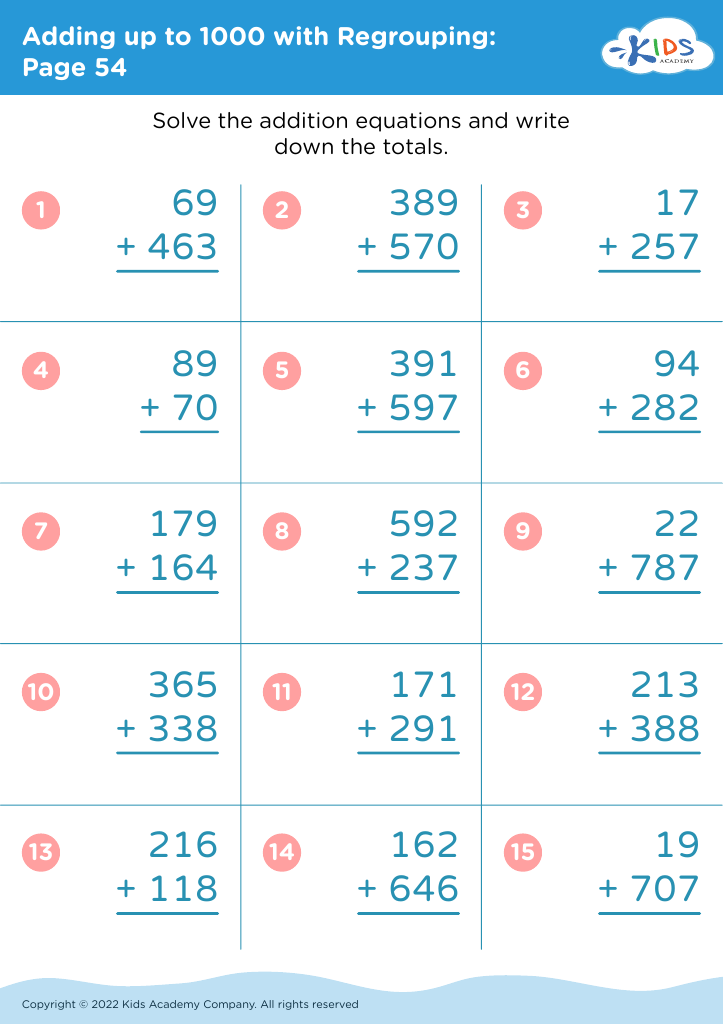
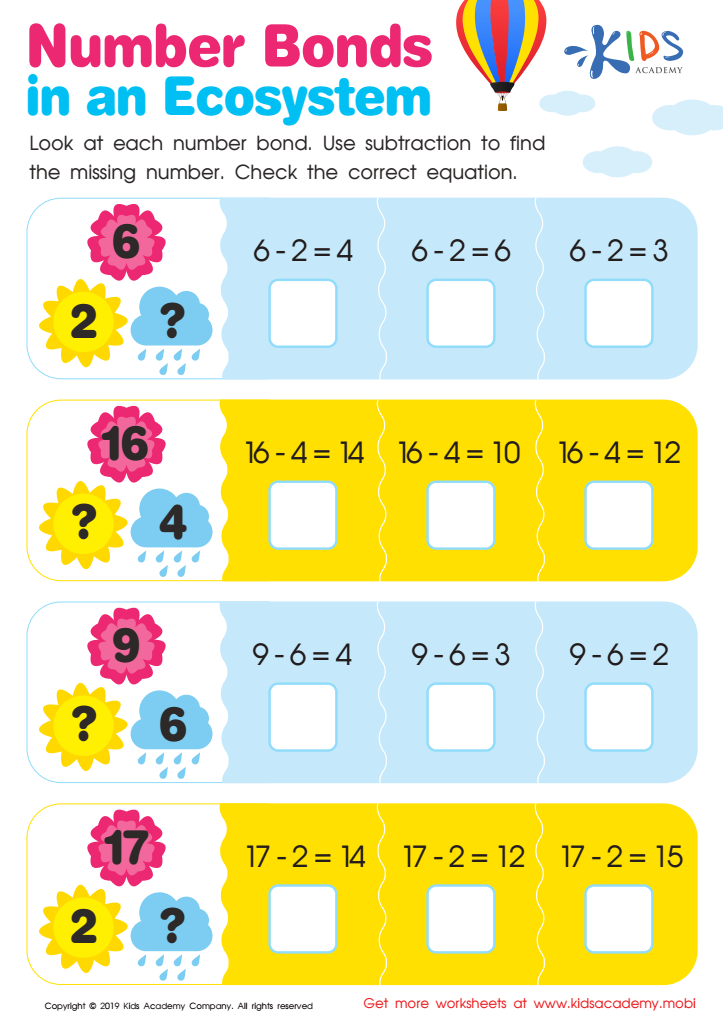
Number Bonds in an Ecosystem Worksheet
 Assign to My Students
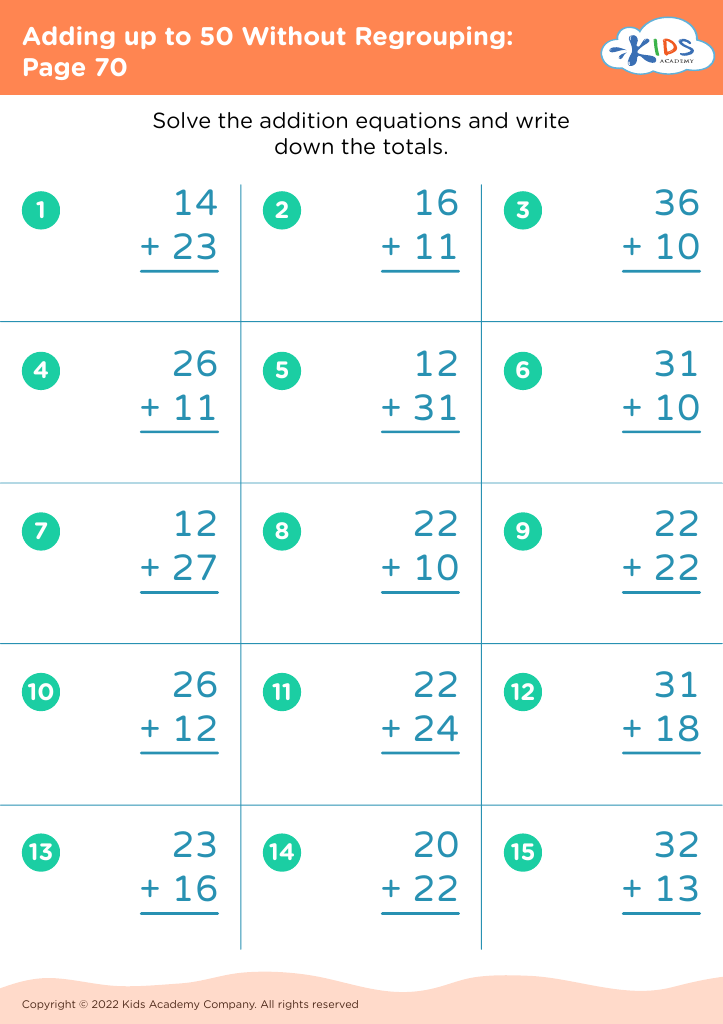
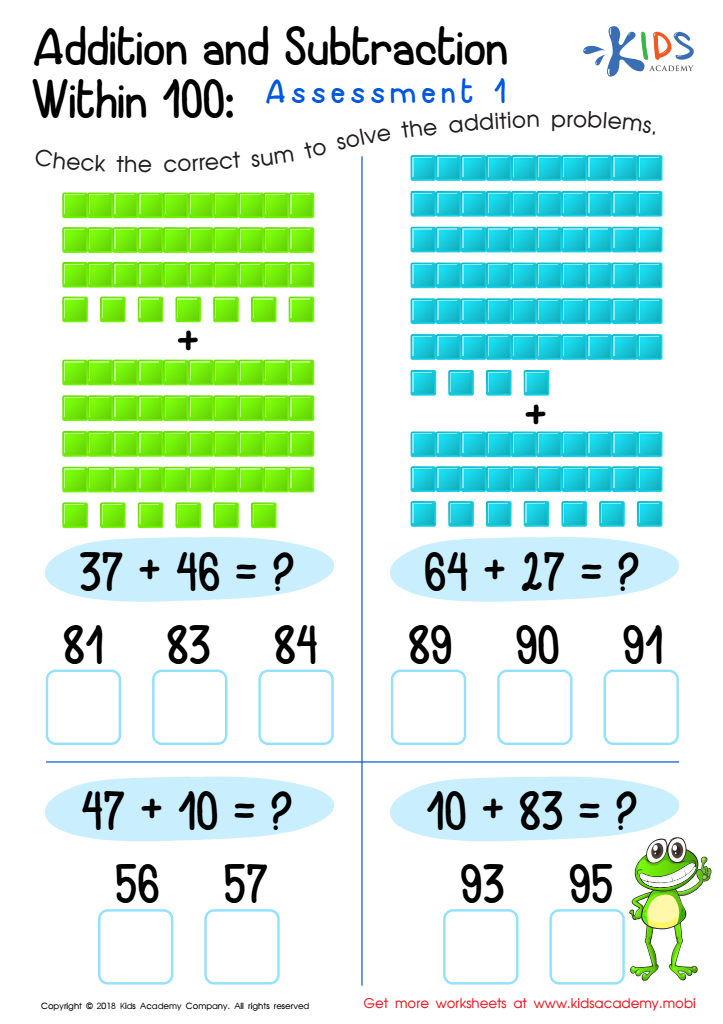
Addition and Subtraction Within 1: Assessment 1 Worksheet
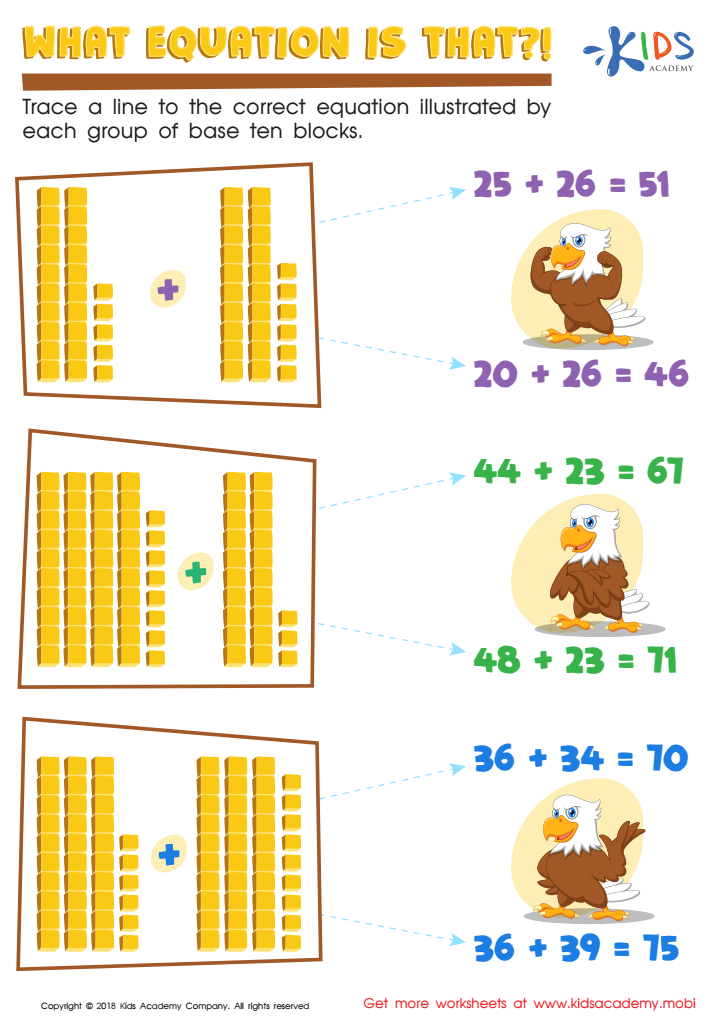
What Equation Is That? Worksheet








Developing problem-solving abilities in addition and subtraction for children ages 3-7 is crucial for several reasons. First, it lays the foundation for future mathematical skills, as early competencies in these operations underlie more complex concepts they will encounter later in school. Children learn to think critically and creatively, which are skills beneficial beyond mathematics.
Moreover, fostering problem-solving abilities enhances cognitive development. Young children explore different ways to manipulate numbers and develop persistence when faced with challenges. This builds resilience and a growth mindset—qualities that are essential for lifelong learning.
In addition, engaging children in problem-solving activities helps them develop communication skills. They express their thought processes, collaborate with peers, and articulate their reasoning, which contributes to both mathematical understanding and social skill enhancement.
Furthermore, these early experiences with addition and subtraction can demystify math, making it more accessible and enjoyable. When children actively engage with mathematical concepts through play and exploration, they are more likely to develop a positive attitude towards learning and math in particular.
For these reasons, parents and teachers should prioritize fostering problem-solving abilities in early mathematics, helping children to not only succeed academically but also to become confident thinkers and learners.








