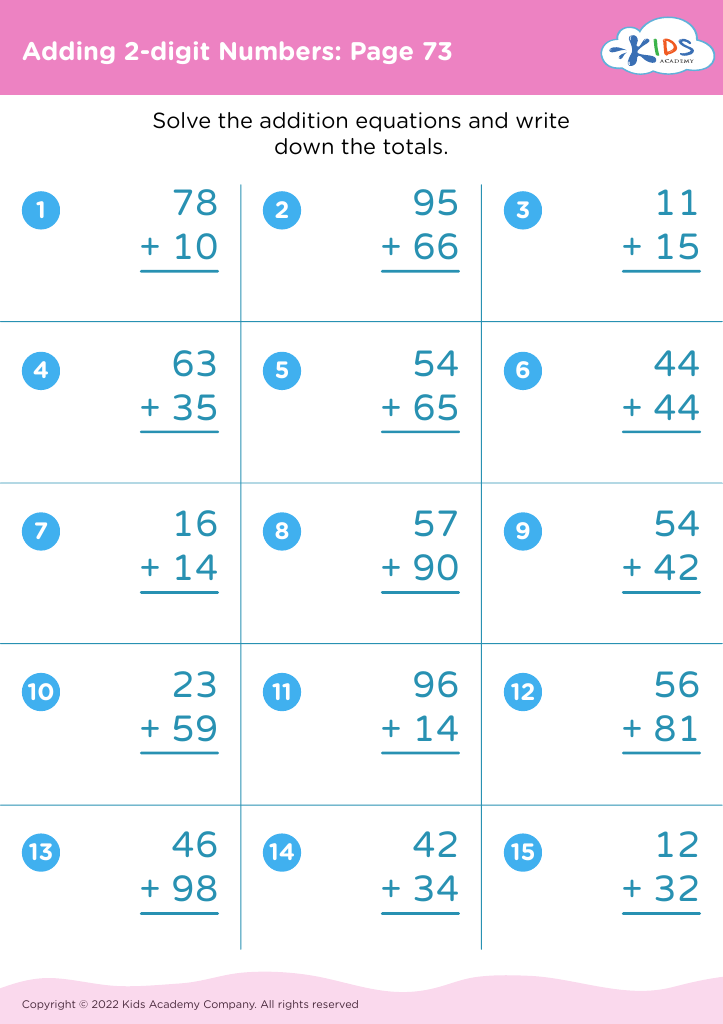








Teaching children aged 3-7 about fraction comparison, addition, and subtraction is crucial for numerous reasons. At this early developmental stage, their brains are incredibly receptive to new concepts, and foundational math skills set the stage for more complex problem-solving abilities later in life. Learning fractions helps children develop a strong number sense, which is essential not just for math, but for a wide range of everyday activities—from sharing equally with friends to understanding time and cooking measurements.
Introducing these concepts early helps demystify math and removes the fear often associated with it. Fraction comparison, addition, and subtraction are gateways to understanding proportions, ratios, and even algebra. By laying a solid foundation, we empower children to approach these future challenges with confidence and competence.
Moreover, hands-on activities with tangible items like slices of fruit or toy blocks can make learning fractions fun and engaging, reinforcing mathematical concepts through play. This not only enhances cognitive abilities but also develops critical thinking and reasoning skills.
When parents and teachers actively engage in teaching these fundamentals, they are not just imparting academic knowledge but also instilling a growth mindset that values persistence, problem-solving, and logical reasoning. These skills are invaluable for lifelong learning and personal development.








