Fraction representation Addition & Subtraction Worksheets for Ages 3-7
3 filtered results
-
From - To
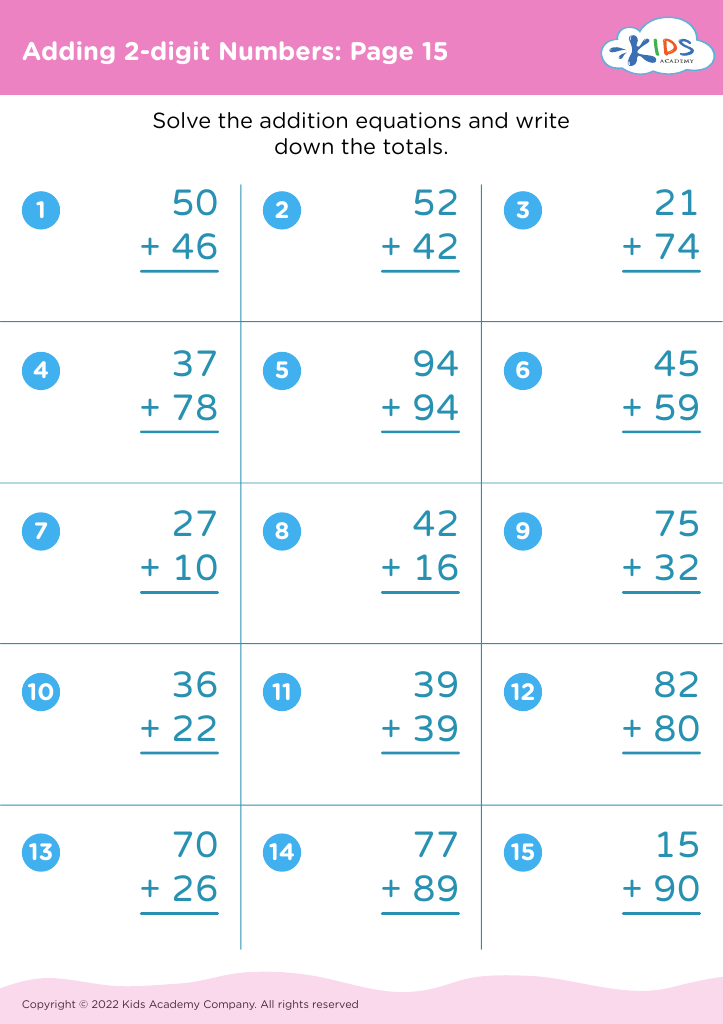
Introduce young learners to the basics of fraction representation with our engaging Addition & Subtraction Worksheets tailored for ages 3-7. These printable worksheets are designed to make learning fractions fun and interactive. Children will enjoy colorful activities that combine visual aids with simple problems, helping to reinforce their understanding of fractions in a clear and approachable way. By practicing addition and subtraction with these worksheets, kids build a strong mathematical foundation. Ideal for both classroom and home use, these worksheets cater to various learning styles, ensuring every child can progress at their own pace. Visit Kids Academy for more!
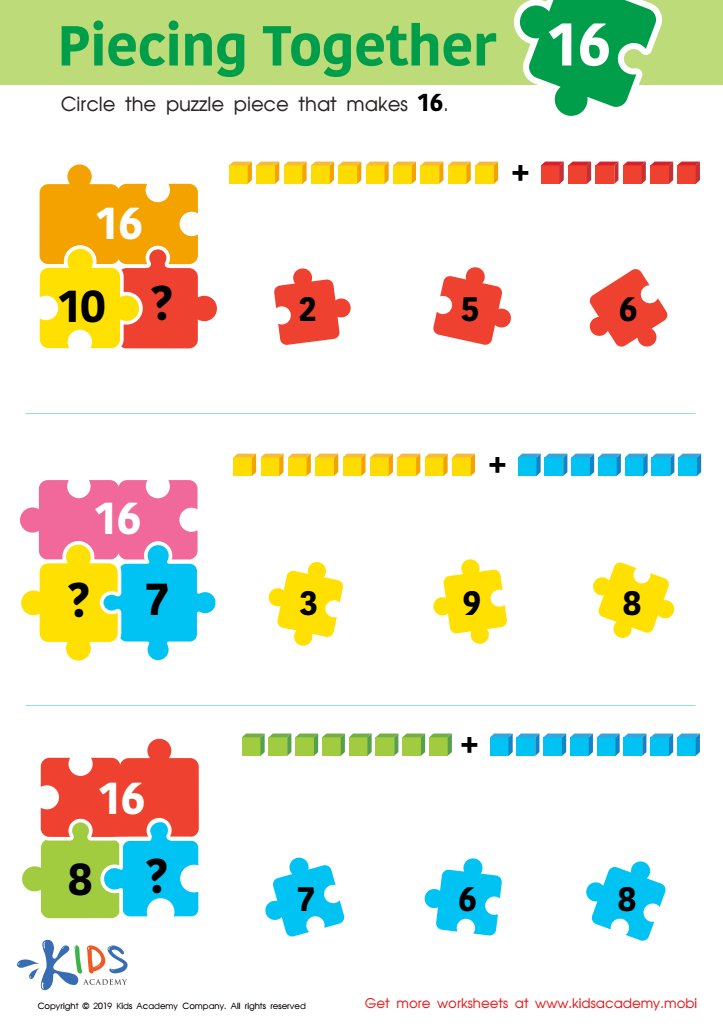
Piecing Together 16 Worksheet
 Assign to My Students
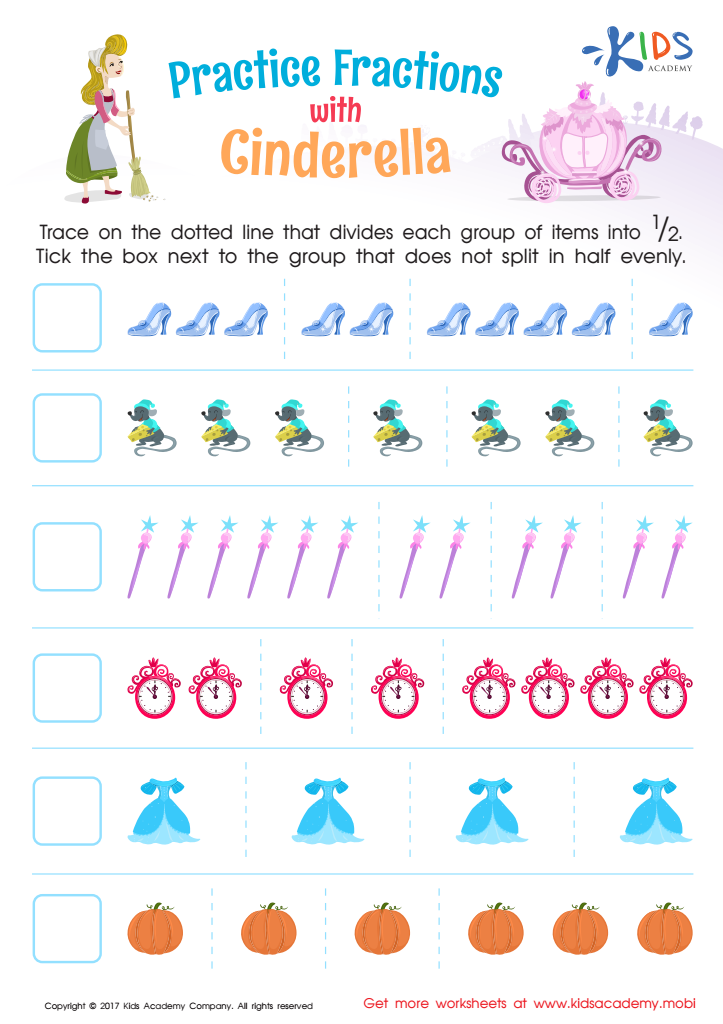
Fractions: Cinderella Printable








Parents and teachers should pay attention to fraction representation, addition, and subtraction in early childhood education because these foundational skills are crucial for a child's mathematical development. For ages 3-7, understanding basic fractions and their arithmetic operations builds a solid foundation for future math concepts. When children grasp the idea that fractions represent parts of a whole, they begin to develop numerical literacy and critical thinking skills essential for problem-solving.
Introducing fraction addition and subtraction through hands-on activities, visual aids, and real-life examples helps young learners connect abstract concepts to their everyday experiences. For instance, using slices of pizza or pieces of fruit can make fractions tangible and fun. This engagement fosters a positive attitude towards math, reducing anxiety and encouraging a growth mindset.
Furthermore, early exposure to these concepts prepares children for more complex mathematical operations in later grades. It enhances their logical reasoning and spatial awareness, skills that are beneficial beyond math classrooms. Parents and teachers who nurture a child's understanding of fractions are laying down stepping stones for academic success in subjects like geometry, algebra, and science. By prioritizing these early lessons, they ensure children have the confidence and competence to tackle advanced mathematical challenges in the future.








