Improve fine motor skills Addition & Subtraction Worksheets for Ages 3-7
3 filtered results
-
From - To
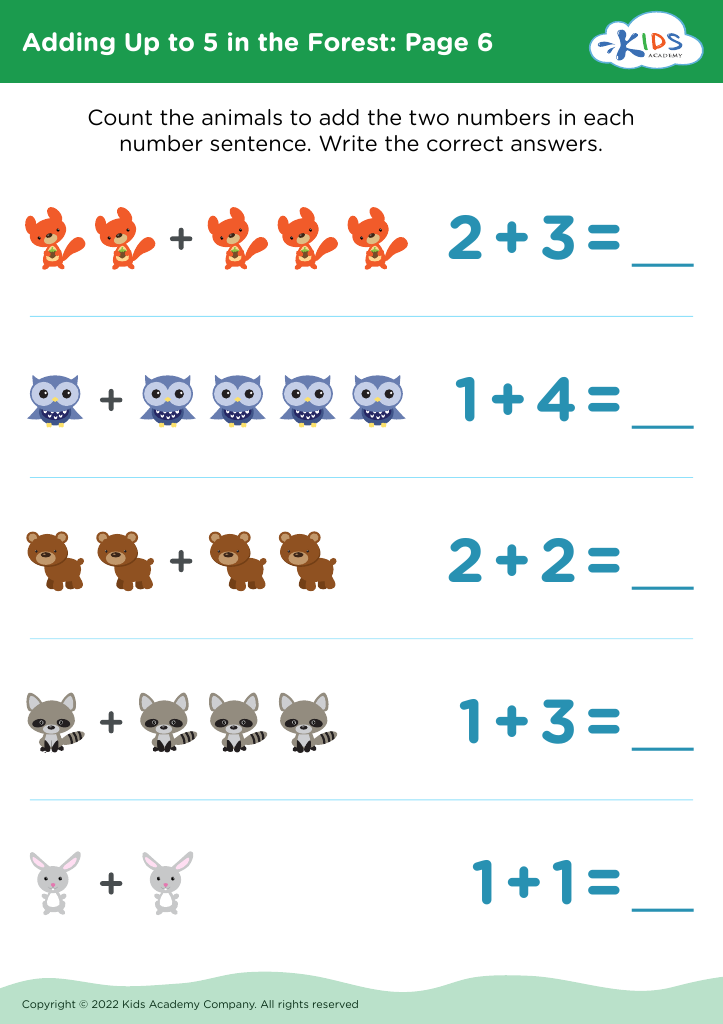
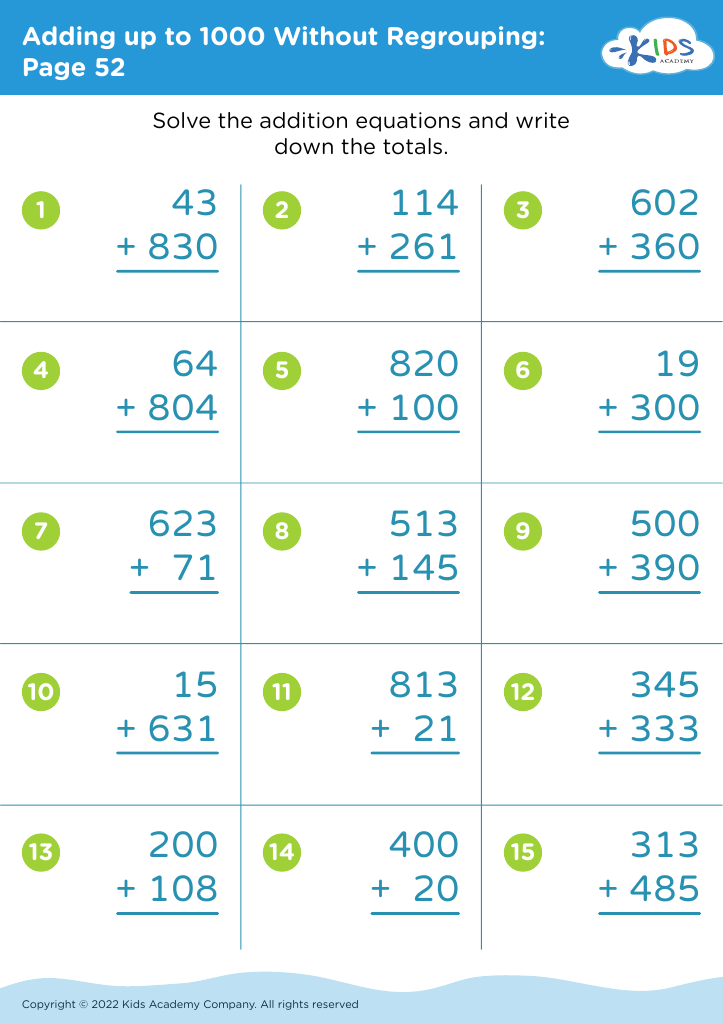
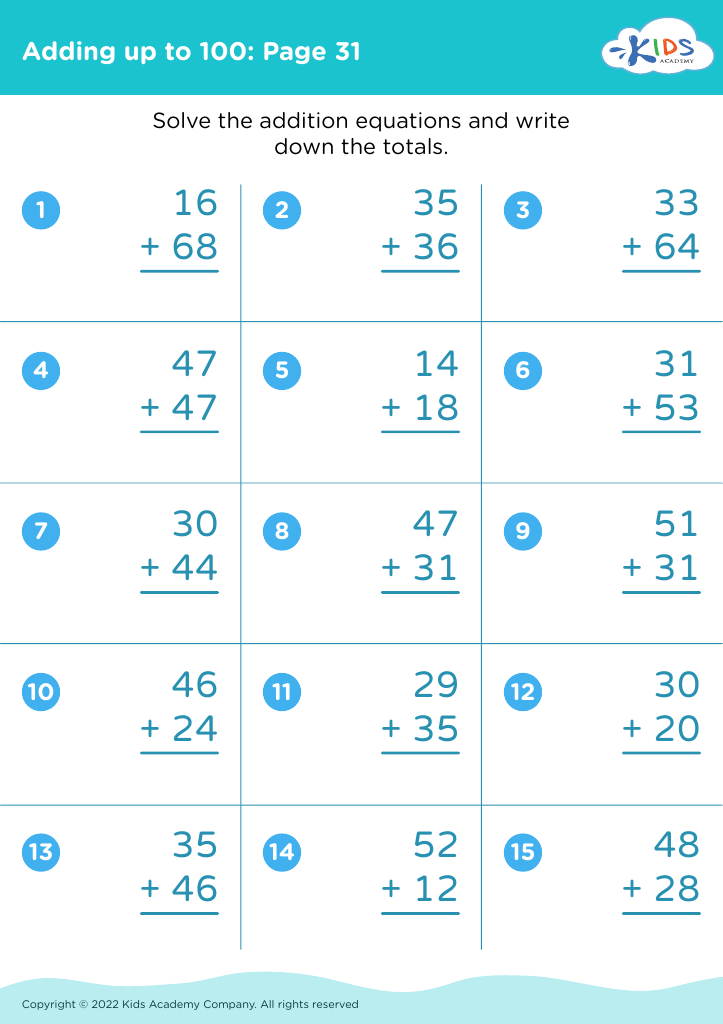
Enhance your child's fine motor skills while they learn essential addition and subtraction concepts with our engaging worksheets designed for ages 3-7. These thoughtfully crafted activities combine math practice with fun, hands-on exercises to develop dexterity and hand-eye coordination. Each worksheet features colorful illustrations and age-appropriate exercises that motivate young learners, making math enjoyable! Children will practice cutting, coloring, and tracing, all while building a strong foundation in early math skills. Perfect for home or classroom use, our resources provide a dynamic learning experience. Explore our collection and watch your child thrive in both math and motor skill development!








Improving fine motor skills in young children, particularly in conjunction with basic addition and subtraction, is crucial for several reasons. Firstly, fine motor skills involve the coordination of small muscles in the hands and fingers, enabling children to perform tasks such as writing numbers, manipulating objects, and ultimately, carrying out mathematical operations. Developing these skills helps children feel more confident and capable in their learning.
For children ages 3-7, effective addition and subtraction are foundational skills that shape their mathematical understanding. Early exposure to these concepts, paired with improved fine motor skills, can facilitate better academic performance as they progress through school. Engaging in activities like counting beads, drawing numerals, or using tools like scissors or stickers can enhance dexterity, thereby making tasks more approachable.
Moreover, caring for the development of fine motor skills and fundamental math lays the groundwork for cognitive growth, enhancing problem-solving abilities and critical thinking. When parents and teachers pay attention to these interconnected areas of development, they create a supportive environment that promotes not only academic achievement but also enjoyment of learning. This holistic approach ultimately prepares children to face more complex challenges in their educational journey and everyday life.








