Improving mental math Addition & Subtraction Worksheets for Ages 3-7
3 filtered results
-
From - To
Boost your child's math skills with our "Improving Mental Math: Addition & Subtraction Worksheets for Ages 3-7." Designed to make learning fun and engaging, these worksheets help young learners develop quick thinking and problem-solving skills. Through interactive exercises, kids practice essential addition and subtraction concepts, paving the way for strong mental math abilities. Perfect for children aged 3-7, our worksheets are a valuable resource for parents and teachers aiming to build a solid numerical foundation. Start enhancing your child's math confidence and accuracy today with our expertly crafted printable worksheets!
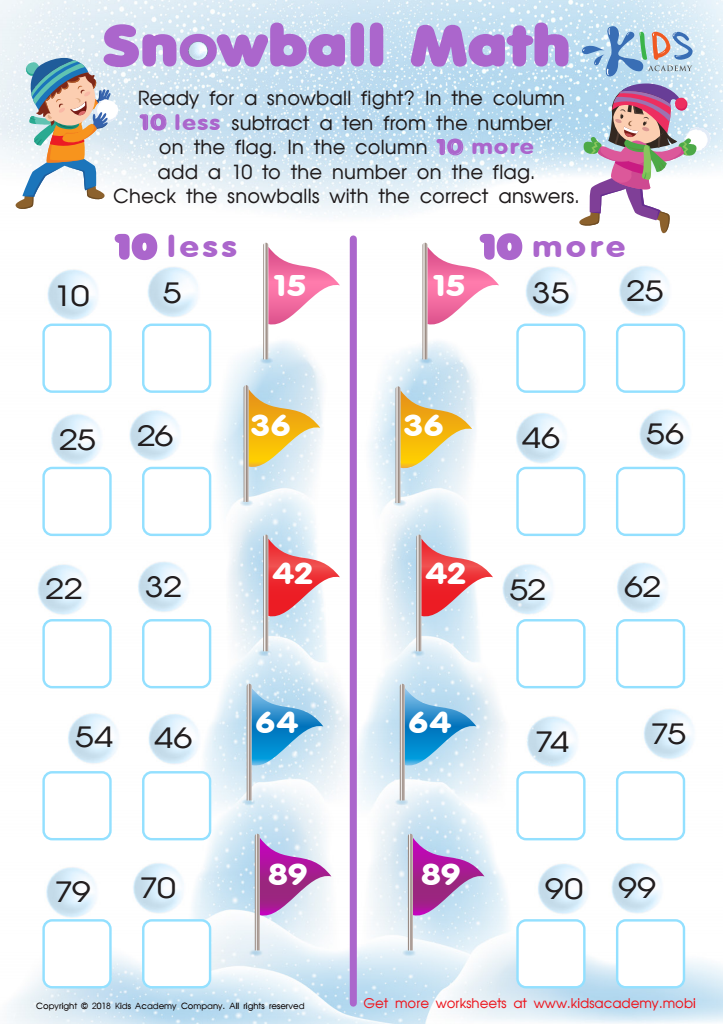
Snowball Math Worksheet
 Assign to My Students
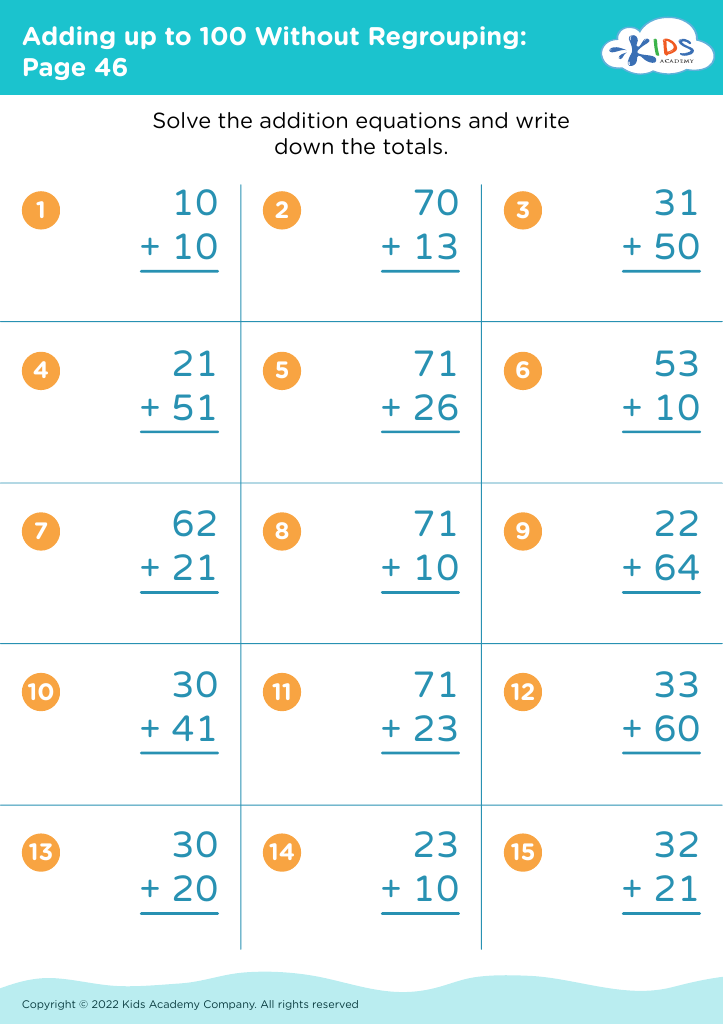
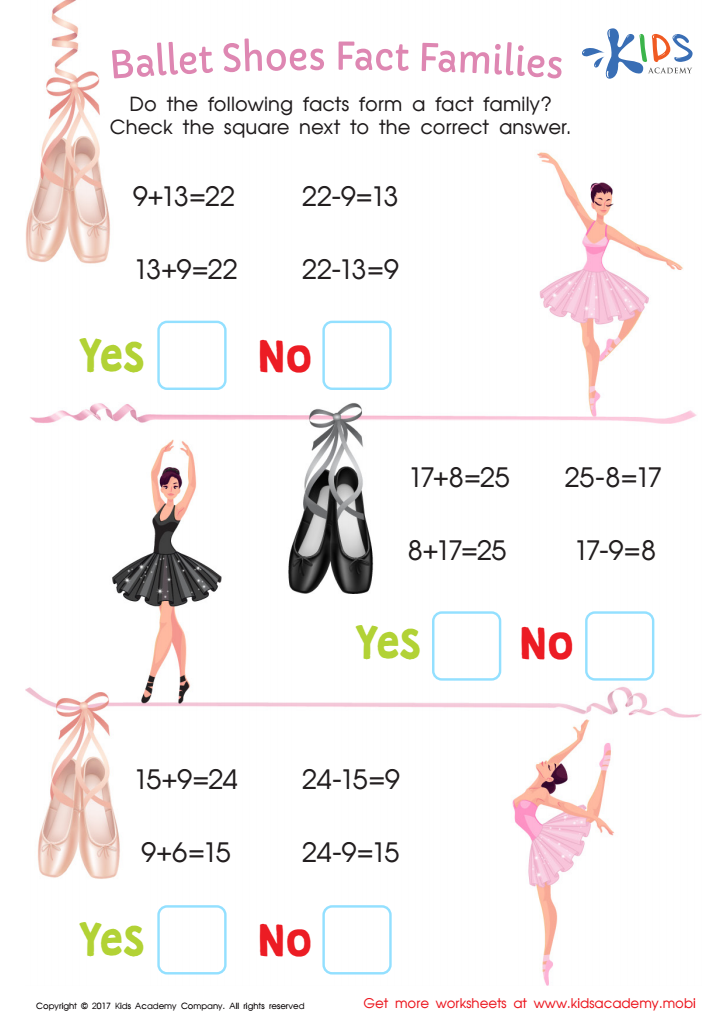
Ballet Shoes Fact Family Printable








Improving mental math addition and subtraction in children ages 3-7 is essential for various foundational development aspects. At this crucial age, kids' brains are highly receptive, and establishing strong numerical and cognitive skills early sets the stage for future academic success. Mental math enhances problem-solving abilities, promoting critical thinking and logical reasoning.
By regularly practicing mental addition and subtraction, young children develop better number sense, which is understanding how numbers work together. This foundational skill allows them to tackle more complex math operations with ease as they progress in their education. It also promotes confidence when dealing with mathematical tasks, reducing anxiety and fostering a positive attitude towards math—a stark difference from mere rote memorization.
Furthermore, mental math sharpens a child's working memory, enhancing their ability to hold and manipulate information simultaneously. This is beneficial not only in math but across all subjects, improving overall cognitive function. Engaging children in mental math activities also offers opportunities for bonding with parents and teachers, turning learning into a fun and interactive experience. Ultimately, investing in young children's mental math skills is investing in their overall intellectual growth, future learning capabilities, and self-confidence.








