Introduction to mathematics Addition & Subtraction Worksheets for Ages 3-7
3 filtered results
-
From - To
Welcome to our "Introduction to Mathematics: Addition & Subtraction Worksheets" designed for ages 3-7! Our engaging and educational worksheets are crafted to introduce your little ones to the fundamental concepts of addition and subtraction. With colorful exercises and fun activities, these worksheets are perfect for beginners. Each printable is created to make learning math enjoyable and to build essential skills step-by-step. Ideal for young learners at home or in the classroom, our resources help foster a love for mathematics early on. Download today and start your child's exciting journey into the world of math!
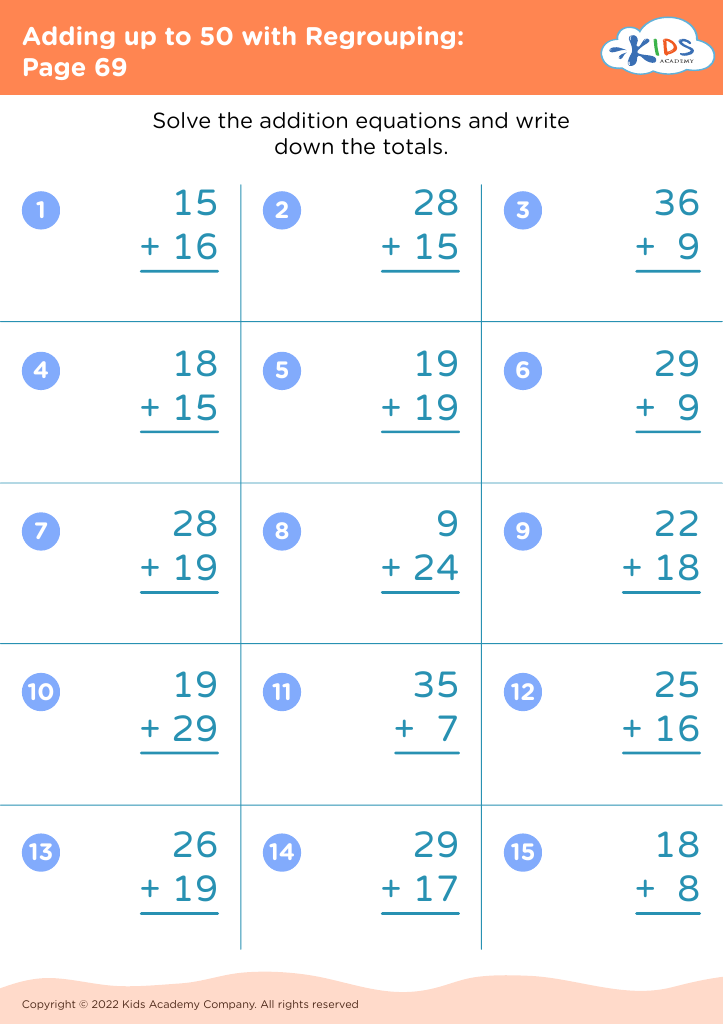
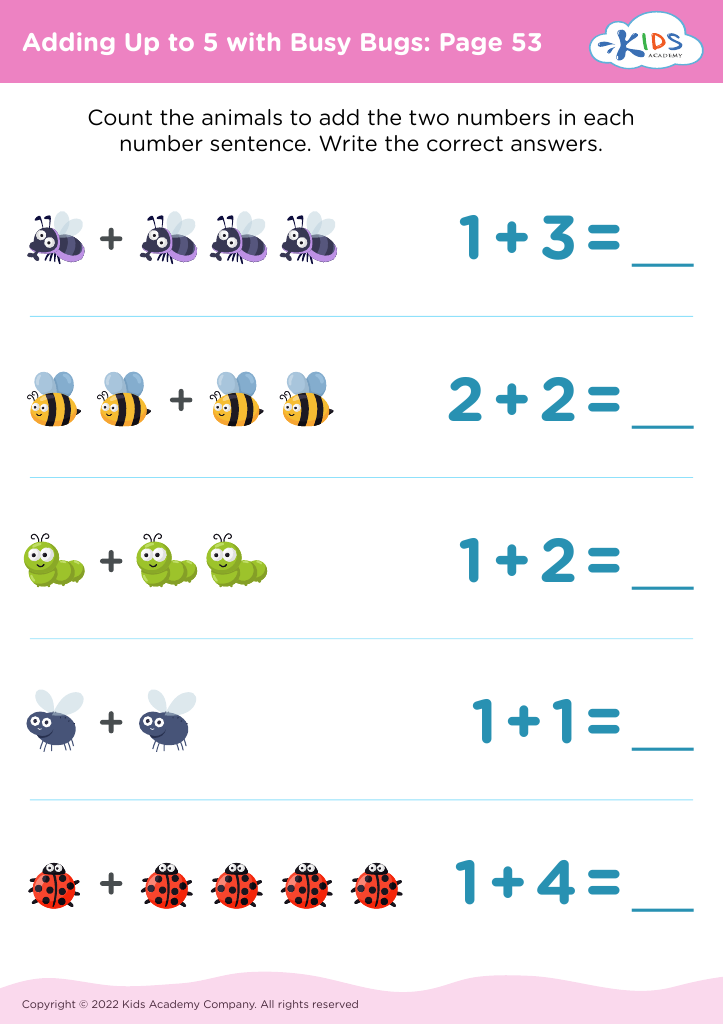
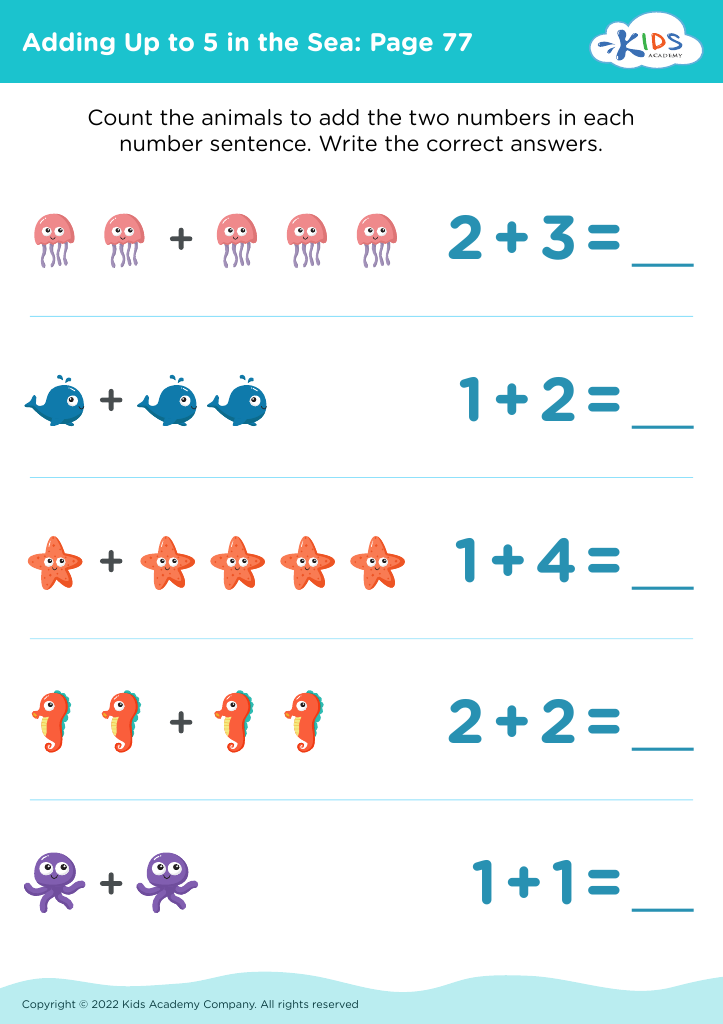








Introduction to mathematics, especially addition and subtraction, is crucial for children aged 3-7 as it establishes a foundational understanding of basic numerical concepts. At this developmental stage, young minds are incredibly receptive to learning and cognitive growth. Understanding addition and subtraction lays the groundwork for more advanced mathematical concepts, ensuring early academic success and fostering a positive attitude towards math.
For parents and teachers, nurturing these skills early on is vital. Addition and subtraction help children develop essential problem-solving abilities and reasoning skills that are applicable in everyday life. When children practice these skills consecutively, whether through counting objects, using visual aids, or engaging in interactive games, they build their confidence and accuracy in handling numbers.
Additionally, early math skills are linked to later academic achievements. Children who grasp arithmetic concepts early will find it easier to navigate future math challenges in higher grades, leading to improved performance in other subjects like science and engineering.
Ultimately, dedicating time and resources to teaching addition and subtraction in a joyful and engaging manner fosters a love for learning, boosts self-esteem, and equips young learners with the critical thinking and analytical skills necessary for lifelong success. Thus, parents and teachers play a pivotal role in guiding children’s early mathematical journey.








