
Mathematical skills Addition & Subtraction Worksheets for Ages 3-7
3 filtered results
Difficulty Level
Grade
Age
-
From - To
Subject
Activity
Standards
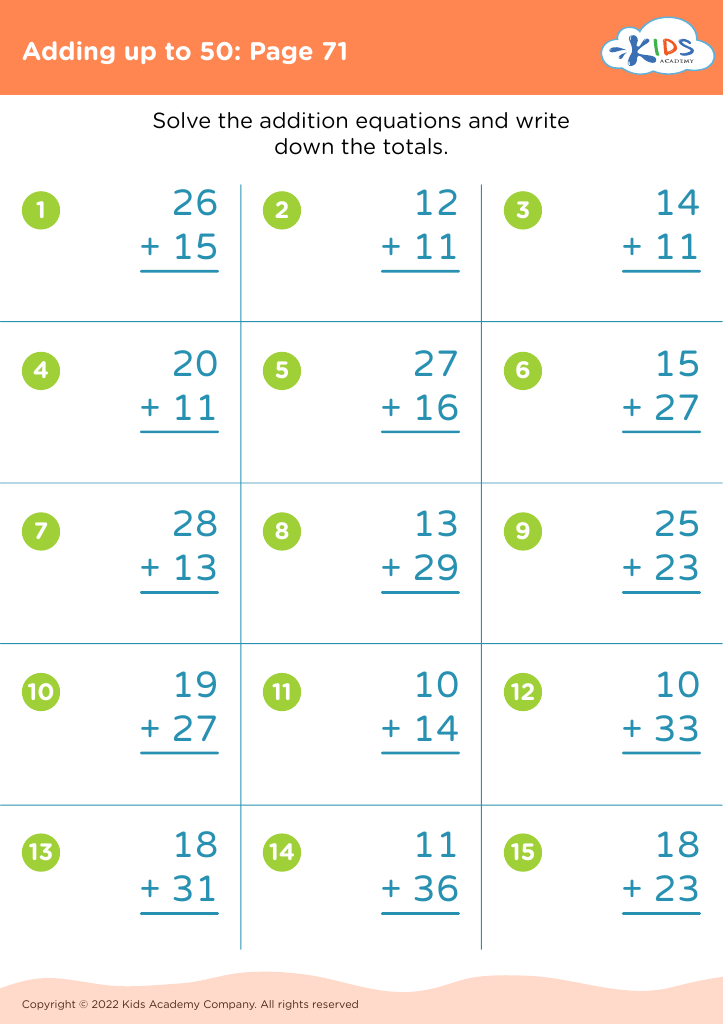
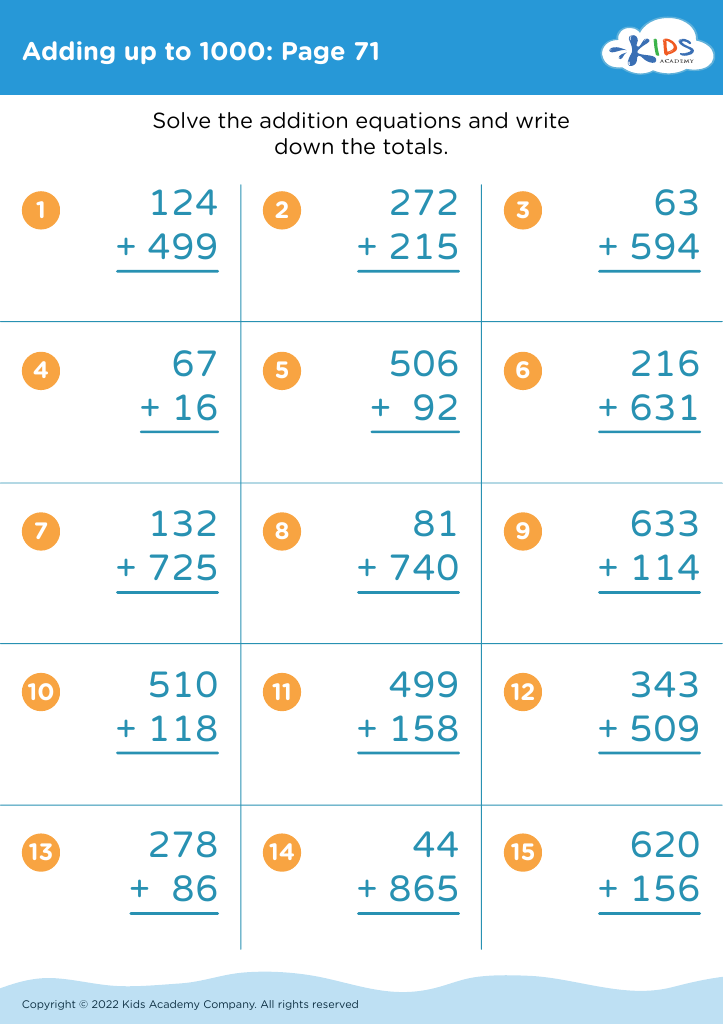
Our engaging Addition & Subtraction Worksheets for Ages 3-7 are expertly designed to build foundational mathematical skills. Tailored specifically for young learners, these worksheets make learning fun and interactive, enhancing both addition and subtraction proficiency. Each worksheet incorporates vibrant illustrations and simple instructions, making it easy for children to grasp basic math concepts. Perfect for both classroom and home use, our resources are crafted to boost confidence and promote a love for math at an early age. Equip your child with essential skills to excel academically and enjoy the learning journey with our comprehensive, age-appropriate material.
Favorites
With answer key
Interactive
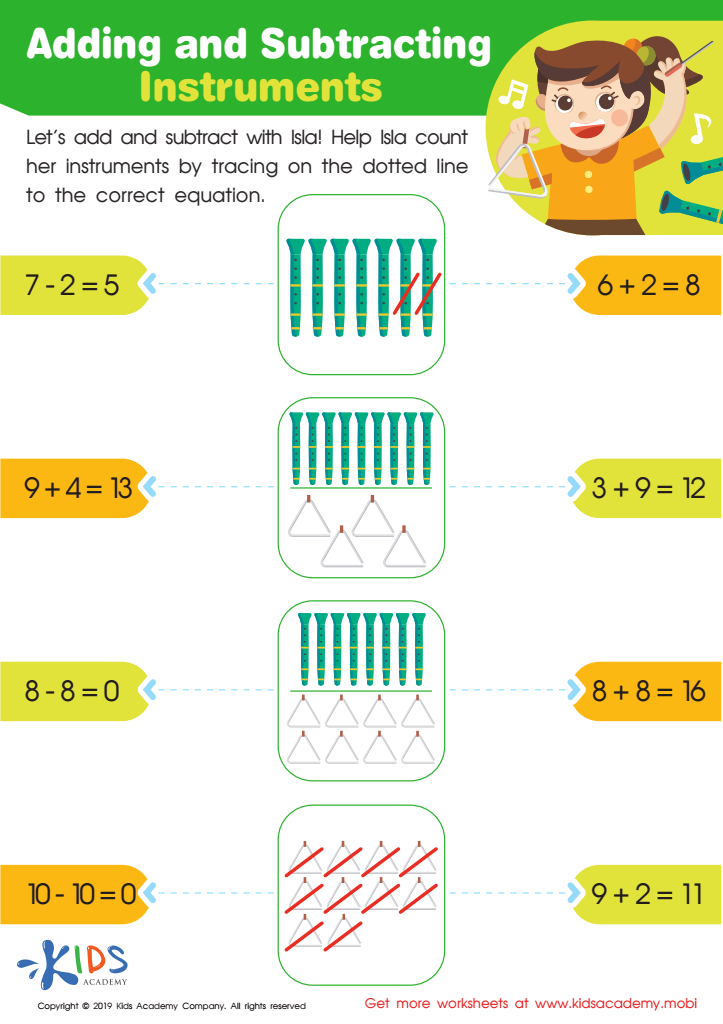
Adding and Subtracting: Instruments Worksheet
Children can help Isla count her musical instruments with this fun worksheet. The downloadable PDF gives them a chance to practice addition and subtraction by connecting pictures to equations. It's also a great way to learn the order of operations.
 Assign to My Students
Adding and Subtracting: Instruments Worksheet
Worksheet
Join Kids Academy for Free
Who is primarily going to use this learning content?








Parents and teachers should prioritize the development of addition and subtraction skills in children aged 3-7 because these foundational mathematical abilities serve as building blocks for their future academic and everyday success. At this formative stage, children's brains are highly receptive to new concepts, and grasping basic arithmetic helps enhance overall cognitive development, including problem-solving and logical reasoning skills.
Early understanding of addition and subtraction fosters numeracy, a critical life skill that aids in activities like counting objects, understanding money, telling time, and even cooking. Reinforcing these skills at a young age sets the groundwork for more complex math concepts, boosting children's confidence and curiosity in learning. Moreover, it supports early development in mathematical thinking, pattern recognition, and the ability to estimate, all integral for success in future, more complex mathematics curriculum.
For parents, engaging in arithmetic activities provides quality bonding time while promoting educational growth. Teachers, on the other hand, can identify and address learning gaps early on, individualizing instruction to better support each child's unique learning pace and style. By emphasizing the importance of addition and subtraction in early childhood, both parents and teachers contribute significantly to a child's comprehensive intellectual and practical development.








